
Sphynx Cat Care: Skin Cleaning, Temperature Sensitivity, and Heart Risk
The Sphynx cat is one of the most distinctive-looking animals in the domestic cat world. Largely hairless, with wrinkled skin, enormous ears, and an intensely social personality, they are unlike any other breed in both appearance and temperament. They are also a breed with very specific care requirements and significant health vulnerabilities — particularly regarding the skin, temperature regulation, and the heart. Sphynx owners who understand these needs from the start are far better placed to give their cats a healthy, comfortable life.
Skin Care: The Most Distinctive Daily Need
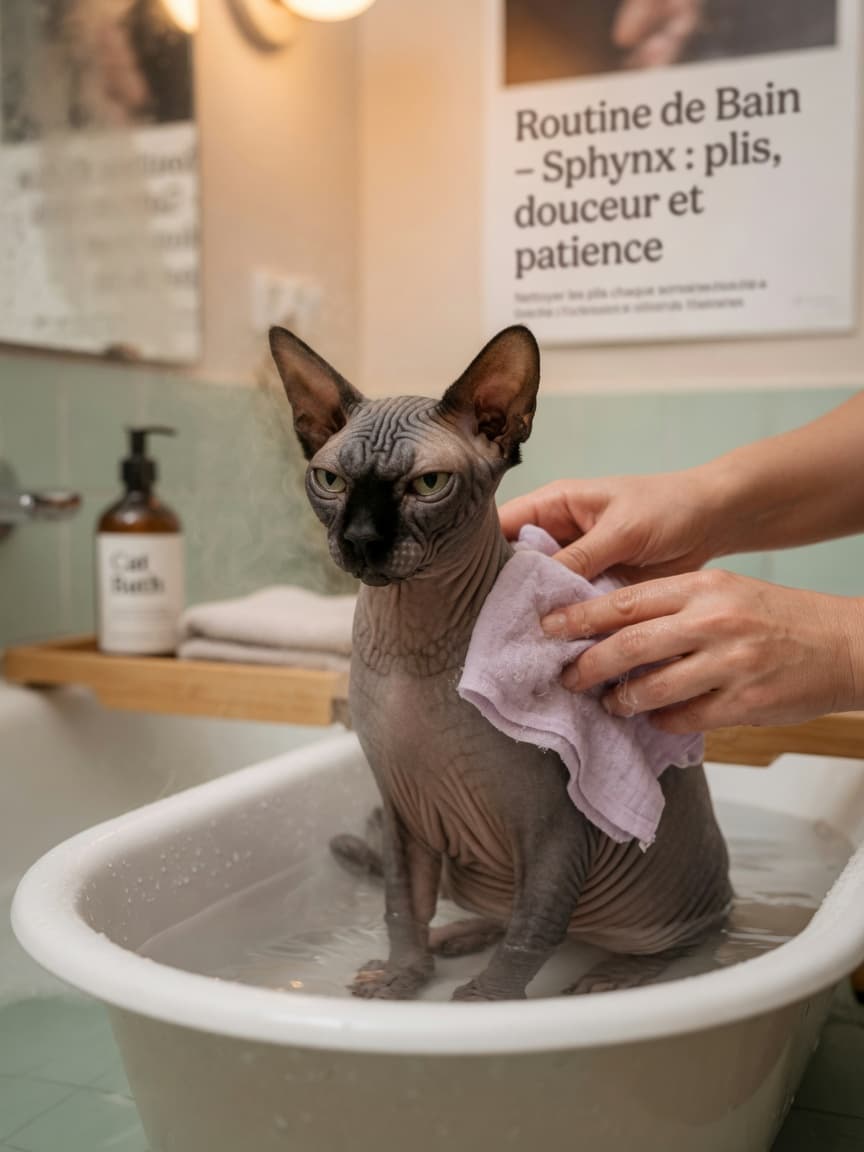
Most cat owners do not think much about bathing their pets — cats are, after all, famously capable of grooming themselves. The Sphynx changes this entirely. In a coated cat, the fur absorbs the natural oils produced by the skin's sebaceous glands and distributes them along the hair shaft. The Sphynx has no fur to absorb these oils, which means they accumulate on the skin surface, attracting dirt, debris, and bacteria.
Without regular cleaning, this oily residue builds up into a waxy, dark substance that can cause skin irritation, blocked pores, and unpleasant odour. Most Sphynx owners bathe their cats weekly or fortnightly using a gentle, cat-safe shampoo — ideally one formulated for sensitive skin. The bathing routine should be introduced gradually from kittenhood so the cat becomes accustomed to water.
Skin Folds and Ears
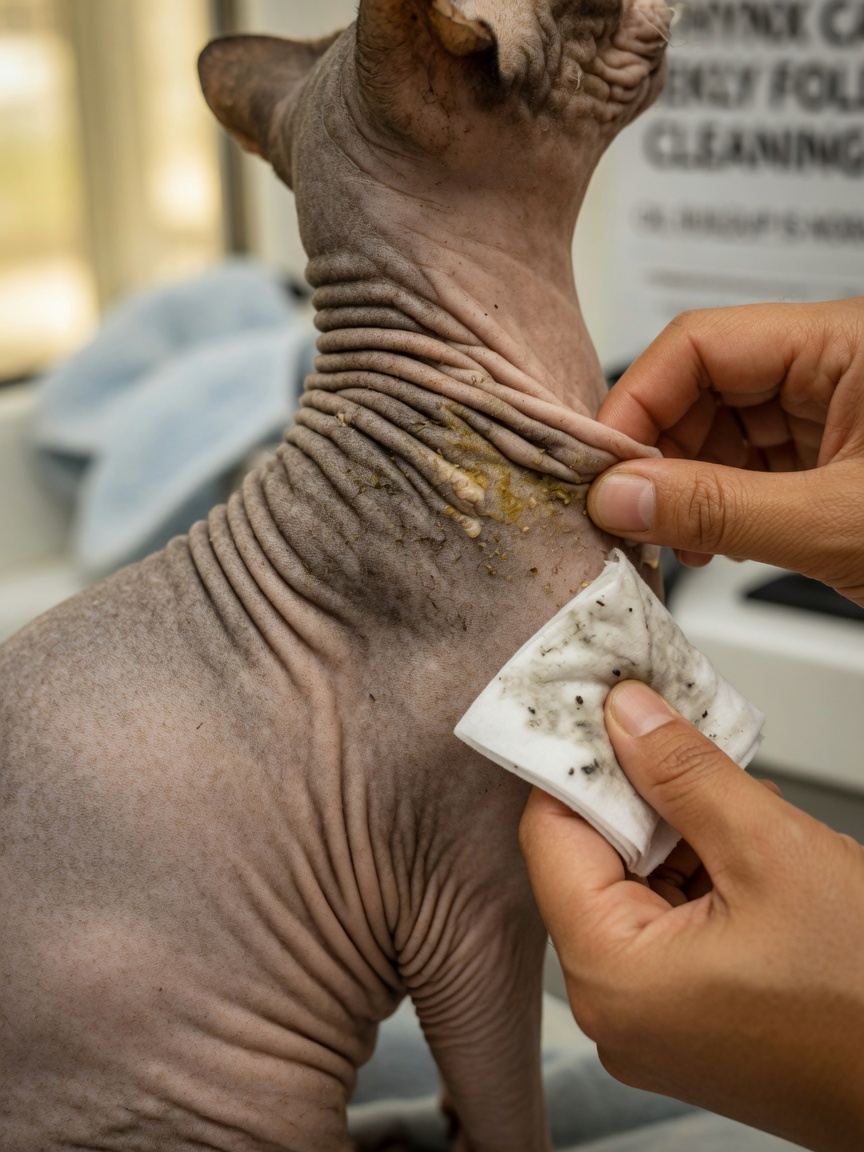
The wrinkled skin characteristic of the Sphynx creates natural folds, particularly around the neck, armpits, and groin. These folds trap moisture, oil, and debris, creating ideal conditions for bacterial and yeast infections if not cleaned regularly. Using a soft, damp cloth or cotton pad to clean between skin folds as part of the bathing routine is essential.
The ears of the Sphynx are also notably large and prone to accumulating a waxy brown discharge. Without fur in the ear canal to provide any degree of filtering, ear wax and debris build up more rapidly than in coated breeds. Weekly ear cleaning with a vet-approved ear cleaner and soft cotton pads is typically necessary. Avoid inserting anything into the ear canal itself — clean only the visible portions of the outer ear.
Nail Beds
One often-overlooked aspect of Sphynx skin care is the nail beds. Without fur on the paws, oily residue accumulates around and beneath the claws. This can cause discomfort and increases infection risk. Gentle cleaning of the paws and nail beds during the regular bathing routine prevents this from becoming a problem.
Temperature Sensitivity
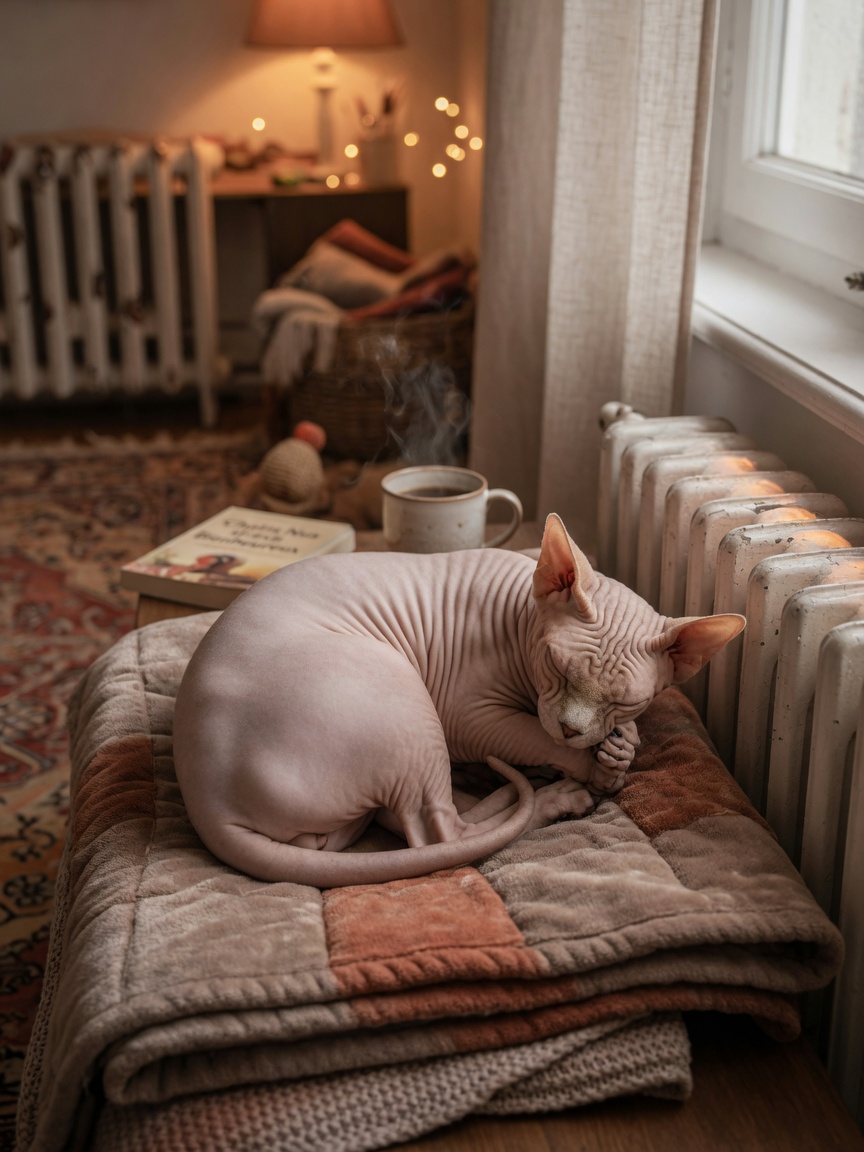
The absence of a fur coat means the Sphynx loses body heat far more rapidly than coated cats. They have a higher metabolic rate than most breeds — partly as a physiological compensation for heat loss — which also means they tend to have robust appetites. In practical terms, the Sphynx is not well-suited to cold environments and should never be housed in unheated spaces.
Indoor temperatures should be kept comfortable year-round — at minimum, the temperature that a lightly dressed human would find comfortable. Many Sphynx cats will seek out warmth actively, pressing against radiators, burrowing under duvets, and sitting on laps at every opportunity. Providing heated cat beds or self-warming blankets is genuinely beneficial rather than simply indulgent.
Equally, the Sphynx should never be left in direct sunlight for extended periods. Without protective fur, their skin is susceptible to sunburn. Cats that have access to sunny windowsills should have the option to move away from direct sun exposure, and outdoor time should be monitored carefully.
Hypertrophic Cardiomyopathy in Sphynx Cats
HCM is the most serious health concern facing the Sphynx breed. Multiple studies have found that HCM is highly prevalent in Sphynx cats, with some research suggesting that affected individuals represent a substantial proportion of the breed population. The condition has been found in Sphynx cats from different breeding lines across multiple countries, suggesting it is deeply embedded in the breed's genetics.
As with other breeds, HCM in the Sphynx causes thickening of the left ventricular wall, impairing the heart's ability to function efficiently. The disease can progress to congestive heart failure and creates a risk of aortic thromboembolism — a blood clot that lodges at the base of the aorta, causing sudden paralysis of the hindquarters and extreme pain.
Screening Protocol
There is currently no validated genetic test for HCM in Sphynx cats equivalent to what exists for Ragdolls. Screening therefore relies on regular echocardiography. Cardiac screening should begin by the time a Sphynx reaches one to two years of age, and should be repeated annually or every other year depending on individual findings. Some cardiologists recommend annual screening for this breed given the high prevalence.
Signs of cardiac problems to watch for include any change in breathing pattern — especially rapid breathing at rest, which is one of the earliest detectable signs of congestive heart failure — lethargy, reduced appetite, and weakness. A normal resting respiratory rate for a cat is typically between fifteen and thirty breaths per minute. Counting your cat's breaths during sleep and keeping a record allows you to notice changes early.
Gastrointestinal Sensitivity
Sphynx cats are known to have somewhat sensitive digestive systems. Loose stools, flatulence, and variable stool consistency are not uncommon in the breed, and can be related to diet composition, food sensitivities, or the Sphynx's naturally higher metabolic rate driving faster gut transit. A high-quality, easily digestible diet with consistent protein sources tends to suit this breed well.
Introducing any dietary changes gradually over seven to ten days reduces the risk of digestive upset. If your Sphynx experiences persistent loose stools, a vet consultation to rule out parasites, inflammatory bowel disease, or food intolerance is worthwhile rather than simply accepting it as normal for the breed.
The Sphynx as a Companion
It is worth noting that the Sphynx's care demands are matched by an extraordinarily engaging personality. These cats are famously sociable, vocal, and affectionate — often described as dog-like in their desire for human company. They do not do well when left alone for long periods and thrive in homes where they have consistent human interaction or feline companionship.
With diligent skin care, a warm environment, regular cardiac screening, and an owner who understands their specific vulnerabilities, Sphynx cats can live happy, healthy lives well into their teens. They are demanding by the standards of low-maintenance cat breeds — but for owners prepared to meet those demands, they are among the most rewarding companions the feline world has to offer.