
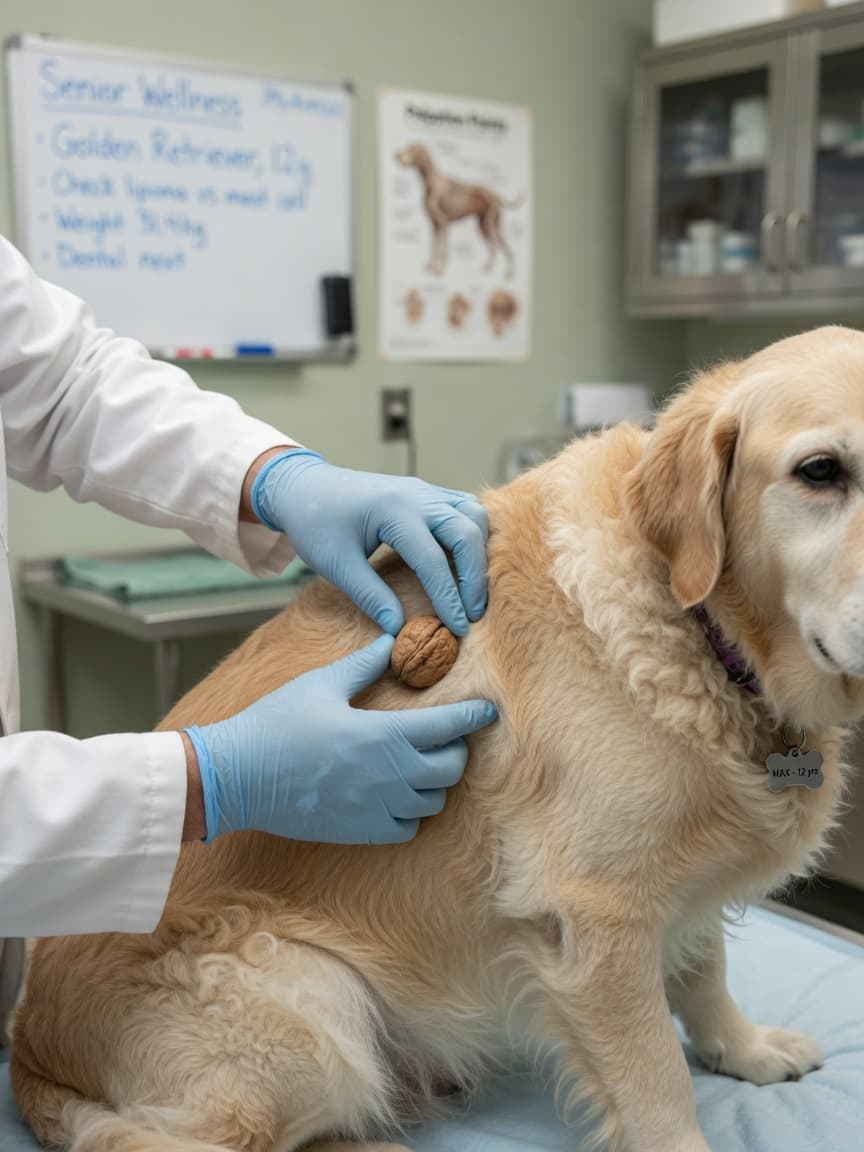
Finding a lump on your dog's body can be genuinely frightening. Your mind immediately races to worst-case scenarios, and worry can cloud your judgment. However, the truth is that not every lump is cancerous. In fact, many lumps are benign fatty deposits or cysts that pose no serious threat to your dog's health. Understanding what to look for and when to seek veterinary help can help you navigate this stressful situation with clarity and confidence.
Why Dogs Develop Lumps
Lumps and bumps are remarkably common in dogs, particularly as they age. According to veterinary research, senior dogs may develop multiple lumps during their lifetime. These growths can be categorised into two main types:
- Benign growths: Lipomas (fatty tumours), sebaceous cysts, warts, and moles typically grow slowly and don't spread
- Malignant growths: Cancerous tumours that can spread to other parts of the body and require urgent treatment
The challenge lies in distinguishing between these categories without professional examination. While some visual clues may suggest one or the other, only a veterinarian can provide a definitive diagnosis.
Signs That a Lump May Be Cancerous
Whilst no single characteristic guarantees malignancy, certain warning signs should prompt immediate veterinary attention:
- Rapid growth: Lumps that double in size within weeks warrant urgent evaluation
- Hardness and immobility: Cancerous tumours tend to feel firm and fixed to underlying tissue, whereas benign fatty lumps usually move freely under the skin
- Ulceration or discharge: Bleeding, pus, or discharge from the lump suggests malignancy
- Redness and inflammation: Surrounding skin that's inflamed, bruised, or discoloured requires investigation
- Associated symptoms: Weight loss, lethargy, or loss of appetite alongside a new lump can indicate systemic disease
- Location: Lumps in lymph nodes, on the chest, or near vital organs may be more concerning
Benign Lumps: What's Likely Harmless
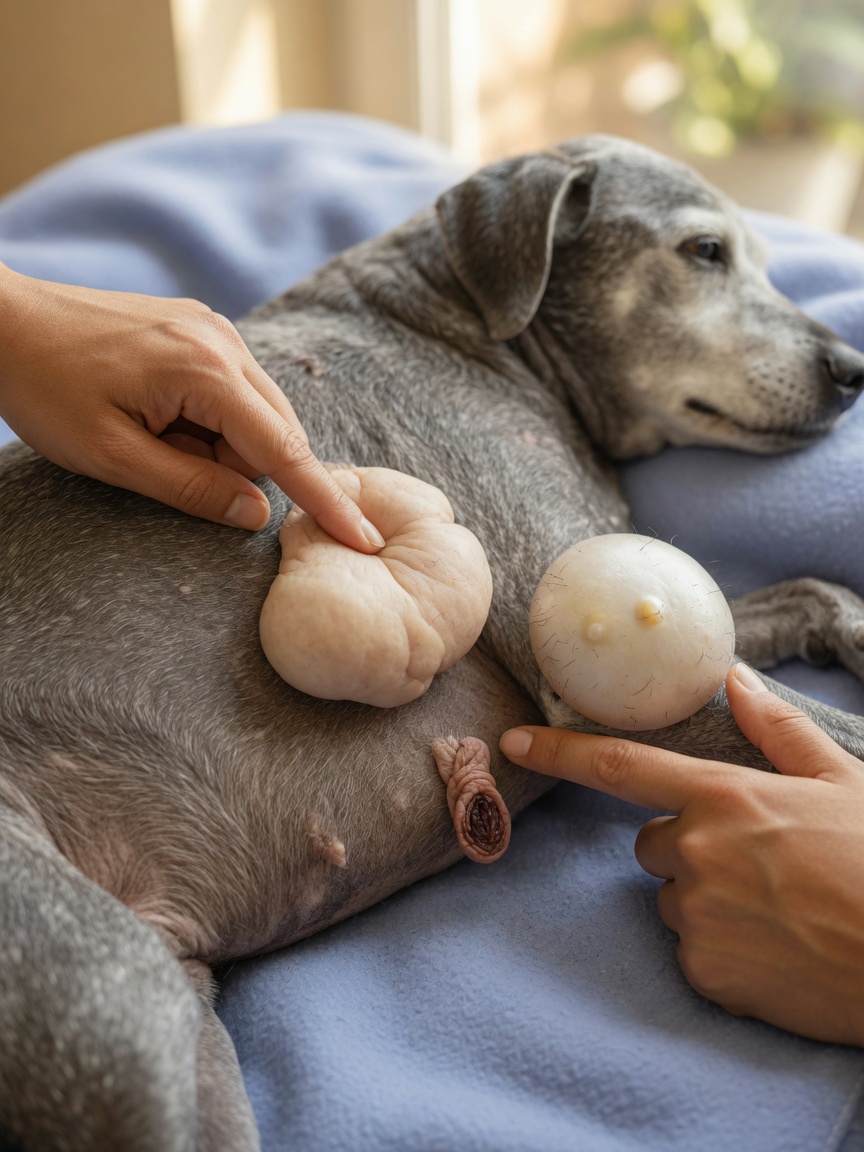
Most lumps found on dogs are benign. Common benign growths include:
- Lipomas: Soft, fatty lumps that grow slowly and don't affect daily life
- Sebaceous cysts: Smooth, moveable bumps filled with waxy material
- Skin tags: Small, soft protrusions usually on the chest or legs
- Moles and warts: Pigmented or rough-textured growths that rarely cause problems
These benign growths typically don't require treatment unless they become infected, interfere with movement, or concern you aesthetically.
The Importance of Professional Diagnosis
Your veterinarian has tools and expertise you don't possess at home. During an examination, they'll assess the lump's characteristics and may recommend diagnostic testing such as:
- Fine needle aspiration: A quick, minimally invasive procedure where cells are extracted for microscopic examination
- Biopsy: Tissue samples sent to a laboratory for definitive diagnosis
- Imaging: X-rays or ultrasounds to determine if cancer has spread
These tests provide certainty and guide treatment decisions.
When to See Your Vet
Don't delay seeking professional advice. Contact your veterinarian promptly if you notice a new lump, especially if it exhibits any of the warning signs mentioned above. Regular health checks, particularly for older dogs, help catch potential problems early when treatment options are most effective.
Key Takeaways
Finding a lump on your dog is undoubtedly stressful, but remember that many lumps are entirely benign. By observing the lump's characteristics and seeking timely veterinary care, you're taking the right steps to protect your dog's health. Trust your instincts—if something concerns you, it's always better to have it checked. Early detection and professional diagnosis are your greatest allies in ensuring your dog lives a long, healthy life.