

Beyond Anecdote: The Science of the Human-Animal Bond
The idea that pets are good for us has been repeated so often it risks being dismissed as sentimental assumption rather than scientific fact. But the evidence base for the mental health benefits of companion animals has grown substantially over the past three decades, moving well beyond anecdote into peer-reviewed territory. The picture that emerges is nuanced, sometimes complicated, but fundamentally supportive of what many pet owners have always believed: sharing life with an animal does something genuinely positive to the human mind.
Understanding that evidence — where it is strong, where it is preliminary, and where it is contested — is important both for owners who want to make sense of their own experience and for healthcare professionals increasingly integrating animal-assisted interventions into treatment settings.
The Physiological Mechanisms
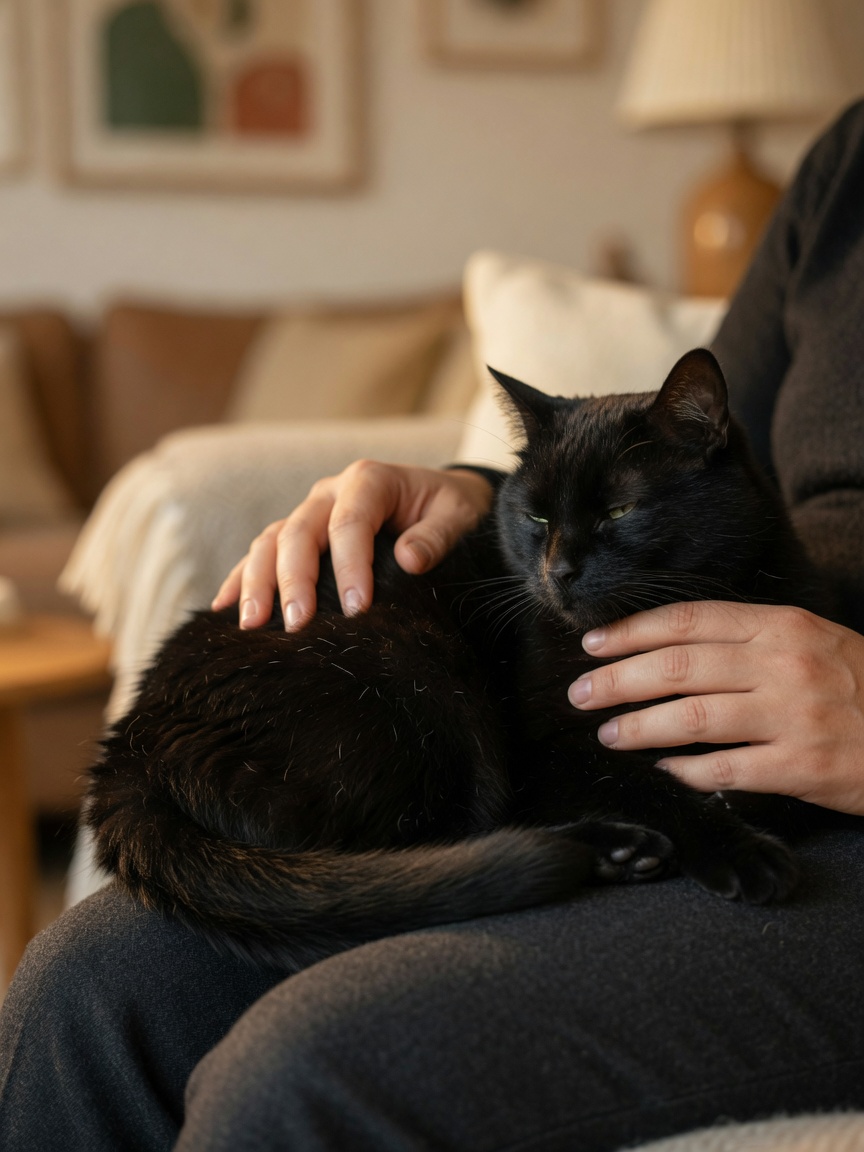
Several measurable physiological pathways help explain the mental health effects of human-animal interaction. The most well-documented involves the oxytocin system. Physical contact with a companion animal — stroking a dog or cat, in particular — has been shown in multiple studies to elevate blood levels of oxytocin in humans. This same hormone is central to social bonding, trust, and the reduction of fear responses. The oxytocin release associated with pet contact also correlates with reductions in cortisol, the primary stress hormone, suggesting that interactions with pets activate the body's calming system in a physiologically meaningful way.
A foundational study by Allen and colleagues found that stockbrokers with hypertension showed significantly lower blood pressure responses to mental arithmetic stress when a pet was present than when alone or with a spouse. This counterintuitive finding — a pet being more calming than a partner in an acute stress scenario — generated substantial interest and has been replicated in various forms since.
Pet ownership is also associated with increased physical activity, particularly among dog owners, and physical activity is one of the most robust predictors of positive mental health. A 2019 systematic review found that dog owners were substantially more likely to meet recommended physical activity guidelines than non-owners, with downstream effects on mood, cognitive function, and sleep quality.
Mental Health Outcomes: What the Research Shows

The relationship between pet ownership and mental health outcomes has been studied across a wide range of conditions and populations. The evidence is most consistently positive in the following areas:
- Reduction in perceived loneliness, particularly among older adults living alone
- Buffering of acute stress responses, measured both subjectively and via cortisol and blood pressure
- Provision of social support and a sense of being needed, which correlates with reduced depression symptom severity
- Facilitation of social interaction with other humans — the well-documented social lubricant effect of dog walking
- Improvements in mood and reduction in anxiety in therapeutic settings using animal-assisted interventions
- Benefits for children with autism spectrum disorder in terms of social engagement and anxiety reduction
A large-scale UK study using data from the COVID-19 pandemic period found that pet owners reported significantly better mental health outcomes during lockdown than non-owners, with the benefit most pronounced for those living alone. The companion animal appeared to serve as a buffer against the psychological effects of social isolation in a uniquely stressful historical context.
Animal-Assisted Interventions in Clinical Settings
Beyond informal pet ownership, structured animal-assisted interventions are now used in a range of clinical and therapeutic contexts. These include animal-assisted therapy, in which a trained animal and handler work alongside a clinician as part of a treatment protocol, and animal-assisted activities, which involve less structured therapeutic interaction.
The evidence base for these interventions, while still developing, is reasonably strong in several areas. A meta-analysis published in PLOS ONE found significant reductions in anxiety and depression across studies involving animal-assisted therapy, with effect sizes in the moderate range. Dementia care is one field where the evidence is particularly encouraging: interactions with animals in residential care settings are associated with reduced agitation, improved mood, and increased social engagement in people with moderate to severe dementia.
Post-traumatic stress disorder is another area of active research. Several US programmes pairing veterans with trained service dogs have produced promising preliminary results, with veterans reporting reduced hypervigilance, improved sleep, and lower perceived stress. Randomised controlled trials are ongoing to establish the size and durability of these effects.
Important Nuances and Limitations
Intellectual honesty requires acknowledging that the evidence is not uniformly positive, and several important caveats apply to drawing sweeping conclusions.
Selection bias is a persistent methodological challenge. People who choose to own pets may differ systematically from those who do not — in personality, lifestyle, socioeconomic status, and baseline mental health — making it difficult to establish causal direction. Does pet ownership improve mental health, or do mentally healthier people choose to have pets?
A large-scale longitudinal study published in Social Indicators Research found that while pet owners reported higher levels of social support and greater conscientiousness, they did not consistently score better on standardised mental health measures than non-owners once confounding variables were controlled. This does not negate the positive findings but underlines that pet ownership is not a universal mental health intervention.
The financial, time, and emotional demands of pet care can also be stressful, particularly during illness or bereavement. Pet loss has its own established grief literature, and the mental health impact of losing a beloved animal is frequently underestimated and underacknowledged by mainstream healthcare.
What the Evidence Actually Supports
The most defensible conclusion from the current evidence is that companion animals provide genuine psychological benefits to many people — particularly in reducing loneliness, buffering stress, and facilitating social connection — but that these benefits are not automatic, universal, or without cost.
The relationship between a person and their pet is, at its best, a genuinely reciprocal one. The mental health benefits humans derive from that relationship are most consistent and most meaningful when the animal is also cared for well, understood as a being with its own emotional needs, and treated as a partner rather than a prop. In that sense, pet ownership as a pathway to better mental health is inseparable from responsible, attentive animal care — a conclusion that serves the interests of both species equally.