
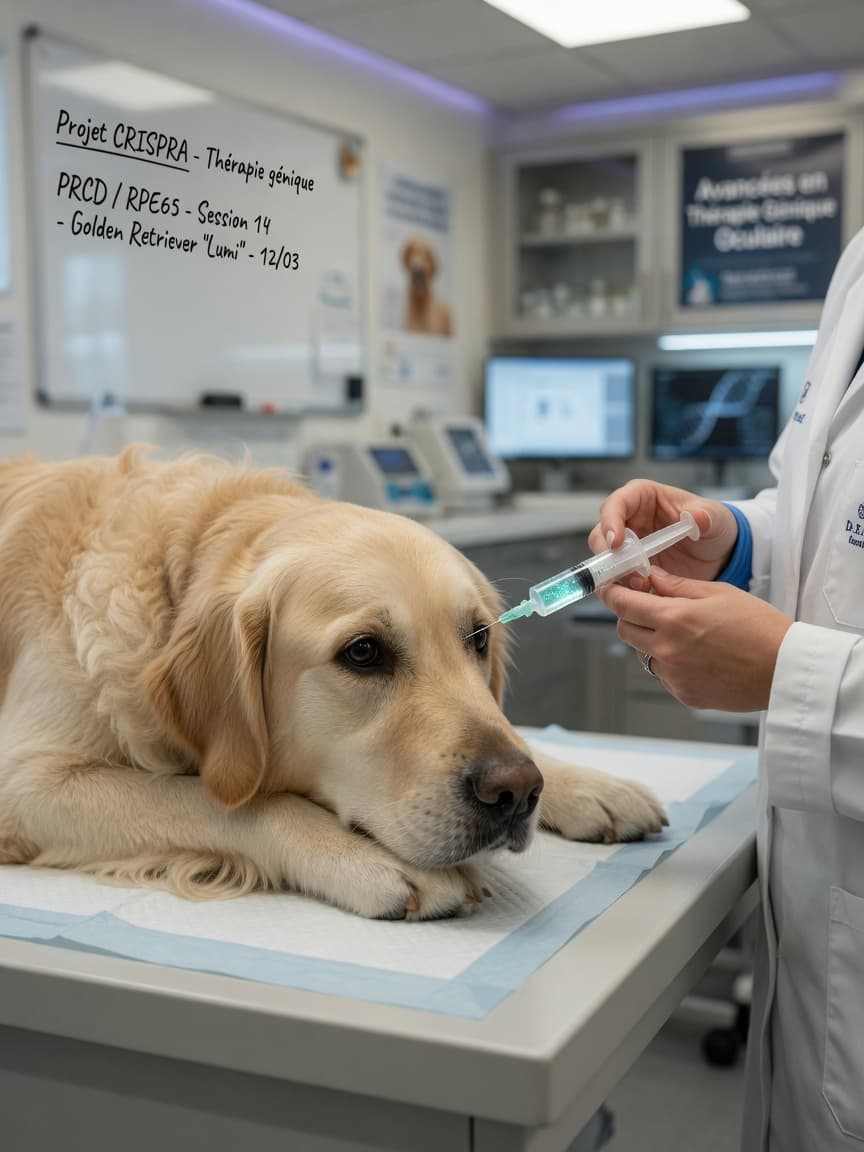
The Promise of Rewriting the Problem at Its Source
Some diseases in dogs are not caused by infection, poor diet, or bad luck — they are written into the animal's DNA from birth. Conditions such as progressive retinal atrophy, haemophilia, and certain muscular dystrophies have long been considered manageable at best and untreatable at worst. Gene therapy is changing that calculus, offering the possibility of correcting a faulty instruction in the genome rather than simply compensating for the damage it causes.
How Gene Therapy Works
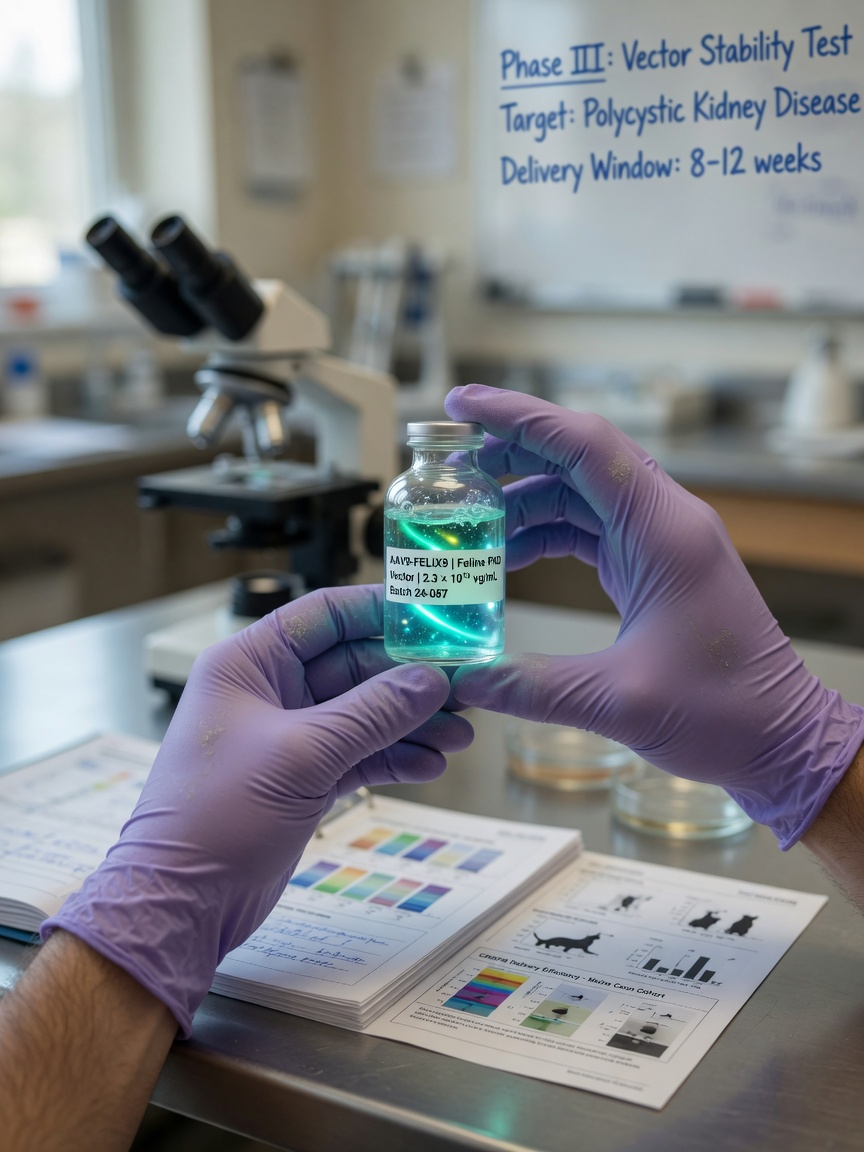
The principle is straightforward even if the execution is not. A functioning copy of a defective gene is introduced into the patient's cells, where it either replaces or supplements the non-working version. The challenge lies in delivery: genetic material cannot simply be injected into the bloodstream and expected to find its target. It requires a vehicle.
Viral Vectors: The Primary Delivery System
The most widely used delivery vehicles are adeno-associated viruses, or AAVs. These are naturally occurring viruses that have been stripped of the genes that cause disease and repurposed as molecular couriers. An AAV carrying a corrective gene is introduced into the body — via injection into the eye, a muscle, or the bloodstream — and ferries its payload into the nucleus of target cells.
Gene Editing: CRISPR and Beyond
A newer approach uses gene editing tools such as CRISPR-Cas9, which act more like molecular scissors than couriers. Rather than introducing a new copy of a gene, editing tools can cut out a faulty sequence and allow the cell's own repair machinery to fix the error. CRISPR applications in veterinary medicine remain largely experimental, but the pace of research is accelerating.
Conditions at the Frontier of Veterinary Gene Therapy
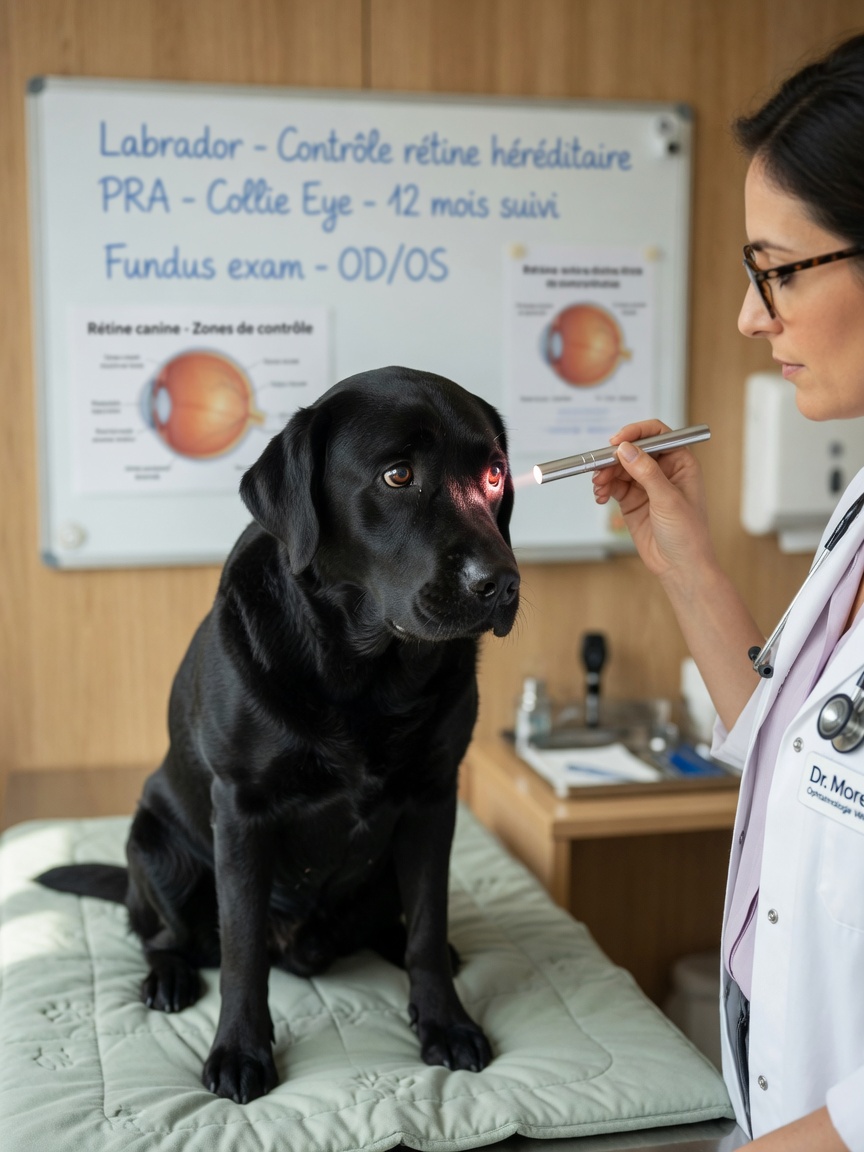
Progressive Retinal Atrophy
This inherited condition causes gradual deterioration of the retina, leading to blindness. It affects dozens of breeds, including Labrador Retrievers, Miniature Schnauzers, and Irish Setters. Gene therapy trials using AAV vectors injected beneath the retina have shown remarkable results in dogs — so remarkable, in fact, that canine trials directly informed the development of the first approved human gene therapy for inherited blindness, voretigene neparvovec.
Haemophilia A and B
Dogs suffer from both forms of haemophilia — clotting factor deficiencies that cause uncontrolled bleeding — and have served as the primary large animal model for developing human gene therapies targeting the same conditions. Sustained expression of clotting factors following a single gene therapy treatment has been demonstrated in canine subjects, with some dogs remaining in remission for years.
Duchenne Muscular Dystrophy
Golden Retrievers can carry a natural mutation causing a condition analogous to Duchenne muscular dystrophy in humans. Exon-skipping strategies — which encourage cells to read around the faulty section of genetic code — have extended mobility and life expectancy in affected dogs in research settings. This work continues to influence the human therapeutic pipeline.
The Dual Role of Dogs in Gene Therapy Research
It is worth acknowledging a nuanced reality: dogs occupy an unusual position in gene therapy, functioning both as patients who may directly benefit from treatment and as research subjects whose genetic similarity to humans makes them invaluable models. This dual role raises ethical questions that the veterinary community continues to navigate actively. For pet owners, the relevant point is that any treatment emerging from this research has been scrutinised carefully and, in most cases, has a documented safety record in canine subjects before human application is considered.
Availability and Current Limitations
Gene therapy for pets is not yet a routine clinical offering. The majority of procedures are available only through university veterinary schools, specialist research centres, or as part of clinical trials. Cost is substantial — where treatments are available outside trials, fees can reach tens of thousands of pounds — and long-term outcome data remain limited given the relative novelty of the field.
Immune responses to viral vectors represent an ongoing challenge. Some dogs mount an immune reaction to the AAV carrier, reducing efficacy or preventing retreatment. Researchers are developing strategies to manage this, including using different AAV serotypes and temporary immune suppression during the initial treatment window.
What Owners Should Know
- Gene therapy is most relevant to owners of dogs with confirmed inherited conditions for which no effective conventional treatment exists.
- Participation in a clinical trial may offer access to cutting-edge treatment at reduced or no cost, though it also carries uncertainty about outcomes.
- Genetic testing can identify whether your dog carries relevant mutations before symptoms appear, which is valuable for breeding decisions and early monitoring.
- Speak with a veterinary geneticist or specialist in internal medicine to understand whether any gene therapy options — investigational or otherwise — exist for your dog's specific condition.
- The field is moving rapidly; a condition that had no gene therapy option two years ago may have an active trial today.