

A Breed Built Tough — But Not Without Its Vulnerabilities
Staffordshire Bull Terriers consistently rank among the most popular family dogs in the UK, and for good reason. They are loyal, affectionate, and robustly built. Yet beneath that muscular exterior lies a genetic profile that every owner should understand. Three conditions in particular — L-2 Hydroxyglutaric Aciduria, hereditary cataracts, and allergic skin disease — account for a significant proportion of veterinary visits in this breed. Knowing what to watch for can make an enormous difference to your dog's quality of life.
L-2 Hydroxyglutaric Aciduria: The Hidden Neurological Threat

L-2 Hydroxyglutaric Aciduria, commonly abbreviated to L2HGA, is an inherited metabolic disorder that is particularly prevalent in Staffordshire Bull Terriers. It is caused by a mutation in the L2HGDH gene, which leads to an accumulation of L-2 hydroxyglutaric acid in the brain, urine, and cerebrospinal fluid. This build-up is toxic to neurological tissue.
Recognising the Signs
Symptoms typically emerge between six months and three years of age, though they can appear later. Owners often first notice episodes that resemble epileptic seizures, along with progressive difficulties in coordination, a condition known as ataxia. Some dogs display behavioural changes such as unusual anxiety, dementia-like confusion, or altered sleep patterns. The signs can be subtle at first and are frequently mistaken for general clumsiness in a young, boisterous dog.
Testing and Management
A DNA test is available for L2HGA and is considered essential for all Staffordshire Bull Terriers used in breeding. Dogs are classified as clear, carrier, or affected. Carriers do not show symptoms but can pass the gene to offspring. For affected dogs, there is no cure, but anticonvulsant medication and dietary antioxidant support — always guided by a veterinary neurologist — can help manage symptoms and slow progression. Early diagnosis gives families the best chance of planning appropriate long-term care.
Hereditary Cataracts: Protecting Your Stafford's Vision
Hereditary cataracts are another well-documented concern in this breed. Unlike cataracts that develop as a consequence of ageing or diabetes, hereditary cataracts in Staffordshire Bull Terriers are caused by a specific genetic mutation and can appear in young dogs, sometimes as early as one to two years of age.
What to Look For
The most visible sign is a bluish or cloudy opacity in one or both eyes. Affected dogs may bump into furniture, become hesitant in unfamiliar environments, or show reluctance to go outdoors in bright light. In early stages, owners may notice a faint greyish shimmer in the pupil when light catches the eye at a certain angle.
Surgical and Preventive Options
Veterinary ophthalmologists can assess cataracts through a slit-lamp examination. When cataracts are mature and significantly impairing vision, surgical removal is often highly effective. For breeding dogs, a DNA test for the hereditary cataract gene (HC-HSF4) is now widely available and strongly recommended. Reputable breeders should be able to provide documentation of clear test results for both parents.
Allergic Skin Disease: The Itchy Reality
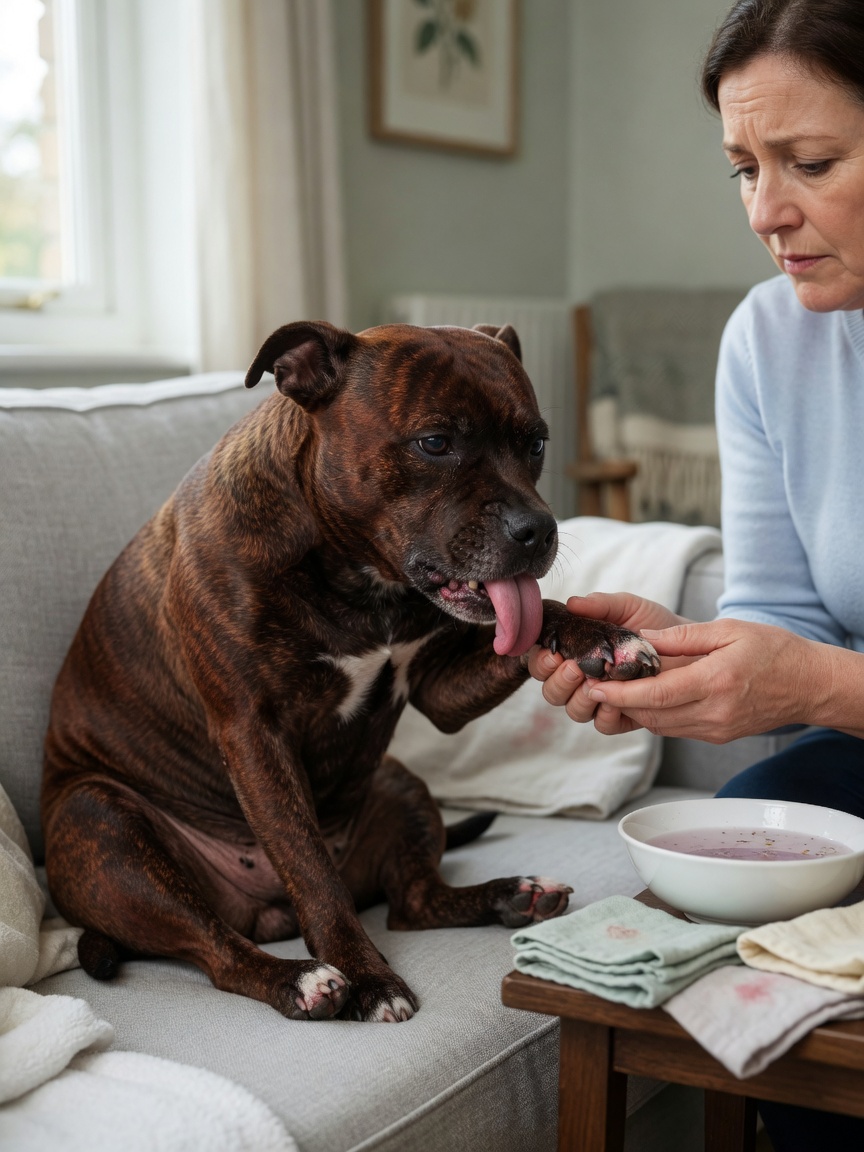
Skin problems are arguably the most common day-to-day health complaint seen in Staffordshire Bull Terriers. The breed has a naturally short, single-layer coat and sensitive skin, which makes them particularly susceptible to both environmental and food-related allergies.
Environmental Triggers
Atopic dermatitis — an immune-mediated response to environmental allergens such as grass pollen, dust mites, and mould spores — is frequently diagnosed in Staffords. Classic signs include persistent licking of the paws, rubbing of the face, recurrent ear infections, and red, inflamed patches on the belly, armpits, and groin. Symptoms are often seasonal at first but may become year-round as sensitivity increases over time.
Food Sensitivities
Some Staffordshire Bull Terriers develop adverse food reactions, most commonly to proteins such as chicken, beef, or dairy. A properly conducted elimination diet — typically lasting a minimum of eight weeks using a novel or hydrolysed protein source — is the gold standard for identifying dietary triggers. Over-the-counter "sensitive" foods are not equivalent to a diagnostic elimination diet and should not be used as a substitute.
Management Strategies
Effective allergy management in this breed usually requires a multi-modal approach. Veterinary-prescribed therapies may include immunotherapy injections, targeted medication to control the itch cycle, medicated shampoos, and fatty acid supplementation to support the skin barrier. Regular bathing with a gentle, veterinary-approved shampoo can also reduce allergen load on the skin. Owners should avoid self-diagnosing and seek a formal allergy workup from a veterinary dermatologist when symptoms are persistent or severe.
Practical Steps for Every Stafford Owner
- DNA test your dog for both L2HGA and hereditary cataracts, regardless of whether you plan to breed.
- Request genetic test certificates from your breeder before purchasing a puppy.
- Schedule annual eye examinations with your vet, particularly from two years of age onwards.
- Keep a symptom diary if you notice neurological episodes — note timing, duration, and any potential triggers.
- If your dog scratches persistently, book a veterinary consultation rather than trialling multiple foods independently.
- Maintain a healthy body weight, as obesity can exacerbate both skin folds and neurological stress.
- Work with your vet to build a breed-appropriate health screening schedule from puppyhood.
Staffordshire Bull Terriers are a rewarding, deeply affectionate breed that thrive with informed owners. The conditions outlined above are manageable — and in many cases preventable through responsible breeding — when identified early. Always consult your veterinary surgeon before making any changes to your dog's medical care or diet.