
French Bulldog Health Problems: BOAS, Spine & Heat Risk
Updated June 2026
- Lifespan: 10–12 years
- Top Health Risks: Brachycephalic obstructive airway syndrome (BOAS), intervertebral disc disease, hemivertebrae, skin fold dermatitis
- Genetic Tests Recommended: Hereditary cataract, degenerative myelopathy (DM), spinal radiographs, BOAS grading
French Bulldogs have surged to the top of popularity charts across Europe and North America, charming millions with their bat ears, compact frames, and affectionate personalities. But beneath that endearing exterior lies a breed burdened with some of the most serious structural health challenges in veterinary medicine. Their extreme conformation — the flat face, compact spine, and barrel chest — creates a cascade of medical conditions that every prospective owner must understand before committing to this breed.
Most Common Health Problems in French Bulldogs
The French Bulldog's health problems cluster around two central anatomical themes: the compressed skull and the malformed spine. Brachycephalic obstructive airway syndrome (BOAS) is the breed's most prevalent and potentially severe condition, affecting the majority of French Bulldogs to some degree. Spinal disorders including hemivertebrae and intervertebral disc disease (IVDD) are also alarmingly common. Skin fold dermatitis, eye conditions, allergies, and reproductive difficulties (most French Bulldogs are born by caesarean section) complete the picture of a breed that, despite its enormous popularity, requires vigilant veterinary management.
Brachycephalic Obstructive Airway Syndrome (BOAS)
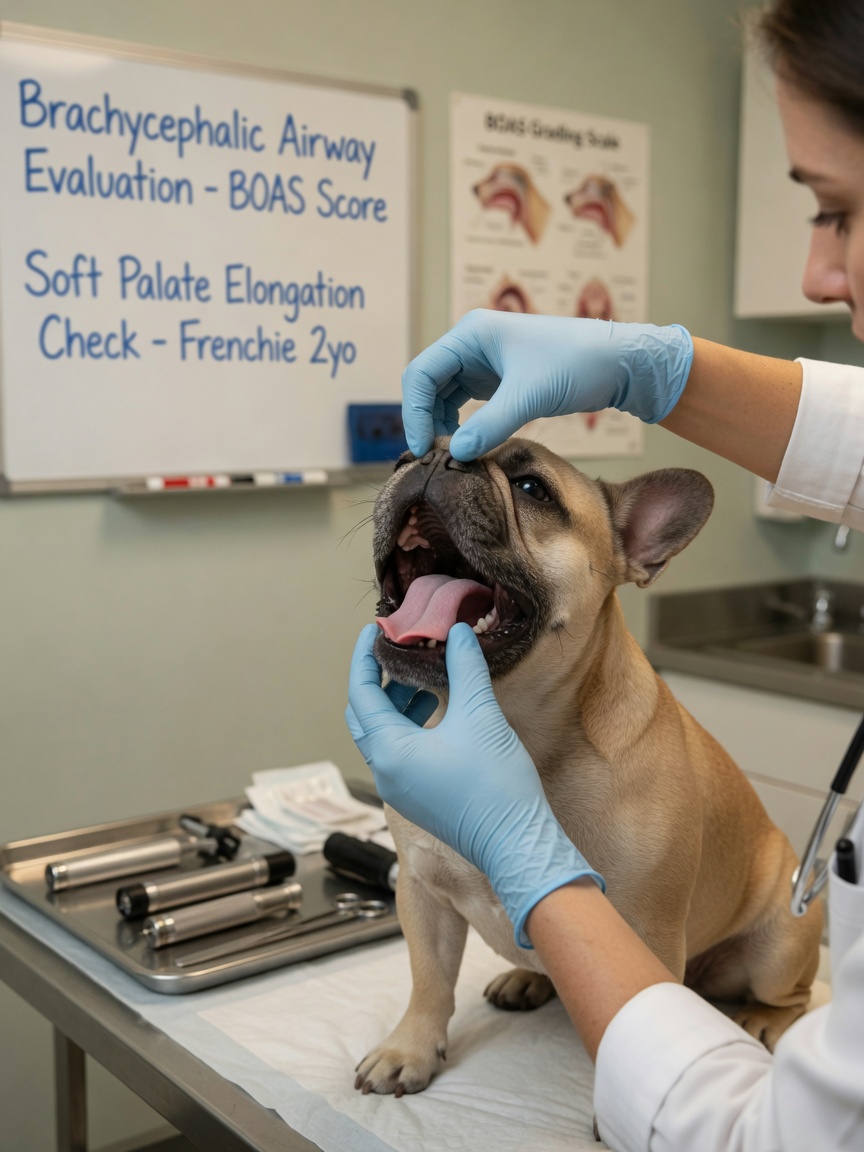
BOAS is an umbrella term for the collection of upper airway abnormalities caused by the breed's shortened skull: stenotic nares (pinched nostrils), an elongated soft palate, a narrow trachea, and everted laryngeal saccules. These structures, individually or in combination, restrict airflow and force the dog to work harder with every breath. Signs include chronic snoring, noisy breathing, exercise intolerance, and in severe cases, cyanosis (blue-tinged gums) and respiratory collapse. Heat and humidity dramatically worsen symptoms because panting — the dog's primary cooling mechanism — is already compromised. A BOAS functional grading system (grades 0–3) used by specialist veterinarians helps guide surgical decision-making. Grade 2 and 3 dogs typically benefit from corrective surgery — widening the nares and shortening the soft palate — which studies show significantly improves exercise tolerance and quality of life.
Spinal Problems: Hemivertebrae and IVDD
The "screw tail" that is a hallmark of the breed is actually a vertebral malformation called hemivertebrae — wedge-shaped vertebrae that fail to develop normally. While isolated hemivertebrae in the tail region are usually harmless, the same malformation can occur throughout the thoracic spine, causing curvature, spinal cord compression, and neurological deficits. Separately, French Bulldogs have chondrodystrophic spines — their intervertebral discs degenerate prematurely, predisposing them to IVDD. Disc material can herniate into the spinal canal, causing sudden pain, weakness, or paralysis. Spinal MRI is the diagnostic gold standard. Mild cases may respond to strict crate rest and anti-inflammatory medication; severe cases require emergency surgical decompression. CT-guided nucleotomy and mini-hemilaminectomy have good outcomes when performed promptly.
Heat Stress and Exercise Intolerance
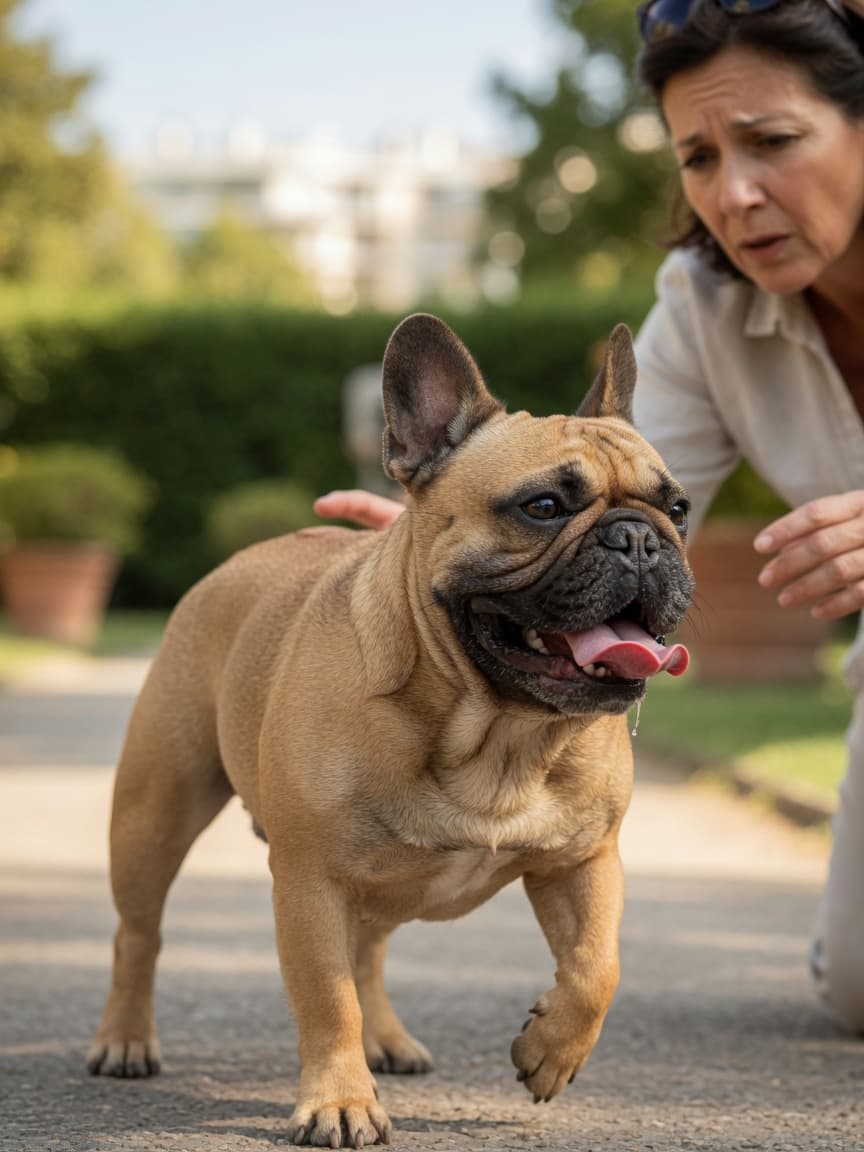
Every French Bulldog owner must understand that this breed cannot self-regulate body temperature effectively. Their compromised airways mean they cannot pant efficiently, and their compact muscle mass generates substantial heat during even moderate exercise. Heatstroke can develop rapidly on warm days, even without vigorous activity. Rectal temperatures above 40.5°C (105°F) constitute a medical emergency. Practical precautions include walking only in early morning or late evening during summer, always carrying water, never leaving dogs in cars, and using cooling mats and paddling pools at home. Air conditioning is not a luxury for a French Bulldog — it is a medical necessity.
Skin Fold Dermatitis and Allergies
The deep facial folds and tail-fold pockets of French Bulldogs trap moisture, debris, and yeast, creating ideal conditions for bacterial and fungal skin infections. Affected areas become red, malodorous, and itchy. Daily fold cleaning with veterinary-approved wipes or dilute chlorhexidine solution prevents most infections. French Bulldogs also have high rates of environmental and food allergies, manifesting as itchy paws, recurrent ear infections, and chronic skin inflammation. Identifying and eliminating allergens — often requiring hydrolysed protein or novel protein elimination diets — can dramatically improve quality of life.
Prevention and Proactive Care
Before purchasing a French Bulldog, request proof of BOAS grading and spinal radiographs for both parents. Choose breeders who participate in the Kennel Club's Assured Breeder scheme or equivalent, which requires health testing. Maintain your dog at a lean body weight — every extra kilogram increases the effort of breathing and puts additional strain on the spine. Regular veterinary checks every six months, rather than annually, are advisable given the breed's vulnerability to progressive conditions.
Recommended Supplements for French Bulldogs
Omega-3 fatty acids from fish oil help modulate the chronic systemic inflammation associated with allergies and early joint degeneration in this breed. A dose of 20 mg/kg EPA+DHA daily is a reasonable starting point. For dogs recovering from spinal surgery or showing early disc disease, vitamin B12 (methylcobalamin) and antioxidants such as vitamin E may support neurological recovery. Probiotic supplements can help manage gut microbiome disruption commonly seen in allergic French Bulldogs on restricted diets.
Some owners report benefits from CBD oil for joint discomfort — always discuss with your vet first and choose a THC-free product like Candid Tails.
For high-quality breed-specific nutrition and supplements, browse the selection at Zooplus — one of Europe's leading pet supply retailers.
Key Takeaways
- BOAS affects the majority of French Bulldogs — surgical correction significantly improves quality of life in grade 2–3 dogs.
- Hemivertebrae and IVDD make spinal problems extremely common; any sudden hindlimb weakness is a veterinary emergency.
- French Bulldogs cannot regulate body temperature effectively — heatstroke prevention is a daily responsibility in warm climates.
- Daily skin fold cleaning prevents the chronic infections that cause significant discomfort and antibiotic overuse.
- Always request parental BOAS grading and spinal X-rays before purchasing a puppy.
References
- Liu NC, Troconis EL, Kalmar L, et al. Conformational risk factors of brachycephalic obstructive airway syndrome (BOAS) in pugs, French bulldogs, and bulldogs. PLoS One. 2017;12(8):e0181928. PMID: 28797074
- De Decker S, Bhatt P, Kyberd P, et al. Prevalence of thoracic vertebral malformations in French bulldogs, English bulldogs, and pugs. Vet Radiol Ultrasound. 2019;60(1):43-54. PMID: 30288797