
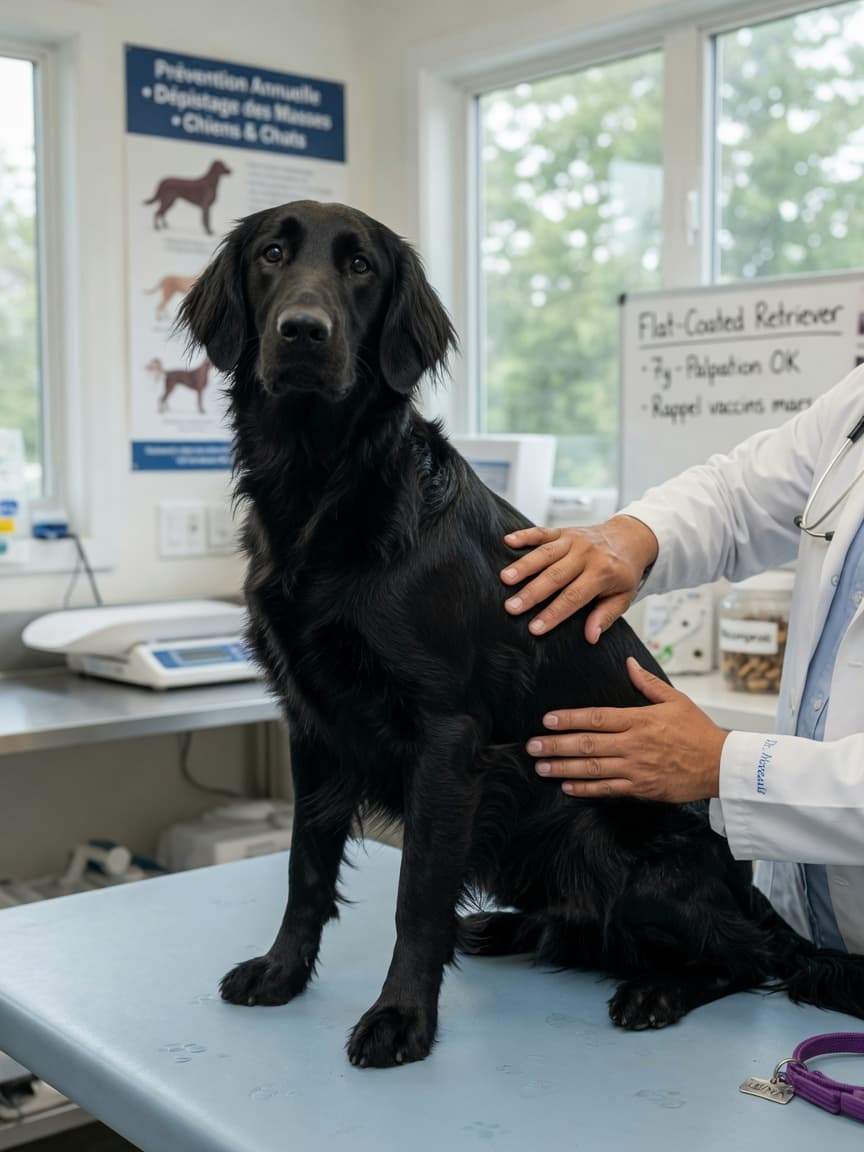
The Shadow Behind the Smile
Flat-Coated Retrievers are famously joyful dogs — breeders often call them "the Peter Pan of the retriever world" for their enduring exuberance. Yet this breed carries a sobering health burden. Studies conducted by the Kennel Club and breed health surveys in both the UK and Scandinavia consistently show cancer as the leading cause of death in Flat-Coated Retrievers, accounting for over 50 per cent of fatalities in some surveys — a rate substantially higher than in most other retriever breeds. Understanding what this means in practice is essential for owners.
Cancer: Prevalence, Types, and Early Detection

The elevated cancer rate in Flat-Coated Retrievers is not confined to one tumour type. Multiple malignancies appear at higher frequency than in the general dog population, which suggests a broad genetic susceptibility rather than a single inherited mutation tied to one cancer type.
Histiocytic Sarcoma
Histiocytic sarcoma is the cancer most strongly associated with this breed. It is an aggressive malignancy arising from histiocytes — immune cells found in skin, joints, and organs. It can affect the spleen, liver, lungs, bone marrow, and soft tissues simultaneously or in rapid sequence. Survival times, even with treatment, are typically measured in weeks to a few months. The speed of progression makes early detection critical, though the disease often remains clinically silent until advanced.
Soft Tissue Sarcomas and Other Malignancies
Beyond histiocytic sarcoma, Flat-Coated Retrievers are at elevated risk for osteosarcoma (bone cancer), mast cell tumours, and haemangiosarcoma. Any new lump, swelling, or unexplained lameness warrants prompt veterinary evaluation — the threshold for investigation should be lower in this breed than in most others.
Practical Monitoring
- Conduct a full body check — including lymph nodes in the neck, armpits, and groin — monthly at home
- Report any new lump to your vet within one to two weeks, without a "wait and see" approach
- Discuss the option of six-monthly health checks from the age of five or six with your veterinary practice
- Any unexplained weight loss, lethargy, or appetite change warrants investigation
Joint Conditions: Hip and Elbow Dysplasia

Like all retrievers, Flat-Coated Retrievers are at risk for developmental joint diseases, particularly hip dysplasia and elbow dysplasia. These conditions arise when the joints develop improperly, causing abnormal wear, chronic inflammation, and eventually osteoarthritis.
Hip Dysplasia
Hip dysplasia involves poor conformation of the hip ball-and-socket joint. Affected dogs may show reduced willingness to exercise, difficulty rising, a characteristic swaying gait, or muscle wasting over the hindquarters. Severity ranges from mild, manageable discomfort to severe joint deterioration requiring surgical intervention. Responsible breeders screen for this condition through formal hip scoring schemes — always request evidence of parental hip scores before purchasing a puppy.
Elbow Dysplasia
Elbow dysplasia encompasses several developmental conditions affecting the elbow joint, most commonly causing front limb lameness in young dogs. Signs often emerge between four and twelve months of age. Elbow scoring of breeding stock, alongside hip scoring, is the primary tool for reducing prevalence over generations.
Managing Joint Disease
- Maintain lean body weight throughout life — excess weight significantly accelerates joint deterioration
- Provide regular, low-impact exercise such as controlled walking and swimming
- Discuss the evidence base for joint supplements — glucosamine and chondroitin have variable evidence, but omega-3 fatty acids have reasonable support for reducing joint inflammation
- Pain management and physiotherapy can substantially improve quality of life in dogs with established arthritis
Lifespan and Responsible Breeding
The median lifespan of Flat-Coated Retrievers in UK surveys is approximately eight to ten years — shorter than comparable retriever breeds, primarily due to cancer mortality. This places significant responsibility on breeders to select against lines with high cancer incidence. As an owner, supporting breeders who participate in health recording schemes and who are transparent about cause of death in their lines is one of the most meaningful contributions you can make to the breed's long-term health.
What Owners Should Prioritise
- Choose a breeder who health-tests for hip and elbow dysplasia and records health outcomes honestly
- Establish a relationship with a vet who is familiar with the breed's cancer profile
- Begin more frequent health checks as the dog moves into middle age, from around five years
- Act quickly on any physical change — delayed investigation is a particular risk in a breed prone to fast-moving malignancies
- Keep your dog lean, exercised, and engaged — overall resilience matters
- Consult your vet before making decisions about cancer screening tools or prophylactic measures