
Removing the Problem at Its Source
It may seem counterintuitive to remove part of a joint rather than repair it, yet femoral head and neck excision — commonly abbreviated to FHNE or FHO — has been resolving canine hip pain for decades. Rather than reconstructing a damaged hip, surgeons remove the femoral head entirely, eliminating the bone-on-bone contact that causes pain. A false joint, supported by surrounding muscle and fibrous tissue, develops in its place. For the right patient, the results are remarkable.
Understanding the Anatomy and the Problem
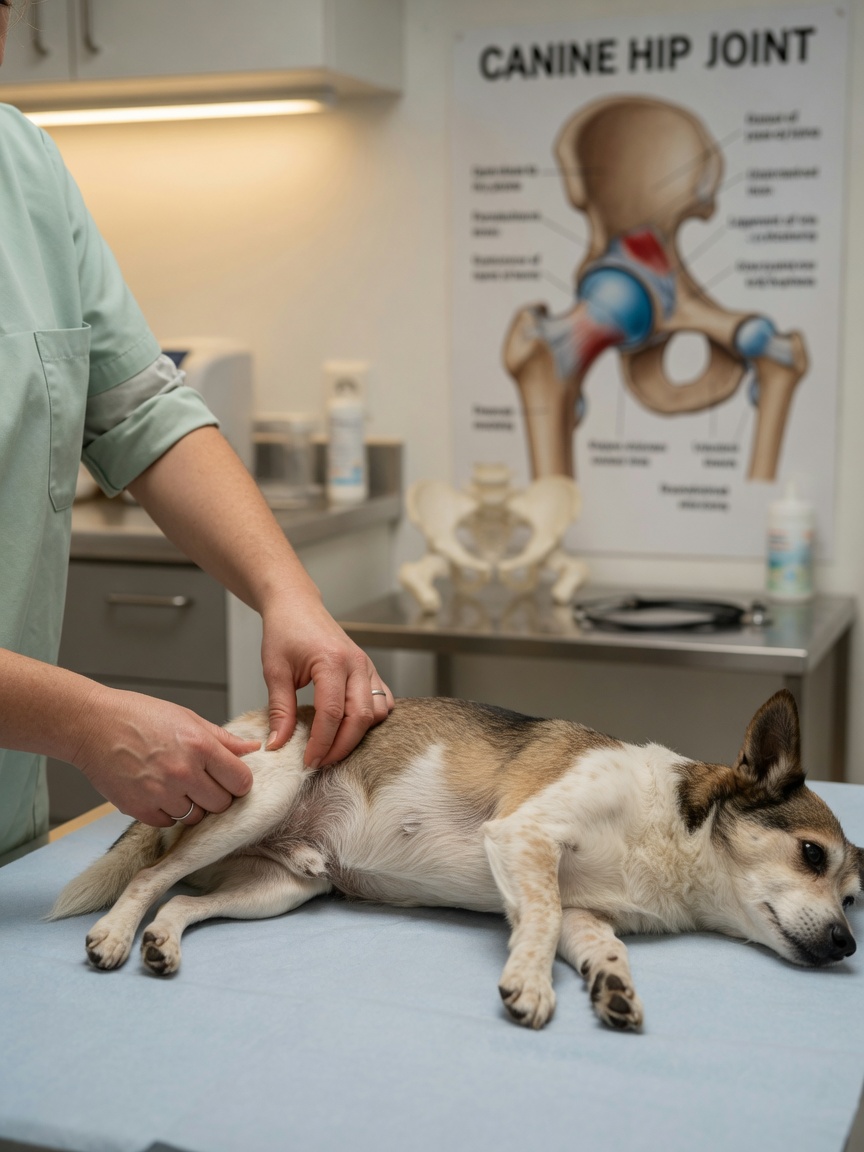
The hip is a ball-and-socket joint. The ball — the femoral head — sits at the top of the thigh bone and articulates with the acetabulum, the cup-shaped socket in the pelvis. When this joint is affected by severe dysplasia, osteoarthritis, fracture, avascular necrosis, or chronic dislocation, the cartilage and bone surfaces degrade. Movement becomes painful, and in advanced cases, every step involves bone grinding against bone.
FHNE addresses this by removing the femoral head and neck entirely. Without the ball, there is no bone-on-bone contact. The body responds by laying down fibrous tissue that forms a pseudoarthrosis — a false joint — which, supported by well-developed surrounding musculature, allows surprisingly functional limb use.
When FHNE Is the Right Choice
FHNE is recommended when the hip joint is too damaged or structurally compromised to be salvaged, and when total hip replacement is not appropriate or accessible. Common indications include severe hip dysplasia with end-stage osteoarthritis, femoral head fractures that cannot be repaired internally, avascular necrosis of the femoral head (Legg-Calvé-Perthes disease in small breeds), chronic hip dislocation unresponsive to closed reduction, and failed previous hip surgeries.
Size and Weight Considerations
FHNE tends to produce the best functional outcomes in dogs under twenty kilograms. In smaller and lighter dogs, muscle strength relative to body weight is sufficient to support the pseudoarthrosis effectively. In larger, heavier breeds the false joint must bear more load, and outcomes can be less predictable — though FHNE is still performed in larger dogs when total hip replacement is not an option, and many achieve acceptable function.
Activity Level and Age
Younger, more active dogs with good muscle mass are generally better candidates than elderly dogs with significant muscle atrophy. Pre-surgical physiotherapy to build muscle is sometimes recommended to improve post-operative outcomes in dogs with notable wasting.
The Surgical Procedure
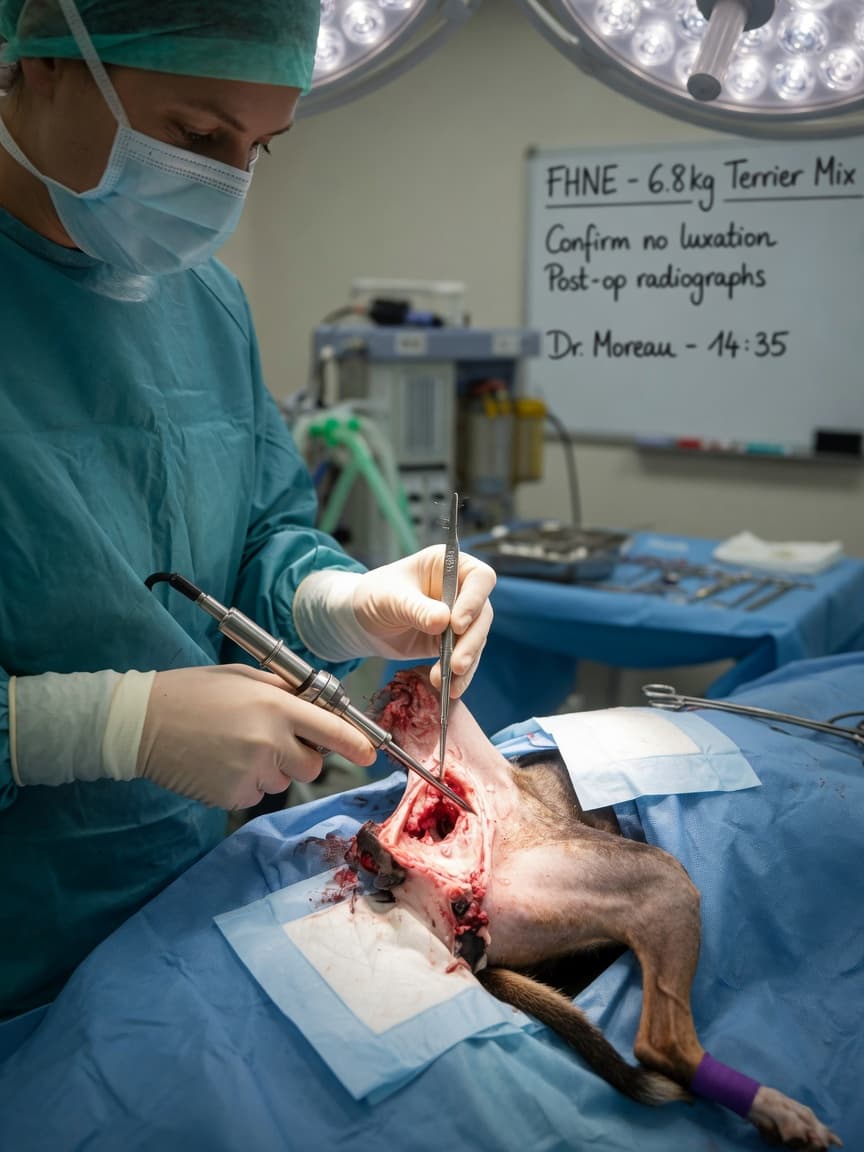
FHNE is performed under general anaesthesia and is technically less demanding than total hip replacement, making it available at many general veterinary practices rather than exclusively at specialist referral centres. The surgeon approaches the hip joint, dislocates the femoral head, and uses an oscillating saw or osteotome to remove the femoral head and neck at the appropriate level. The cut surface is smoothed to eliminate sharp edges. The joint capsule and surrounding soft tissues are closed carefully, as the quality of this closure influences early comfort and recovery.
Operating time is typically under one hour, and the procedure can be performed bilaterally — on both hips — either simultaneously or in staged operations a few weeks apart.
Recovery and Rehabilitation
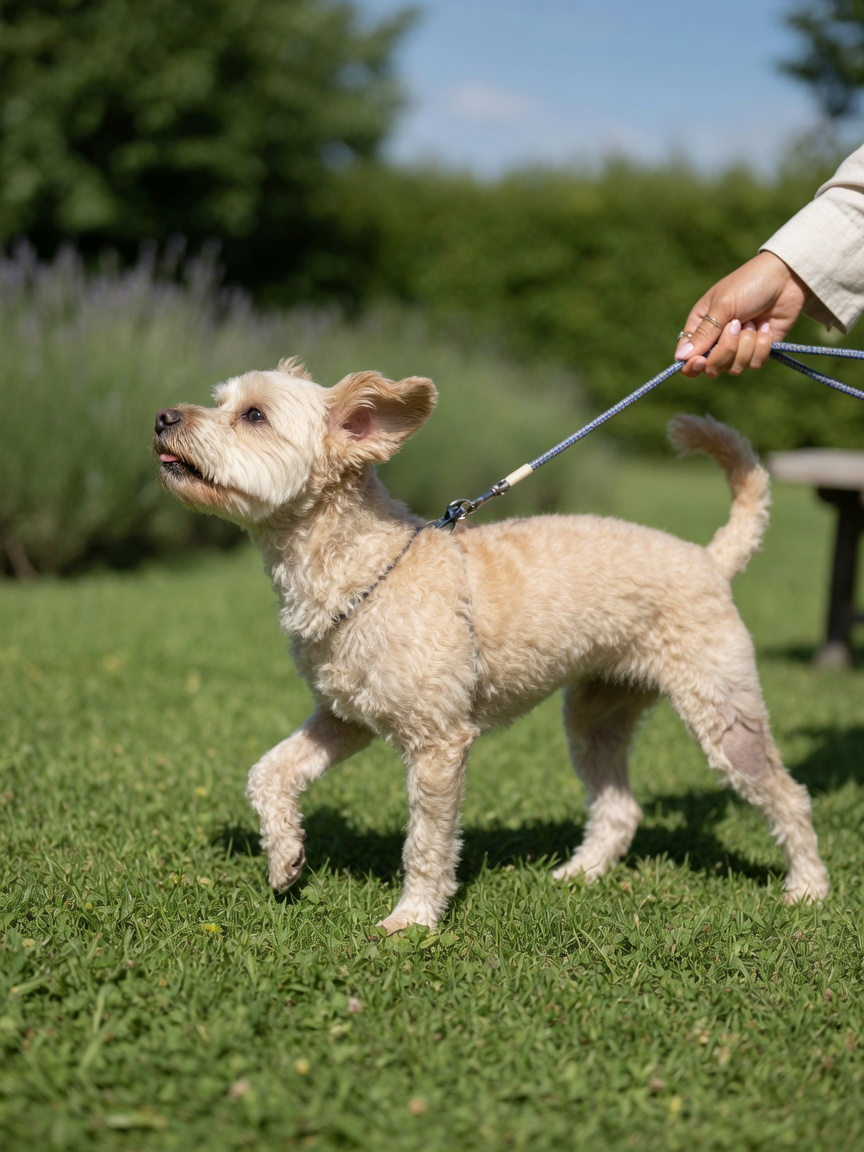
Recovery from FHNE differs from total hip replacement in one critical respect: early, controlled use of the limb is actively encouraged rather than strictly restricted. Movement promotes the formation of a functional pseudoarthrosis and prevents muscle wasting.
The First Two Weeks
Pain is managed with prescribed analgesics. Short, frequent lead walks begin almost immediately, and owners are encouraged to gently manipulate the limb to maintain range of motion. Passive physiotherapy exercises performed at home — gentle flexion and extension of the hip — are typically taught by the veterinary team before discharge.
Weeks Two to Eight
Walk duration increases progressively. Hydrotherapy, particularly underwater treadmill work, is highly beneficial during this phase as it allows the dog to use the limb without full bodyweight loading. Muscle development is the priority: the better the surrounding musculature, the more stable and comfortable the false joint will become.
Long-Term Outcomes
Most small to medium dogs achieve good to excellent limb function by three to four months. Some dogs show a mild residual change in gait — a slightly shorter stride on the operated side — but this does not typically cause discomfort or limit daily activity. Return to pain-free, functional movement is the norm rather than the exception in well-managed patients.
Comparing FHNE to Total Hip Replacement
Total hip replacement generally produces superior biomechanical outcomes, particularly in larger dogs, but it carries higher cost, longer restricted recovery, and greater surgical complexity. FHNE is more accessible, significantly less expensive, and still delivers a good quality of life for appropriately selected patients. It is also the preferred salvage procedure when THR fails or is complicated by infection.
The decision between the two approaches should be made in consultation with a veterinary orthopaedic surgeon who can assess your dog's individual anatomy, size, muscle condition, and the severity of the joint disease.
What Owners Should Know Before Surgery
- FHNE removes the femoral head entirely, allowing a pain-free false joint to form through rehabilitation.
- It is most effective in dogs under twenty kilograms but can benefit larger dogs when alternatives are unsuitable.
- Early, active physiotherapy is essential — the outcome depends heavily on muscle development post-surgery.
- Hydrotherapy significantly improves recovery speed and quality of movement.
- Most dogs return to comfortable, functional activity within three to four months.
- Always seek the opinion of a veterinary orthopaedic specialist to determine whether FHNE or an alternative procedure is most appropriate for your dog.