
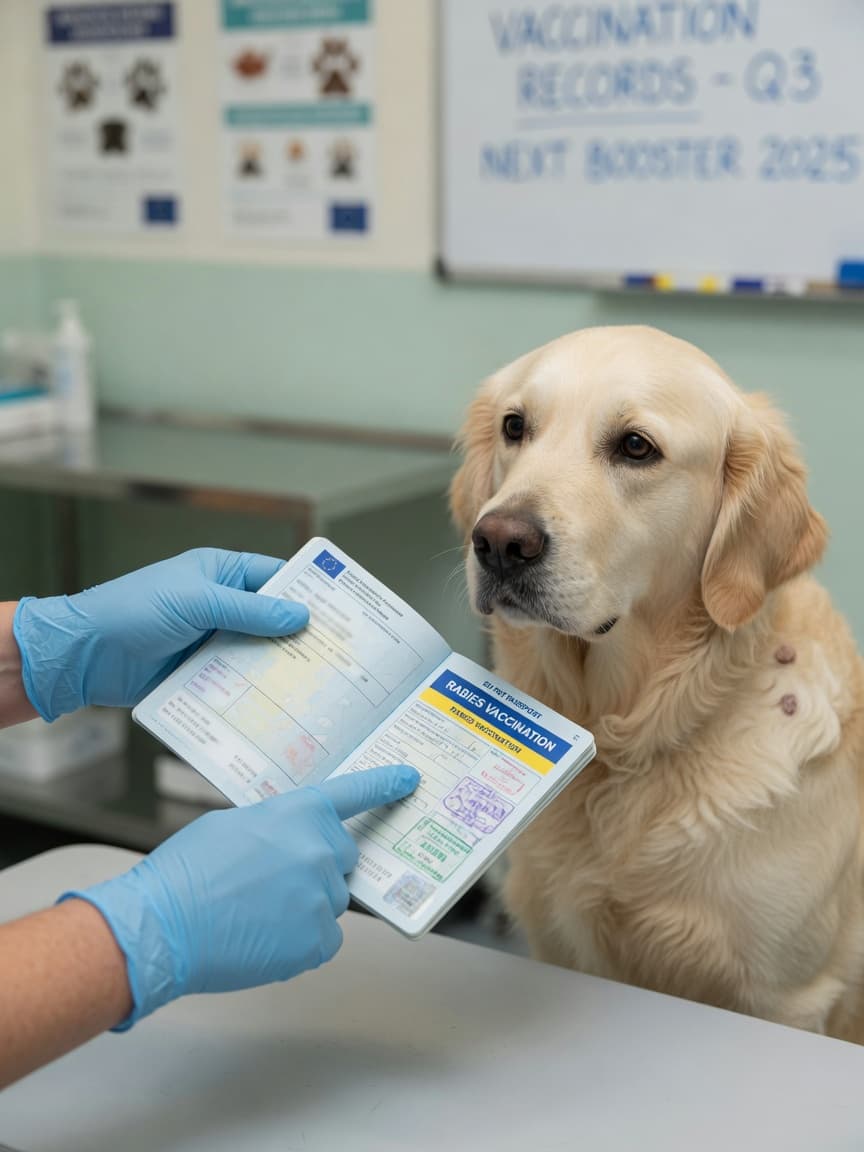
EU Pet Passport: How It Works, Where to Get It & What It Costs
If you've ever tried to research travelling with a pet across Europe, you've almost certainly encountered the term "EU Pet Passport." For millions of pet owners across the continent, this small blue booklet is the gateway to stress-free cross-border travel with their animals. Whether you're relocating from Germany to Portugal, spending a summer in the south of France, or planning a road trip through Spain and the Netherlands, understanding this document is essential.
The EU Pet Passport system was established under EU Regulation 576/2013, which harmonised rules for the non-commercial movement of pets across member states. The system covers dogs, cats, and ferrets — the three species recognised under EU pet travel legislation.
What Is the EU Pet Passport?
The EU Pet Passport is a standardised booklet issued by an authorised veterinarian in any EU member state. It functions as a travel document for your pet, recording:
- The animal's microchip number (ISO standard 11784/11785)
- Rabies vaccination dates and validity periods
- Owner identification and contact details
- Other health treatments as required (e.g., tapeworm treatment for dogs entering certain countries)
- The issuing vet's details and stamp
The passport is accepted across all 27 EU member states, plus Iceland, Liechtenstein, Norway, and Switzerland under bilateral agreements. Once issued, the same passport remains valid for the animal's lifetime, with veterinarians adding updated vaccination records as needed.
Who Can Issue a Pet Passport?
Only authorised veterinarians can issue an EU Pet Passport. In most countries, your regular vet will be authorised to do so — though it's worth confirming when you call to book an appointment. The vet must verify that your pet has a readable microchip before the passport can be issued. If your pet is not yet microchipped, the chip must be implanted before (or at the same time as) the rabies vaccination — never after, as the sequence matters for legal validity.
According to PDSA guidance, the microchip must comply with ISO standard 11784 or 11785. Many vets in France, Spain, Germany, and the Netherlands use compatible readers as a matter of routine, but it's wise to confirm compatibility if you have a non-standard chip.
The Rabies Vaccination Requirement
A valid rabies vaccination is the cornerstone of the EU Pet Passport. Your pet must be vaccinated against rabies by an authorised vet, and the vaccination must be recorded in the passport with the date administered, the batch number, and the vaccine brand. Importantly:
- The vaccination is only valid 21 days after it is given (for a first vaccination)
- Booster vaccinations are valid immediately, provided they are given before the previous one expires
- If a vaccination lapses, the 21-day waiting period resets
This 21-day waiting period is non-negotiable. If you're planning a trip in six weeks, book your vet appointment as soon as possible to ensure your pet is legally ready to travel.
How Much Does It Cost?
Costs vary by country and by veterinary practice, but as a general guide:
- Spain: €15–€30 for the passport itself; rabies vaccination €20–€40
- France: €20–€40 for the passport; vaccination €25–€50
- Germany: €10–€25 for the passport; vaccination €25–€45
- Netherlands: €15–€35 for the passport; vaccination €30–€55
- UK: The EU Pet Passport is no longer issued in Great Britain post-Brexit (see our dedicated article on UK pet travel)
Many vets offer a combined "passport + vaccination" appointment, which can be slightly cheaper than booking separately. Always ask for a full cost estimate before the appointment.
Additional Requirements Depending on Destination
While the rabies vaccination covers most EU travel, certain destinations or circumstances require extra documentation:
- Tapeworm treatment for dogs: Required for entry into Ireland, Finland, Norway, Malta, and Northern Ireland. Must be administered by a vet 1–5 days before entry and recorded in the passport.
- Echinococcus treatment: Some countries request additional parasite documentation for dogs coming from high-risk regions. ESCCAP (European Scientific Counsel Companion Animal Parasites) publishes country-specific parasite risk maps and treatment guidelines that vets use.
- Health certificates: Some non-EU destinations require an additional official health certificate alongside (or instead of) the passport.
Keeping the Passport Up to Date
A pet passport is only as good as the information recorded in it. Each time your pet receives a rabies booster, the vet must stamp and sign the relevant section. Travelling with an expired rabies vaccination record — even if your pet was vaccinated — can result in your animal being denied entry or placed in quarantine.
FEDIAF and European veterinary bodies recommend scheduling annual vet check-ups, which conveniently align with most rabies booster schedules in countries requiring annual vaccination.
Key Takeaways
- The EU Pet Passport is mandatory for travelling with dogs, cats, or ferrets across EU member states.
- It must be issued by an authorised vet and requires a microchipped, rabies-vaccinated pet.
- There is a 21-day wait after a first rabies vaccination before the passport is valid for travel.
- Costs typically range from €30–€90 total across EU countries for passport + vaccination.
- Some countries require additional treatments (tapeworm, Echinococcus) — always check the destination's specific rules.
- Keep vaccination records updated — an expired entry can mean quarantine at the border.
Recommended Gear for EU Pet Travel
Once your pet's paperwork is sorted, make sure they travel comfortably. A well-ventilated carrier, a secure harness for the car, and a familiar blanket can make all the difference on a long journey across Europe.
Shop on Zooplus → for IATA-approved carriers, travel water bottles, and calming accessories designed for European road and rail travel.