ForPetsHealthcare
Dogs

How to Introduce a New Cat to Your Existing Cat

By Julia WrenfieldUpdated August 4, 20261 min read
Evidence-based · Sources checked
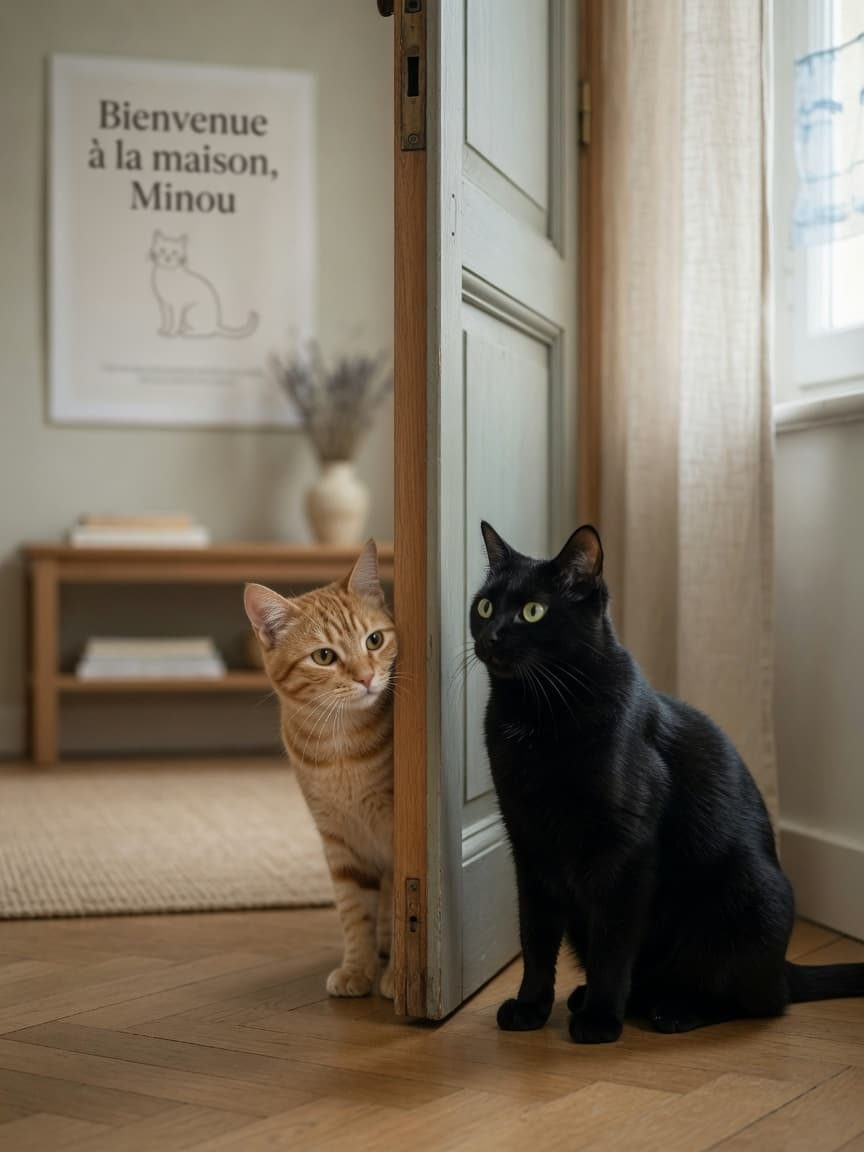
{"en": "Two cats separated by a door, one sniffing underneath as part of introduction process", "es": "Dos gatos separados por una puerta, uno oliendo debajo como parte del proceso de presentaci\u00f3n", "fr": "Deux chats s\u00e9par\u00e9s par une porte, l'un renifle dessous lors de l'introduction", "de": "Zwei Katzen durch eine T\u00fcr getrennt, eine schn\u00fcffelt darunter w\u00e4hrend der Einf\u00fchrung", "nl": "Twee katten gescheiden door een deur, een snuffelt eronder tijdens de introductie", "pt": "Dois gatos separados por uma porta, um farejando embaixo durante o processo de apresenta\u00e7\u00e3o", "it": "Due gatti separati da una porta, uno che annusa sotto durante il processo di introduzione"}
A slow, structured introduction gives both cats the best chance of coexistence.

Step 1: Separate Rooms (Days 1-7)

New cat gets own room with food, water, litter, bedding. Cats adjust to scent under the door.

Step 2: Scent Swapping (Days 3-7)
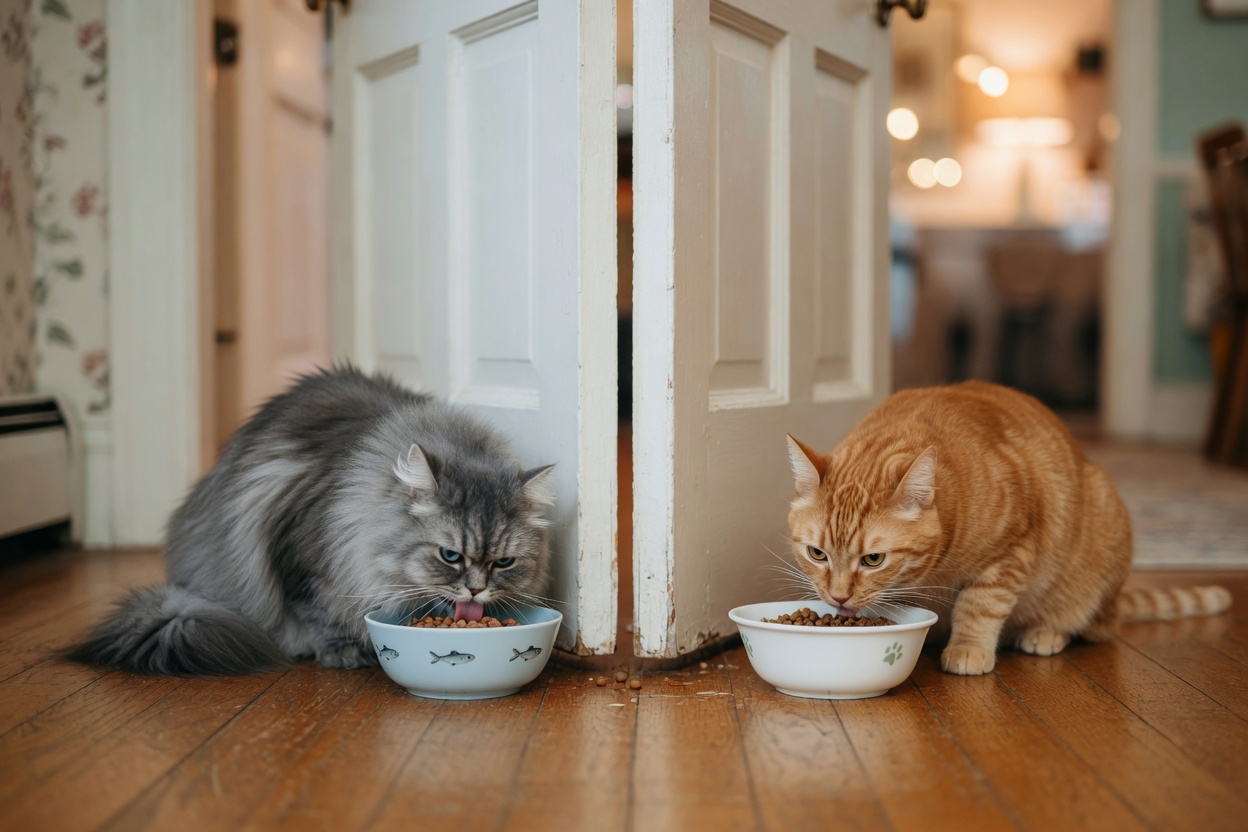
Two cats eating from bowls on opposite sides of a closed door during scent swapping

Swap bedding. Feed both cats on either side of the closed door.

Step 3: Visual Introduction (Days 7-14)

Open door a crack or use baby gate. Short sessions with feeding nearby.

Step 4: Supervised Time Together

Once both cats show calm curiosity, allow short supervised sessions with hiding spots available.

#introducing new cat to existing cat#cat health#feline nutrition#forpetshealthcare

Sources & further reading

This article is based on peer-reviewed veterinary research and reputable animal-health sources. Explore the underlying science in our Research Library.

Related articles

The 19 Best Animal Shelters in the Netherlands (2026)

the Netherlands's animal shelters, rescue associations and refuges save thousands of dogs, cats and other animals every year, almost always on tiny budgets and volunteer power. To build the most objective ranking possible, we analysed public Google reviews across more than 56 registered animal-prote…

Read more →

The 25 Best Animal Shelters in Italy (2026)

Italy's animal shelters, rescue associations and refuges save thousands of dogs, cats and other animals every year, almost always on tiny budgets and volunteer power. To build the most objective ranking possible, we analysed public Google reviews across more than 121 registered animal-protection org…

Read more →

The 48 Best Animal Shelters in Germany (2026)

Germany's animal shelters, rescue associations and refuges save thousands of dogs, cats and other animals every year, almost always on tiny budgets and volunteer power. To build the most objective ranking possible, we analysed public Google reviews across more than 152 registered animal-protection o…

Read more →

The 32 Best Animal Shelters in France (2026)

France's animal shelters, rescue associations and refuges save thousands of dogs, cats and other animals every year, almost always on tiny budgets and volunteer power. To build the most objective ranking possible, we analysed public Google reviews across more than 89 registered animal-protection org…

Read more →

The 8 Best Animal Shelters in Portugal (2026)

Portugal's animal shelters, rescue associations and municipal centros de recolha save thousands of dogs, cats and other animals every year, almost always on tiny budgets and volunteer power. To build the most objective ranking possible, we analysed public Google reviews across more than 86 registere…

Read more →

Sphynx Cat Skin care and hygiene: Causes, Signs & Care

Sphynx cats have little to no coat, which means the skin itself takes on jobs that fur normally does — insulation, oil dispersal, and barrier protection — leaving it prone to greasiness, blocked pores, fungal infections, and sunburn. The single most important thing to know is that a Sphynx's skin ne…

Read more →
Disclaimer:This article is for informational purposes only and does not constitute veterinary advice. Always consult a qualified veterinarian for your pet's health concerns.

Free newsletter

Pet health tips, straight to your inbox

Weekly science-backed advice for dog & cat owners. No spam, unsubscribe anytime.