
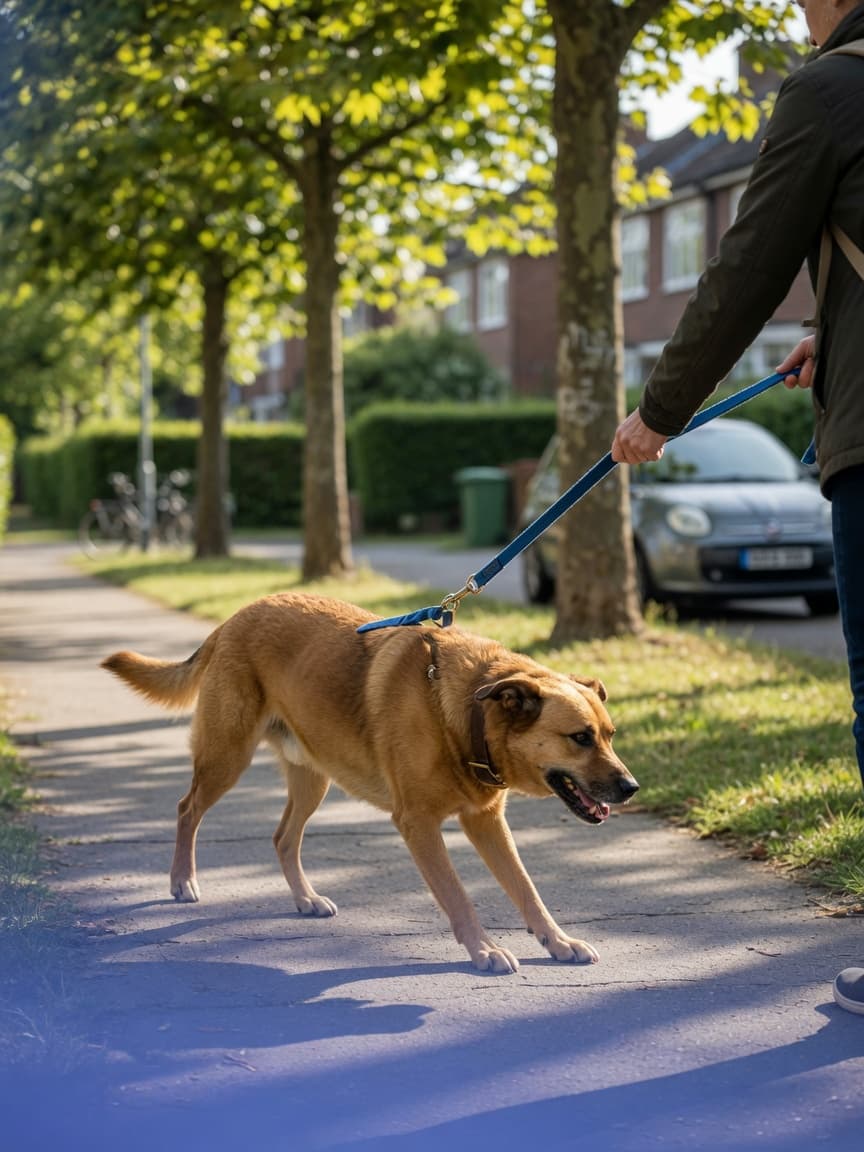
Why Does My Dog Pull on the Lead?
If your dog charges ahead the moment you clip on the lead, you are far from alone. Pulling is one of the most frequently cited behaviour problems among UK dog owners, and it is entirely understandable when you consider things from your dog's perspective. Dogs naturally move at a faster pace than humans, and the world outside is rich with exciting smells, sights, and sounds. Every time your dog has pulled and you have kept walking, the behaviour has been rewarded — the dog got where it wanted to go. That simple history of reinforcement is why pulling becomes so entrenched so quickly.
Understanding this is the first step. Pulling is not dominance, stubbornness, or spite. It is a behaviour that has worked reliably, and your job is to make walking calmly at your side an equally — or more — rewarding option.
Equipment: Harnesses vs Collars
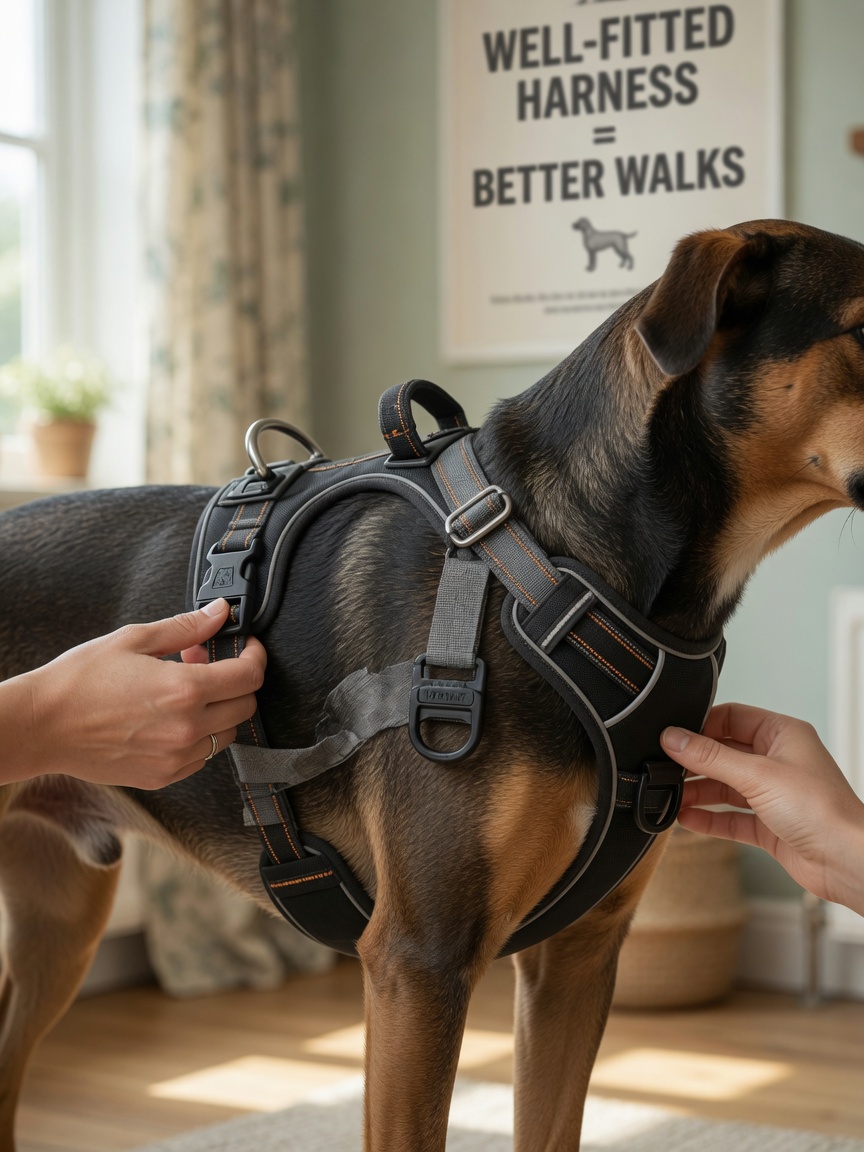
Before you begin training, it is worth reviewing the equipment you are using. A standard flat collar places pressure directly on the throat and trachea when a dog pulls, which can cause discomfort or injury over time, particularly in small breeds or dogs prone to respiratory issues. Many trainers and veterinary professionals recommend a well-fitted, front-clip harness as a safer starting point.
A front-clip harness redirects your dog's forward momentum gently back towards you when they pull, without causing pain. This does not replace training — it is a management tool — but it can make the process far more manageable in the early stages. Look for a harness with two attachment points (front and back) for versatility. Zooplus stocks a wide range of harnesses from trusted brands such as Julius-K9 and Ruffwear, with sizing guides to help you find the right fit for your dog's breed and build.
Avoid choke chains, prong collars, and slip leads used as a corrective tool. These devices work through discomfort or pain, which can increase anxiety and, in some cases, make behaviour problems worse.
Core Training Methods for Loose-Lead Walking
The Stop-and-Wait Method
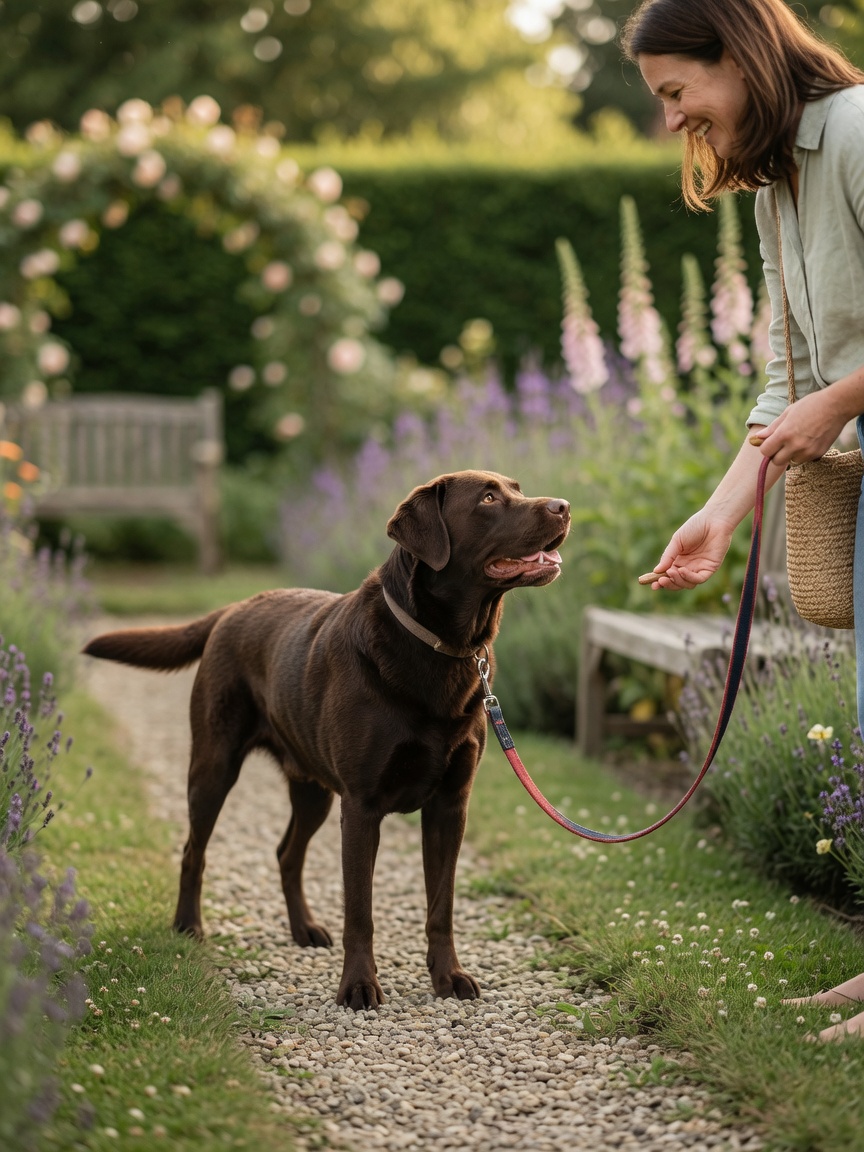
This is the foundation of loose-lead training and is endorsed by organisations such as the Association of Pet Behaviour Counsellors (APBC). The principle is simple: movement only happens when the lead is loose. The moment your dog begins to pull and the lead goes taut, you stop completely. Stand still and wait. When your dog checks in with you — even glances back — mark the moment with a calm "yes" and take a step forward as a reward. If they pull again, stop again.
Consistency is everything here. Every single person who walks the dog must apply the same rule. One walk where pulling is allowed undoes significant progress.
Direction Changes
A variation that many dogs respond to well involves changing direction the moment the lead tightens. When your dog pulls ahead, calmly turn and walk the other way, calling your dog's name in a cheerful tone. Reward generously when they catch up and walk beside you. This teaches your dog that staying close to you is what keeps the walk moving in an interesting direction.
Reward Positioning
Where you deliver the reward matters enormously. If your dog pulls to the left and you toss a treat ahead of them, you have inadvertently rewarded the pulling position. Instead, deliver treats directly to your hip — the position you want your dog to occupy. Use a treat pouch so rewards are fast and consistent. Build up duration gradually: one step in position, then two, then five, then ten before rewarding.
Capturing Calm Walking
Watch for moments when your dog naturally walks at your pace with a loose lead and reward them immediately. Dogs learn quickly from what is reinforced in the moment, and catching good behaviour as it happens is one of the most powerful tools in your training toolkit.
Building Up Gradually
Do not begin loose-lead training on a busy high street. Start in a low-distraction environment — your garden or a quiet car park — and gradually increase the level of distraction as your dog improves. If your dog struggles at any stage, go back a step. Training should always feel achievable for the dog.
Keep early training sessions short: five to ten minutes is plenty. Dogs learn better in short, frequent sessions than in long, exhausting ones.
Managing High-Arousal Situations
Some dogs pull intensely at the beginning of a walk due to pent-up energy. Consider a brief off-lead play session in the garden before heading out, or allow a sniff-focused section of the walk at the start where lead pressure is less of a concern. Once your dog has burned off some energy, formal loose-lead practice tends to be far more productive.
When to Consult a Behaviourist
If your dog is pulling so hard that walks have become dangerous — if you have been pulled over, if your dog lunges at triggers with intensity, or if the pulling is accompanied by anxiety, barking, or reactivity — it is time to seek professional support. Look for a practitioner accredited by the APBC, COAPE, or the International Association of Animal Behavior Consultants (IAABC). A qualified behaviourist will assess your dog as an individual and put together a tailored plan. Your vet may also be able to rule out any underlying physical discomfort that could be contributing to the behaviour.
Loose-lead walking is a skill that takes time to build. With patience, consistency, and the right equipment, most dogs make excellent progress. Celebrate the small wins along the way — they add up.