
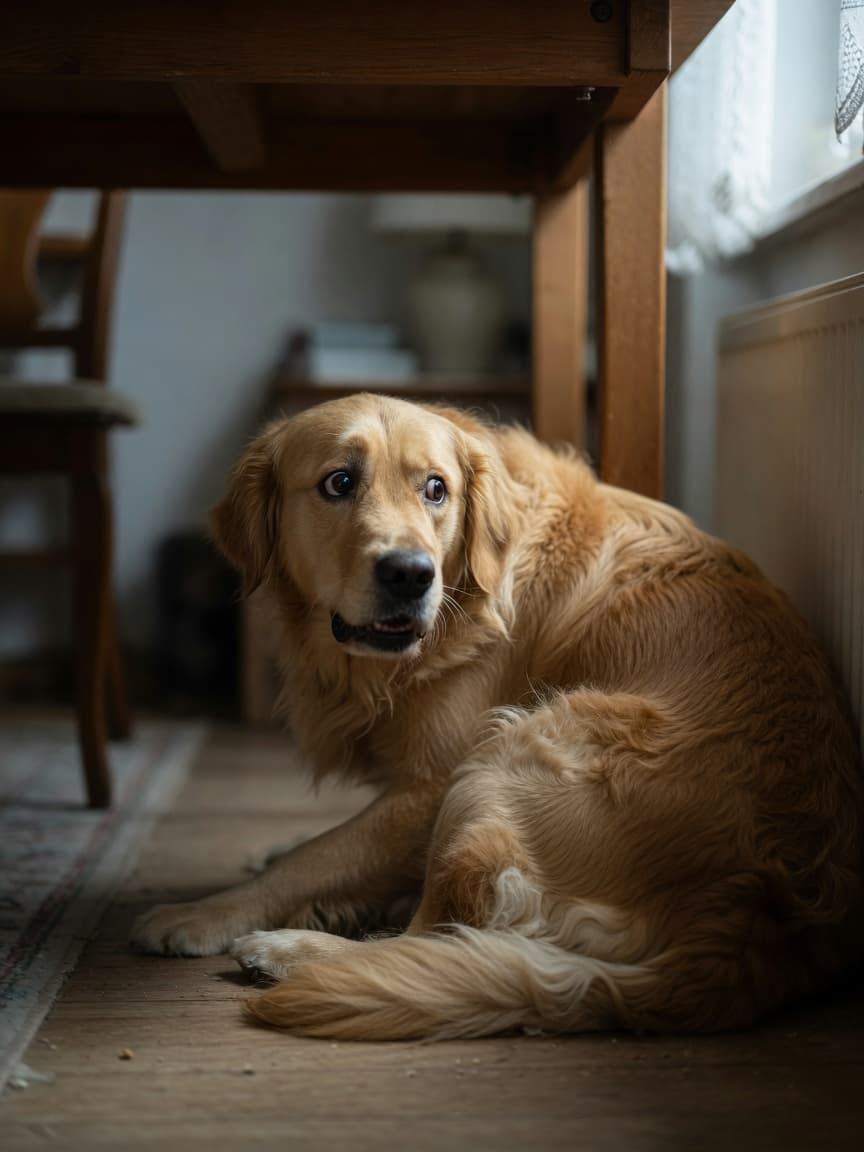
What Is Noise Phobia in Dogs?
Many dogs become anxious around loud noises, but noise phobia is far more than a simple startle response. It is a clinical condition characterised by an extreme, disproportionate fear reaction to specific sounds — most commonly fireworks, thunderstorms, gunshots, and traffic. The World Small Animal Veterinary Association (WSAVA) recognises noise phobia as a significant welfare concern, and the British Small Animal Veterinary Association (BSAVA) recommends that it be treated as a medical issue rather than a behavioural quirk to be dismissed.
Unlike a mild fear that passes quickly, noise phobia can cause profound distress and worsen over time if left untreated. Understanding the difference between fear and phobia — and acting promptly — makes a real difference to your dog's quality of life.
Signs of Noise Phobia
Noise phobia can manifest in a wide range of behaviours. Some dogs show obvious signs of distress; others may exhibit subtler signals that are easy to miss. Common signs include:
- Panting and drooling excessively
- Trembling or shaking uncontrollably
- Hiding under furniture or in confined spaces
- Destructive behaviour — scratching at doors, chewing furniture
- Vocalising — barking, whining, or howling persistently
- Attempting to escape the home or garden
- Loss of bladder or bowel control
- Refusing to eat or drink
- Pacing and inability to settle
If your dog displays several of these signs during noisy events, speak to your vet. Early intervention is far more effective than waiting until the phobia becomes severe.
Short-Term Management: Creating a Safe Environment
During a noise event, your immediate priority is to help your dog feel as safe as possible. Never punish a dog for showing fear — this will only worsen anxiety and damage your relationship.
Provide a Safe Space
Allow your dog access to a self-chosen retreat — under a bed, inside a wardrobe, or in a covered crate. Never force them out of their hiding spot. You can enhance the safe space by lining it with familiar-smelling bedding and covering it with a thick blanket to muffle sound. Some owners create a purpose-built den well in advance of bonfire season so the dog associates it with comfort.
Anxiety Wraps and ThunderShirts
Anxiety wraps apply gentle, constant pressure to the dog's torso, similar to the calming effect of swaddling. ThunderShirt is a well-known brand that many owners find helpful. Results vary between individual dogs, but they are safe to use and worth trying as part of a broader management plan.
Adaptil (DAP) Diffuser and Products
Adaptil — also known as Dog Appeasing Pheromone (DAP) — is a synthetic version of the pheromone produced by nursing mothers to calm their puppies. It is available as a plug-in diffuser, collar, and spray. Plug the diffuser in well before the anticipated noise event — ideally two weeks in advance — to allow pheromone levels to build up in the home. Adaptil products are available from Zooplus and from most veterinary practices. The BSAVA supports the use of pheromone products as part of a multimodal approach to noise phobia management.
Practical Tips During a Noise Event
- Close curtains and windows to reduce both sound and flashes of light
- Play calming music or white noise at a low level to mask sudden sounds
- Stay calm yourself — dogs are highly attuned to their owner's emotional state
- Offer food-stuffed toys or long-lasting chews as a distraction, if the dog is willing to engage
- Do not force your dog to confront the noise — this can cause further trauma
Long-Term Treatment: Desensitisation and Counter-Conditioning
While short-term measures provide relief during a noise event, they do not address the underlying phobia. The gold standard long-term treatment is a structured programme of desensitisation and counter-conditioning, ideally designed by a qualified behaviourist.
Desensitisation involves gradually and systematically exposing your dog to recordings of the feared sounds at a very low volume — below the threshold that triggers a fear response. Over time, the volume is very slowly increased. Dogs Trust has developed a free sound therapy programme (available on their website) specifically designed for this purpose, using high-quality recordings of fireworks, thunder, and other common triggers.
Counter-conditioning pairs the feared sound with something the dog finds highly rewarding — usually food. The goal is to change the dog's emotional response from fear to positive anticipation. This process takes weeks or months of consistent, patient work and should never be rushed.
Medication Options
For dogs with moderate to severe noise phobia, behavioural modification alone may not be sufficient. Your vet can discuss a range of prescription options:
- Sileo (dexmedetomidine oromucosal gel): A licensed veterinary medication specifically for noise aversion in dogs. Applied to the gum before a noise event, it reduces anxiety without causing heavy sedation.
- Acepromazine: A sedative sometimes used historically, though it is no longer considered best practice for noise phobia — it sedates the body but does not reduce fear, meaning the dog remains mentally distressed while physically unable to move. Discuss this with your vet.
- Longer-term anxiolytics: For dogs with generalised anxiety, your vet may prescribe daily medication such as SSRIs or tricyclic antidepressants to reduce the overall anxiety baseline.
Never administer human anxiety medication to your dog — many are toxic. Always consult your vet before using any supplement or over-the-counter product.
Referral to a Qualified Behaviourist
If your dog's noise phobia is severe or not improving with the measures above, ask your vet for a referral to a clinical animal behaviourist. Look for membership of the Association of Pet Behaviour Counsellors (APBC) or the Centre of Applied Pet Ethology (COAPE) — both organisations maintain registers of qualified professionals who use evidence-based, force-free methods.
When to Contact a Vet or Emergency Service
If your dog injures themselves attempting to escape, collapses, or shows signs of severe physical distress during a noise event, contact your vet or an emergency veterinary service immediately. The Blue Cross and PDSA offer advice and, in some cases, emergency treatment for those who cannot afford private veterinary care. Save the number of your nearest out-of-hours emergency vet in your phone before bonfire season begins.
Noise phobia is a treatable condition. With patience, the right support, and professional guidance, the vast majority of dogs show meaningful improvement.