
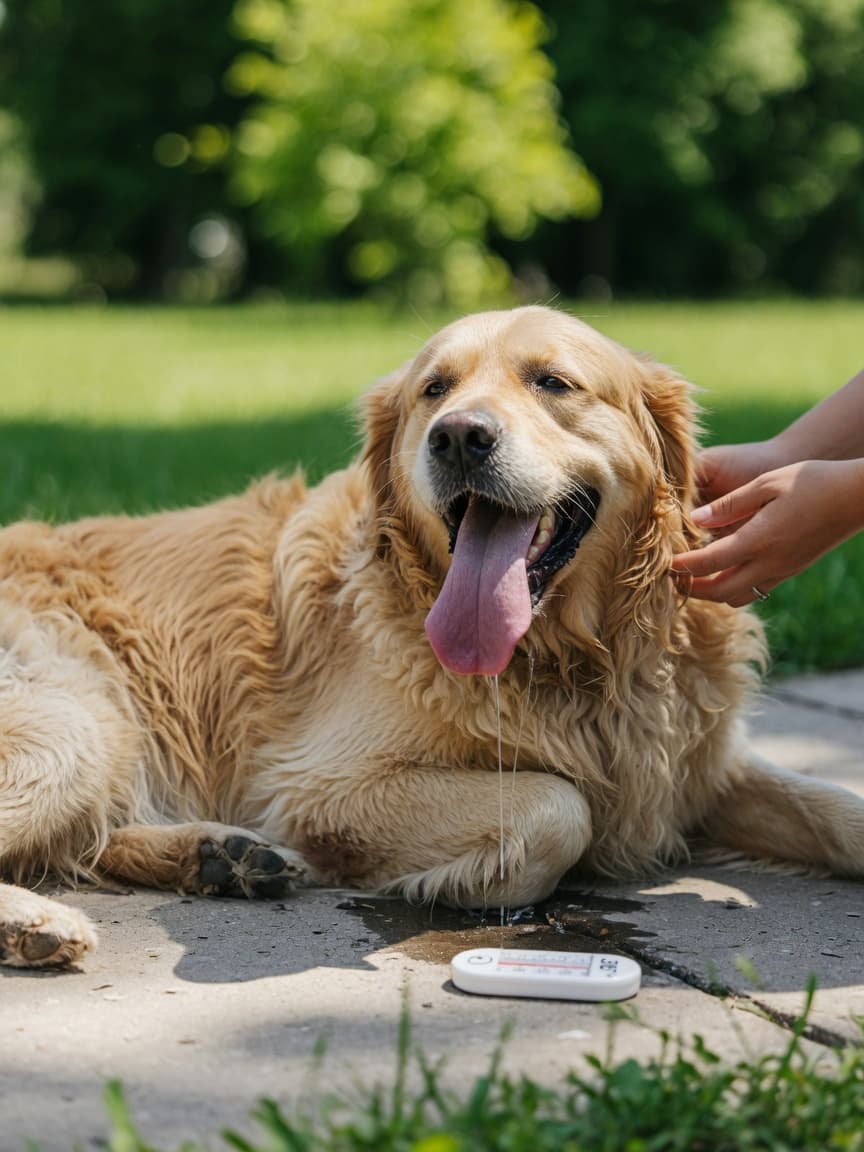
Heatstroke in Dogs: A Life-Threatening Emergency
Heatstroke is one of the most serious emergencies a dog owner can face, and it can develop with terrifying speed. Unlike humans, dogs cannot sweat effectively through their skin. They rely almost entirely on panting to regulate their body temperature, and in very hot or humid conditions, panting simply cannot remove heat fast enough to prevent the body temperature from rising to dangerous levels.
Every dog owner should know how to recognise heatstroke, what to do in the first critical minutes, and — equally importantly — what not to do, as incorrect first aid can make the situation significantly worse.
What Is a Normal Body Temperature for a Dog?
A healthy dog's body temperature sits between 38°C and 39°C. When the body temperature rises above 39.5°C, a dog begins to experience heat stress. Heatstroke is generally defined as a body temperature of 40°C or above, and at temperatures approaching 41°C and beyond, irreversible organ damage can occur within minutes. Brain damage, kidney failure, and failure of the blood clotting system can all develop rapidly, which is why speed of response is essential.
Recognising the Signs of Heatstroke
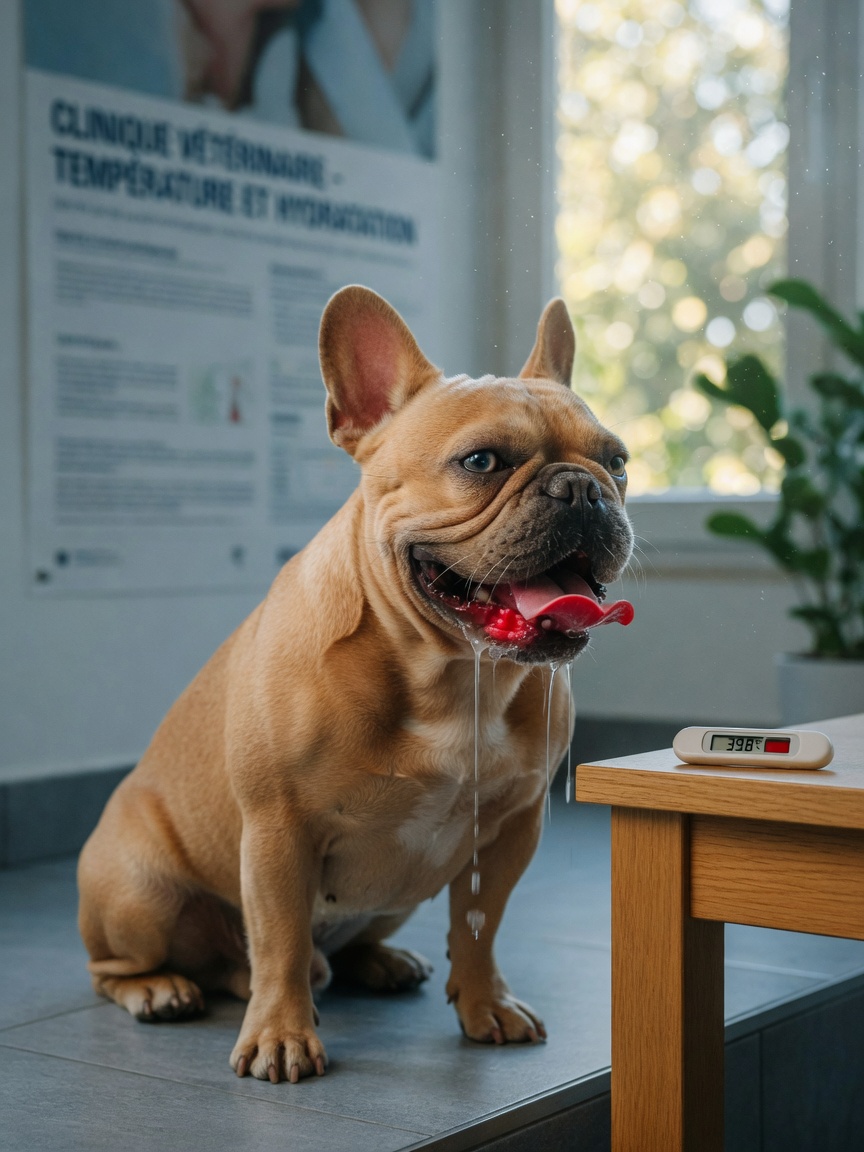
Early recognition gives you the best chance of a good outcome. Signs of heatstroke in dogs include:
- Excessive, frantic panting that does not ease
- Drooling large amounts of thick, ropey saliva
- Bright red or very pale gums
- A dazed, glassy, or confused expression
- Stumbling, uncoordinated movement, or collapsing
- Vomiting or diarrhoea, sometimes with blood
- Seizures in severe cases
- Loss of consciousness
If you observe any of these signs in a dog that has been exposed to heat, treat it as an emergency and act immediately.
What to Do: First Aid for Heatstroke
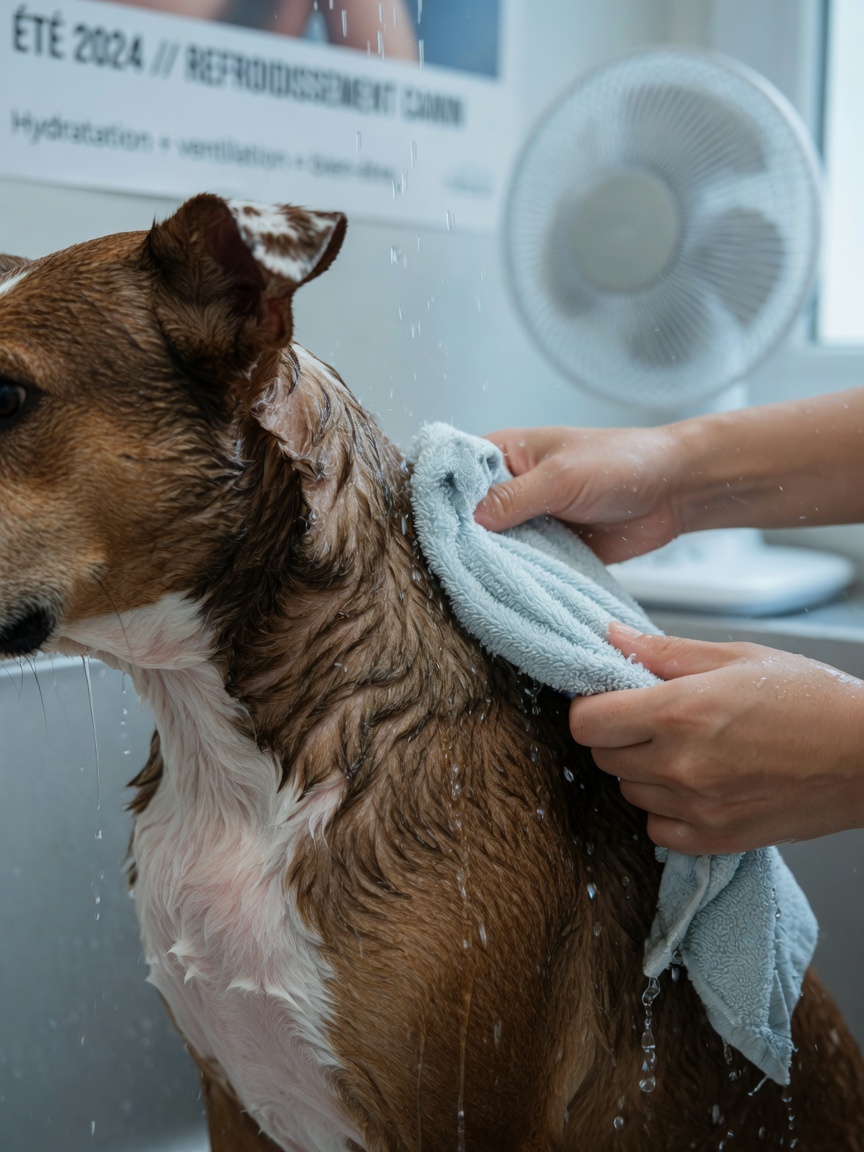
The goal of first aid is to begin cooling the dog as quickly as possible while arranging urgent veterinary attention. Even if the dog appears to recover with cooling, you must still get it to a vet — internal damage may not be immediately visible.
- Move the dog to a cool, shaded or air-conditioned area immediately.
- Pour cool — not cold or iced — water over the dog's body. Focus on the neck, armpits, and groin area, where large blood vessels run close to the surface of the skin.
- Place wet towels over these same areas: neck, armpits, and groin. Do not cover the entire body with a wet towel and leave it — see below for why.
- Use a fan to move air over the dog while the water evaporates, as evaporative cooling is more effective than water alone.
- Offer small amounts of cool drinking water if the dog is conscious and able to swallow safely. Do not force water into a dog's mouth.
- Call your vet immediately and continue first aid on the way to the clinic.
What NOT to Do: Common First Aid Mistakes
Incorrect first aid during a heatstroke emergency can be just as dangerous as doing nothing. The following mistakes must be avoided:
- Do not use ice-cold water or ice. Very cold water causes the blood vessels near the skin to constrict, which actually traps heat inside the body rather than releasing it. Rapid external cooling with cold water can also trigger shock.
- Do not submerge the dog in a cold bath or bucket of cold water for the same reason.
- Do not wrap the dog tightly in a wet towel and leave it. Once a wet towel is no longer releasing heat through evaporation, it becomes an insulating layer that traps heat around the body. Wet towels should be refreshed regularly or used only on specific areas such as the neck and groin.
- Do not give water by mouth to a dog that is collapsed, unconscious, or unable to swallow properly. A dog in this state cannot protect its airway, and giving water could cause it to inhale the liquid into its lungs.
- Do not delay getting to a vet because the dog appears to be cooling down. Recovery from heatstroke requires veterinary monitoring and supportive treatment that cannot be provided at home.
Breeds Most at Risk: Brachycephalic Dogs
All dogs are vulnerable to heatstroke in hot conditions, but brachycephalic breeds — those with flattened faces and shortened airways — are at significantly higher risk than others. The anatomical features that give these dogs their distinctive appearance also severely limit their ability to cool themselves through panting.
The breeds of greatest concern include:
- French Bulldogs
- English Bulldogs
- Pugs
- Shih Tzus
- Cavalier King Charles Spaniels
- Boxers
- Boston Terriers
Owners of brachycephalic dogs should be especially cautious during warm weather and should consider speaking to their vet about brachycephalic obstructive airway syndrome (BOAS) surgery if their dog shows signs of breathing difficulty. Even mild exercise in warm weather can trigger heatstroke in severely affected individuals.
Other dogs at elevated risk include elderly dogs, overweight dogs, those with heart or lung conditions, and dogs with thick double coats.
The Danger of Hot Cars
A significant proportion of heatstroke cases in dogs involve being left in a parked car. The temperature inside a car can rise to dangerous levels with extraordinary speed, even on days that feel only moderately warm to humans. On a day when the outside temperature is 22°C, the interior of a parked car can reach 47°C within an hour. On hotter days, the rise is even faster.
Leaving a window cracked open provides negligible protection. The greenhouse effect inside a car means that heat builds regardless of small ventilation gaps. There is no safe amount of time to leave a dog in a parked car in warm weather. If you cannot take your dog with you wherever you are going, the safest option is to leave it at home.
In the UK, if you encounter a dog in a distressed state inside a hot car, you should call 999. In a genuine emergency where the dog's life is at risk and police cannot respond in time, the law may permit you to break a window, but you should establish the necessity, call 999 first, and gather witnesses if possible.
Prevention Is Always Better Than Treatment
The best approach to heatstroke is to prevent it from occurring in the first place. Walk your dog in the early morning or late evening during hot weather, avoid pavement that can burn paw pads, always carry fresh water, provide shade and ventilation, and never leave your dog in a car. Knowing the signs and the correct first aid response means that if heatstroke does occur despite your best efforts, you are ready to act quickly and correctly.