
Cushing's Disease in Dogs: Symptoms, Diagnosis & Treatment
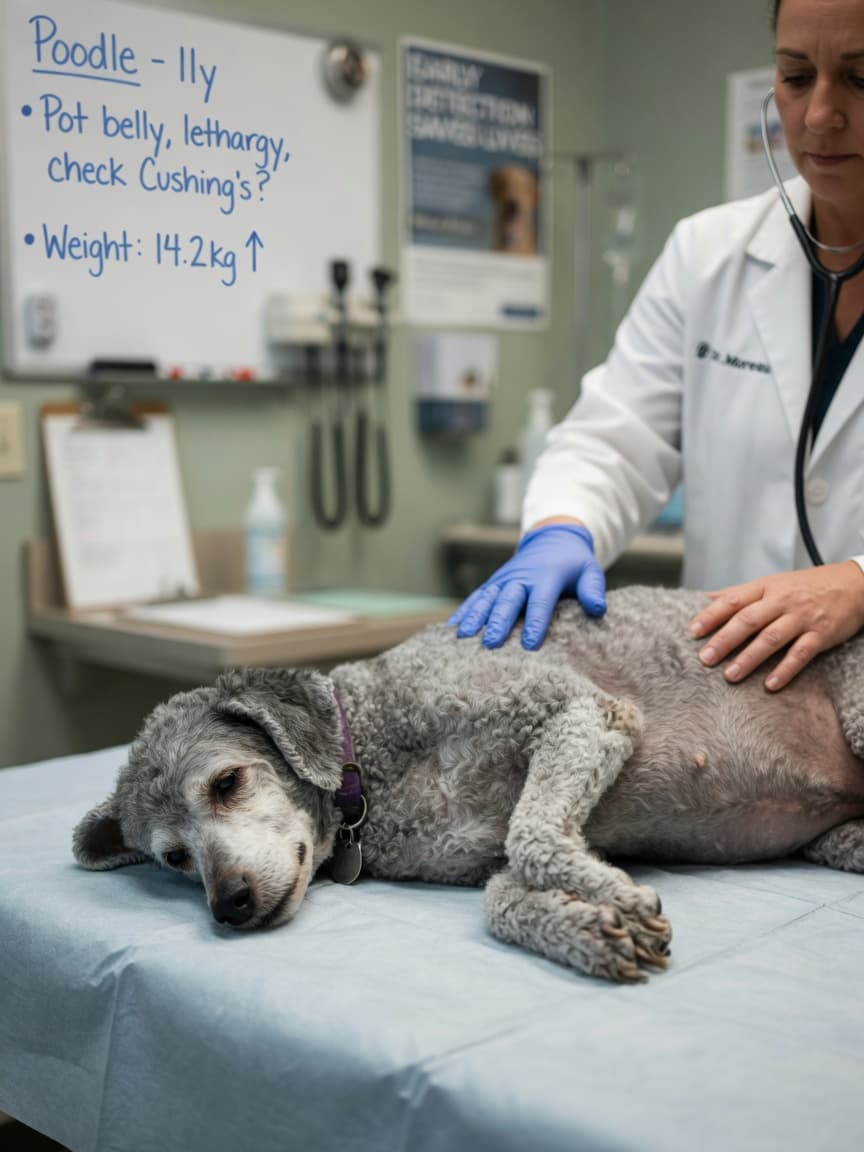
If your older dog is drinking water constantly, having accidents in the house, and developing a pot-bellied appearance despite not eating more than usual, Cushing's disease may be the culprit. This hormonal disorder is surprisingly common in dogs over seven years of age, and its gradual onset means many owners — and even some clinicians — initially attribute the signs to "normal aging." Understanding what to look for and when to push for testing can make a significant difference in your dog's quality of life.
How Cushing's Disease Develops
Cortisol is produced by the adrenal glands, two small glands that sit near the kidneys. Normally, the pituitary gland at the base of the brain regulates cortisol production through a hormone called ACTH (adrenocorticotropic hormone). In Cushing's disease, this regulation breaks down in one of two ways:
- Pituitary-dependent hyperadrenocorticism (PDH): A benign tumor on the pituitary gland secretes excessive ACTH, which in turn overstimulates both adrenal glands. This accounts for approximately 80–85% of natural Cushing's cases in dogs.
- Adrenal-dependent hyperadrenocorticism (ADH): A tumor (benign or malignant) on one adrenal gland produces cortisol independently of pituitary control. This accounts for the remaining 15–20% of cases.
There is also iatrogenic Cushing's syndrome, which develops when dogs receive prolonged courses of corticosteroids (prednisone, dexamethasone) for other conditions. This form resolves when the steroids are tapered and discontinued, under veterinary supervision.
Recognizing the Symptoms
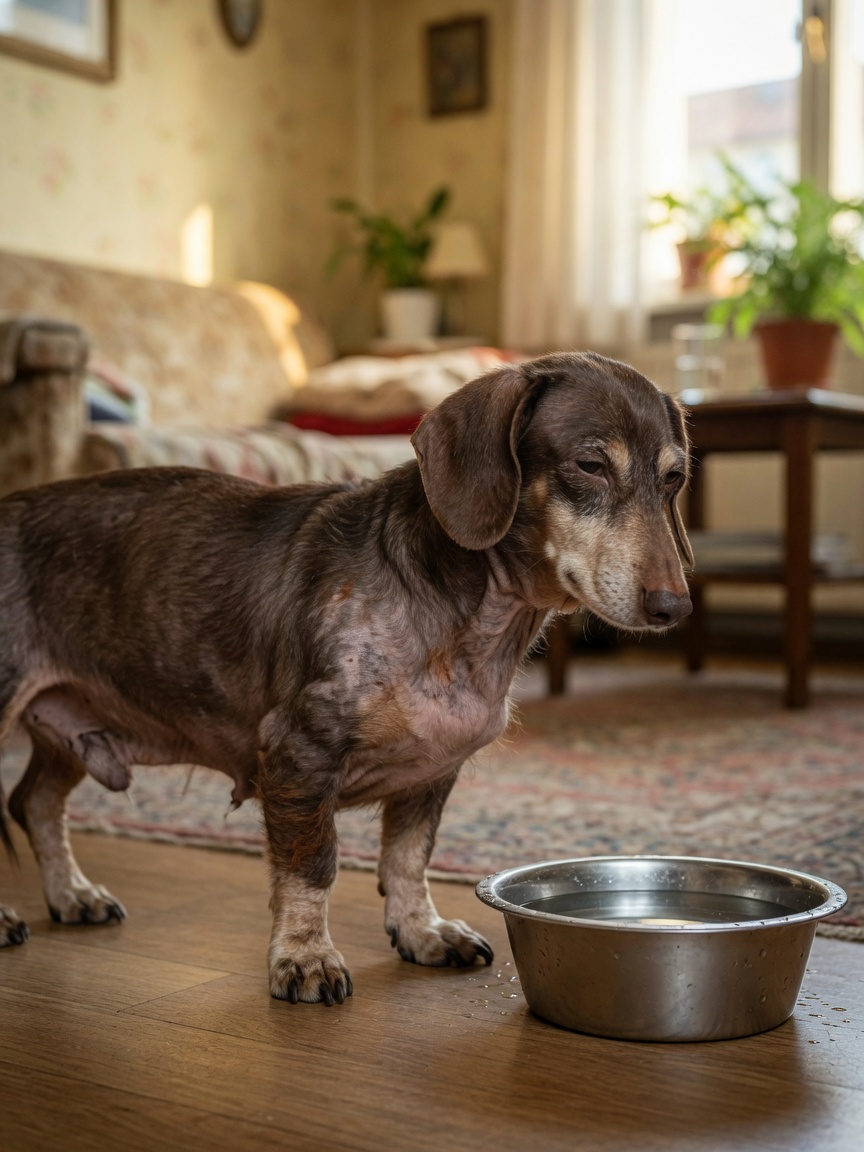
Cushing's disease tends to develop slowly over months to years. The most common signs include:
- Polydipsia and polyuria: Dramatically increased thirst and urination, often resulting in house-training accidents in previously reliable dogs.
- Polyphagia: Insatiable appetite. Dogs with Cushing's will beg persistently, counter-surf, or eat things they normally wouldn't.
- Pot-bellied appearance: Muscle weakness causes the abdomen to drop while fat redistributes to the belly and neck.
- Skin changes: Thin, fragile skin; hair loss (particularly on the trunk while the head and legs are spared); comedones (blackheads); and calcinosis cutis (calcium deposits in the skin).
- Lethargy and exercise intolerance: Muscle wasting reduces stamina.
- Panting excessively even without exercise or heat.
- Recurrent skin or urinary tract infections due to cortisol's immunosuppressive effects.
Certain breeds are predisposed, including Poodles, Dachshunds, Boxers, Boston Terriers, Beagles, and Labrador Retrievers.
Diagnosis: It Takes More Than One Test
Diagnosing Cushing's disease requires a systematic approach because no single test is perfectly sensitive and specific. According to the AVMA, diagnosis typically involves a combination of:
- Routine bloodwork and urinalysis: Elevated liver enzymes (particularly ALP), dilute urine, and sometimes elevated cholesterol are common but non-specific findings that raise clinical suspicion.
- Low-dose dexamethasone suppression test (LDDST): A cortisol-suppressing drug is given, and cortisol is measured afterward. In Cushing's, cortisol fails to suppress appropriately.
- Urine cortisol:creatinine ratio (UCCR): A screening test that is highly sensitive but not highly specific — a normal result helps rule out Cushing's, but an elevated result requires confirmation.
- ACTH stimulation test: Useful for distinguishing natural Cushing's from iatrogenic and for monitoring treatment response.
- Abdominal ultrasound: Evaluates adrenal gland size and can help differentiate PDH from ADH.
Treatment Options
Treatment depends on the underlying cause and the dog's overall health status.
Trilostane (Vetoryl): The most widely used medication for PDH and ADH in dogs. It works by inhibiting cortisol synthesis in the adrenal glands. Trilostane requires careful monitoring — cortisol levels must be checked regularly (typically at 10 days, 4 weeks, 12 weeks, and every 3–6 months thereafter) because over-suppression can cause life-threatening Addisonian crisis.
Mitotane (Lysodren): An older drug that selectively destroys cortisol-producing cells in the adrenal glands. It requires an induction phase followed by a maintenance phase and equally careful monitoring.
Surgical adrenalectomy: For adrenal tumors, surgical removal is potentially curative but carries significant perioperative risk. It is generally reserved for otherwise healthy dogs at experienced surgical centers. Cornell University's College of Veterinary Medicine offers specialist internal medicine consultations for complex endocrine cases.
Pituitary radiation: For large pituitary tumors causing neurological signs, radiation therapy can reduce tumor size and improve quality of life, though it is not widely available and is expensive.
Supporting dogs with Cushing's nutritionally: Dogs with Cushing's disease benefit from carefully controlled diets that support liver health, maintain lean muscle, and manage secondary skin issues. HolistaPet offers omega-3 rich supplements that may support skin and coat health in dogs with hormonal conditions.
Explore HolistaPet Supplements for Dogs →Living With a Dog Who Has Cushing's Disease
With appropriate treatment, most dogs with Cushing's disease live comfortably for several years after diagnosis. The condition requires long-term commitment from the owner: regular vet visits, consistent medication schedules, and prompt attention to any signs of medication overdose (sudden lethargy, loss of appetite, vomiting — signs of Addisonian crisis that require emergency treatment).
Dietary management supports but does not replace medical treatment. Dogs on trilostane or mitotane benefit from a moderate-protein, low-fat diet to support their compromised liver and reduce fat accumulation. Avoid high-calorie treats that encourage the already insatiable appetite.
When to See the Vet
Request evaluation if your middle-aged or older dog shows any combination of increased thirst, increased urination, pot-bellied appearance, hair loss on the trunk, or repeated skin/ear/urinary infections. If your dog is already on Cushing's medication and suddenly becomes lethargic, stops eating, or vomits repeatedly, seek emergency care — these signs may indicate dangerous cortisol over-suppression.
Key Takeaways
- Cushing's disease causes excess cortisol production and is most common in dogs over seven years old.
- Classic signs are increased thirst/urination, pot belly, hair loss, and persistent hunger.
- Diagnosis requires specific endocrine tests — routine bloodwork alone is not sufficient.
- Trilostane is the current first-line treatment and requires regular monitoring to prevent over-suppression.
- With proper management, dogs with Cushing's can maintain good quality of life for years.
References
- Behrend EN, Kooistra HS, Nelson R, et al. "Diagnosis of spontaneous canine hyperadrenocorticism: 2012 ACVIM consensus statement (small animal)." J Vet Intern Med. 2013;27(6):1292–1304. PMID: 24112317
- Ramsey IK. "Trilostane in dogs." Vet Clin North Am Small Anim Pract. 2010;40(2):269–283. PMID: 20219479