
Collapsed Trachea in Dogs: A Complete Guide for Owners
A sudden, harsh, honking cough from a small dog is one of the more alarming sounds a pet owner can encounter. In many toy and small breeds, this distinctive sound is the hallmark of tracheal collapse — a condition in which the cartilage rings supporting the windpipe weaken and flatten, causing the airway to narrow or close partially during breathing. While it can be frightening to witness, most dogs with tracheal collapse can be managed effectively with the right approach.
Which Breeds Are Affected?
Tracheal collapse is strongly associated with small and toy breeds. The cartilage rings that normally hold the trachea open in a C-shape become soft and pliable rather than firm, allowing the trachea to flatten — particularly during inhalation, though it can also occur during exhalation or at both points in the breathing cycle.
The breeds most commonly affected include:
- Yorkshire Terrier — one of the most frequently diagnosed breeds
- Chihuahua
- Pomeranian
- Maltese
- Toy and Miniature Poodle
- Shih Tzu
- Lhasa Apso
The condition appears to have a hereditary component in these breeds, though environmental factors such as obesity and exposure to irritants also play a role in how severely it presents and progresses.
The Goose-Honk Cough
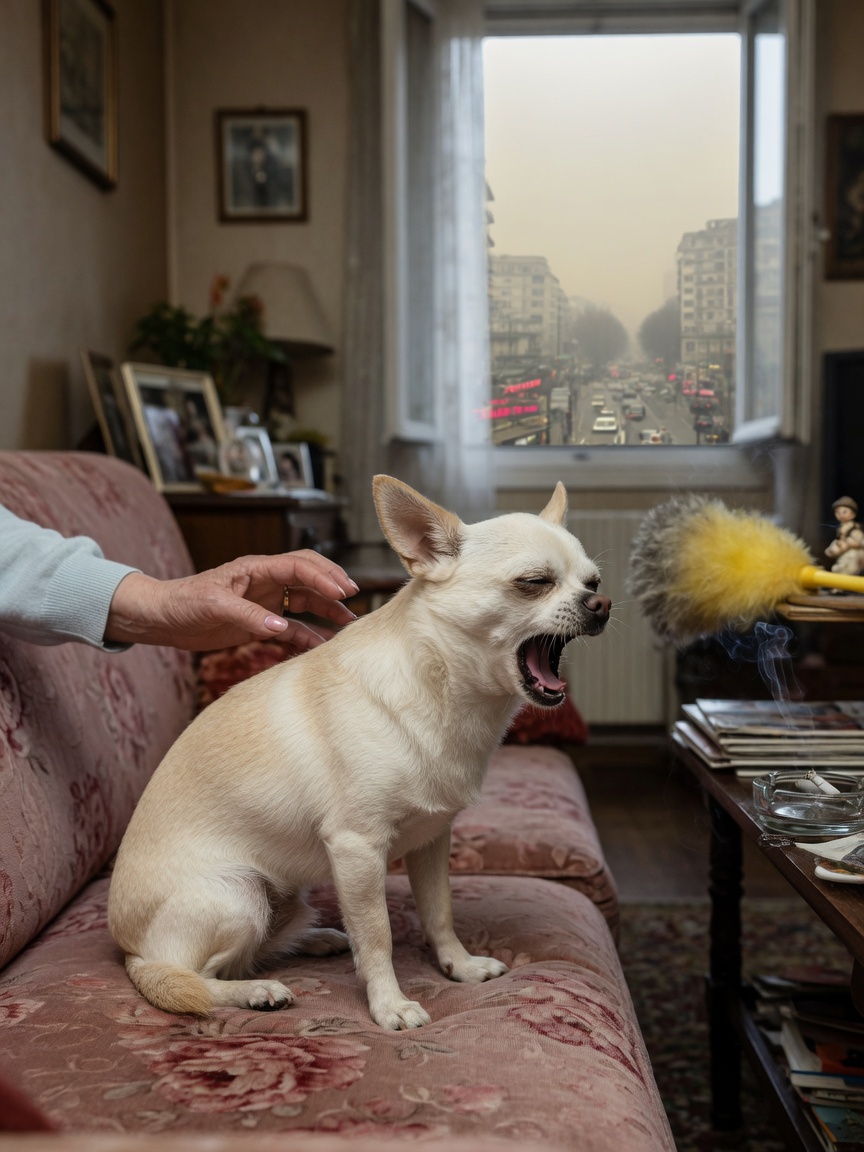
The cough produced by tracheal collapse is highly distinctive and is often described as a goose honk or a goose-like bark. It tends to be dry, harsh, and paroxysmal — occurring in sudden bouts rather than as a persistent gentle cough. Episodes are commonly triggered by excitement, exercise, eating or drinking, pressure on the neck, or exposure to environmental irritants such as cigarette smoke, dusty air, or strong fragrances.
Other signs that may accompany the cough include laboured breathing, a blue tinge to the gums (cyanosis) in severe episodes, retching or gagging at the end of a coughing bout, and exercise intolerance. In mild cases, the dog may only cough occasionally and otherwise appear entirely normal. In severe cases, episodes can be frequent, prolonged, and distressing for both dog and owner.
Diagnosing Tracheal Collapse
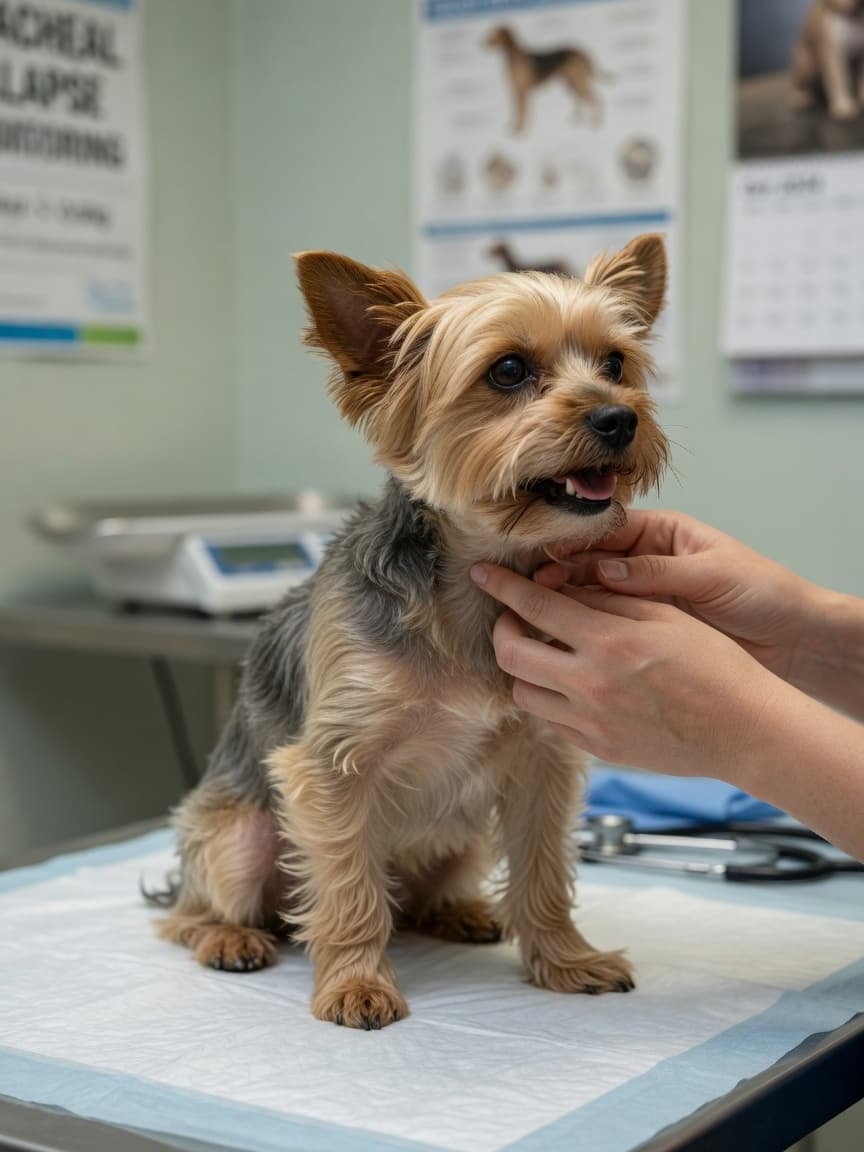
A vet may strongly suspect tracheal collapse based on the breed, history, and the characteristic sound of the cough. Gentle pressure on the trachea in the neck area often elicits the cough, which supports the diagnosis. However, confirming the diagnosis and understanding the extent and location of the collapse requires imaging.
Fluoroscopy
Fluoroscopy — a form of real-time moving X-ray — is considered the gold standard for diagnosing tracheal collapse. Because the trachea changes shape dynamically during breathing, a static X-ray taken at a single moment may miss the collapse entirely if it occurs at a different phase of the respiratory cycle. Fluoroscopy allows the vet to observe the trachea in motion and identify exactly when and where it collapses. It also helps to determine whether the collapse affects the cervical trachea (in the neck), the intrathoracic trachea (in the chest), or both.
Radiographs (X-rays) can be useful as an initial step and may reveal collapse if taken at the right moment, and they also help to rule out other causes of coughing such as pneumonia or heart disease. Endoscopy (passing a camera down the airway) provides a direct view of the trachea and can assess the severity of collapse using a grading system from Grade 1 (mild flattening) to Grade 4 (complete closure of the lumen).
Medical Management
The majority of dogs with tracheal collapse are managed medically rather than surgically, and many do very well with a combination of lifestyle modifications and medications.
The Harness Rule: No Collars on the Neck
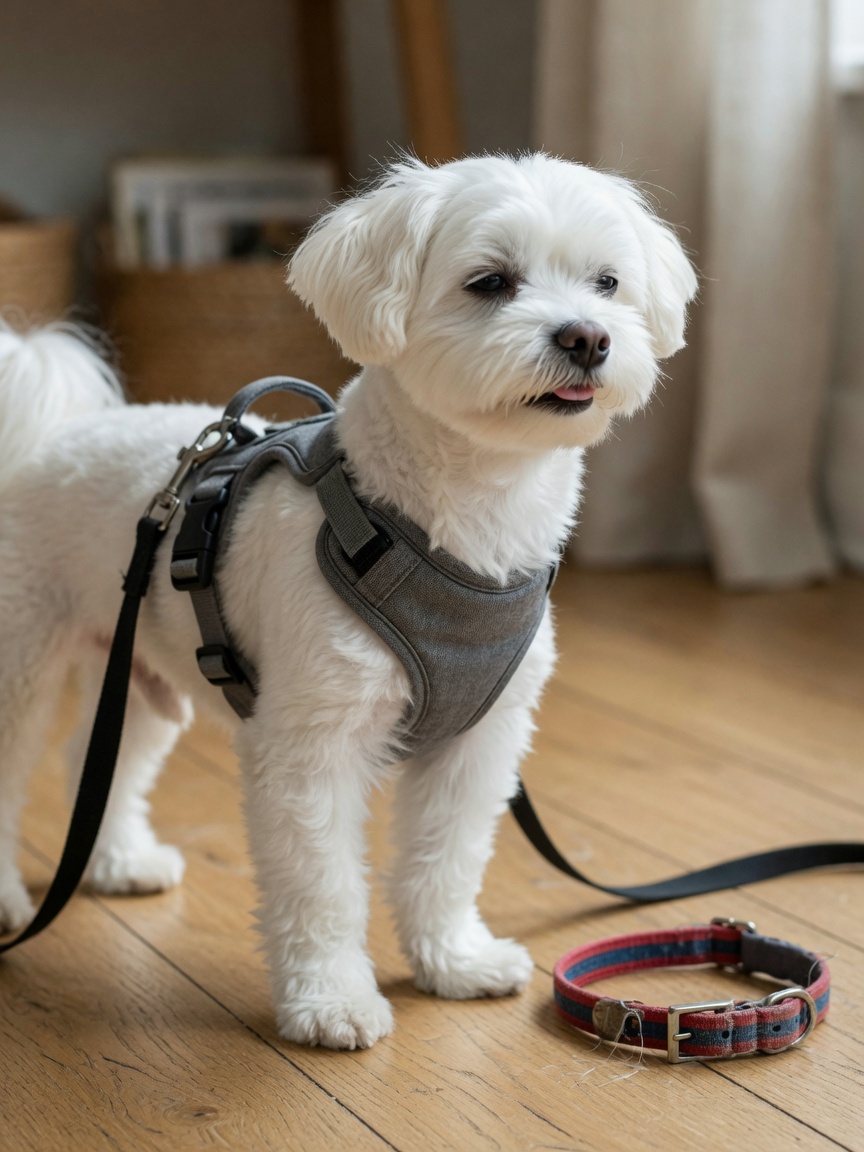
One of the most important — and immediately actionable — changes any owner of a small breed dog should make is switching from a neck collar to a harness. Pressure on the trachea from a collar during walking, pulling, or excitement can trigger and worsen coughing episodes and cause further damage to the already compromised cartilage. A well-fitted body harness distributes pressure across the chest and shoulders, completely removing load from the neck and trachea. This single change can make a notable difference to the frequency and severity of coughing episodes.
Weight Loss
For dogs that are overweight, weight loss is one of the most effective interventions available. Excess weight places additional demands on the respiratory system and increases the effort required to breathe. Even modest weight reduction can lead to meaningful improvement in clinical signs. Weight loss should be approached carefully and progressively under veterinary guidance.
Cough Suppressants
Antitussive medications are used to reduce the frequency of coughing episodes. Reducing coughing is important not just for comfort but because repeated coughing bouts can themselves inflame and worsen the trachea. Butorphanol is commonly used in dogs with tracheal collapse and can be prescribed for regular use or for acute episodes.
Bronchodilators
Bronchodilators help to widen the airways and reduce the effort of breathing. They can be particularly useful in dogs that also have concurrent lower airway disease or bronchitis. Theophylline is one option used in this context, though it requires careful dosing and monitoring.
Anti-inflammatory Medications
Short courses of corticosteroids are sometimes used to reduce airway inflammation during acute exacerbations. Sedation may also be required in dogs experiencing a severe respiratory crisis, as anxiety and distress exacerbate airway obstruction significantly.
Surgical Treatment
Surgery is considered for dogs with severe tracheal collapse that is not adequately controlled with medical management, or for those experiencing life-threatening respiratory distress. Two surgical approaches are used:
- Extraluminal ring prostheses: Plastic rings are placed around the outside of the trachea to provide structural support and prevent collapse. This technique is more effective for collapse of the cervical (neck) trachea.
- Intraluminal stenting: A self-expanding metal stent is placed inside the trachea via an endoscope. This is particularly useful for intrathoracic tracheal collapse that cannot be reached surgically from outside. Stenting carries risks including stent fracture, infection, and granuloma formation, but can provide significant relief in appropriately selected cases.
Surgery is not without risk, particularly in smaller patients, and outcomes vary. It is generally reserved for cases where medical management has genuinely been optimised and found insufficient.
Ongoing Management and Outlook
Tracheal collapse is a lifelong condition that cannot be cured, but it can be managed successfully in many dogs. Keeping your dog lean, using a harness at all times, minimising exposure to triggers such as smoke and strong scents, and administering prescribed medications consistently are the cornerstones of long-term care. Most dogs with mild to moderate tracheal collapse live comfortable lives with appropriate management, and regular veterinary check-ups allow for adjustment of the treatment plan as needed over time.