
Important Disclaimer
This article is for general information only and does not replace professional veterinary training or advice. If your dog is unresponsive or not breathing, call a vet or emergency veterinary service immediately. CPR performed without proper training may cause injury. This guide is a bridge — not a substitute — for qualified veterinary care. We strongly recommend attending a hands-on pet first aid course to practise these techniques before an emergency occurs.
Why Dog CPR Knowledge Matters
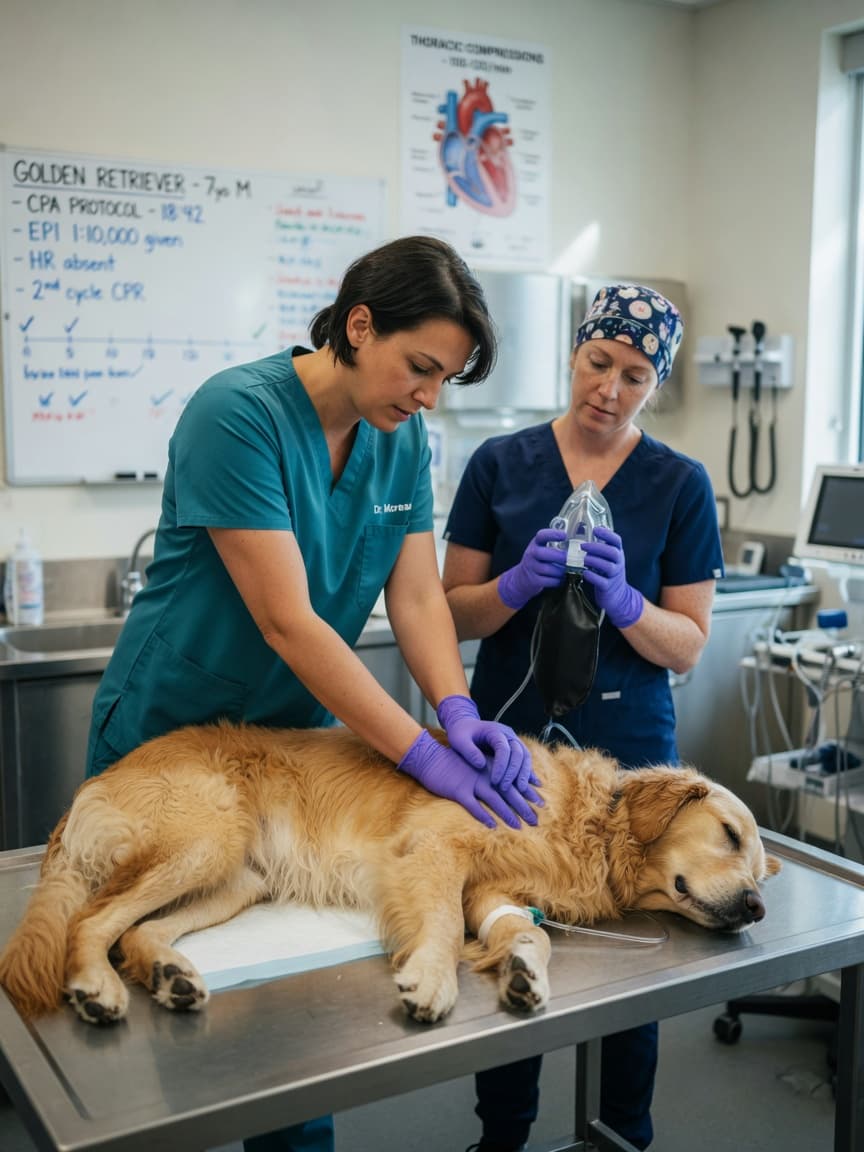
Cardiac arrest and respiratory failure in dogs can occur suddenly — following an accident, drowning, choking, electrocution, or severe illness. In these situations, the minutes before a vet arrives are critical. Cardiopulmonary resuscitation (CPR) — the combination of rescue breaths and chest compressions — can maintain a minimal level of circulation and oxygenation, buying precious time for professional help to arrive.
The British Small Animal Veterinary Association (BSAVA) supports owner awareness of basic life support, while emphasising that hands-on training is essential for effective, safe performance. Reading a guide is a starting point — attending a pet first aid course, where you practise on mannequins and receive instructor feedback, is what builds real competence and confidence.
Before You Begin: Is CPR Needed?
CPR should only be performed on a dog that is unconscious, not breathing, and has no detectable heartbeat. Performing chest compressions on a conscious or breathing dog can cause serious injury. Always assess the situation before acting.
Step-by-Step Dog CPR
Step 1: Check Responsiveness
Call your dog's name loudly and firmly. Gently tap or stroke them. If there is no response at all — no movement, no eye flicker, no reaction to touch — proceed to the next step. If the dog responds in any way, do not begin CPR. Keep them warm and calm and call your vet immediately.
Step 2: Call for Help
Before doing anything else, shout for someone to call your vet or the nearest emergency veterinary service. If you are alone, make the call yourself before beginning CPR if at all possible — emergency vets can guide you through the process by phone. In the UK, the Blue Cross and PDSA offer advice lines, and most areas have 24-hour emergency veterinary practices. Save these numbers in your phone now.
Step 3: Open the Airway
Lay your dog on their right side on a flat, firm surface. Gently extend the neck to create a straight line from the nose to the lungs. Open the mouth and carefully look inside — use a finger to sweep the mouth and remove any visible obstruction such as a foreign object, vomit, or mucus. Do not perform a blind finger sweep into the throat, as this may push an obstruction further in.
Step 4: Check for Breathing
Watch the chest for rise and fall. Place your cheek close to the dog's nose and mouth and feel for breath on your skin. Listen for any sound of breathing. Do this for no more than ten seconds. If there is no sign of breathing, proceed immediately.
Step 5: Rescue Breaths
Close your dog's mouth gently but firmly by wrapping your hand around the muzzle. Place your mouth over the dog's nose — not the mouth — and breathe in steadily until you see the chest rise. This should take approximately one second. Remove your mouth and allow the chest to fall. Give two rescue breaths before moving to chest compressions.
If the chest does not rise with rescue breaths, recheck the airway for obstruction and reposition the neck before trying again.
Step 6: Check for a Pulse
The easiest place to find a dog's pulse is the femoral artery, located on the inside of the upper thigh where the leg meets the body. Press gently with two fingers and hold for up to ten seconds. If you cannot detect a pulse, begin chest compressions immediately.
Step 7: Chest Compressions
This is where technique varies by the dog's size and build:
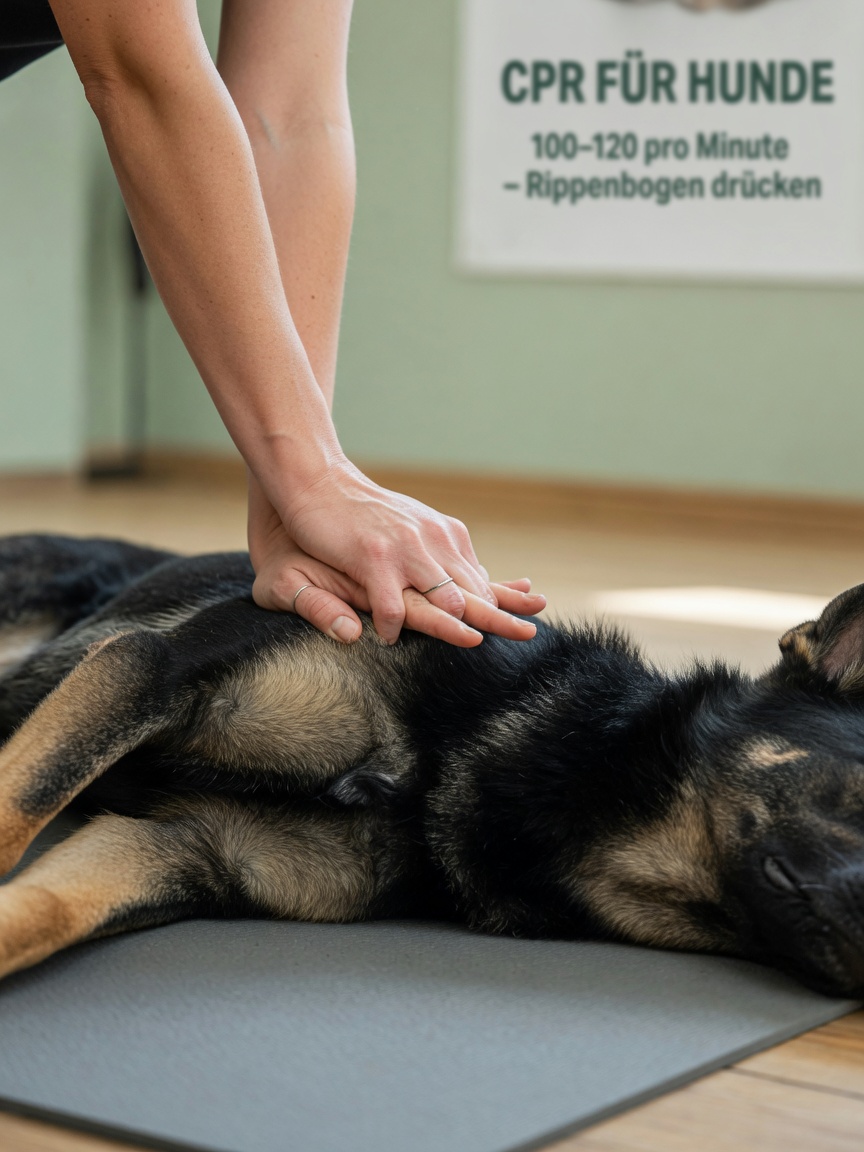
- Most dogs: With the dog lying on their right side, place the heel of one hand on the widest part of the chest — approximately where the elbow meets the chest wall. Place your other hand on top. Keep your arms straight and compress the chest firmly downwards by approximately one-third of its width. Compressions should be firm, rhythmic, and delivered at a rate of 100 to 120 per minute — roughly the beat of the song "Stayin' Alive."
- Barrel-chested breeds (Bulldogs, Pugs, Basset Hounds): These dogs have a wide, rounded chest that makes side positioning less effective. Place the dog on their back and compress the sternum (breastbone) directly, using the same hand position and compression depth.
- Very small dogs and puppies: Use one hand only, or compress with your thumb and fingers on either side of the chest. Reduce compression depth proportionally — never use full force on a tiny dog.
Deliver 30 chest compressions, then give 2 rescue breaths. This 30:2 ratio is the standard recommended by veterinary resuscitation guidelines. Continue this cycle without pausing.
Step 8: Continue Until Help Arrives
Maintain CPR without stopping until one of the following occurs:
- The dog begins breathing and a heartbeat is restored
- A vet or trained professional takes over
- You are physically unable to continue
- You have been performing CPR for 20 minutes with no signs of recovery — at this point, continuing is unlikely to be beneficial
If another person is present, swap roles every two minutes to maintain the quality and rate of compressions as fatigue sets in.
After CPR
Even if your dog appears to recover, veterinary assessment is essential. A dog that has suffered cardiac or respiratory arrest requires urgent examination to identify the underlying cause, assess for injuries caused by compressions, and provide ongoing monitoring and supportive care.
Important Disclaimer — Repeated
This guide provides general guidance only. It does not replace professional veterinary training. CPR carries risks including rib fractures and internal injury. Always contact a vet immediately in any emergency. Attend a certified pet first aid course — such as those endorsed by the BSAVA or offered by Canine First Aid — to practise these skills safely under professional supervision before an emergency occurs.