
Dog Anal Glands: What They Are & When They Need Expressing
Few grooming topics make dog owners more uncomfortable than anal glands — and few are more important to understand. Anal gland problems are one of the most common reasons dogs visit veterinarians, yet many owners have never heard of anal glands until their dog starts scooting across the carpet or filling the car with an inexplicable fishy odor. This guide explains what anal glands are, how to recognize when they need attention, and what your options are for management.
What Are Anal Glands and What Do They Do?
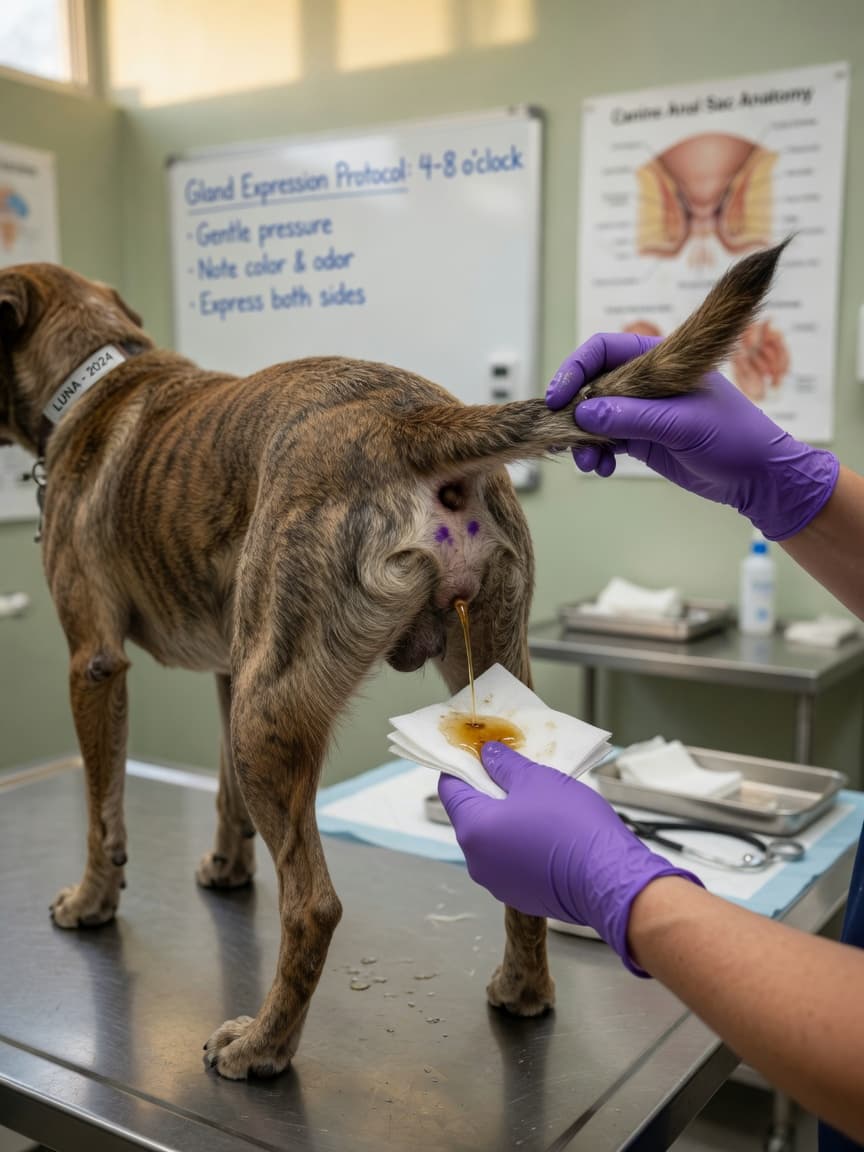
Dogs have two small sacs located just inside the anus, at approximately the four o'clock and eight o'clock positions. These sacs — sometimes called anal glands, though "anal sacs" is the more accurate veterinary term — are lined with glands that produce a strong-smelling, oily secretion.
The secretion serves communication purposes inherited from wild canid ancestors. When a dog defecates, the passing stool naturally applies pressure to the sacs and releases a small amount of this secretion, essentially leaving a chemical signature unique to that individual dog. This is why dogs spend so much time sniffing each other's rear ends and inspecting locations where other dogs have defecated — they are reading detailed identity and status information encoded in anal gland secretions.
In a healthy dog with firm, well-formed stools, anal glands express naturally and automatically during each bowel movement. Problems arise when this natural expression fails.
Signs of Anal Gland Impaction
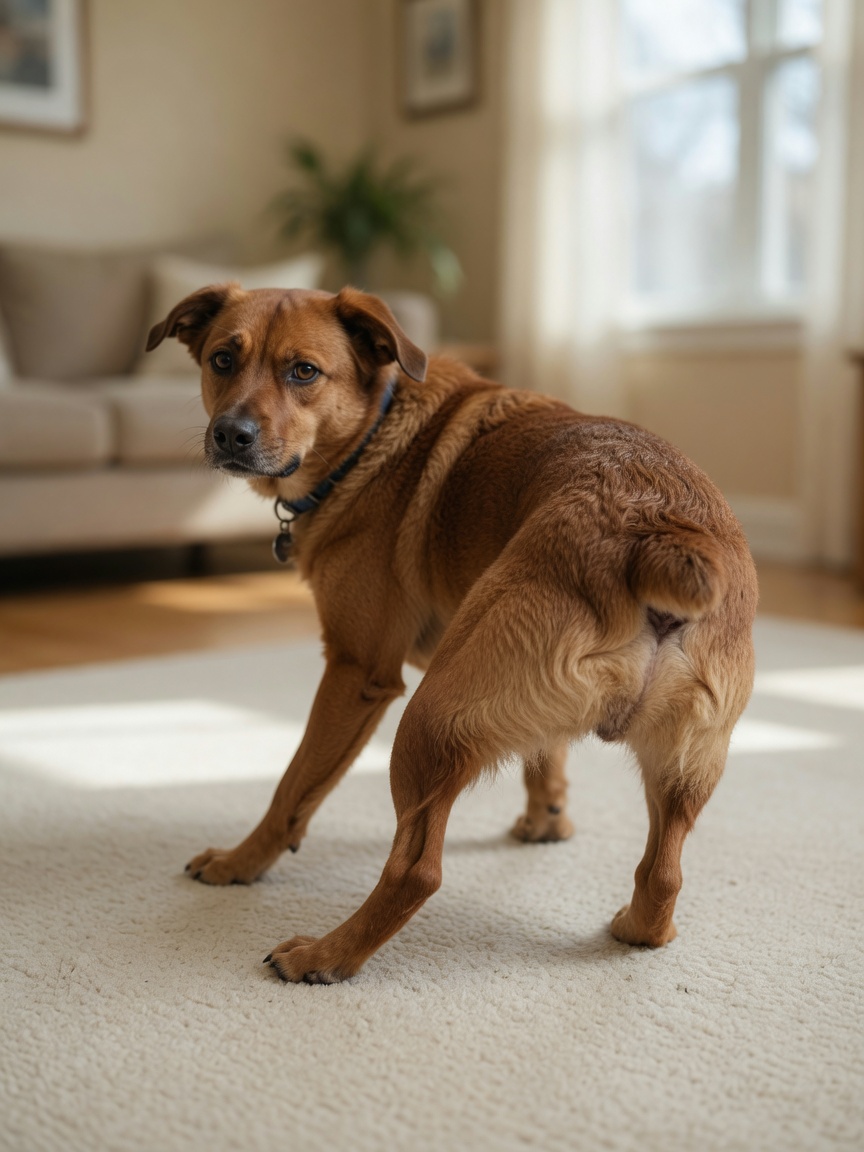
When anal glands do not empty adequately, the secretion accumulates, thickens, and the sacs become uncomfortably full — a condition called impaction. Recognizing the signs early allows for simple intervention before the situation becomes more serious:
- Scooting: Dragging the rear end along the floor or carpet is the classic sign. Dogs scoot to relieve the pressure and discomfort of full anal glands. Note that scooting can also indicate intestinal parasites or perianal irritation — stool analysis and a veterinary exam will distinguish these causes.
- Licking or chewing at the rear: Persistent attention to the anal or perianal area, especially if the dog can't seem to leave it alone.
- Fishy or musty odor: A sudden or persistent fishy smell on the dog or in their environment, particularly after the dog sits on a soft surface, is strongly associated with anal gland leakage or full sacs.
- Reluctance to sit: Discomfort when sitting, or posturing oddly to avoid sitting directly on the rear.
- Tail chasing or excessive tail attention.
Internal vs. External Expression
There are two methods for manually expressing anal glands, and they are not equivalent:
External expression involves applying gentle pressure to the outside of each sac simultaneously to squeeze the secretion outward. This is what many groomers offer as a routine add-on service. External expression only removes fluid that is near the surface of the sac opening — it does not fully empty the sac and cannot clear thickened or impacted material effectively.
Internal expression involves inserting a gloved, lubricated finger into the rectum and pressing each sac between the finger inside and the thumb outside to fully empty it. This is the method used by veterinarians and trained veterinary technicians. Internal expression is more thorough and is the appropriate technique for impacted or repeatedly problematic glands.
Can Dog Owners Express Anal Glands at Home?
This is worth an honest answer: technically yes, but in most cases the answer should be no, or at least not routinely.
External expression is physically possible for owners to perform at home and carries low risk of harm. However, frequent unnecessary expression can actually weaken the smooth muscle of the sac and cause the dog to become dependent on manual expression rather than natural emptying. Expressing glands that are not actually full is counterproductive.
Internal expression should only be performed by a veterinarian or trained veterinary technician. Attempting this without proper training risks perforating the sac, introducing infection, or causing serious injury.
The practical recommendation: if your dog has occasional anal gland issues, have the veterinarian or a professional groomer handle expression. If the problem is recurring, discuss long-term management strategies with your vet rather than defaulting to routine home expression.
Diet and Fiber to Support Natural Expression
The most common underlying cause of anal gland problems in otherwise healthy dogs is soft or inconsistent stools that do not apply adequate pressure to the sacs during defecation. Dietary changes to produce firmer stools often resolve the problem:
- Increase dietary fiber: Adding a small amount of plain canned pumpkin (not pie filling — pure pumpkin only), cooked sweet potato, or a veterinarian-recommended fiber supplement to meals can firm stools significantly.
- Psyllium husk powder (plain, unsweetened) is another effective soluble fiber source used in veterinary practice.
- Ensure adequate hydration — dehydrated dogs produce harder, drier stools at the other extreme. Ensure fresh water is always available.
- Consider a high-fiber prescription diet if dietary modification alone is insufficient — your veterinarian can recommend appropriate options.
When to See a Vet: Infection and Abscess
If impacted glands are not expressed, the accumulated secretion can become infected with bacteria, progressing to a painful anal sac abscess. Signs of abscess include a visible swelling, redness, or a soft fluctuant mass near the anus; open wounds or draining tracts; pus or blood-tinged discharge; extreme pain and reluctance to defecate; and fever or lethargy.
An abscess requires veterinary treatment: antibiotics, pain management, and often flushing or surgical drainage of the sac. In dogs with severe or repeatedly infected glands, surgical removal of the anal sacs (anal sacculectomy) may ultimately be recommended — a procedure with good outcomes when performed by an experienced surgeon.
The VCA Animal Hospitals anal sac disease guide and the WSAVA nutritional guidelines provide additional clinical context on diet and anal gland health management.
Key Takeaways
- Anal glands are small sacs inside the anus that normally express naturally during defecation when stools are firm
- Key signs of impaction: scooting, licking the rear, fishy smell, and reluctance to sit
- External expression (what groomers do) is less thorough than internal expression (performed by vets) — for impacted glands, internal expression by a veterinarian is needed
- Routine home expression is not recommended and can weaken natural sac tone over time
- Adding dietary fiber (plain pumpkin, psyllium) to firm stools often resolves recurring anal gland issues permanently
- Infection or abscess — indicated by swelling, open wounds, or pus near the anus — requires immediate veterinary care
References
- Hill LN, Smeak DD. "Open versus closed bilateral anal sacculectomy for treatment of recurrent anal sac disease in 95 dogs." Vet Surg. 2002;31(6):562–566. Surgical outcomes and indications for anal sac removal in companion dogs. PubMed PMID: 12451533
- Pappalardo E, Martino PA, Noli C. "Macroscopic, cytological and bacteriological evaluation of anal sac content in normal dogs and in dogs with selected dermatological conditions." Vet Dermatol. 2002;13(6):315–322. Characterization of normal and pathological anal sac secretions. PubMed PMID: 12464054