
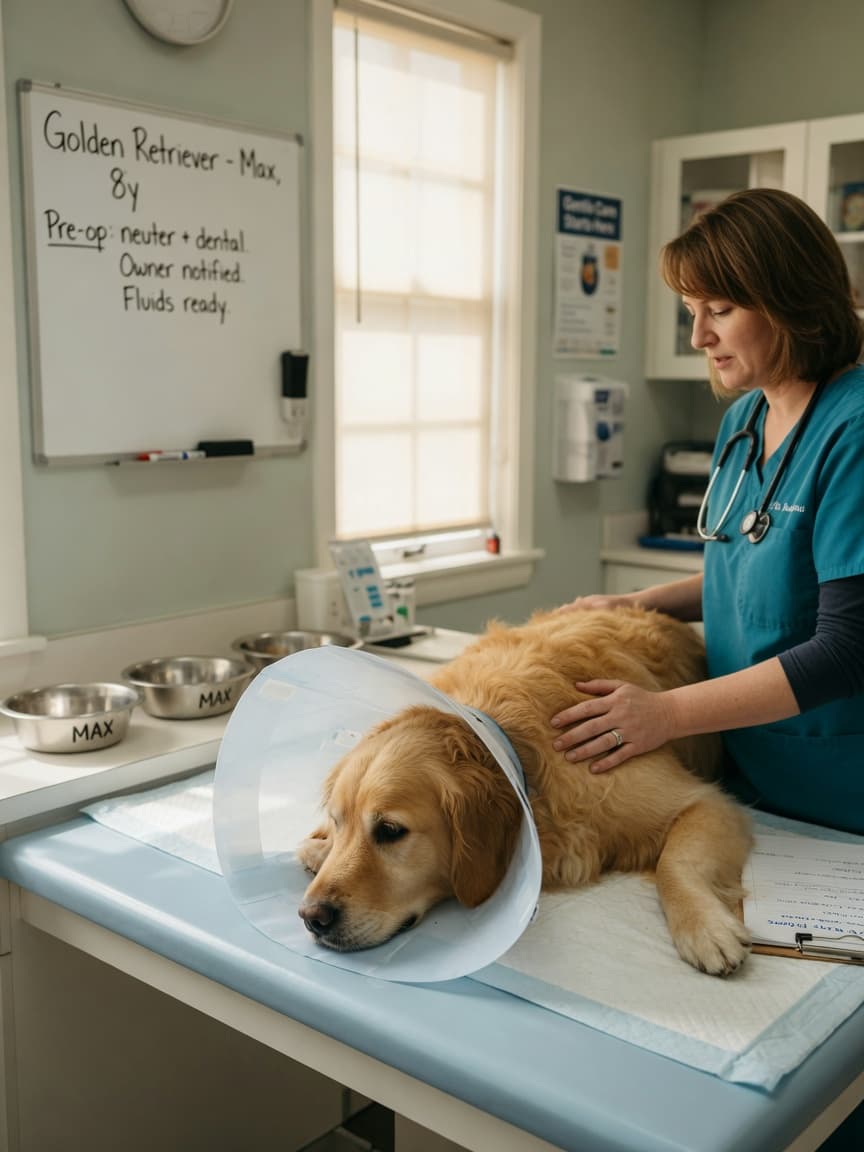
If your dog is scheduled for surgery, you've likely received a long list of pre-operative instructions from your veterinary practice. One of the most important—and frequently asked—questions is whether your furry friend needs to fast beforehand. The answer is almost always yes, and there are very good medical reasons why. Pre-surgical fasting is a critical safety measure that protects your dog during anaesthesia, and understanding why it matters can help you feel more confident on surgery day.
Why Pre-Surgical Fasting Is Essential
Pre-operative fasting exists to prevent a serious complication called aspiration pneumonia. When your dog is under general anaesthesia, their swallowing reflex and gag reflex are significantly diminished or absent. If food or water remains in the stomach, it can be inhaled into the lungs during intubation (when the breathing tube is placed), potentially causing life-threatening inflammation or infection.
Fasting also helps keep your dog's stomach empty, which reduces nausea and vomiting during recovery—an equally important consideration for their comfort and safety.
Standard Fasting Guidelines for Dogs
Most veterinary anaesthetists recommend the following fasting protocol:
- Food: Withhold food for 6-8 hours before surgery
- Water: Withhold water for 2-4 hours before surgery
Your vet will provide specific timing based on your dog's age, health status, and the type of procedure. Puppies and senior dogs may require slightly different protocols. Always follow your veterinary practice's exact instructions, as they have reviewed your individual dog's medical history.
Preparing Your Dog for Fasting
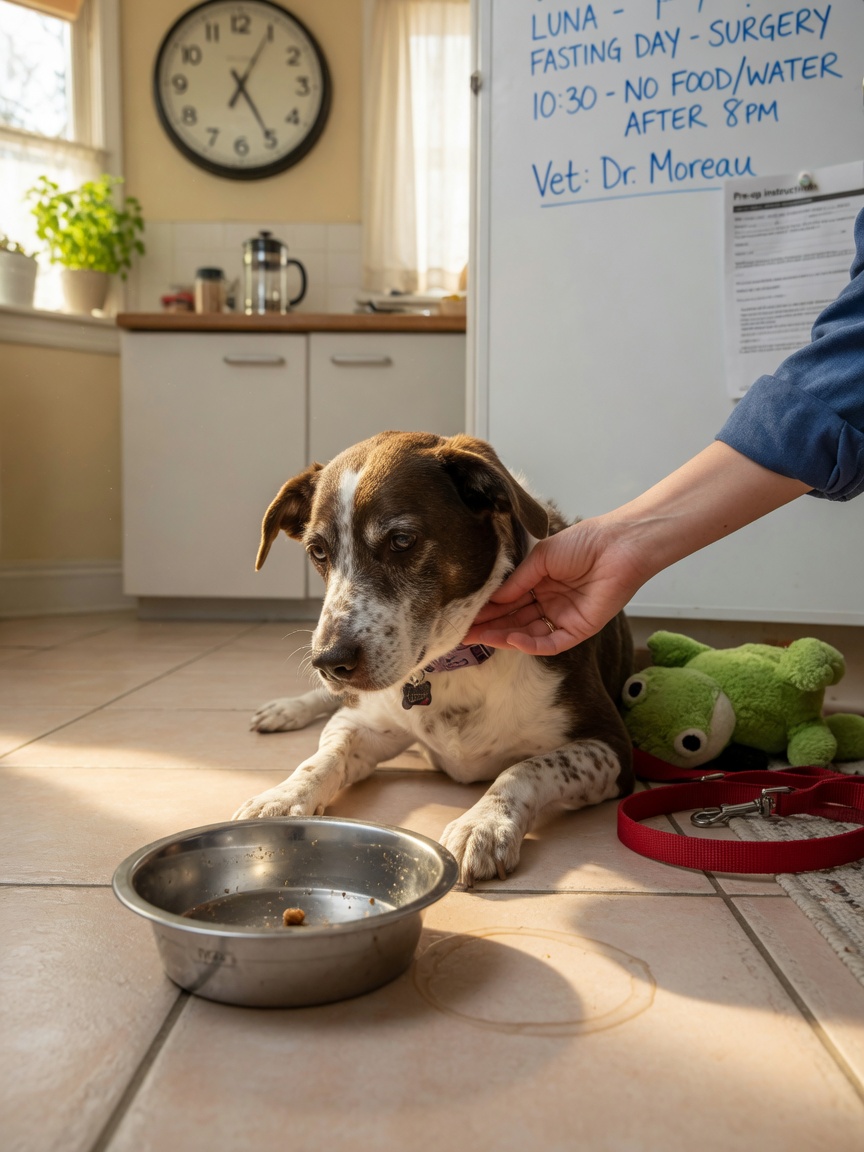
The key to a successful pre-operative fast is planning ahead:
- Mark your surgery time clearly and count backwards to determine when to stop offering food and water
- Remove water bowls from your dog's regular access several hours before the deadline
- Keep your dog calm and occupied the morning of surgery—exercise can increase nausea
- Avoid offering treats, chews, or flavoured medications during the fasting period unless specifically approved by your vet
- If your dog takes regular medications, discuss with your veterinary team which ones should be given before surgery and which should be withheld
Special Considerations for Different Dogs
Puppies: Young puppies have faster metabolisms and lower blood sugar reserves, so they may require shorter fasting periods. Your vet may recommend just 4 hours without food.
Senior Dogs: Older dogs may have specific health conditions requiring modified fasting protocols. Always discuss age-related concerns with your veterinarian.
Diabetic Dogs: If your dog has diabetes, fasting requires particular attention. Your vet will advise whether to give insulin before surgery and may recommend a slightly different schedule.
Day-of-Surgery Tips
Keep your dog's routine as normal as possible on surgery day, despite the fasting. This helps reduce stress and anxiety. Take a final bathroom break just before leaving for the clinic, as they won't be able to eat or drink beforehand.
If your dog becomes distressed about not eating (which is common), distraction is your friend. A quiet walk, gentle play, or cuddle time can help pass the hours more comfortably.
After Surgery: Reintroducing Food and Water
Your veterinary team will advise when it's safe to offer food and water again, typically a few hours after surgery once your dog is fully awake and alert. Start with small amounts of water, then offer a light, bland meal if your dog shows interest. Some dogs experience reduced appetite post-surgery, which is completely normal.
Key Takeaways
Pre-surgical fasting is a non-negotiable safety measure that protects your dog during anaesthesia. By following your vet's specific instructions carefully—typically 6-8 hours without food and 2-4 hours without water—you're playing an active role in ensuring your dog's surgical safety and smooth recovery. If you have any questions about your dog's pre-operative instructions, never hesitate to contact your veterinary practice. They're there to help you and your beloved pet through this important procedure with confidence.
```