
What Is Dilated Cardiomyopathy in Dogs?
Dilated cardiomyopathy, commonly known as DCM, is a disease of the heart muscle itself. Unlike mitral valve disease — where a faulty valve causes problems — DCM involves the actual muscle walls of the heart becoming weak and thin. The heart chambers enlarge and the muscle loses its ability to contract effectively. As a result, the heart cannot pump blood around the body efficiently, and the dog is at risk of heart failure, abnormal heart rhythms, and in some cases, sudden cardiac death.
DCM is most commonly seen in large and giant breeds, and it is the second most common form of heart disease in dogs overall. Prompt diagnosis and careful management can significantly improve both quality and length of life.
Breeds Most Commonly Affected

Certain breeds carry a significantly higher risk of developing DCM. The breeds most frequently affected include:
- Dobermann Pinschers
- Irish Wolfhounds
- Great Danes
- Boxers
- Cocker Spaniels (American)
- Newfoundlands
- Portuguese Water Dogs
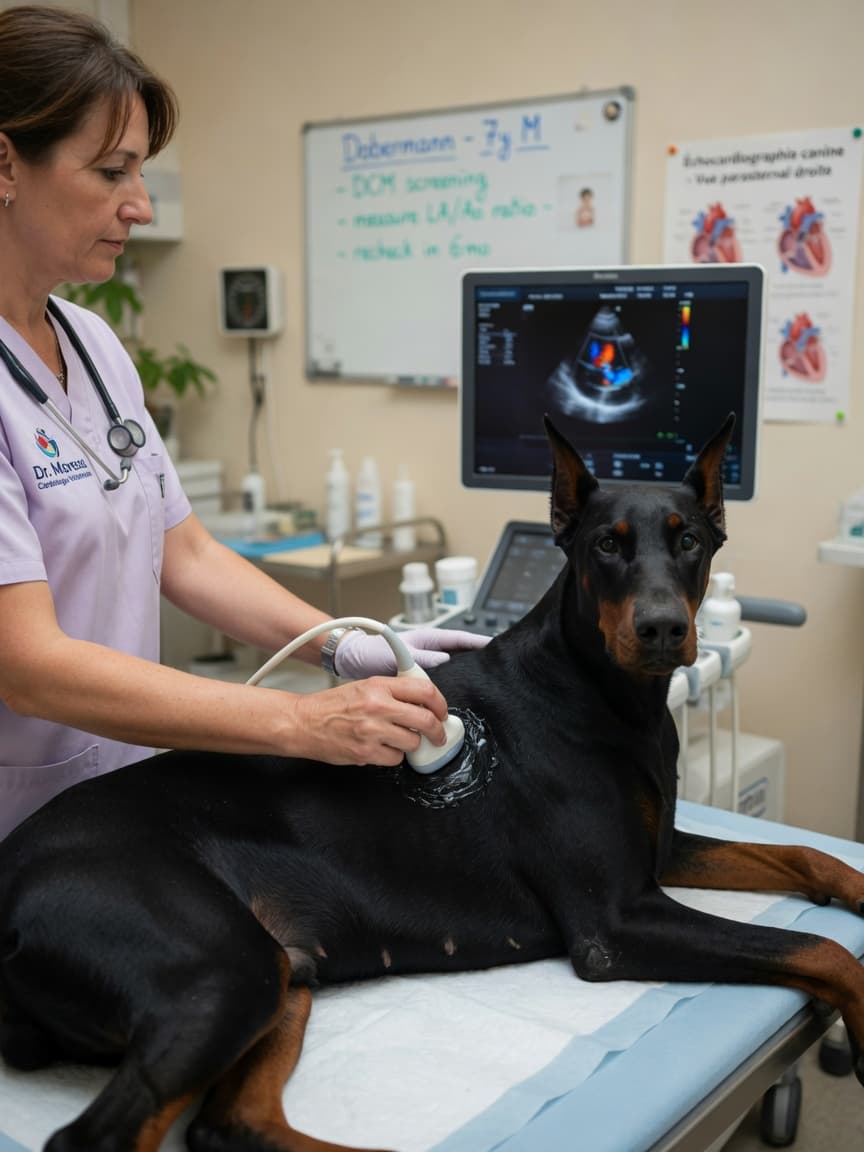
Among these, the Dobermann stands apart for a particularly concerning reason. Dobermann DCM can be entirely hidden — dogs may appear outwardly healthy while already having a significantly diseased heart. Sudden death without any prior warning is a known and tragic outcome in this breed, making proactive screening essential.
The Insidious Nature of Dobermann DCM
In Dobermanns, DCM frequently passes through what is called an occult phase — a period in which the dog has no obvious symptoms despite the heart being structurally abnormal. During this phase, dangerous heart rhythm disturbances called ventricular premature complexes, or VPCs, may be occurring. These arrhythmias can trigger episodes of sudden cardiac arrest.
Because of this, cardiologists strongly recommend that Dobermanns undergo annual cardiac screening from around two to three years of age. This screening typically combines echocardiography to assess heart size and function with Holter monitoring to detect arrhythmias. A Holter monitor is a small device worn by the dog for 24 hours that continuously records the heart's electrical activity, capturing any abnormal rhythms that would be missed during a brief in-clinic check.
Genetic testing is also available for Dobermanns. A mutation in the PDK4 gene has been identified as a risk factor, and DNA tests can indicate whether a dog carries the mutation. However, a negative result does not guarantee a dog will never develop DCM, so regular screening remains important regardless.
The Grain-Free Diet Debate

In 2018, the United States Food and Drug Administration began investigating a potential link between grain-free, boutique, and exotic ingredient diets and an increased incidence of DCM in breeds not traditionally predisposed to the condition — including Golden Retrievers, Labrador Retrievers, and others. The proposed mechanism involved low levels of the amino acid taurine, which plays an important role in heart muscle function.
This investigation generated significant concern among pet owners, and for good reason. However, it is important to understand that the research is still ongoing. No definitive causal link between grain-free diets and DCM has been formally established, and the picture is complex — not all affected dogs were taurine deficient, and not all grain-free diets appear to carry equal risk.
The current consensus among most veterinary cardiologists is that owners with dogs in high-risk breeds, or dogs showing any cardiac symptoms, should discuss their pet's diet with their vet. If your dog is eating a grain-free or legume-heavy diet, it may be worth switching to a diet that meets established nutritional standards from a long-standing manufacturer with a strong research record.
Symptoms of DCM
During the occult phase, there are often no visible symptoms at all. Once the disease progresses, or if significant arrhythmias develop, the following signs may appear:
- Sudden weakness or collapse, sometimes without warning
- Exercise intolerance or rapid tiring during walks
- Increased breathing rate or effort, especially at rest or when sleeping
- Coughing, particularly at night
- A distended abdomen due to fluid accumulation (ascites)
- Weight loss and muscle wasting
- Fainting episodes (syncope)
In some Dobermanns and other affected breeds, the very first sign of DCM is sudden cardiac death with no preceding warning. This is why screening is so strongly emphasised for at-risk breeds — catching the disease during the occult phase gives owners and vets the best possible chance to intervene.
Diagnosis
Diagnosis of DCM involves a combination of approaches. Your vet will listen to the heart for murmurs or abnormal rhythms, though in the early occult stage these may be absent. Chest X-rays can reveal an enlarged heart and any fluid in the lungs. Echocardiography is the gold standard for assessing the heart's structure and function, measuring the size of the chambers and the strength of the muscle contractions. A 24-hour Holter monitor is recommended for Dobermanns and Boxers to identify arrhythmias. Blood tests may be used to check for underlying causes, including taurine levels in certain breeds.
Treatment Options
Treatment depends on the stage of the disease and the presence of arrhythmias. Common medications used include:
- Pimobendan (Vetmedin): Strengthens the heart's contractions and reduces the pressure the heart works against. Often started in the occult phase once echocardiographic abnormalities are confirmed.
- ACE inhibitors: Help to reduce the workload on the heart by dilating blood vessels.
- Diuretics such as furosemide: Remove excess fluid from the lungs and body when heart failure develops.
- Antiarrhythmic medications: Used to control dangerous heart rhythms, particularly in Dobermanns and Boxers. Mexiletine and sotalol are commonly used.
- Taurine supplementation: Recommended in breeds or individuals confirmed to have low taurine levels, and sometimes trialled alongside a diet change.
Prognosis
The prognosis for DCM varies considerably by breed and stage at diagnosis. Irish Wolfhounds and Great Danes often have a shorter survival time once the disease is identified. Dobermanns diagnosed during the occult phase and started on pimobendan have been shown in research to have a significantly delayed progression to heart failure. Once overt heart failure develops, survival is typically measured in months rather than years, though some dogs remain stable for longer with careful management. Regular monitoring and a close relationship with a veterinary cardiologist give your dog the best possible chance.