
More Than Just a Dirty Ear
Most dog owners are familiar with the telltale signs of an outer ear infection — the smell, the scratching, the head shaking. But when an infection penetrates deeper into the middle ear (otitis media) or progresses further still to the inner ear (otitis interna), the consequences become considerably more serious. These conditions can cause neurological signs, permanent hearing loss, and balance disorders that profoundly affect a dog's quality of life. Understanding the difference matters.
Anatomy First: Why the Depth of Infection Changes Everything
The canine ear has three distinct regions. The outer ear canal leads to the eardrum (tympanic membrane), which serves as a barrier between the outer and middle ear. The middle ear is an air-filled cavity containing tiny bones that transmit sound vibrations. The inner ear houses the cochlea (responsible for hearing) and the vestibular apparatus (responsible for balance). When infection breaches these deeper structures, the functions they control are directly threatened.
How Do Middle and Inner Ear Infections Develop
Spread From the Outer Ear
The most common route is direct extension from chronic or severe outer ear infection (otitis externa). A persistently infected outer ear can eventually erode or rupture the eardrum, allowing bacteria, yeast, and inflammatory material to enter the middle ear. This is why recurring ear infections in dogs should never be dismissed as a minor nuisance — they carry real risk of progression.
Haematogenous Spread and Eustachian Tube
Less commonly, infection can reach the middle ear via the Eustachian tube from the nasopharynx, or through the bloodstream. Certain systemic infections or immunosuppressive conditions can predispose dogs to this pathway. Breeds with anatomical abnormalities — particularly brachycephalic dogs with compressed skull structures — may have altered Eustachian tube function that increases susceptibility.
Recognising the Signs
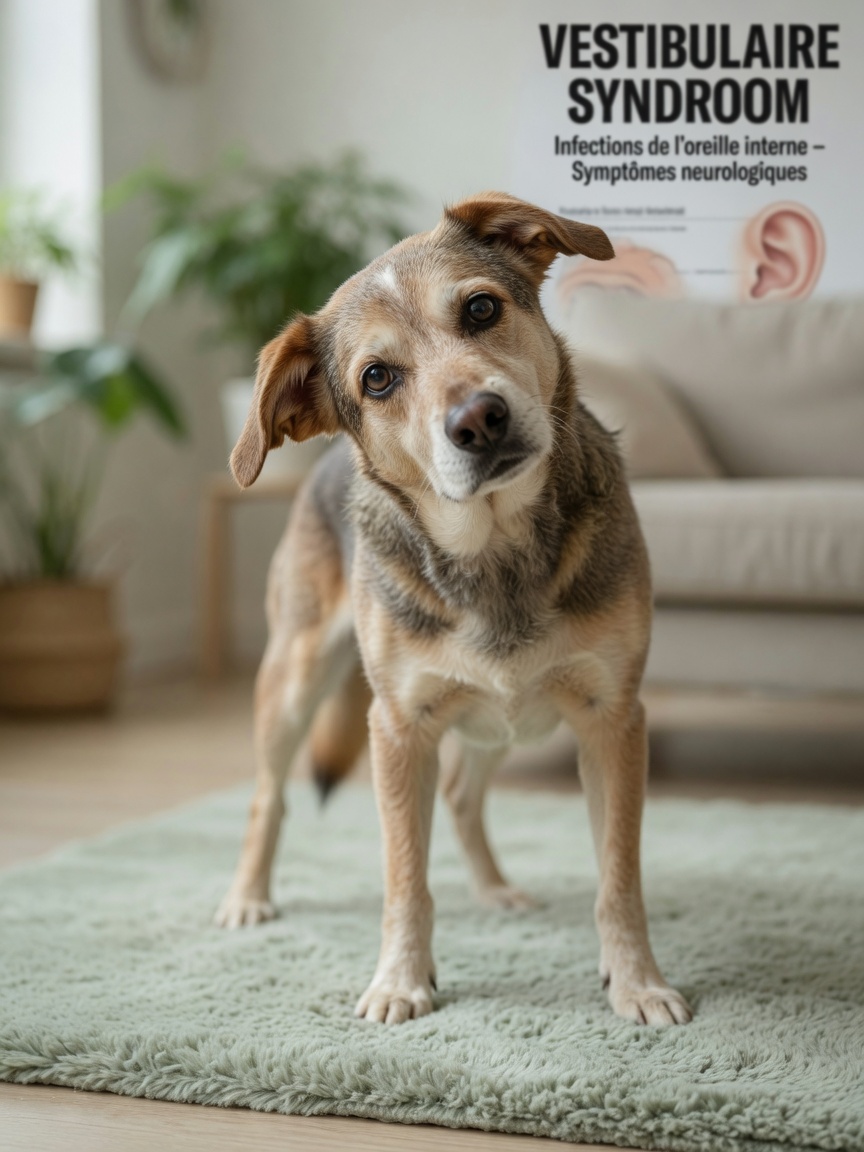
The clinical picture varies depending on which structures are affected and how severely.
Signs of Otitis Media
Middle ear infection may present with ongoing or recurrent outer ear problems, pain when opening the mouth or touching the jaw area, reluctance to eat hard food, and sometimes a head tilt. Facial nerve paralysis — causing a drooping lip, eyelid, or ear on one side — can occur if the facial nerve, which passes through the middle ear, becomes inflamed or compressed. Some dogs show Horner's syndrome, a triad of signs involving the eye: a sunken appearance, drooping upper eyelid, elevated third eyelid, and a smaller pupil on the affected side.
Signs of Otitis Interna
When infection reaches the inner ear, vestibular signs become prominent. A dog may suddenly appear drunk — stumbling, falling to one side, rolling, or circling. The head tilt is often pronounced. Rapid, involuntary eye movement (nystagmus) is characteristic. Vomiting may occur due to disorientation. These signs can be distressing to witness and are sometimes mistaken for a stroke or seizure by panicked owners. Hearing loss in the affected ear is common and may be permanent.
Diagnosis
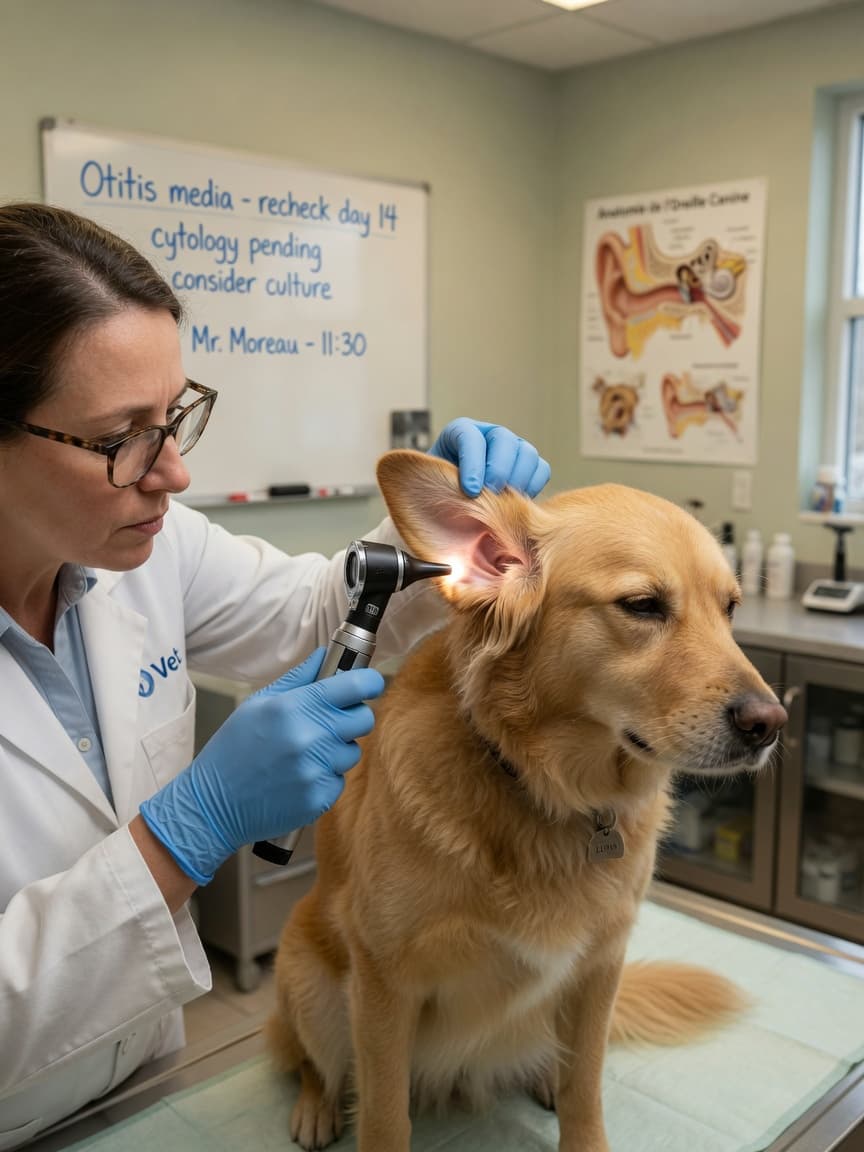
A thorough diagnosis is essential because the treatment approach and prognosis depend on accurately identifying the extent of infection. Your vet will perform a detailed otoscopic examination, often under sedation to properly visualise the eardrum and ear canal. Samples will be taken for cytology and culture to identify the causative organisms — bacterial, fungal, or mixed infections are all possible, and treatment must be matched to the pathogen.
Advanced imaging is frequently necessary. Computed tomography (CT) is the preferred method for evaluating the middle and inner ear, as it provides detailed views of the bony structures of the tympanic bulla. MRI may be recommended when neurological involvement is suspected and detailed imaging of soft tissue and the brain is needed. Chest radiographs may also be taken to assess for systemic spread in complex cases.
Treatment and Management
Medical Management
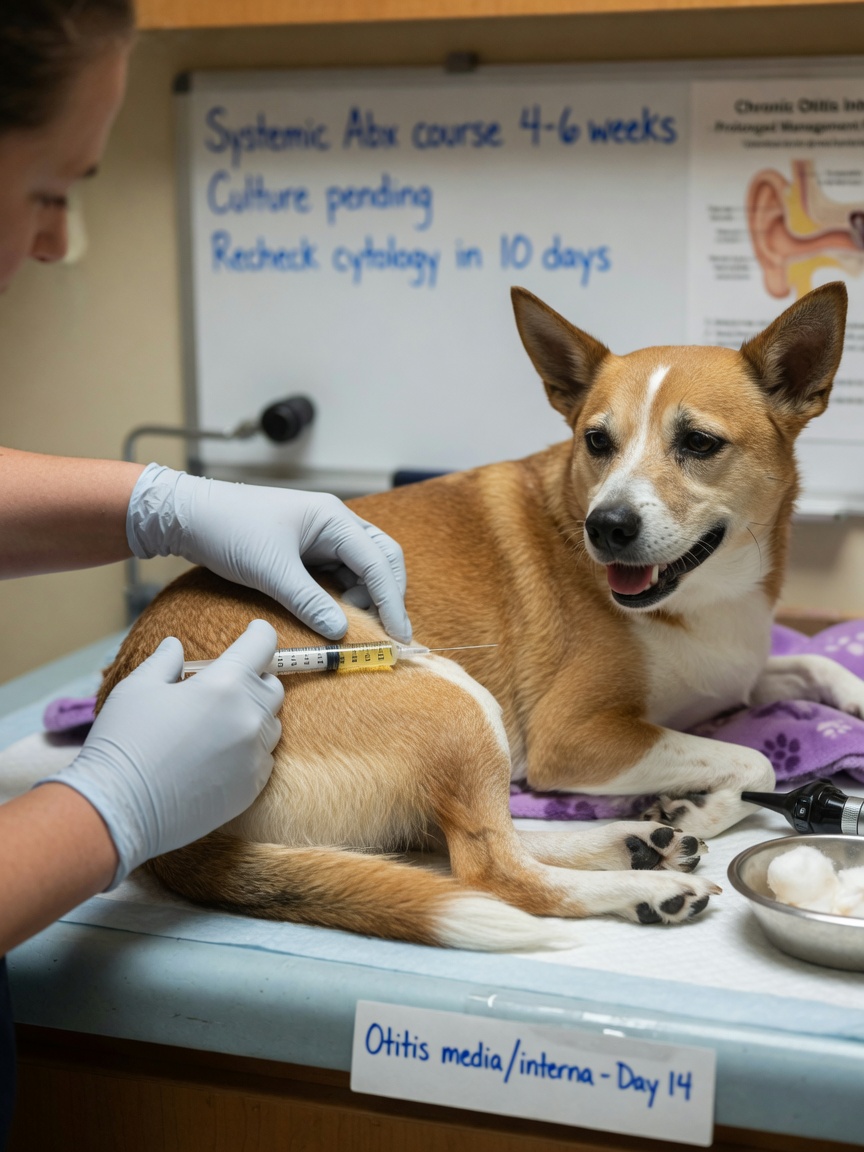
Treatment typically involves prolonged courses of systemic antibiotics or antifungal medications, selected based on culture and sensitivity results. Topical ear preparations may also be used where the eardrum is intact or has been assessed appropriately. Anti-inflammatory medications help manage pain and reduce swelling around sensitive nerve structures. Treatment courses for deep ear infections are substantially longer than for simple outer ear infections — often six to eight weeks or more — and premature discontinuation is a common reason for relapse.
Surgical Options
When medical management fails, or when chronic structural changes have occurred within the middle ear, surgery may be recommended. Total ear canal ablation with lateral bulla osteotomy (TECA-LBO) removes the diseased ear canal and opens the bulla to allow drainage and debridement. This is a significant procedure but can be life-changing for dogs with chronic, treatment-resistant disease. Ventral bulla osteotomy is an alternative approach used in some cases.
Prognosis and Long-Term Outlook
Prognosis depends heavily on how early the condition is caught and treated, the organisms involved, and whether permanent structural damage has occurred. Facial nerve deficits sometimes resolve with treatment, though recovery can take months and is not guaranteed. Vestibular signs often improve significantly over weeks, even when the inner ear is affected, because the brain has a remarkable capacity to compensate. Hearing loss in the affected ear is frequently permanent. Dogs managed well can lead comfortable, happy lives.
What Dog Owners Should Do
- Treat outer ear infections promptly and follow the full course of prescribed treatment — do not stop early because the ear looks better.
- If your dog develops a head tilt, stumbles, has facial asymmetry, or shows eye abnormalities alongside an ear problem, seek veterinary attention the same day.
- Request appropriate diagnostic imaging if your vet suspects middle or inner ear involvement — this is not an over-cautious request.
- Commit to the full duration of prescribed medication and return for all follow-up appointments.
- Always have a veterinarian guide treatment decisions; deep ear infections are not suitable for home management alone.