
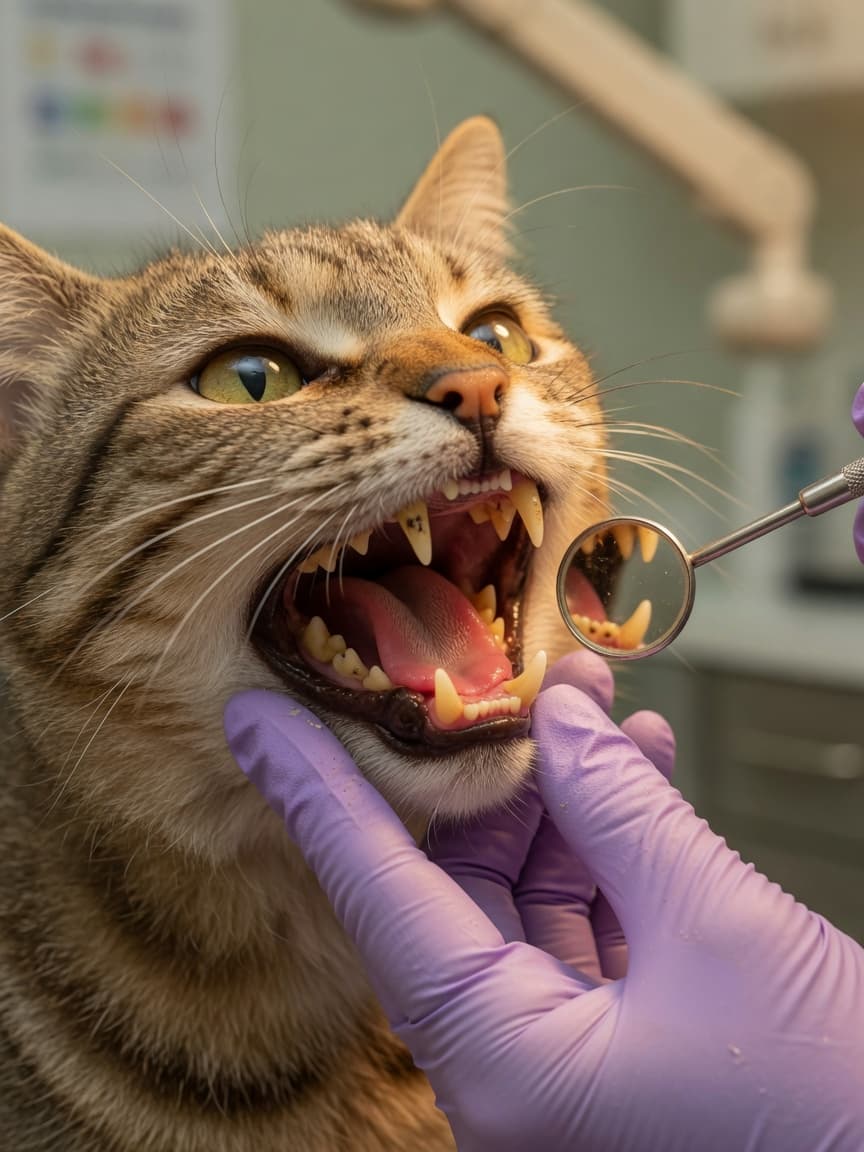
How Common Is Dental Disease in Cats?
Dental disease is one of the most frequently diagnosed health problems in cats across Europe. Research consistently shows that between 50 and 90 per cent of cats over four years of age have some degree of periodontal disease, and the condition becomes increasingly prevalent as cats age. Despite this, feline dental health often receives far less attention than dental care for dogs, partly because cats are adept at concealing discomfort and partly because their independent nature can make oral examination and home care more challenging.
WSAVA guidelines include oral health assessment as a core component of every routine consultation, and veterinary organisations such as FECAVA actively promote awareness of feline dental disease among owners throughout Europe. Understanding the condition and taking proactive steps can significantly improve your cat's quality of life.
Types of Dental Disease in Cats
The most common dental conditions seen in cats include periodontal disease, tooth resorption, and stomatitis. Periodontal disease follows a similar progression to that seen in dogs — plaque hardens into tartar, which irritates the gums and eventually damages the structures supporting the teeth. Gingivitis, the earliest and most reversible stage, involves inflamed, reddened gums that may bleed easily.
Tooth resorption is a particularly painful condition unique to cats, in which the body begins to break down and absorb the structure of a tooth from the inside out. It affects a significant proportion of cats at some point in their lives and often cannot be detected without dental radiographs. Feline stomatitis is a severe inflammatory condition affecting the entire mouth, often with an immune-mediated component, and can cause extreme pain and difficulty eating.
Recognising the Signs of Dental Pain in Cats
Cats rarely vocalise pain in an obvious way, which means dental problems can be present for months or years before an owner realises something is wrong. Knowing the subtle signs of oral discomfort is therefore extremely important.
Watch for changes in eating behaviour, such as dropping food, chewing on one side of the mouth, showing interest in food but then backing away, or refusing dry food in favour of wet. Excessive drooling, particularly if tinged with blood, is a significant warning sign. Reduced grooming, a matted or unkempt coat, or a cat that flinches when touched near the face can all indicate oral pain. Bad breath that is noticeably unpleasant — beyond normal fish-food odour — is also a reliable indicator of dental disease.
If you observe any of these signs, a veterinary examination is warranted as soon as possible. Cats experiencing dental pain are suffering silently, and early intervention prevents further deterioration.
Home Dental Care for Cats
Toothbrushing is as effective in cats as in dogs, but it requires considerable patience and should ideally be introduced during kittenhood when the cat is most adaptable. Use a soft cat-specific toothbrush or a finger brush along with toothpaste formulated for cats — available in flavours such as chicken or malt that cats tend to accept more readily. Never use human toothpaste, which contains ingredients toxic to cats.
Introduce the process very gradually. Begin by touching around the cat's mouth gently while offering treats. Progress to allowing the cat to lick cat toothpaste from your finger, then to rubbing the gum line with your finger, and finally to using the brush. Even brushing two or three times per week provides meaningful benefit if daily brushing proves impractical. Some cats never accept brushing, and for these individuals, complementary approaches become especially important.
Dental treats with the VOHC seal of acceptance offer an accessible alternative for cats resistant to brushing. Specific dental diets, designed with a particular kibble texture that mechanically cleans the teeth as the cat chews, are another option worth discussing with your vet. Zooplus carries a good selection of feline dental treats and oral hygiene products that can complement a home care routine.
Professional Dental Cleaning Under Anaesthesia
General anaesthesia is essential for safe and effective dental cleaning in cats. A cat cannot be asked to hold still and open its mouth on command, and attempting to clean teeth without anaesthesia results in a stressful and superficial procedure that does nothing to address disease below the gum line. Any practice offering "anaesthesia-free dental cleaning" should be avoided — veterinary and dental professional organisations universally advise against this approach.
Under anaesthesia, the veterinarian will perform a full oral examination, scale tartar from all tooth surfaces and beneath the gum line, and take dental radiographs to assess tooth roots and detect conditions such as tooth resorption that are invisible above the gum line. Any teeth that are beyond saving will be extracted, which — while it sounds alarming — typically results in a dramatic improvement in comfort and quality of life. Most cats eat better and behave more contentedly after appropriate extractions.
Before the procedure, your vet will perform pre-anaesthetic blood tests to check organ function and assess anaesthetic risk, particularly important in middle-aged and older cats. Recovery is generally straightforward, and cats are typically sent home the same day with appropriate pain relief.
How Often Does Your Cat Need a Dental Clean?
The frequency of professional cleaning depends on the individual cat's oral health, genetics, diet, and how effectively home care is being carried out. Some cats require annual cleaning under anaesthesia, while others may go several years between procedures. Your vet will advise based on what they observe during routine check-ups.
Establishing a habit of annual health examinations — during which the vet assesses the mouth — means that developing dental disease is caught early. Preventive intervention is always less invasive, less expensive, and less distressing for your cat than treating advanced disease. Good dental care, combined with attentive home observation, gives your cat the best possible chance of a comfortable and healthy life.