
The Breed Most Likely to Experience Spinal Disaster
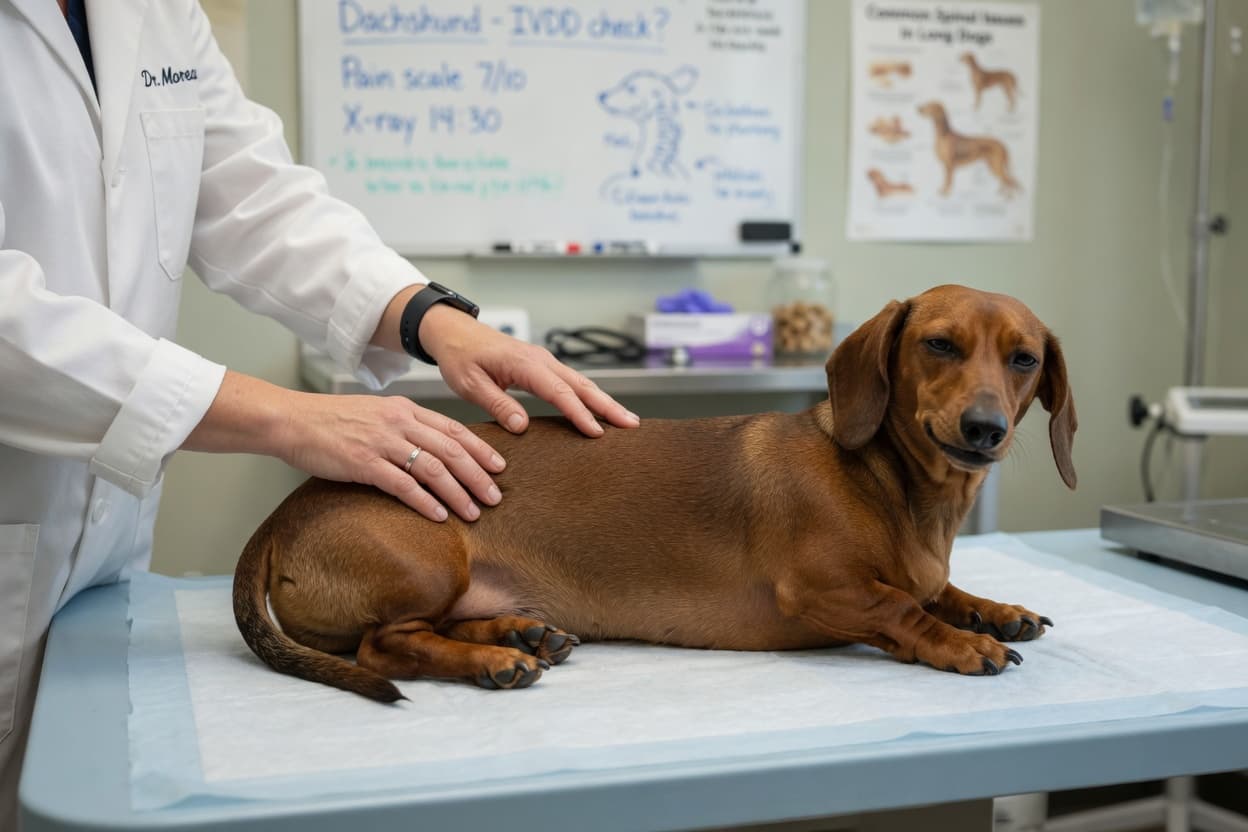
Approximately one in four Dachshunds will experience a clinically significant episode of Intervertebral Disc Disease at some point in their life. That figure, drawn from research published in veterinary epidemiology literature, is not meant to alarm but to prepare. Back problems in Dachshunds are not bad luck — they are a predictable consequence of the breed's anatomy, and understanding them is the most practical thing an owner can do to protect their dog.
Why Dachshunds Are So Vulnerable
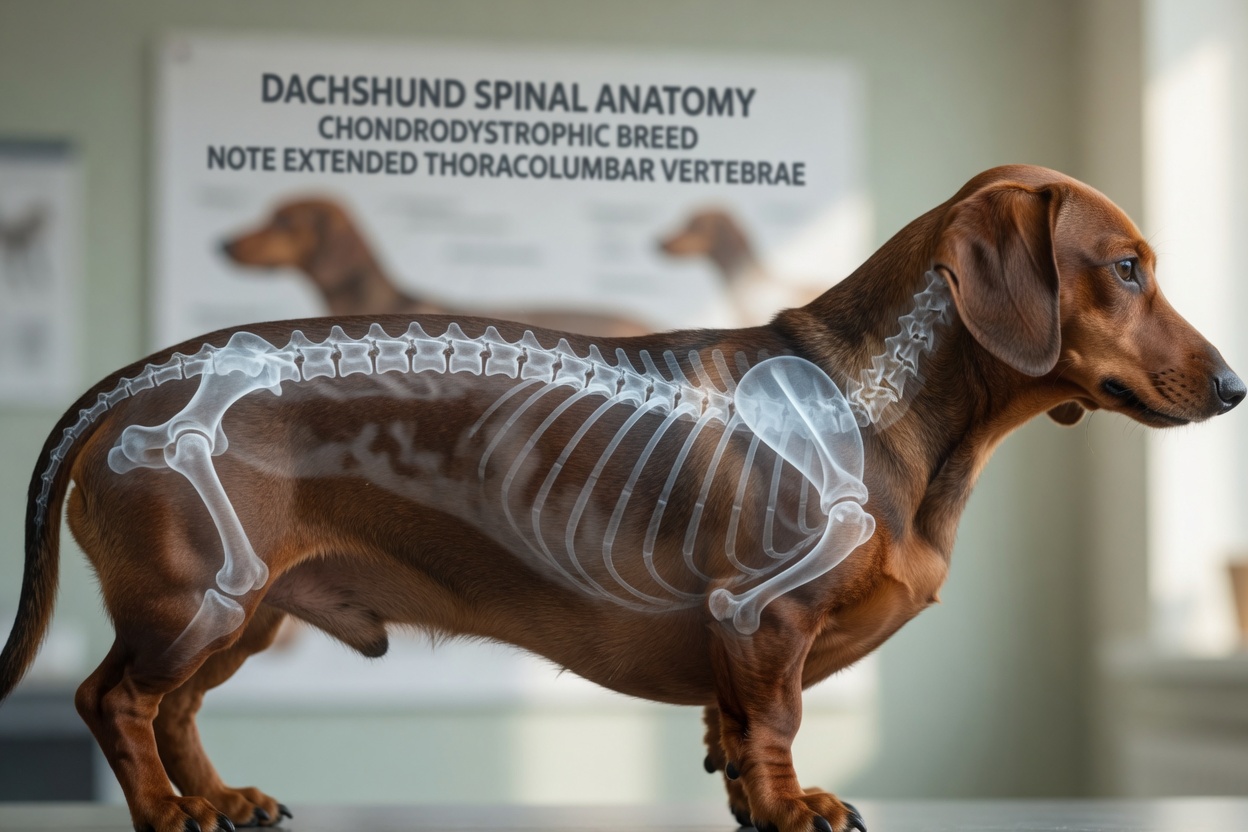
Dachshunds are chondrodystrophic — meaning they carry a genetic mutation that causes premature calcification of the intervertebral discs. Where a healthy disc is composed of a tough outer ring and a gelatinous inner core that absorbs impact, a chondrodystrophic disc calcifies and loses its shock-absorbing properties early in life. Many Dachshunds have calcified discs detectable on X-ray by three to four years of age.
Combined with the breed's disproportionately long spine relative to their leg length, this creates a structural vulnerability that amplifies the consequences of any spinal stress. Disc material that herniates inward can compress the spinal cord rapidly, causing anything from pain to complete paralysis.
Types of IVDD and What They Mean
Intervertebral Disc Disease in Dachshunds most commonly presents as Hansen Type I, in which the calcified disc material is explosively extruded into the spinal canal. This type tends to cause sudden, severe signs. Hansen Type II, more common in older or non-chondrodystrophic dogs, involves a slower bulging of the disc and tends toward a more gradual onset.
Where problems most often occur
The thoracolumbar junction — roughly the area where the rib cage ends — is the most common site for disc herniation in Dachshunds, accounting for the majority of clinical cases. Cervical (neck) discs are the second most common site and can cause very different symptoms, often including severe neck pain and forelimb involvement.
Recognising the Signs
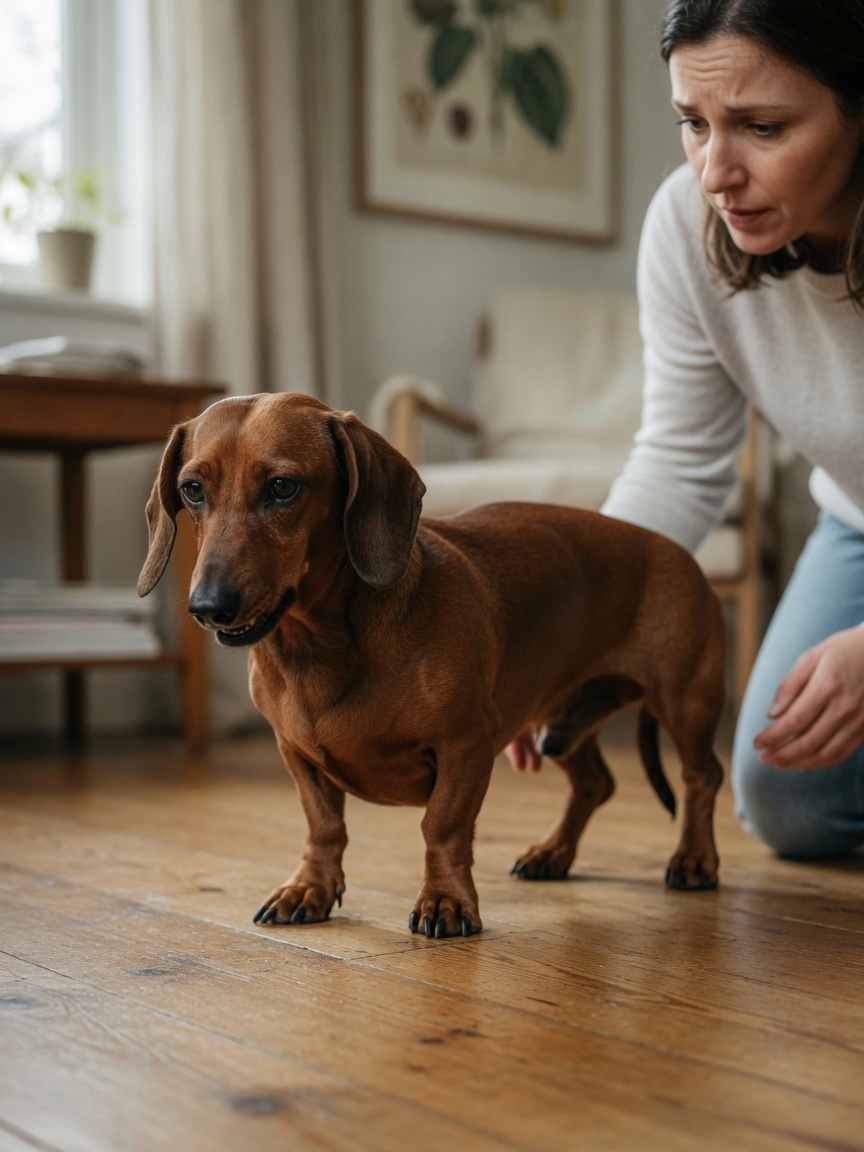
Knowing what to look for is genuinely life-changing for a Dachshund owner, because the speed of response to IVDD directly influences outcome.
- Back pain: arching or hunching of the spine, reluctance to be touched along the back, yelping when lifted
- Hindlimb weakness: stumbling, dragging of the rear paws, a drunken or wobbly gait
- Loss of proprioception: the dog fails to correct its paws when placed upside-down (knuckling)
- Paralysis: inability to move one or more limbs
- Loss of bladder or bowel control: a serious sign indicating significant spinal cord involvement
These signs can develop over hours or appear suddenly. A dog that was walking normally in the morning can be paralysed by evening. Any hindlimb weakness in a Dachshund is a veterinary emergency — do not wait to see if it resolves.
Treatment Options
Conservative management
Mild cases — typically those involving pain without neurological deficits — may be treated conservatively with strict cage rest for four to six weeks, anti-inflammatory medication, and pain relief. Conservative management requires genuine confinement; allowing the dog to move freely defeats its purpose entirely. Success rates for mild cases managed this way are reasonable, but recurrence is common, and the underlying disc problem is not resolved.
Surgery
Decompressive surgery, in which the herniated disc material is removed from the spinal canal, is the recommended approach for dogs with moderate to severe neurological signs. The critical factor is time: dogs that undergo surgery within 24 to 48 hours of paralysis have substantially better outcomes than those treated later. Dogs that retain the ability to feel deep pain stimuli in their limbs have a good prognosis with prompt surgery. Those who have lost deep pain perception have a guarded prognosis, but recovery is still possible with early intervention.
Physiotherapy and rehabilitation
Whether treated surgically or conservatively, physiotherapy plays a significant role in recovery. Hydrotherapy, passive limb exercises, and laser therapy are among the modalities used by veterinary rehabilitation practitioners. Recovery from surgical IVDD can take weeks to several months, requiring considerable commitment from owners.
Prevention: What Actually Makes a Difference
Prevention cannot eliminate IVDD risk in Dachshunds, but it can meaningfully reduce the frequency and severity of episodes.
- Maintain a healthy body weight — a heavy Dachshund places disproportionate load on an already vulnerable spine
- Use ramps or steps to allow the dog to access furniture and cars without jumping — repeated impact loading from jumping down is associated with disc injury
- Discourage rough play involving twisting, sudden direction changes, or rough handling by children
- Use a harness rather than a collar to remove any pressure from the cervical spine during lead walking
- Avoid activities that cause repeated spinal concussion — long runs on hard surfaces, for instance
- Consider MRI screening in middle age if your Dachshund belongs to a heavily affected line, as this can identify pre-clinical disc calcification
What to Do If You Suspect a Crisis
- Do not wait and monitor — contact your vet immediately
- Restrict movement: carry your dog rather than allowing it to walk, and confine it to a small, comfortable space
- Do not give human pain relief such as ibuprofen or paracetamol — both are toxic to dogs
- If it is out of hours, contact an emergency veterinary service: time is the most important factor in IVDD outcomes
- Ask your vet directly about referral to a neurologist if surgical assessment is appropriate — general practice vets will guide this, but advocacy from owners matters
Living with a Dachshund means accepting that IVDD is a real possibility and preparing accordingly. Owners who understand the risks, have a plan, and act without delay when problems arise give their dog the best possible chance of a full or near-full recovery. Speak to your vet about your individual dog's risk profile and what preventive measures make most sense for your household.