
What Is Hypoglycaemia and Why Does It Matter?
Hypoglycaemia refers to abnormally low blood glucose levels. Glucose is the primary fuel source for the brain and nervous system, which means that when levels drop too low, neurological function is compromised rapidly. Unlike many other medical conditions that develop over weeks or months, hypoglycaemia can progress from subtle symptoms to life-threatening collapse within minutes, making it one of the true veterinary emergencies.
Normal blood glucose in dogs sits between approximately 3.9 and 6.9 mmol/L. Clinical signs typically begin to appear when levels fall below 3.3 mmol/L, and severe neurological compromise usually occurs below 2.5 mmol/L. The brain, unable to store glucose itself, depends entirely on a continuous supply from the bloodstream.
Common Causes of Low Blood Sugar in Dogs
Hypoglycaemia is not a diagnosis in itself but a sign of an underlying problem. Identifying the root cause is essential for both immediate management and long-term prevention.
Insulin Overdose in Diabetic Dogs
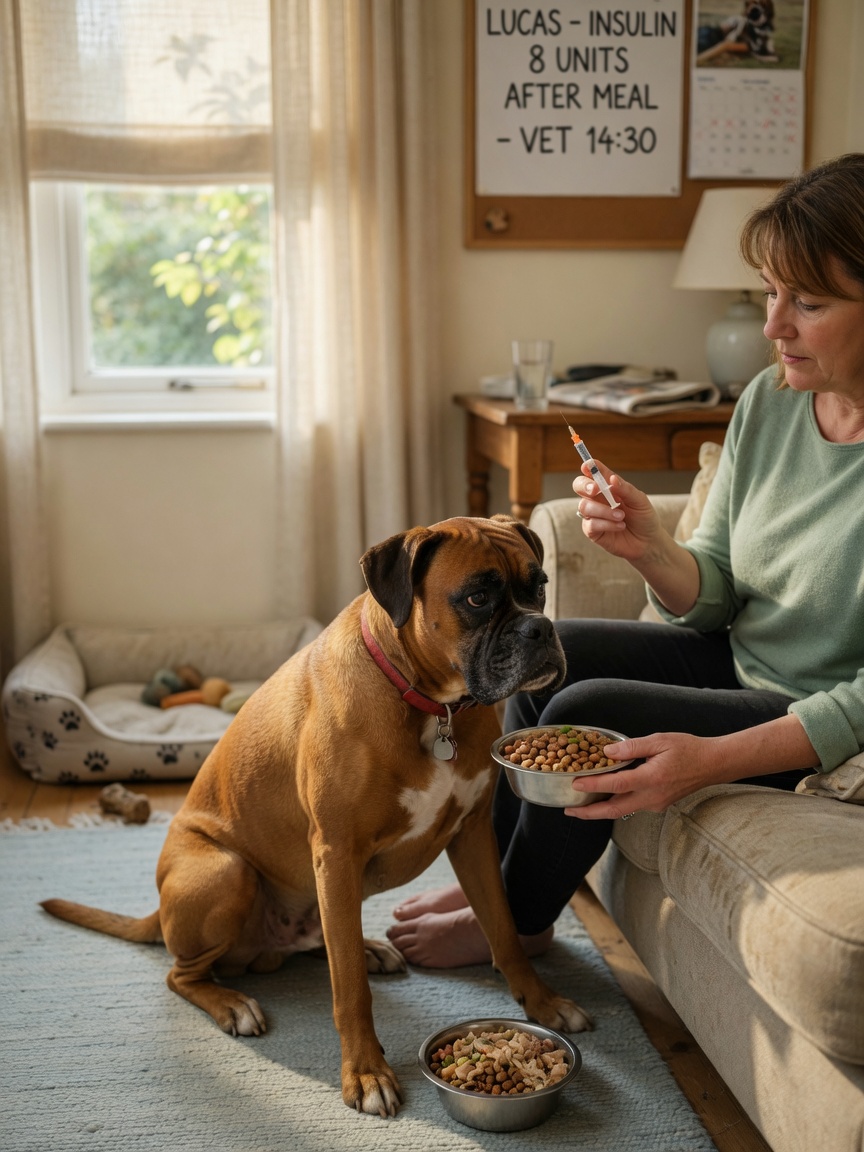
The most common cause in adult dogs is insulin overdose. This can occur if the dose is too high, if a diabetic dog skips a meal after receiving insulin, if the dog vomits following injection, or if unusual activity levels increase glucose consumption. Owners of diabetic dogs must be alert to this possibility at all times.
Toy and Small Breed Puppies
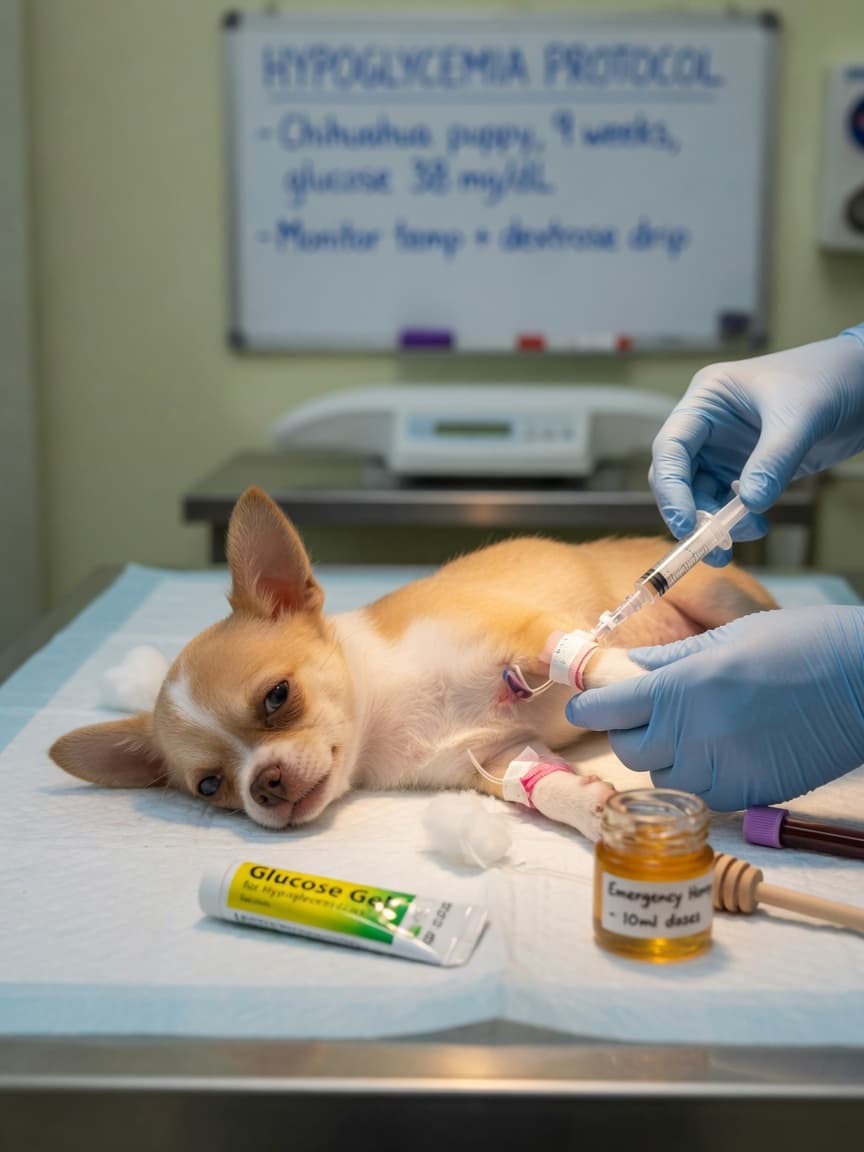
Very young puppies, particularly those of toy breeds such as Chihuahuas, Yorkshire Terriers, and Maltese, have limited glycogen stores and immature glucose regulatory mechanisms. Stress, chilling, missed meals, intestinal parasites, or infections can rapidly deplete their glucose reserves. Hypoglycaemia in puppies is common and can be life-threatening without prompt intervention.
Insulinoma
An insulinoma is a tumour of the insulin-producing beta cells of the pancreas. These tumours continuously secrete insulin regardless of blood glucose levels, causing persistent and severe hypoglycaemia. They typically affect older dogs and are more common in certain breeds including Boxers, Irish Setters, and Standard Poodles.
Other Causes
- Liver disease, which reduces the liver's ability to store and release glucose
- Sepsis, where widespread infection disrupts metabolic regulation
- Addison's disease, through cortisol deficiency impairing gluconeogenesis
- Hunting dog hypoglycaemia, a transient condition in working dogs during sustained exercise
- Xylitol toxicity, as this sweetener causes a rapid and severe insulin release in dogs
- Rare glycogen storage disorders
Recognising the Signs

Hypoglycaemia presents along a spectrum from mild to life-threatening, and the signs progress as glucose levels fall further.
- Restlessness or unusual anxiety
- Weakness, wobbliness, or uncoordinated movement
- Muscle twitching or trembling
- Glazed or vacant expression
- Disorientation and confusion
- Excessive drooling
- Collapse and inability to stand
- Seizures
- Loss of consciousness
In puppies, the earliest signs are often simply lethargy and a reluctance to feed. As the condition worsens, they may become limp, unresponsive, or begin paddling their limbs. Any puppy that seems suddenly dull or floppy should be treated as a potential hypoglycaemia case until proven otherwise.
Emergency Response at Home
If you suspect your dog is hypoglycaemic and they are still conscious and able to swallow safely, immediate glucose supplementation is the priority.
- Rub a small amount of honey, corn syrup, or glucose gel onto the gums and inner cheeks
- Do not attempt to give anything by mouth if the dog is unconscious or seizing, as this risks aspiration
- If the dog responds and begins to improve, offer a small amount of food
- Contact your vet or emergency clinic immediately regardless of how well the dog appears to recover
Glucose applied to the mucous membranes is absorbed relatively quickly and can buy critical minutes while you travel to the clinic. A temporary improvement should never be taken as a sign that veterinary assessment is unnecessary, as the underlying cause must be identified and addressed.
If your dog is unconscious or seizing, do not attempt to give anything orally. Wrap them in a blanket to maintain body temperature and transport them to an emergency vet without delay. Intravenous dextrose will be required to restore glucose levels rapidly.
Veterinary Treatment
In a clinical setting, hypoglycaemia is treated with intravenous dextrose, which rapidly restores blood glucose levels. Once stabilised, the dog will require investigation to determine the cause. This typically includes a full blood panel, assessment of liver function, insulin and glucose measurements, and potentially abdominal imaging to look for a pancreatic tumour.
For suspected insulinoma, further diagnostics may include an amended insulin to glucose ratio and imaging such as ultrasound or CT scan. Surgical removal of the tumour offers the best long-term outcome, though medical management with prednisolone and dietary modification can help in inoperable cases.
Prevention Strategies
Prevention depends on the underlying cause, but some general principles apply across situations.
- Diabetic dog owners should always ensure their dog has eaten before giving insulin and should keep glucose gel or honey readily accessible
- Toy breed puppies should be fed little and often, every four to six hours, and kept warm and free from unnecessary stress
- Working dogs should be fed a high-quality diet with complex carbohydrates and may benefit from a meal or snack mid-activity
- Keep all products containing xylitol completely out of reach, as even small amounts can trigger severe hypoglycaemia
- Any dog with recurrent unexplained episodes should be investigated promptly rather than managed symptomatically
Hypoglycaemia is frightening to witness, but with rapid recognition and appropriate first aid, many dogs recover fully. Building your knowledge of the warning signs and having glucose sources to hand is among the most practical things a dog owner can do, particularly if their dog has a condition that predisposes them to low blood sugar.