
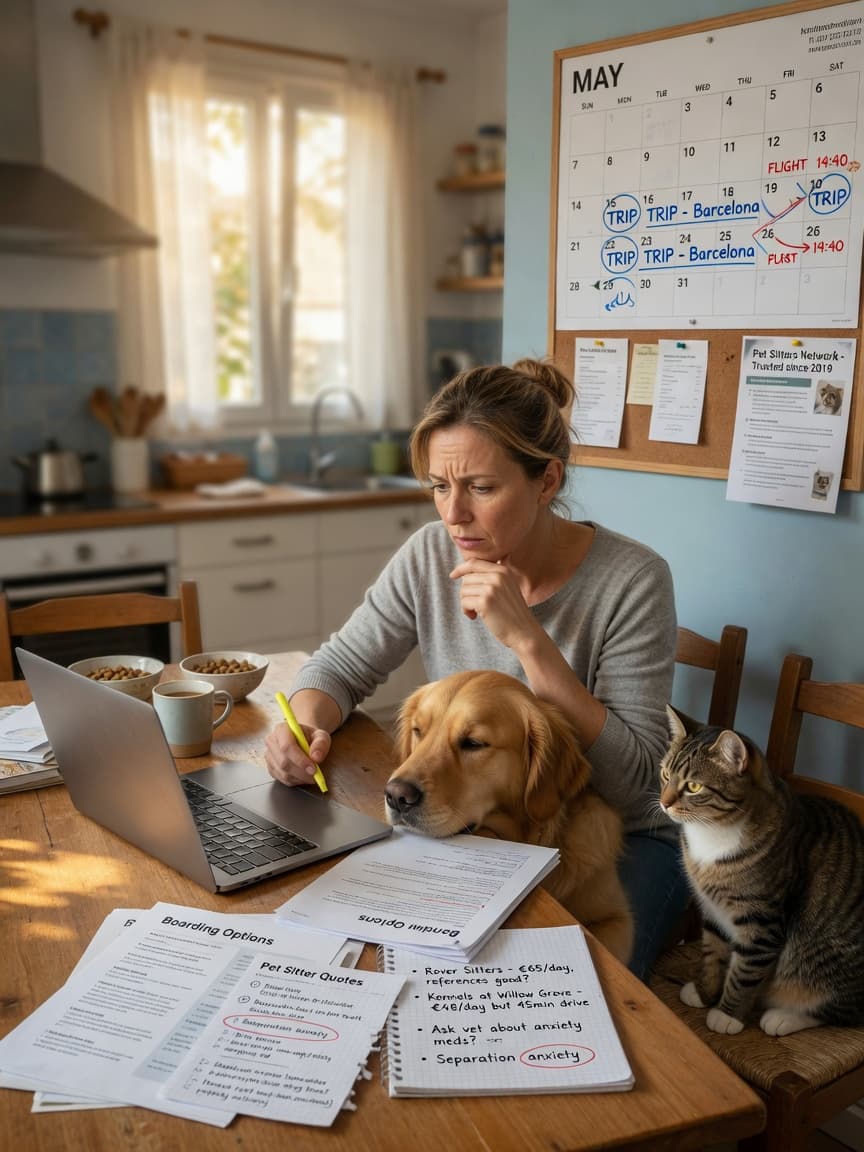
Your Holiday Plans Are Set — But What About the Pets?
Arranging care for pets left at home is one of the most consequential decisions a pet owner makes, yet it is frequently left until the last minute. The choice between a boarding kennel or cattery and a professional pet sitter — or trusted friend — has lasting implications for your pet's welfare, your peace of mind, and in some cases, your home security. Neither option is universally superior; the right choice depends on your pet's temperament, health, and routine.
The Case for Boarding Kennels and Catteries
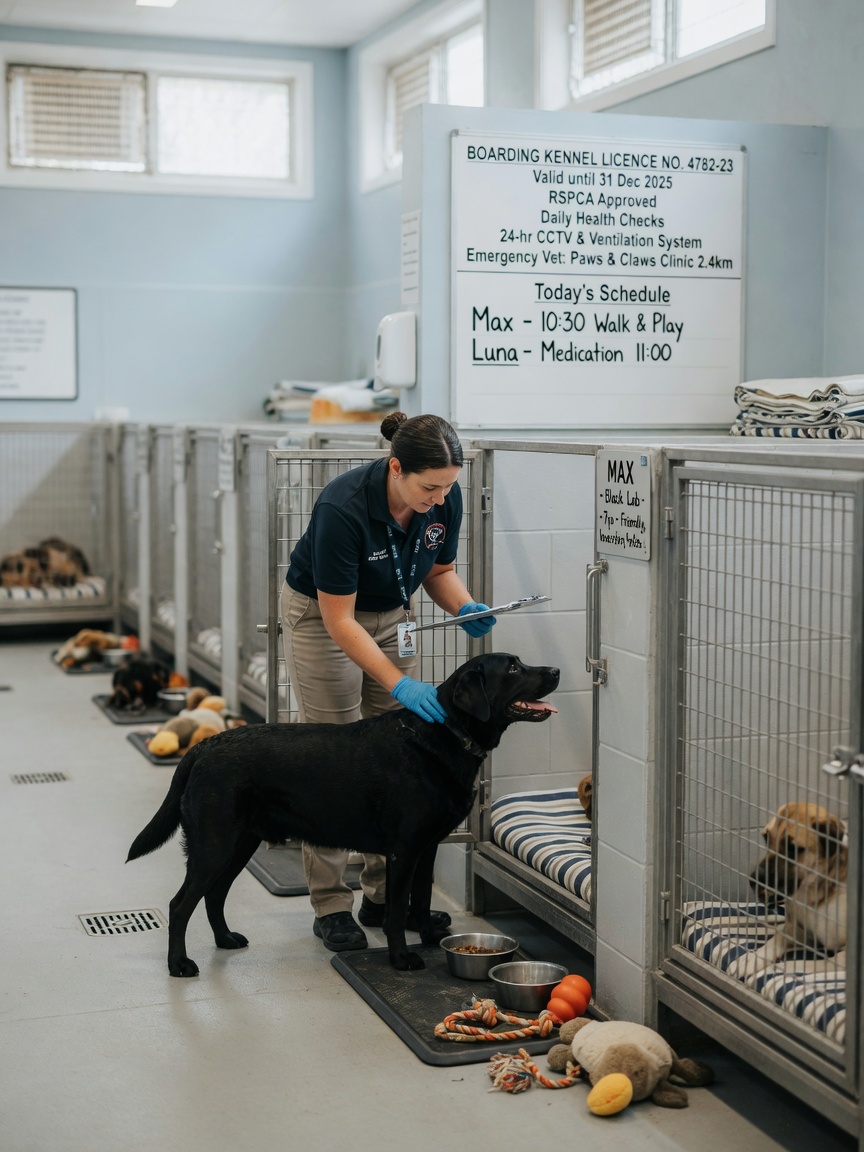
Structure and Supervision
Reputable boarding facilities offer round-the-clock supervision, structured feeding schedules, and staff trained to identify signs of illness or distress. For dogs that thrive on routine and social interaction with other dogs, a well-run kennel can be genuinely stimulating rather than stressful. Facilities licensed by the local authority under the Animal Welfare (Licensing of Activities Involving Animals) Regulations 2018 are subject to inspection, which provides a baseline of assurance.
Security
Escape-proof enclosures and controlled environments reduce the risk of lost pets. Staff on site means that if your pet falls ill, action can be taken promptly. Many kennels have relationships with local veterinary practices and carry appropriate insurance.
Limitations
Some animals — particularly anxious dogs, older cats, or pets with complex medical needs — do not adapt well to kennel environments. The noise levels, unfamiliar smells, and proximity to unknown animals can elevate stress hormones significantly. Animals on specialist diets or multiple medications require careful handover. Always confirm that the facility can accommodate your pet's specific needs before booking.
The Case for Professional Pet Sitters
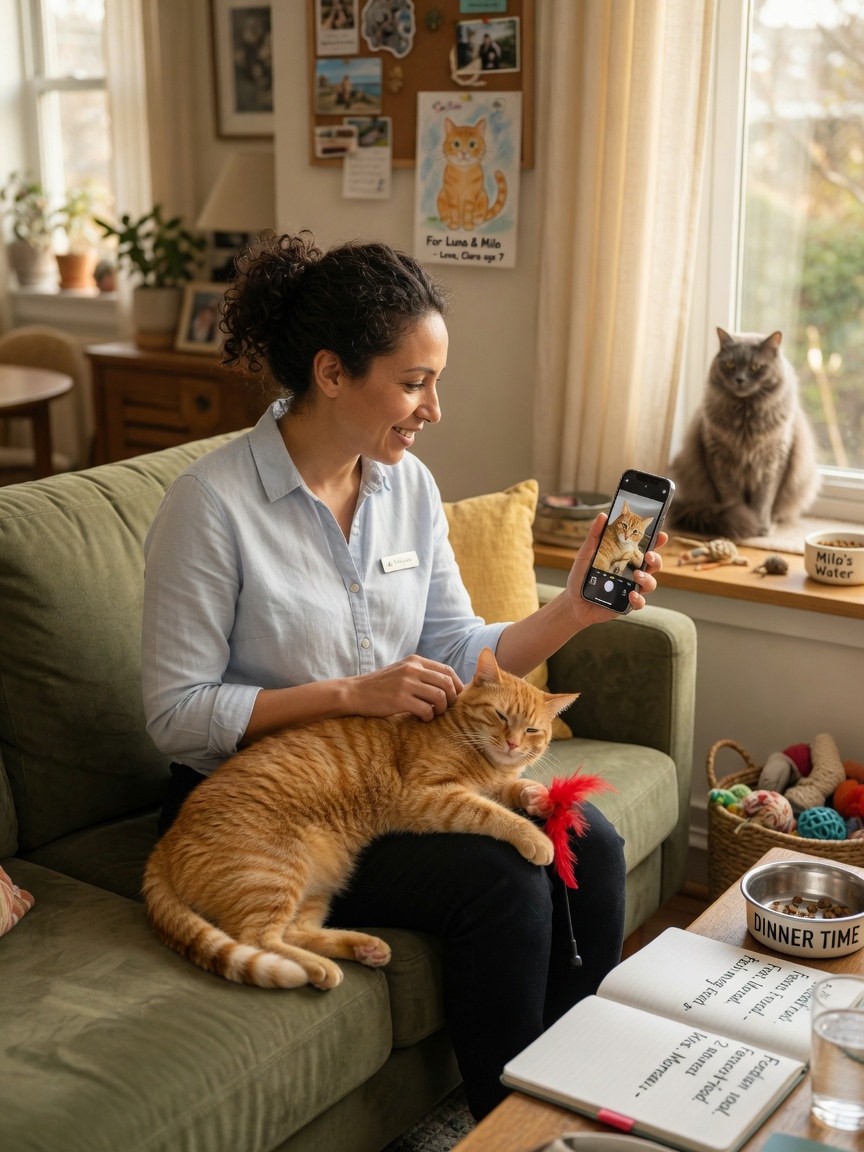
Home Comfort and Continuity
A professional pet sitter — visiting the home or living in while you are away — allows your pet to remain in their familiar environment with their existing routine largely intact. This is particularly valuable for cats, which are highly territorial and often adapt poorly to relocation. Senior pets with health conditions, animals recovering from surgery, or those with behavioural issues frequently do better with in-home care.
Individual Attention
Unlike kennels where staff manage multiple animals simultaneously, a dedicated pet sitter provides one-to-one attention. Regular photo and video updates — now standard practice among professional sitters — offer reassurance throughout your absence.
Limitations
Quality is highly variable. The industry is not formally regulated in the same way as licensed kennels. A poorly vetted pet sitter creates risks not only for your pet but for your home. Insurance, references, and experience must be verified independently. Pet sitters who are members of professional bodies such as the National Association of Pet Sitters and Dog Walkers (NarpsUK) have signed up to a code of conduct, which offers some additional assurance.
Questions to Ask Before You Book Either Option
For Boarding Kennels
- Is the facility licensed by the local authority and what star rating does it hold?
- What is the staff-to-animal ratio?
- How are medical emergencies handled, and with which vet?
- Are dogs exercised individually or in groups, and how is group compatibility assessed?
- What vaccinations are required, and how are records verified?
- Can you visit the facility unannounced before booking?
For Pet Sitters
- Are they insured, and does the policy cover injury to your pet and damage to your property?
- Can they provide two verifiable references from recent clients?
- What is their experience with your specific species and breed?
- How do they handle a veterinary emergency, and who authorises treatment?
- What happens if they are ill or unavailable — is there a backup sitter?
- How frequently will they visit or check in, and what updates will you receive?
Preparing Your Pet — and Your Carer
Regardless of which option you choose, a thorough handover is non-negotiable. Provide written instructions covering feeding schedule and quantities, any medication with dosing guidance, behavioural quirks and triggers, your vet's contact details, and a signed consent form authorising veterinary treatment in your absence. Leave a budget for unexpected expenses and confirm in advance how these will be handled. If using a kennel, send a familiar-smelling item such as a worn T-shirt to provide olfactory comfort.
For animals with significant anxiety or health conditions, speak to your vet before your trip. Short-term anxiety support — behavioural or pharmaceutical — can make the experience considerably less distressing. Your vet is the right person to advise on what is appropriate for your individual animal.