
When Normal Behaviours Become Problematic
Every behaviour a cat might display compulsively — grooming, chewing, sucking — is rooted in something entirely normal. Cats groom themselves for hygiene and thermoregulation. They chew and mouth objects as part of exploration. These behaviours become concerning when they are performed repetitively, excessively, and in contexts where they serve no obvious biological function — particularly when they cause physical harm or significantly disrupt daily life.
Feline compulsive disorder (FCD) is the clinical term for these patterns, and it is more common than many owners realise. Understanding the underlying mechanisms is important because the treatment approach depends heavily on correctly identifying the cause.
Overgrooming and Psychogenic Alopecia
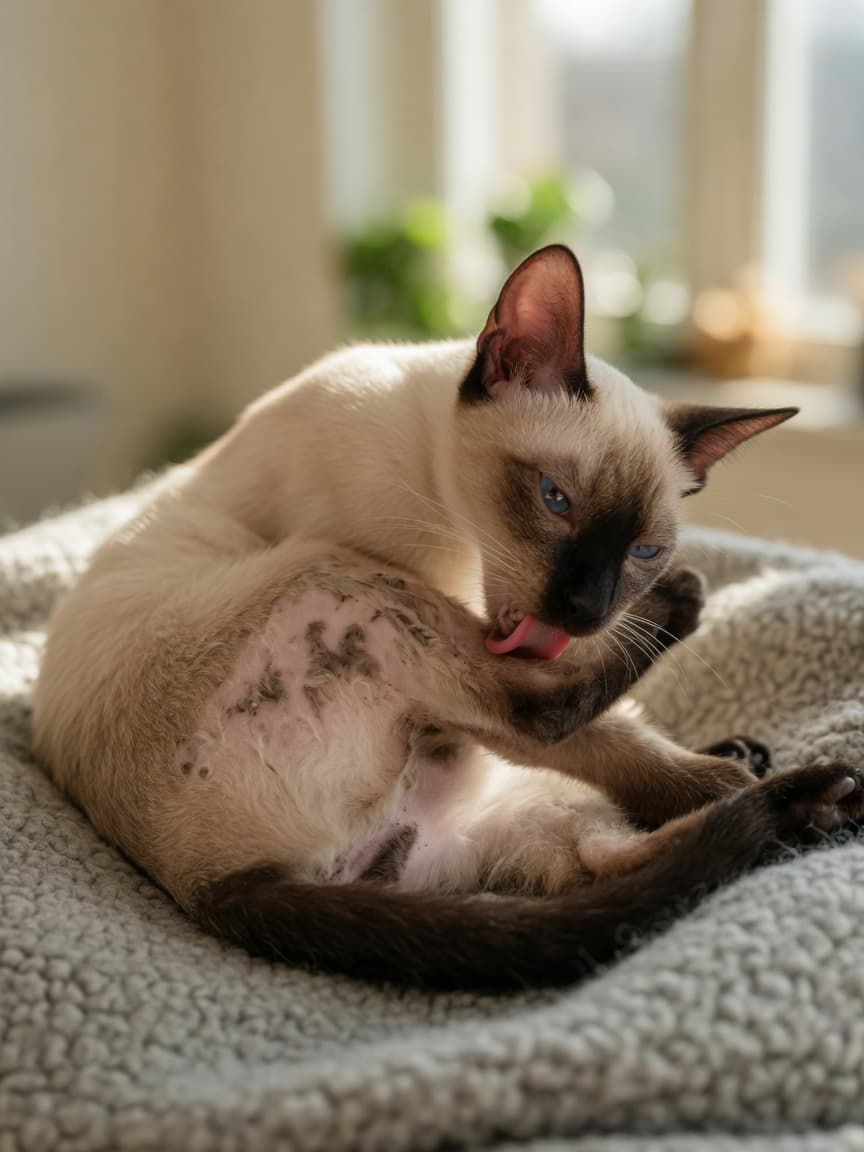
Overgrooming — the repetitive, excessive licking, chewing, or pulling of fur — is the most frequently reported compulsive behaviour in cats. It most commonly affects the belly, inner thighs, flanks, and the base of the tail, producing symmetrical areas of thinning fur or outright bald patches.
The critical first step is ruling out medical causes. Overgrooming is far more commonly driven by physical discomfort than by psychological factors, and the skin presentations of medical and behavioural overgrooming can look identical. Conditions that must be excluded before a behavioural diagnosis is made include:
- Flea allergy dermatitis — even a single flea bite can trigger intense pruritus in sensitised cats
- Environmental or food allergies
- Fungal infections such as ringworm
- Pain conditions — particularly lower spinal and arthritic pain, which can drive licking at accessible areas above the pain site
- Hyperthyroidism, which increases general arousal and restlessness
Psychogenic alopecia — overgrooming driven by psychological distress — is a diagnosis of exclusion. It is reached only after physical causes have been systematically investigated. Studies suggest it may be less common than previously thought; a significant proportion of cats diagnosed behaviourally are found upon thorough investigation to have an underlying dermatological or pain condition.
When overgrooming is genuinely psychological, it is typically associated with chronic stress. Stressors in a cat's environment might include inter-cat conflict, changes in household routine, a new baby or pet, building work, or insufficient territory and resources for the number of cats in the home.
Pica: Eating Non-Food Items
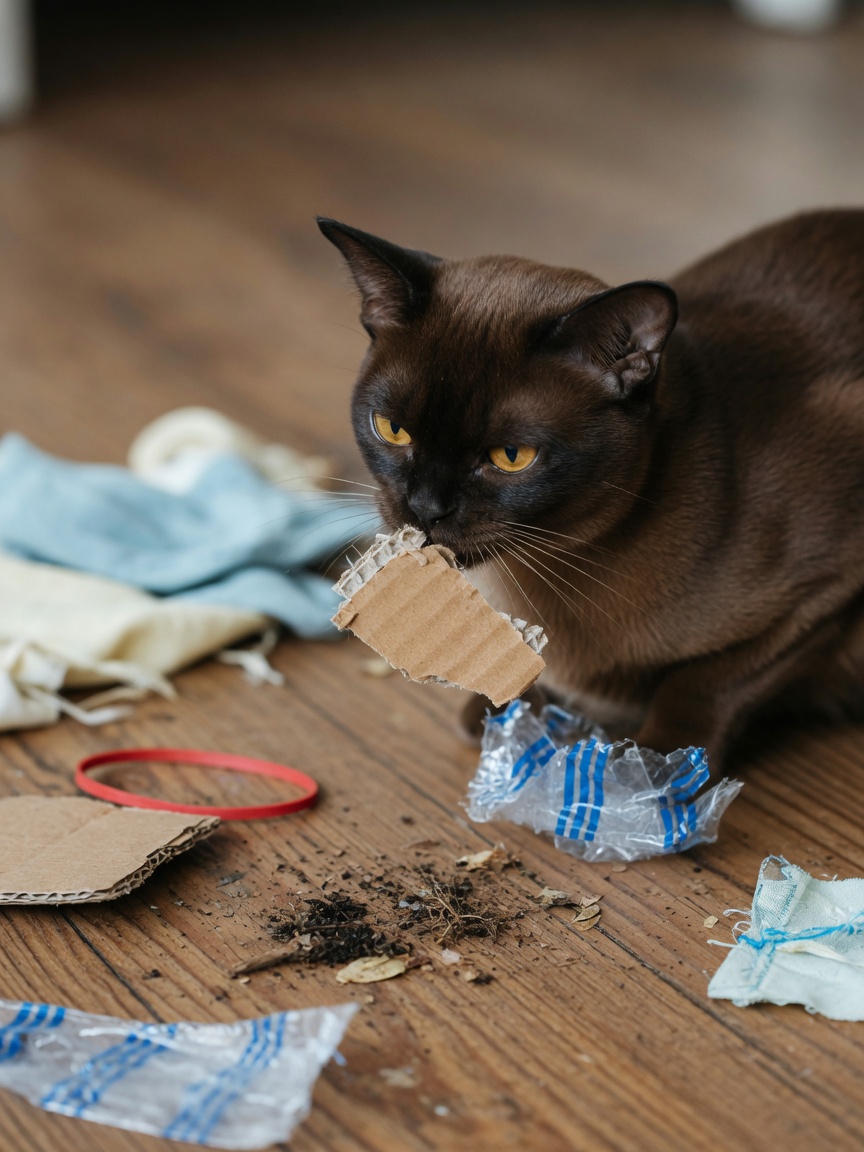
Pica describes the persistent consumption of non-food substances. In cats, commonly ingested items include plastic, rubber, paper, cardboard, fabric, and soil. Some cats target highly specific materials and will seek them out deliberately.
The causes of pica are not fully understood, but several contributing factors have been identified:
- Nutritional deficiencies or gastrointestinal conditions that drive the animal to seek something their body perceives as missing
- Neurological abnormalities affecting impulse control
- Obsessive-compulsive spectrum disorder, particularly in genetically predisposed breeds such as Siamese and related Oriental breeds
- Early weaning, which can result in persistent oral fixation behaviours
- Anaemia, which occasionally drives consumption of dirt or clay — a specific subtype known as geophagia
Pica poses genuine physical risks. Ingested materials can cause gastrointestinal obstruction, which is a veterinary emergency. Any cat displaying pica should receive a full veterinary workup including blood panels, and materials the cat targets should be made inaccessible as an immediate safety measure.
Wool Sucking and Fabric Chewing
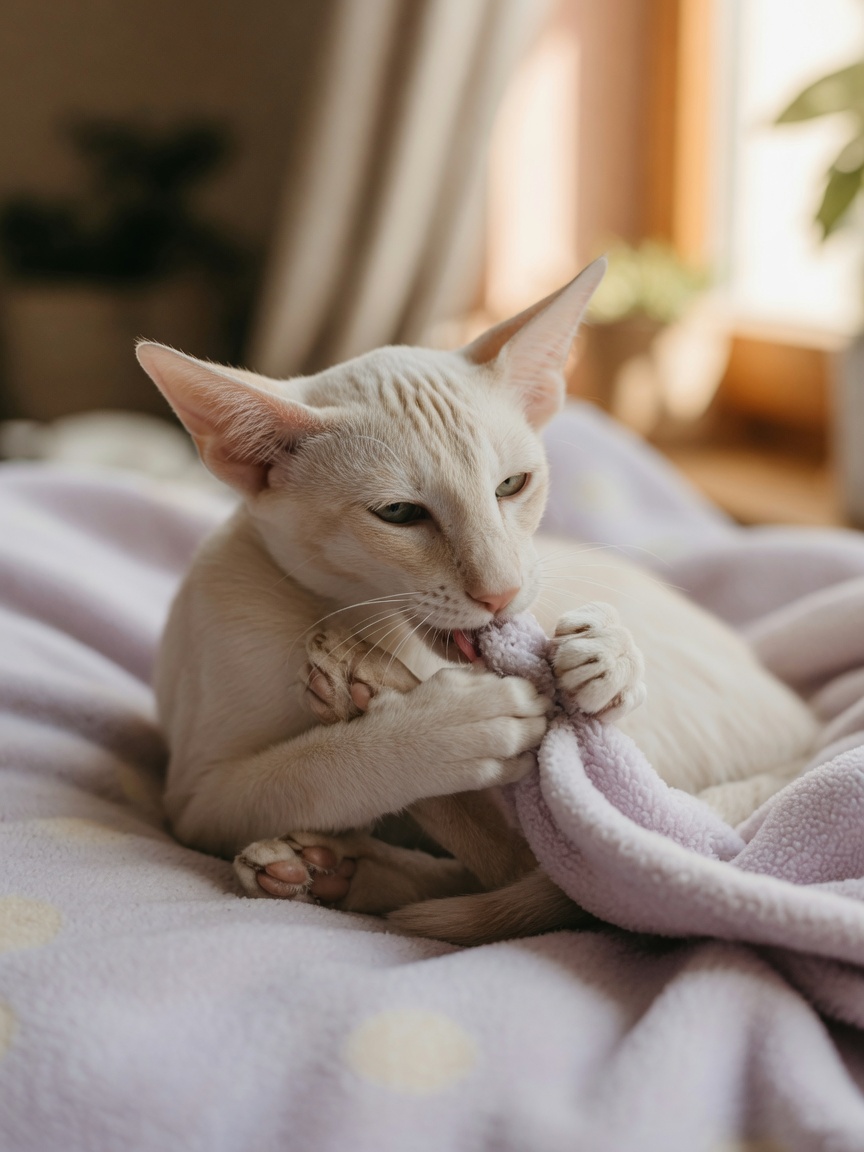
Wool sucking is the repetitive suckling, chewing, or ingestion of fabric — typically soft materials such as wool, fleece, blankets, or clothing. It is particularly prevalent in Siamese and Burmese cats, and this strong breed predisposition suggests a significant genetic component.
The behaviour is thought to arise from a mismatch between a kitten's developmental drive to nurse and their early weaning from the mother. Kittens that are weaned before eight weeks are at significantly elevated risk. The behaviour often begins as comfort suckling in kittenhood and becomes a compulsive habit that persists and may intensify into adulthood.
In adult cats, wool sucking can serve as a self-soothing mechanism during stress, similar to thumb-sucking in children. In some individuals it remains largely harmless if no material is actually ingested; in others it escalates to pica with associated ingestion risks.
Approaches to Treatment
Environmental Modification
Reducing or eliminating identifiable stressors is a foundational step for stress-driven compulsive behaviours. This may involve increasing vertical space and hiding places, ensuring each cat in a multi-cat household has adequate resources (a general guideline is one litter tray, feeding station, and resting space per cat, plus one extra), and providing consistent daily routine.
Increased Enrichment and Appropriate Stimulation
Cats with compulsive behaviours often benefit from increased mental and physical stimulation. Interactive play sessions, puzzle feeders, and foraging opportunities redirect the compulsive drive into species-appropriate behaviours and lower overall arousal levels.
Veterinary and Pharmacological Intervention
For moderate to severe compulsive disorder, veterinary-prescribed medication is frequently necessary alongside behavioural and environmental management. SSRIs such as fluoxetine and tricyclic antidepressants such as clomipramine have demonstrated efficacy in reducing compulsive behaviour frequency in cats. Medication alone is rarely sufficient without environmental modification.
Compulsive behaviours in cats are often chronic and require long-term management rather than a cure, but with appropriate intervention, significant reduction in frequency and intensity is achievable for most cats.