
What Is Cold Laser Therapy?
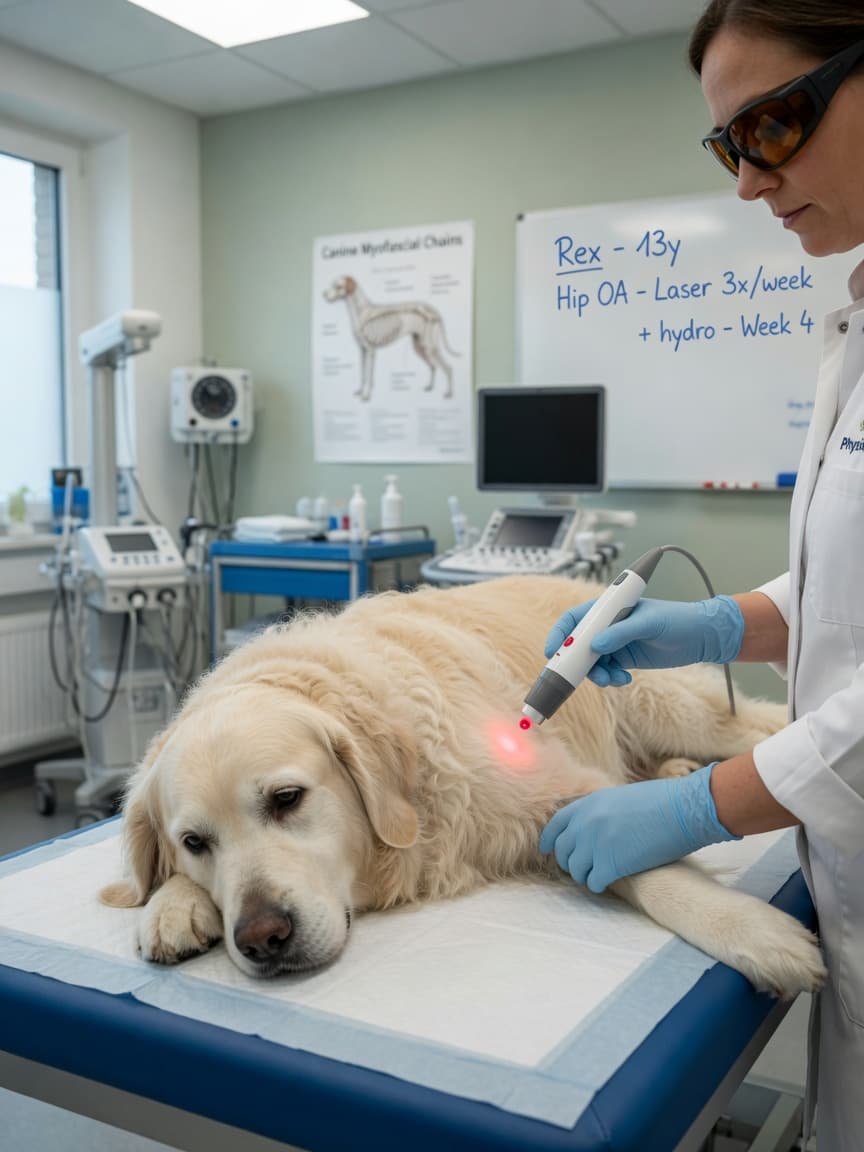
Cold laser therapy — more precisely called photobiomodulation therapy (PBMT) — uses specific wavelengths of light to stimulate cellular processes in tissue. Unlike surgical or cutting lasers, the devices used in this therapy produce no heat perceptible to the patient and cause no tissue damage. The light penetrates the skin and is absorbed by photoreceptors within cells, particularly within the mitochondria.
The therapy has become increasingly common in veterinary practice over the past decade, used in both conventional clinics and integrative settings. You will encounter it offered for dogs, cats, rabbits, and even horses. Understanding what the research actually supports — and where the gaps remain — helps you make informed decisions about your pet's care.
How Does It Work?
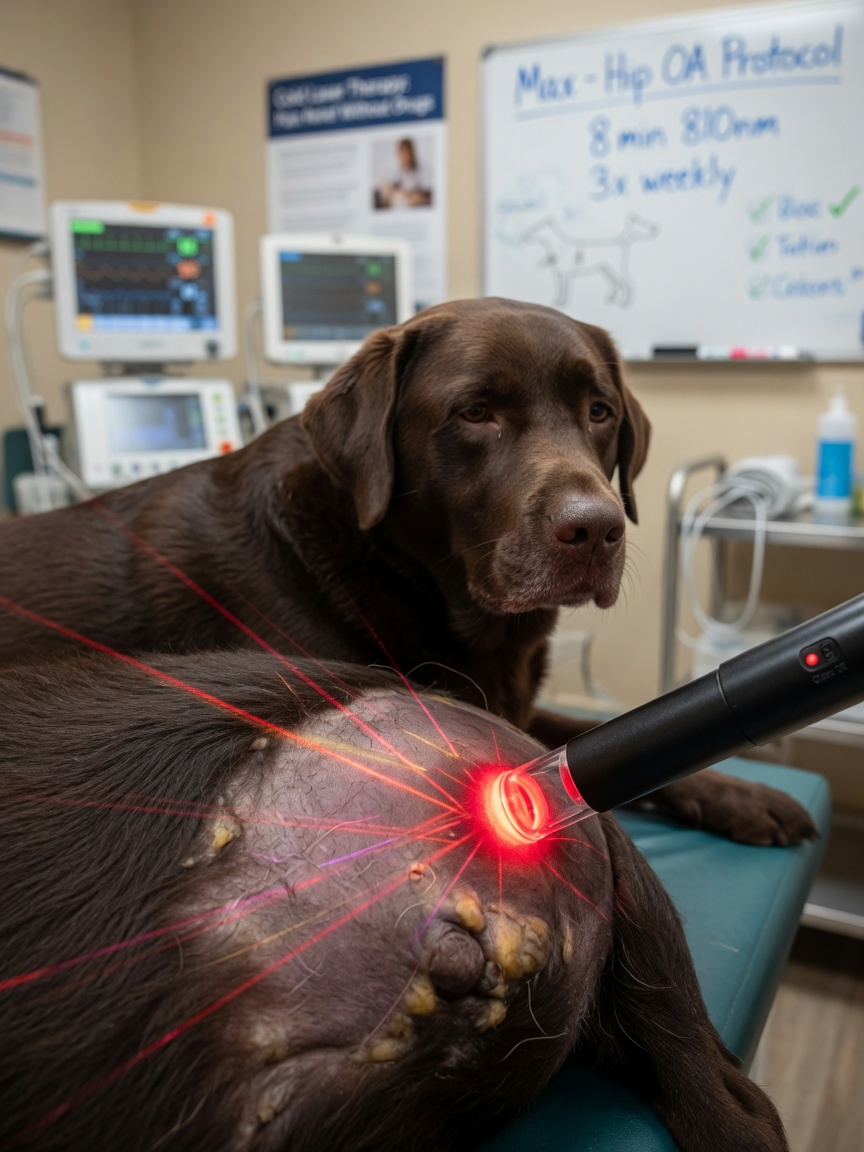
When photons from the laser are absorbed by cytochrome c oxidase, an enzyme in the mitochondrial respiratory chain, a cascade of biological events follows. ATP production increases, reactive oxygen species levels shift, and nitric oxide is released. These changes are thought to promote cellular repair, reduce inflammation, improve local circulation, and modulate pain signalling.
The key variables are wavelength (typically between 600 and 1000 nanometres for therapeutic use), power output, treatment duration, and the specific tissue being targeted. Different tissue types absorb light differently, and darker pigmented skin or dense muscle mass requires adjustments to protocol.
Common Veterinary Applications
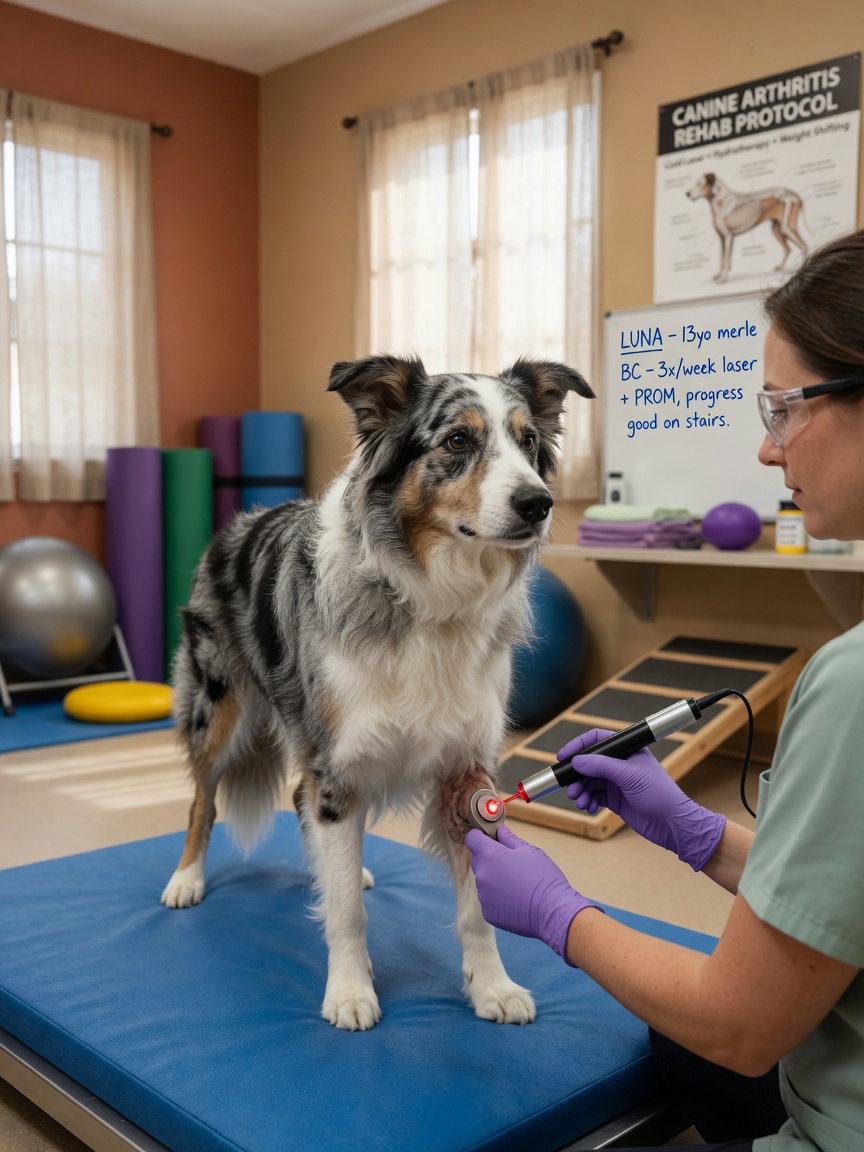
In clinical veterinary practice, cold laser therapy is most frequently used for:
- Osteoarthritis and joint pain, particularly in older dogs and cats
- Wound healing, including post-surgical incisions and chronic skin lesions
- Intervertebral disc disease and spinal pain
- Tendon and ligament injuries
- Nerve damage and neuropathic pain
- Otitis externa (ear inflammation)
Many veterinary physiotherapists incorporate PBMT into broader rehabilitation programmes following orthopaedic surgery or neurological injury. In these contexts it is typically one component among several rather than a primary treatment.
What the Research Shows
The evidence base for photobiomodulation in veterinary medicine is more developed than for many complementary therapies, though it still has significant limitations. Studies vary considerably in laser type, dosing protocol, and outcome measures, making direct comparisons difficult.
For wound healing, the evidence is relatively strong. A number of controlled studies in dogs have demonstrated accelerated closure of surgical wounds and reduced inflammation following PBMT. A 2016 study in the American Journal of Veterinary Research found significantly improved wound healing in dogs receiving laser treatment compared to controls.
For osteoarthritis, results are more mixed. Some studies report meaningful reductions in pain scores and improved mobility; others show minimal difference from sham treatment. A 2019 randomised placebo-controlled trial in dogs with hip osteoarthritis found modest but statistically significant improvements in ground reaction force — an objective biomechanical measure — in treated animals.
Research in cats is much thinner than in dogs, largely due to the practical challenges of conducting controlled trials in feline patients. Case series and small studies suggest benefit for chronic musculoskeletal pain, but robust evidence is lacking.
Dose and Protocol Matter Enormously
One of the significant problems in interpreting PBMT research is that underdosing and overdosing both appear to reduce efficacy. There is a biphasic dose-response relationship — too little light has minimal effect, while too much can actually inhibit the biological processes you are trying to stimulate. This is known as the Arndt-Schulz principle.
Clinically, this means that a session delivered with an underpowered handheld device purchased online is unlikely to produce the same results as a properly calibrated Class 3B or Class 4 laser administered by a trained professional. The proliferation of low-power consumer devices has muddied the waters considerably, and some of the negative studies may reflect inadequate dosing rather than a genuine absence of effect.
Is It Safe?
Cold laser therapy has an excellent safety profile when used appropriately. The primary risk is ocular damage — the laser must never be directed at the eyes, and practitioners and patients wear protective eyewear during treatment. Beyond this, adverse events are rare. Some animals experience a brief increase in discomfort after treatment, particularly in acutely inflamed tissue, but this is typically transient.
Contraindications include use over tumours (as increased cellular activity could theoretically stimulate growth), use during pregnancy, and application over the thyroid gland or gonads. Practitioners should screen for these before beginning treatment.
What to Expect During a Session
A typical session lasts between five and twenty minutes depending on the size of the treatment area and the condition being addressed. The practitioner moves a handheld probe slowly over the target area, often making contact with the skin or fur. Most animals find the experience neutral to pleasant; some appear to relax visibly during treatment.
For chronic conditions, an initial course of six to ten sessions over two to three weeks is common, followed by maintenance treatment on an interval determined by clinical response. Acute injuries may respond more quickly.
Realistic Expectations
Photobiomodulation therapy is one of the better-evidenced complementary modalities in veterinary medicine, but it is not a miracle treatment. For conditions like osteoarthritis, it appears to offer meaningful pain relief and functional improvement in many patients, though responses vary. It works best as part of a multimodal management plan that may include physiotherapy, weight management, and conventional analgesia where needed.
Ask your vet whether they offer PBMT or can refer to a clinic that does. Ensure that whoever administers the therapy is appropriately trained and using calibrated professional-grade equipment, and maintain realistic expectations about the degree of improvement your pet is likely to achieve.