
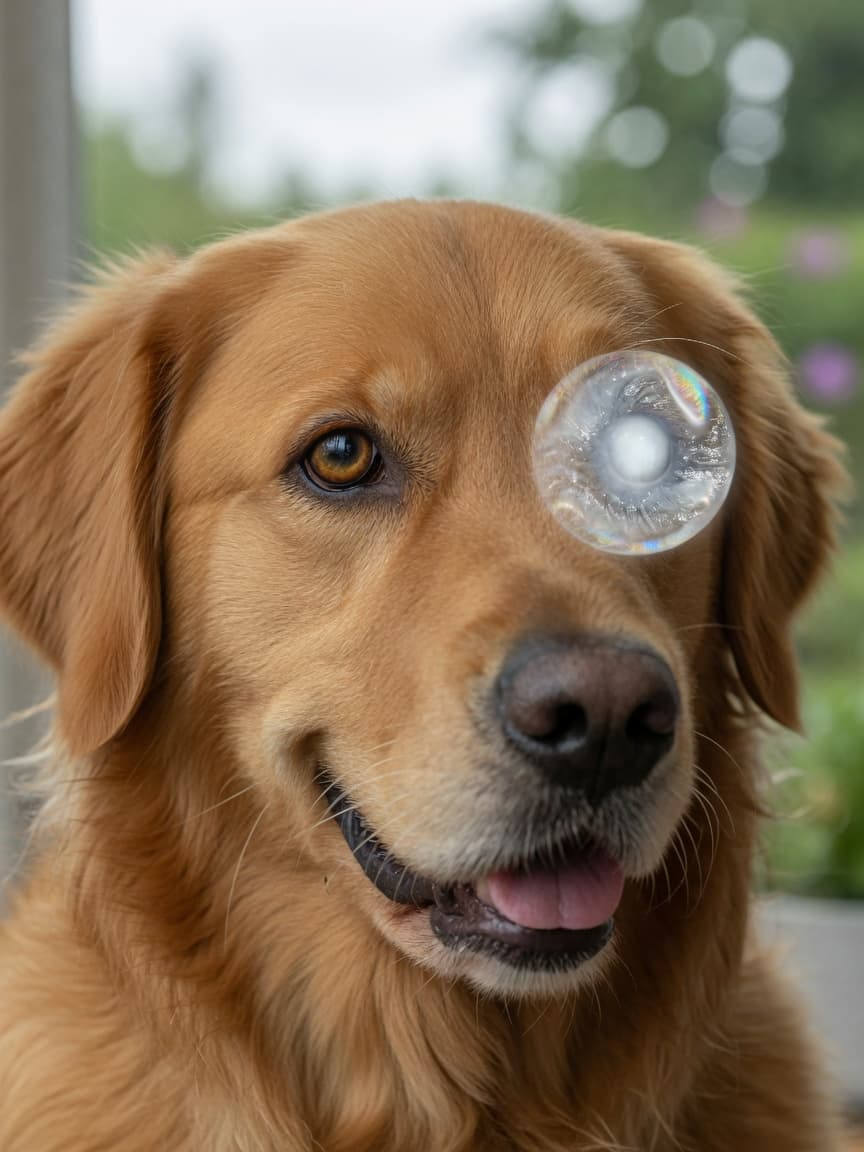
That Cloudy Eye Might Not Be What You Think
A milky or bluish haze over a dog's eye is one of the most common concerns owners bring to their vet — and one of the most frequently misidentified. Many owners assume cloudiness means cataracts; often, it is actually nuclear sclerosis, a normal age-related hardening of the lens that does not significantly impair vision and requires no treatment. Genuine cataracts are a different matter entirely. They involve opacity within the lens fibres themselves, they do impair vision, and in dogs they frequently progress rapidly — sometimes to complete blindness within months. Knowing which type of cataract you are dealing with and why it developed is essential to deciding what to do next.
How Cataracts Form
The lens of the eye is a transparent, flexible structure that focuses light onto the retina. It is composed of precisely arranged protein fibres that maintain their clarity through careful regulation of metabolism and hydration. When this regulation breaks down — through genetic defects, metabolic disease, inflammation, or other insults — the fibres lose their orderly arrangement, proteins clump together, and the lens becomes opaque. This opacity is a cataract. Cataracts can be tiny and inconsequential, or they can fill the entire lens and cause complete blindness. Staging ranges from incipient (less than 15% of the lens affected) through immature, mature, and hypermature.
Inherited Cataracts
Hereditary cataracts are the most common form in dogs and occur through well-characterised genetic mutations in several breeds. Golden Retrievers, Labrador Retrievers, Boston Terriers, French Bulldogs, Staffordshire Bull Terriers, West Highland White Terriers, Miniature Schnauzers, and Standard Poodles are among the most commonly affected. In many of these breeds, cataracts develop in young to middle-aged dogs, distinguishing them clearly from age-related change. The British Veterinary Association and Kennel Club jointly run an eye testing scheme specifically to identify cataracts and other inherited eye conditions in breeding dogs.
DNA tests are now available for several of the identified mutations, allowing breeders to screen dogs before mating. Prospective buyers of affected breeds should ask for both ophthalmoscopic examination certificates and DNA test results from both parents.
Diabetic Cataracts
Diabetic cataracts represent a distinct and particularly aggressive category. Dogs with diabetes mellitus develop cataracts in up to 80% of cases, often within six to twelve months of diagnosis. The mechanism is well understood: elevated blood glucose levels alter the metabolism within the lens, causing rapid accumulation of a sugar alcohol called sorbitol. This draws in water, disrupts the lens fibres, and creates rapid, diffuse opacity. The process can be strikingly fast — some dogs develop mature cataracts within weeks of a diabetes diagnosis being made.
Managing the diabetes itself does not reverse existing cataracts, though good glycaemic control may slow their progression. Owners of diabetic dogs should be aware that cataract development is not a treatment failure; it is an expected complication in many cases. The practical question becomes whether the dog is a suitable candidate for surgical removal.
Other Causes
Cataracts can also develop secondary to uveitis (intraocular inflammation), trauma, progressive retinal atrophy (where the degenerating retina releases toxic by-products that damage the lens), nutritional deficiencies in orphaned puppies, and radiation exposure. Secondary cataracts resulting from uveitis or retinal disease require careful evaluation before surgery is considered, as the outcomes are considerably less predictable.
Is Surgery the Right Choice?
When Surgery Is Recommended
Cataract surgery in dogs — phacoemulsification, the same technique used in human ophthalmology — involves ultrasonic fragmentation and aspiration of the lens contents through a small incision, followed by placement of an artificial intraocular lens. Success rates in suitable candidates are high, with over 90% of dogs retaining functional vision post-operatively in experienced hands. Surgery is most strongly recommended in dogs with bilateral mature cataracts causing significant visual impairment, particularly when the dog is otherwise healthy, the retina is functioning normally, and the eye is free from active inflammation.
The Importance of Pre-Surgical Assessment
Not every dog with cataracts is a suitable surgical candidate. Before proceeding, a veterinary ophthalmologist will perform electroretinography to confirm the retina is functional — cataracts that developed secondary to progressive retinal atrophy, for example, will not restore vision when removed, as the retina behind the lens is already degenerate. Ocular ultrasound is used to assess the retina when it cannot be directly visualised. General health screening, particularly in diabetic patients, confirms fitness for anaesthesia.
When Surgery May Not Be Appropriate
Dogs with hypermature cataracts that have already caused significant uveitis, dogs with non-functional retinas, those with poorly controlled systemic disease, and very elderly dogs with limited life expectancy may not benefit sufficiently to justify the procedure and its costs. In these cases, management focuses on controlling intraocular inflammation with anti-inflammatory drops and monitoring for secondary glaucoma — a serious complication of mature and hypermature cataracts.
Living With a Dog Who Has Cataracts
Dogs adapt remarkably well to vision loss when it develops gradually, using scent and hearing to compensate. Keeping the home environment consistent, avoiding furniture rearrangements, using textured mats as spatial cues, and maintaining predictable routines all support a good quality of life. Sudden vision loss — which can occur with certain cataract complications — may require additional support and reassurance during the adjustment period. Regular vet monitoring remains important even in dogs not proceeding to surgery, to catch complications such as glaucoma or lens-induced uveitis early.
Key Takeaways
- Not all cloudy eyes are cataracts — nuclear sclerosis is a common age-related change that does not significantly affect vision
- Inherited cataracts affect many common breeds and may develop in young dogs; DNA testing of breeding stock is recommended
- Diabetic cataracts are common and often rapid in onset; up to 80% of diabetic dogs are affected
- Phacoemulsification surgery has high success rates in suitable candidates; electroretinography is essential before proceeding
- Dogs with retinal disease, uncontrolled inflammation, or non-functional retinas may not benefit from surgery
- Always consult a veterinary ophthalmologist to assess suitability and discuss the risks and benefits of surgical intervention