
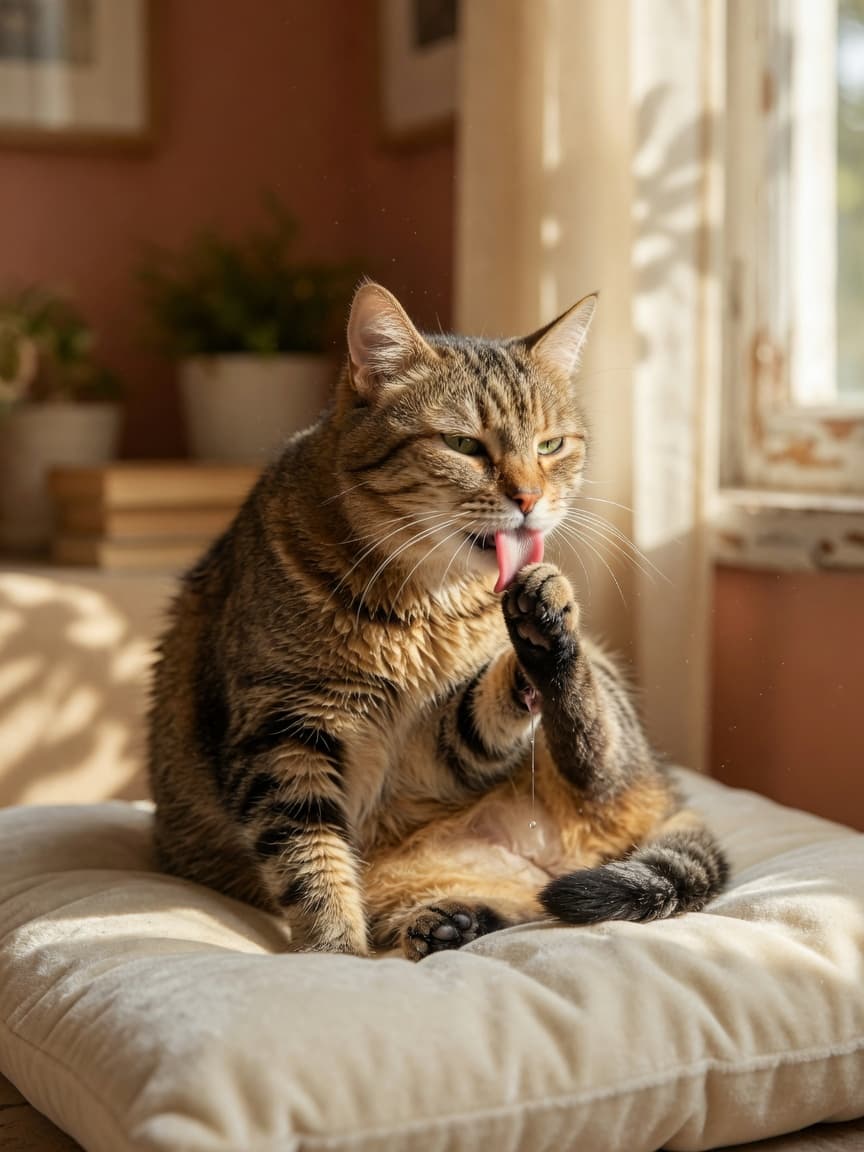
If you've ever watched your cat spend what seems like hours licking their fur, you might wonder if something is wrong. The truth is, grooming is one of the most natural and essential behaviours for cats. On average, cats spend between 30 and 50 percent of their waking hours grooming themselves—a behaviour that serves multiple critical purposes for their health, wellbeing, and survival. Understanding why your feline friend engages in this constant self-care routine can help you recognise normal behaviour from potential health concerns.
Temperature Regulation and Comfort
One of the primary reasons cats groom themselves is to maintain optimal body temperature. By licking their fur, cats spread saliva across their coat, which evaporates and creates a cooling effect. This is particularly important during warm weather or when your cat feels overheated. In cooler conditions, grooming helps them fluff their fur to trap warm air closer to the skin, providing natural insulation. Additionally, the act of grooming itself is soothing and helps cats feel more comfortable in their environment.
Hygiene and Wound Healing
Cats are meticulous about cleanliness. They groom to remove dirt, debris, and parasites from their coat—behaviours inherited from their wild ancestors. Self-grooming also helps keep their skin healthy and free from infections. When cats have minor cuts or wounds, they instinctively lick the affected area. Interestingly, cat saliva contains compounds with antimicrobial properties that can help prevent infection and promote healing, though this is limited to minor injuries.
Scent Marking and Social Communication
Grooming is also a form of chemical communication. When your cat licks themselves, they're distributing their natural scent throughout their coat. This helps them:
- Create a familiar, comforting personal scent profile
- Mark themselves as part of their territory
- Signal their emotional state to other cats and humans
- Strengthen their sense of identity and security
You may notice your cat grooms more intensely after visiting the veterinary clinic or coming into contact with unfamiliar scents—they're essentially "resetting" their scent signature.
Stress Relief and Emotional Regulation
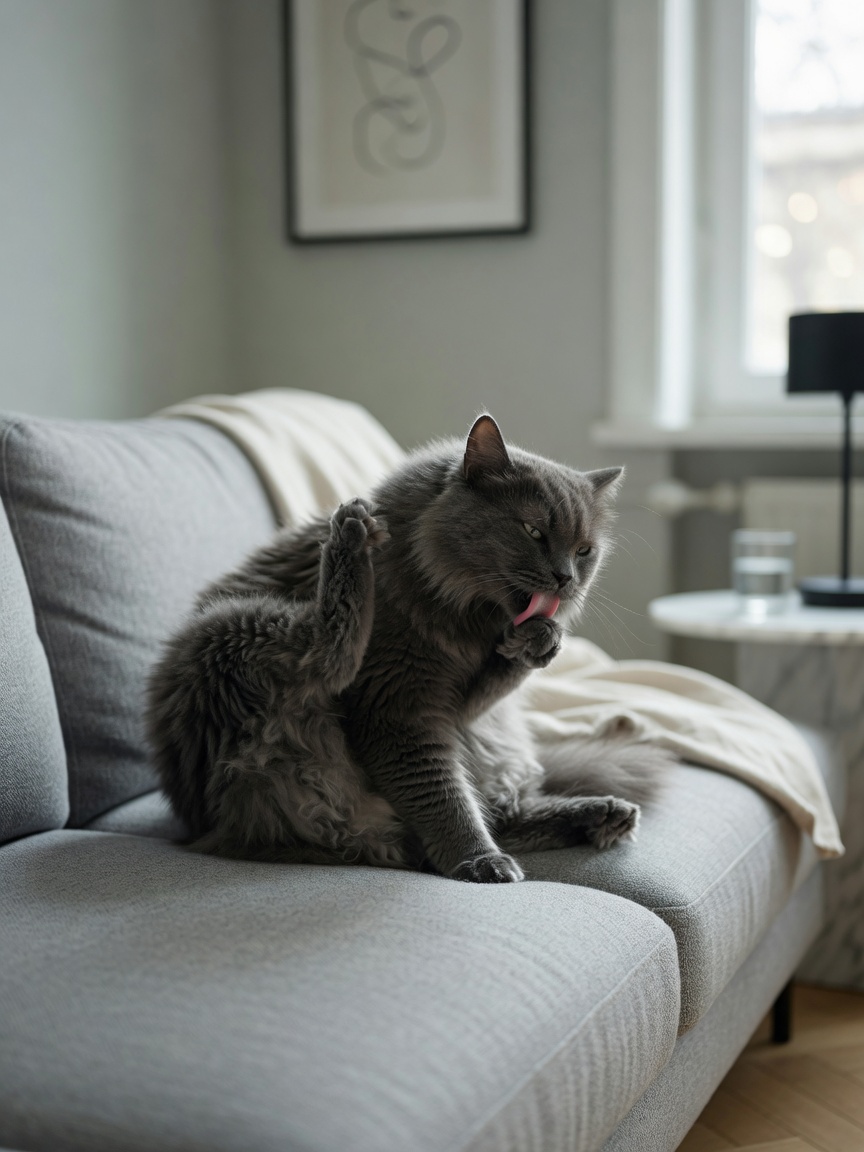
Grooming serves as a calming mechanism for cats. When stressed, anxious, or bored, cats often increase their grooming behaviour as a self-soothing strategy. This is similar to how humans might fidget or take a warm bath when feeling overwhelmed. However, if you notice your cat grooming excessively to the point of causing hair loss or skin irritation, this could indicate underlying stress or anxiety that requires attention.
Social Bonding
When cats groom each other—a behaviour called allogrooming—they're strengthening social bonds. If your cat grooms you by licking your hands or face, they're extending this bonding behaviour to you as a family member. This is a sign of affection and trust.
When Excessive Grooming Becomes a Concern
Whilst regular grooming is normal, excessive grooming can indicate health issues such as:
- Parasitic infections (fleas or mites)
- Skin allergies or dermatitis
- Hormonal imbalances
- Pain or discomfort in specific areas
- Anxiety or behavioural disorders
Contact your veterinary surgeon if your cat has bald patches, visible skin irritation, or appears to be grooming obsessively.
Key Takeaways
Cat grooming is a multifaceted behaviour that supports their physical health, emotional wellbeing, and social relationships. It's a normal, healthy habit that typically requires no intervention. By understanding the reasons behind this behaviour, you can better appreciate your cat's natural instincts whilst remaining alert to any changes that might signal a health concern. Keep an eye on grooming patterns, maintain regular veterinary check-ups, and provide environmental enrichment to help your cat feel calm and content.