
Cat Zoomies: Why Your Cat Gets the 3am Crazies
By Julia Wrenfield, Pet Wellness Researcher
What Are Cat Zoomies (FRAPs)?
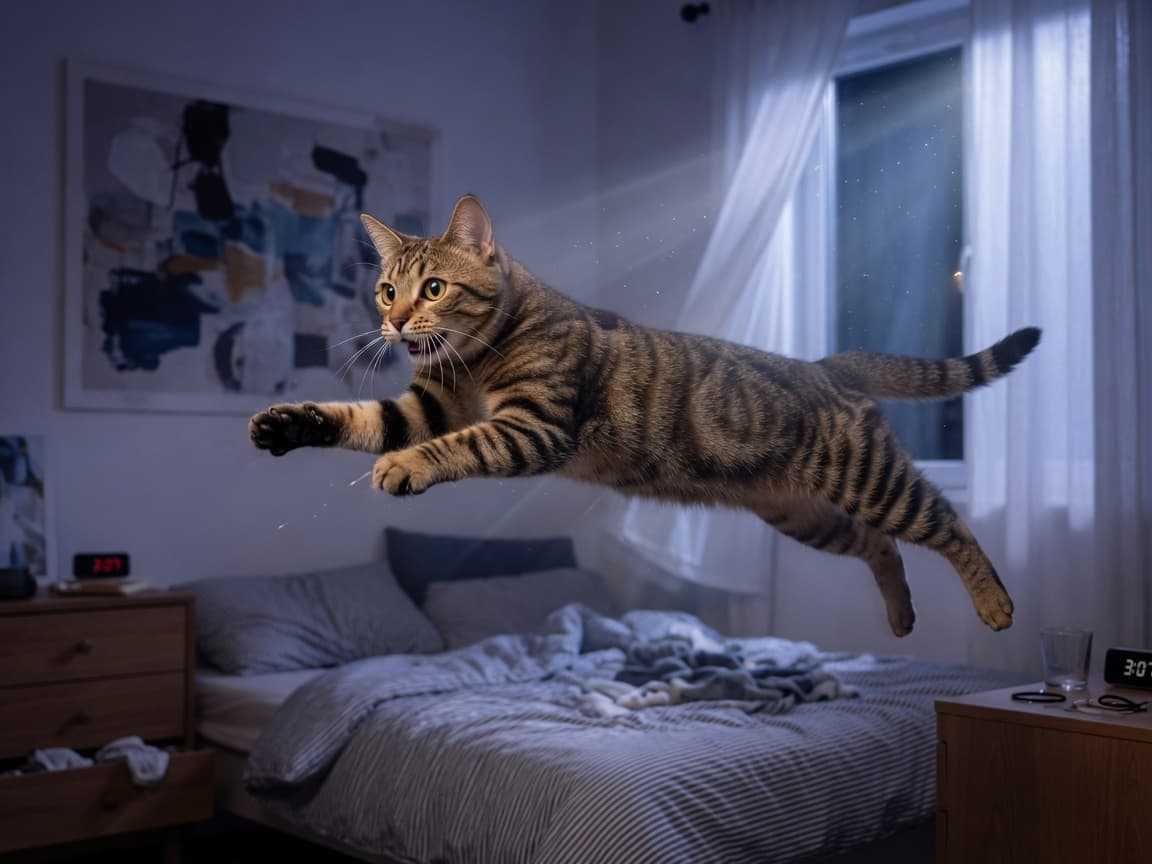
You're fast asleep. It's 3am. Suddenly your cat launches off the bed, tears down the hallway, ricochets off the sofa, and charges back into the bedroom at full speed — for no apparent reason. Welcome to the world of Frenetic Random Activity Periods, or FRAPs, more commonly known as "the zoomies."
FRAPs are sudden, intense bursts of movement — sprinting, leaping, spinning, and general chaos — that seem to come out of nowhere and disappear just as quickly. While the behavior can look alarming, especially at 3am, it is entirely normal and is observed across many domestic animals, including dogs, rabbits, and ferrets. For cats, however, zoomies are deeply rooted in their biology and evolutionary history.
Cats Are Crepuscular: Hardwired for Dawn and Dusk
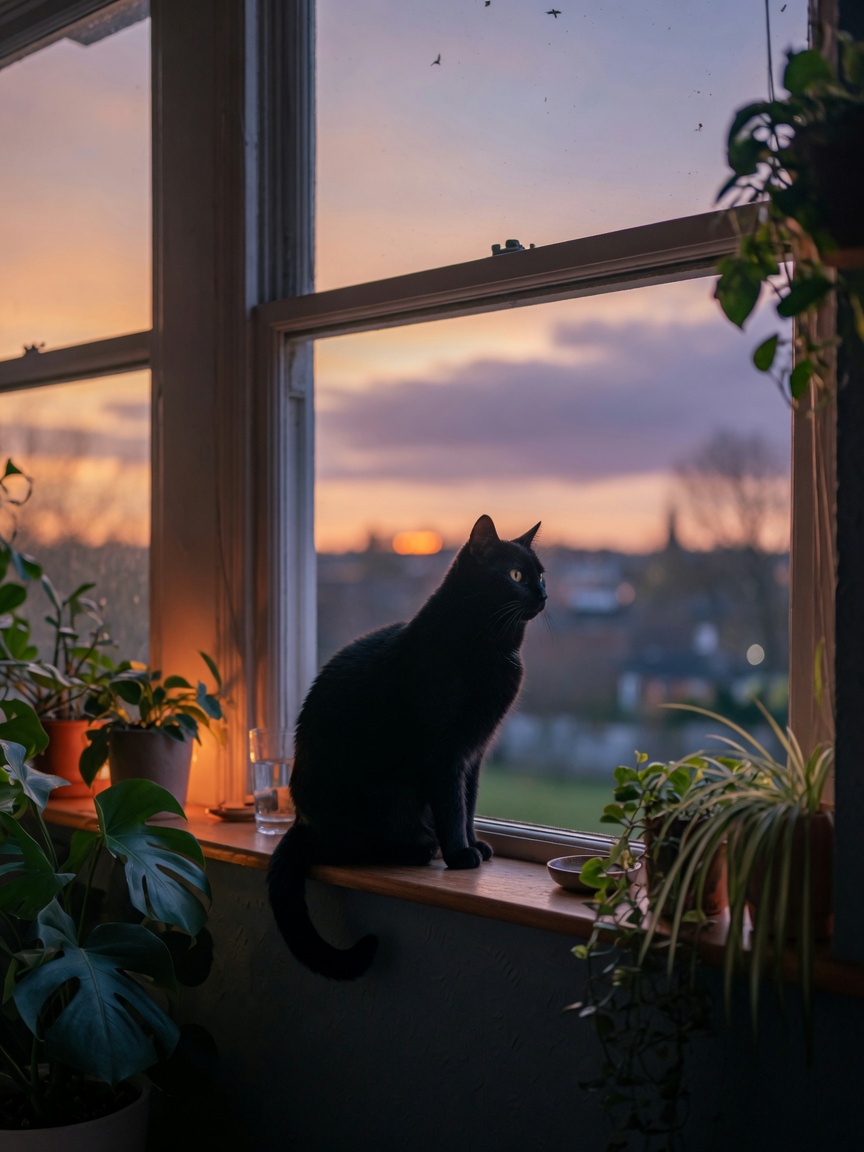
One of the most important things to understand about cats is that they are naturally crepuscular — meaning they are most active at dawn and dusk. This behavioral pattern evolved in their wild ancestors to coincide with the activity cycles of their prey: small rodents and birds that are also most active during those low-light transitional hours.
Your domestic cat still carries this biological clock, regardless of when you go to sleep. When you turn off the lights at 11pm, your cat's internal rhythm is just warming up. This is why those 3am sprints feel so random to you — from your cat's perspective, it is perfectly reasonable waking time.
The Hunting Instinct and Energy Buildup
Even the most pampered indoor cat is still, neurologically speaking, a predator. Throughout the day, a cat's hunting instinct steadily accumulates energy and arousal. In the wild, this energy would be spent stalking, chasing, pouncing, and catching prey — a full cycle that ends with a satisfying kill and a long rest.
An indoor cat that has not had adequate play or stimulation never completes that cycle. The hunting energy builds up, and eventually it has to go somewhere. The result is a FRAP: a compressed, explosive release of all that pent-up predatory drive. Think of it as a circuit breaker trip — the system has reached capacity and is venting pressure.
Post-Poop Zoomies: The Litter Box Sprint Explained
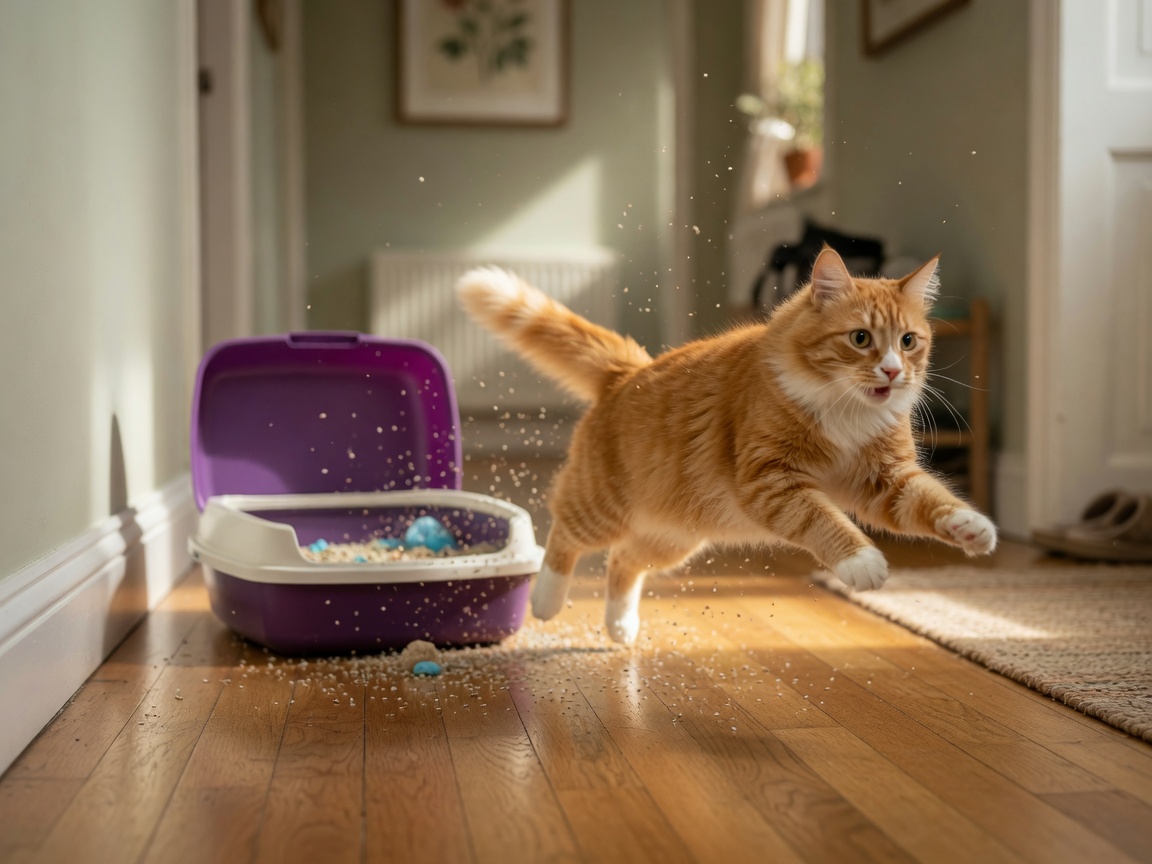
A specific and particularly puzzling type of zoomie happens immediately after a cat uses the litter box. Your cat squats, does its business, then bolts out of the box and tears through the house as if being chased. This is so common it has its own nickname: the "post-poop zoomies" or "poo-phoria."
The leading explanation involves the vagus nerve, which runs from the brainstem through the abdomen. During defecation, the bowel stimulates the vagus nerve, which can trigger a brief rush of euphoric sensation — similar to what some humans experience. This nerve stimulation may create a sudden burst of energy and even mild relief or excitement that expresses itself as a sprint. It is harmless and very normal in healthy cats.
Boredom and Understimulation
Indoor cats that lack enrichment — interactive toys, climbing structures, window access, or regular play sessions — are significantly more prone to intense, frequent zoomies. The behavior becomes their primary outlet for a mind and body that has simply not been challenged enough during waking hours. If your cat's zoomies are extreme and daily, it is worth evaluating how much active stimulation they receive each day. Most adult cats benefit from at least two 10–15 minute interactive play sessions per day.
Kittens vs. Adult Cats vs. Senior Cats
Zoomie frequency changes across a cat's life:
- Kittens (under 1 year): Zoomies are extremely frequent — sometimes multiple times per day. Kittens have enormous energy reserves and are in constant play-learning mode. This is completely normal and will gradually diminish.
- Adult cats (1–10 years): Zoomies become less frequent but still occur regularly, especially in under-stimulated cats or at crepuscular hours. Indoor cats tend to zoom more than cats with outdoor access.
- Senior cats (11+ years): Zoomies become infrequent. A sudden increase in frenetic activity in a senior cat — especially if combined with weight loss, increased thirst, or vocalization — can occasionally point to hyperthyroidism, which causes restlessness and hyperactivity. Worth mentioning to your vet.
How to Reduce Nighttime Zoomies
If the 3am Olympics are affecting your sleep, several strategies can help shift your cat's energy output to more sociable hours:
- Pre-bedtime play session: Spend 10–15 minutes engaging your cat in active play — feather wands, laser pointers, or toy mice — about 30 minutes before you want to sleep. Follow the play session with a small meal. This mimics the hunt-catch-eat-groom-sleep cycle and signals the brain to wind down.
- Puzzle feeders: Replacing or supplementing a food bowl with a puzzle feeder forces mental work throughout the day, reducing boredom-driven energy accumulation.
- Environmental enrichment: Cat trees, window perches, bird feeders outside the window, and rotating toys all help drain cognitive and physical energy during daylight hours.
- A second cat: Social cats often burn significantly more energy through play with a companion, reducing the intensity of solitary zoomie episodes.
When Zoomies Could Signal a Health Problem
In the vast majority of cases, zoomies are healthy and normal. However, there are a few situations where sudden or unusual frenetic behavior may warrant a vet check:
- Post-litter box distress: If your cat races out of the box, seems agitated, licks its rear, or scoots — especially repeatedly — this can signal anal gland irritation, intestinal parasites, or perianal discomfort. Parasites such as pinworms or tapeworm segments near the anus can cause intense itching that triggers frantic movement after defecation.
- Nighttime vocalization + zoomies in seniors: Can be a sign of cognitive dysfunction syndrome or hyperthyroidism.
- Zoomies accompanied by scratching the ears or shaking the head: Ear mites or ear infections can cause sudden bursts of frantic movement.
- Sudden onset in a previously calm adult cat: May indicate pain, neurological issues, or hyperthyroidism.
Key Takeaways
- Zoomies (FRAPs) are normal, explosive energy releases rooted in feline predatory biology.
- Cats are crepuscular — naturally most active at dawn and dusk, which explains 3am energy bursts.
- Post-poop zoomies are caused by vagus nerve stimulation during defecation — harmless and common.
- Kittens zoom most frequently; frequency declines with age.
- The best remedy is a structured play-then-feed routine before bedtime plus daytime enrichment.
- Consult a vet if zoomies are accompanied by rear-end irritation, vocalization, or sudden onset in a calm adult cat.
References
- Stelow EA, Bain MJ, Kass PH. The Relationship Between Coat Color and Aggressive Behaviors in the Domestic Cat. Journal of Applied Animal Welfare Science. 2016;19(1):1-15. PMID: 26467020. [Cited for feline behavioral patterns and FRAP context.]
- Amat M, Camps T, Manteca X. Stress in owned cats: behavioural changes and welfare implications. Journal of Feline Medicine and Surgery. 2016;18(8):577-586. PMID: 26944808.