
Why Cats Scratch Furniture & How to Redirect It
By Julia Wrenfield, Pet Wellness Researcher
Why Cats Scratch
Scratching serves four distinct biological functions, each of which explains why it cannot simply be eliminated:
Claw maintenance: Scratching removes the outer sheath of the claw, keeping the sharp inner layer exposed and functional. Without regular scratching, claws overgrow and can curl back into the paw pad.
Scent marking: Cats have scent glands between the paw pads. Scratching deposits this scent on vertical surfaces, communicating the cat's presence and status to other animals — and to themselves.
Visual marking: The scratch marks themselves are a visible signal, particularly important in multi-cat households and in cats who have outdoor access.
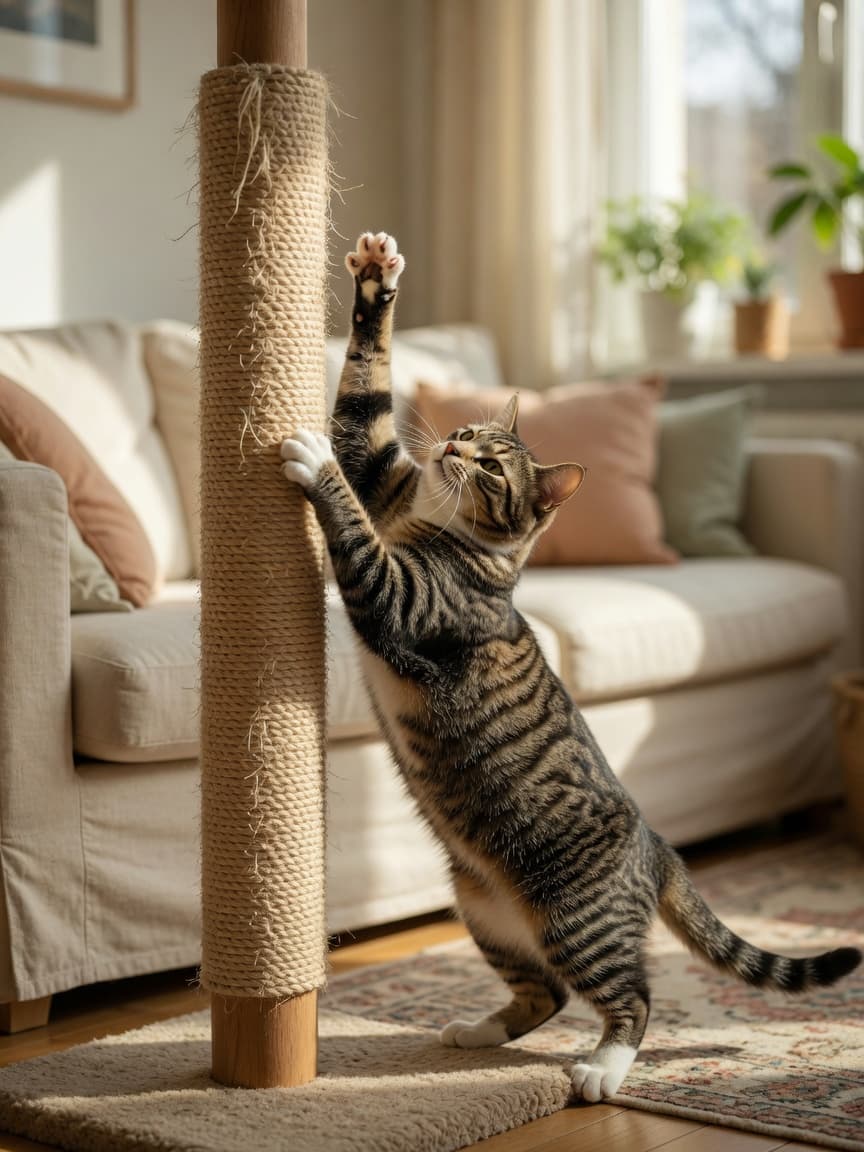
Stretching: The extended reaching motion of scratching provides a full-body stretch of the back, shoulders, and legs — the feline equivalent of yoga. Cats frequently scratch immediately after waking up for this reason.
Research in Journal of Feline Medicine and Surgery (PubMed) found that scratching behaviour is significantly influenced by the presence of preferred substrates — cats provided with appropriate scratching posts used furniture substantially less, confirming that redirection rather than suppression is the effective approach.
Why the Sofa Is the Target
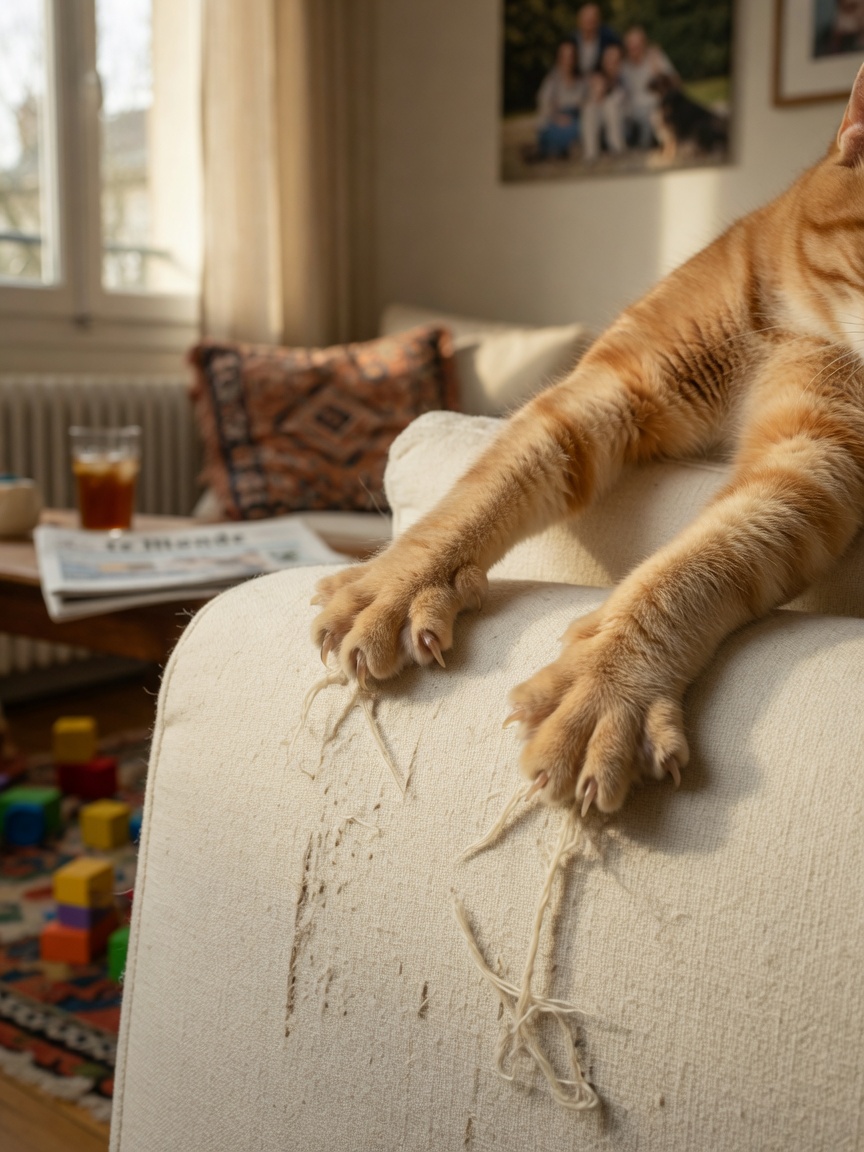
Cats scratch the sofa — specifically — for very good reasons from their perspective. Sofas are usually located in the centre of social activity (the living room), making them ideal scent marking locations. They are vertical, stable, and have a texture (often fabric or leather) that provides satisfying resistance. They are at the right height for a full-body stretch. And they smell strongly of the cat's family group, making them a preferred marking site.
The ASPCA notes that cats most commonly scratch in social areas, near sleeping spots, and at entry and exit points — all of which are communicative locations. Understanding the logic behind the choice helps in selecting alternative sites that will actually be used.
Choosing the Right Scratching Post
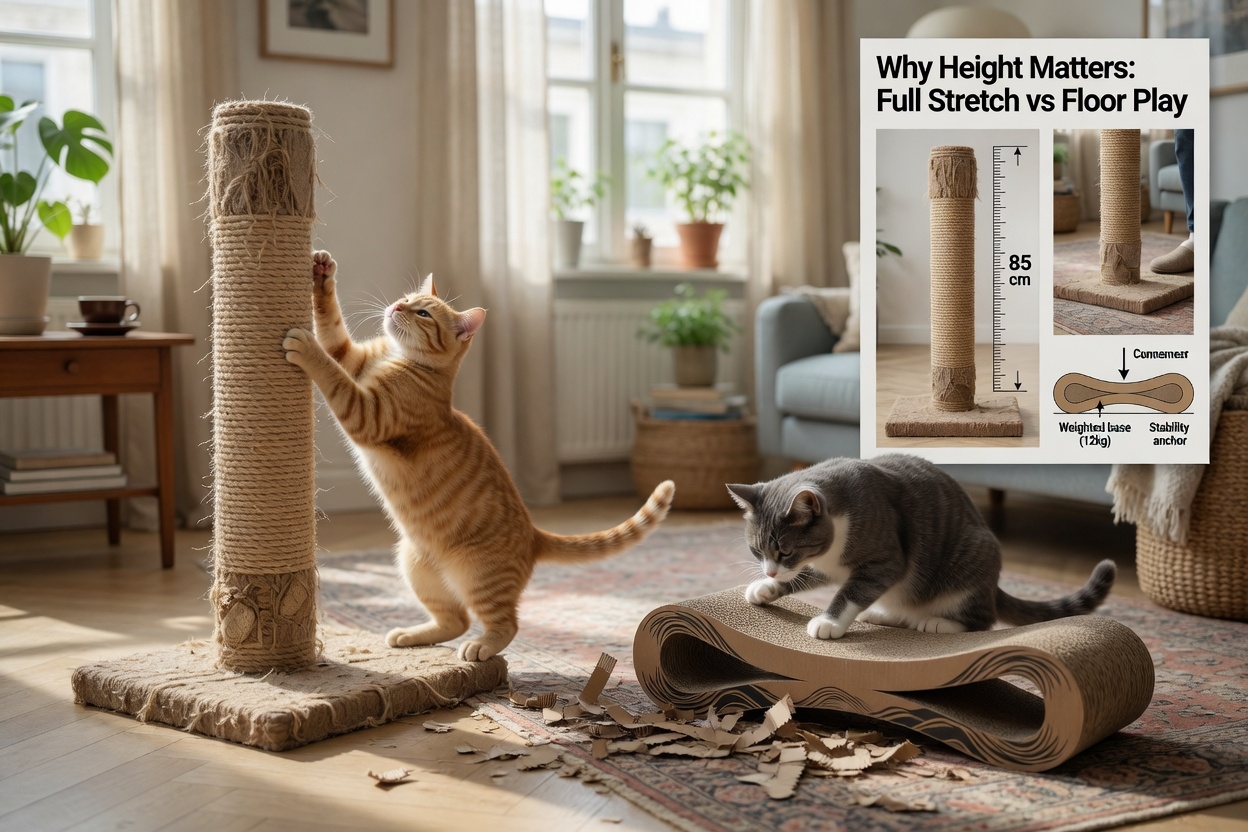
The majority of scratching posts sold in pet shops are too short, too unstable, or made from the wrong material — and cats ignore them. A functional scratching post must meet four criteria:
- Height: Tall enough for a full vertical stretch — at least 70–90 cm for a medium-sized cat. The cat must be able to reach above their head with both front paws extended.
- Stability: Must not wobble or tip. A post that shifts under pressure startles the cat and teaches them to avoid it. Weight the base or bolt it to the wall.
- Texture: Sisal rope or sisal fabric is preferred by most cats. Carpet-covered posts are less effective because they feel similar to carpet floors and blur the distinction between acceptable and unacceptable scratching surfaces.
- Orientation: Most cats prefer vertical scratching surfaces, but some prefer horizontal (floor-level cardboard scratchers). Offer both initially to identify your cat's preference.
The PDSA recommends placing at least one scratching post in every room where the cat spends significant time, including near their sleeping spots — scratching immediately after waking is a reliable daily behaviour that can be easily redirected if the appropriate surface is nearby.
Placement — The Most Overlooked Variable
A scratching post in the corner of a spare bedroom will not be used. Placement must mirror the logic of why the sofa was chosen: central location, near resting spots, in social areas. Initially, place the post directly beside the piece of furniture being scratched. Once the cat is using the post reliably, you can gradually (2–5 cm per day) move it to a more convenient location.
For multi-cat households, provide at least one post per cat plus one additional, distributed across the home. Cats in the same household may compete to scratch the same post as a social signalling behaviour — multiple posts reduce this tension.
Making the Post Attractive — Making the Sofa Unattractive
Encourage use of the post by sprinkling dried catnip (for catnip-responsive cats — approximately 50–70% of cats have the catnip response), rubbing a small amount of the cat's own scent on the post by pressing their paws gently against it, and hanging a dangling toy at the post to encourage interaction.
Simultaneously, make the furniture temporarily less attractive: double-sided tape (cats dislike sticky textures), aluminium foil, or commercially available furniture guards create an unpleasant scratching surface. Importantly, these must be used alongside the attractive post — not as a stand-alone deterrent. Deterrents alone produce a cat who finds other furniture to scratch, not a cat who uses the post.
Never spray water at a scratching cat or physically move them away from the furniture — these interventions make cats fearful of the owner's presence and do not address the scratching drive at all. According to The Guardian's feature on cat behaviour, punishment-based interventions for scratching are ranked among the most counterproductive approaches in feline behaviour management, often increasing anxiety-related scratching.
Protecting Furniture During Transition
While redirecting scratching behaviour, protect vulnerable furniture with washable covers, temporary furniture guards, or double-sided tape. Nail covers (soft vinyl caps glued over the claws, brand name Soft Paws) reduce furniture damage during the transition period and are a humane alternative to declawing — they last 4–6 weeks before needing replacement. They require calm handling to apply and may not suit all cats.
Regular nail trimming (every 2–4 weeks) also reduces the damage caused by scratching — trimmed nails produce shallower marks. Ask your vet or groomer to demonstrate the technique if you are not confident doing this at home.
Realistic Timelines
With a correctly specified post placed in the right location alongside deterrents on the target furniture, most cats begin using the post within 1–2 weeks. Full transition — where the post is used consistently and the furniture ignored — typically takes 4–6 weeks. Some cats, particularly those who have been scratching a specific piece of furniture for years, take longer to redirect. Patience and consistency, rather than punishment, are the tools that work.
If a cat shows sudden escalation in scratching alongside other signs of stress (hiding, appetite changes, increased vocalisation), consider environmental stressors: a new pet, building work, a change in schedule, or a new person in the home. Stress-related scratching increases as a coping and marking behaviour and requires addressing the stressor as well as the scratching itself.
Key Takeaways
- Scratching is essential biological behaviour — cats cannot stop, only be redirected to appropriate surfaces.
- Provide tall (70–90 cm+), stable, sisal-covered posts in the social areas where the cat already spends time.
- Place the post beside the target furniture initially, then gradually move it once the post is in regular use.
- Use deterrents (double-sided tape, foil) on furniture alongside — not instead of — an attractive alternative.
- Never punish scratching: it increases anxiety and does not stop the behaviour.
- Most cats transition to using a well-placed appropriate post within 4–6 weeks.