
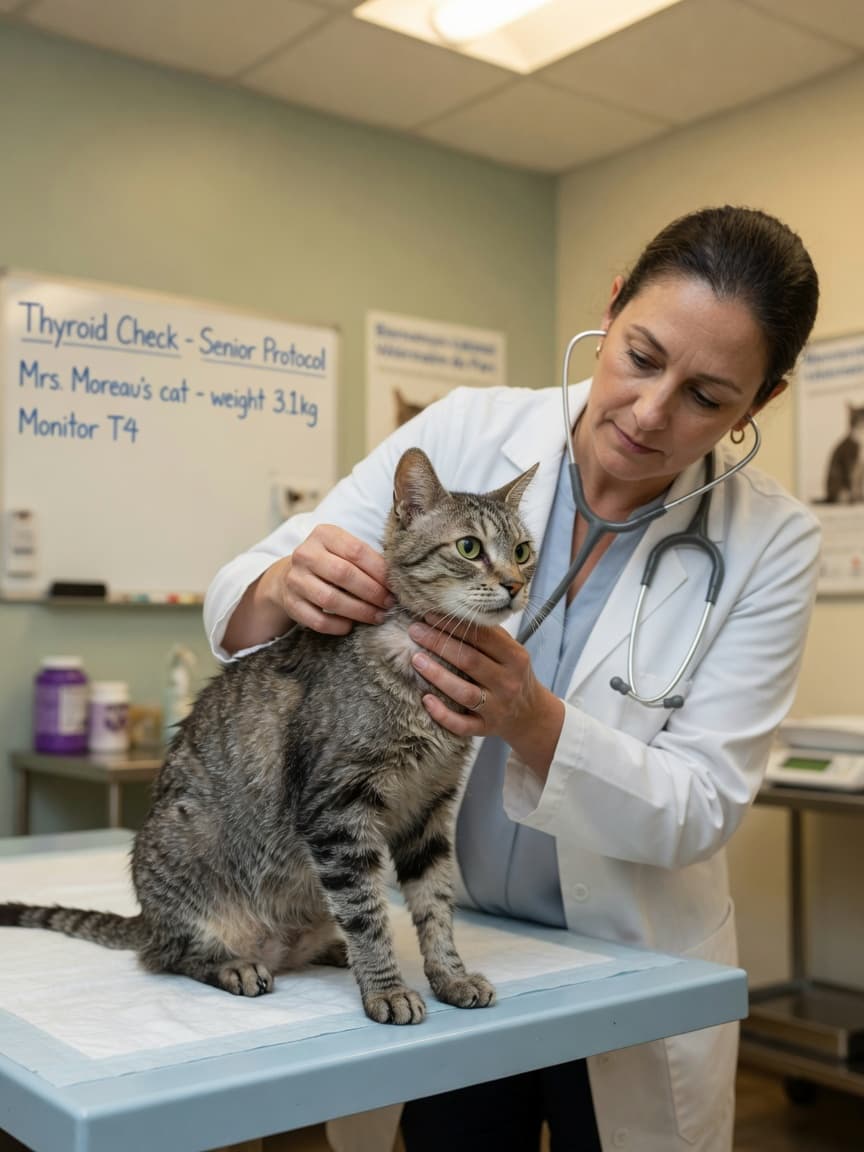
What Is Feline Hyperthyroidism?
Hyperthyroidism is the most common endocrine disorder seen in older cats, typically affecting those aged ten years and above. The condition arises when the thyroid gland produces excessive amounts of thyroid hormone, which then accelerates virtually every metabolic process in the body. In the vast majority of cases, the underlying cause is a benign tumour called an adenoma on one or both lobes of the thyroid gland. Malignant thyroid tumours are rare, accounting for fewer than two per cent of cases.
Because the condition develops gradually, many owners initially attribute the signs to normal ageing. Early diagnosis is important, however, as untreated hyperthyroidism can place serious strain on the heart, kidneys, and other vital organs.
Recognising the Symptoms
The hallmark combination that often prompts a veterinary visit is weight loss despite a noticeably increased appetite. Because thyroid hormone drives metabolism so hard, the cat burns through calories faster than it can consume them. Other common signs include:
- Hyperactivity, restlessness, or vocalising more than usual, particularly at night
- Increased thirst and urination
- Vomiting or intermittent diarrhoea
- A poor, unkempt coat
- Rapid or irregular heartbeat, which your vet may detect during examination
- Elevated blood pressure
Diagnosis is confirmed through a blood test measuring the level of total thyroxine (T4). Your vet may also recommend blood pressure measurement, a urinalysis, and a full biochemistry panel to assess kidney function before choosing a treatment, as the two conditions frequently co-exist.
Treatment Option 1: Daily Medication
The most widely used first-line treatment involves giving your cat a drug that blocks thyroid hormone production. The two most common medicines are methimazole and carbimazole. Methimazole is given twice daily, while carbimazole is a pro-drug that converts to methimazole in the body and is often available as a once-daily formulation, which many owners find more convenient. Both are available as tablets or as a transdermal gel applied to the inner surface of the ear flap.
Pros
- Widely available and relatively low cost
- Reversible — useful for stabilising the cat before other treatments or if side effects occur
- Allows monitoring of kidney function, which can sometimes worsen as thyroid levels normalise
Cons
- Requires lifelong administration, which can be challenging with some cats
- Side effects, including facial itching, vomiting, and in rarer cases changes to blood cell counts, occur in around fifteen per cent of cats
- Regular blood monitoring every three to six months is essential
Treatment Option 2: Radioactive Iodine (I-131)
Radioactive iodine therapy is widely considered the gold standard treatment for feline hyperthyroidism. A single injection of radioactive iodine is given subcutaneously. The iodine is taken up preferentially by the overactive thyroid tissue and destroys it, leaving the normal surrounding tissue unaffected.
Pros
- Curative in over ninety-five per cent of cats with a single treatment
- No anaesthetic required
- No ongoing medication necessary in most cases
Cons
- Requires a stay of several days at a licensed facility until radiation levels fall to safe limits
- Higher upfront cost compared to medication
- Not available at all veterinary practices — referral to a specialist centre is required
- Some cats develop hypothyroidism afterwards and require thyroid hormone supplementation
Treatment Option 3: Surgical Thyroidectomy
Surgical removal of one or both thyroid lobes (thyroidectomy) is another potentially curative option. It is performed under general anaesthetic and can be highly effective, particularly when only one lobe is affected.
Pros
- Can be curative, especially for unilateral disease
- A single procedure with no ongoing radiation restrictions
Cons
- Carries the risks associated with general anaesthesia, which are higher in older cats
- Risk of damage to the parathyroid glands, which sit alongside the thyroid and regulate calcium levels
- Hyperthyroidism may recur if residual thyroid tissue remains or if the second lobe becomes diseased
- Pre-operative stabilisation with medication is usually required to reduce anaesthetic risk
Treatment Option 4: Prescription Diet
Hills y/d is a prescription diet formulated with extremely restricted levels of iodine. Because the thyroid gland requires iodine to produce thyroid hormone, feeding this diet as the sole food source reduces hormone production and can normalise T4 levels within three to eight weeks.
Pros
- No injections or tablets required
- An appealing option for cats that are difficult to medicate
Cons
- The cat must eat nothing other than the prescribed diet — no treats, table scraps, or other food sources, which can be very difficult in multi-cat households
- If the diet is interrupted, thyroid hormone levels can rise rapidly
- Not suitable for cats with concurrent kidney disease in some cases
- Some cats do not find the diet palatable
The Importance of Ongoing Monitoring
Regardless of the chosen treatment, regular veterinary monitoring remains essential. Thyroid levels, kidney function, blood pressure, and body weight should all be checked on a schedule agreed with your vet, typically every three to six months once stable. This is particularly important because successfully treating hyperthyroidism can unmask underlying chronic kidney disease, as the elevated blood flow caused by excess thyroid hormone can artificially maintain kidney filtration at normal levels.
With the right treatment and consistent follow-up care, the prognosis for cats with hyperthyroidism is very good. Most cats return to a normal quality of life and can enjoy many more comfortable years with their owners.