
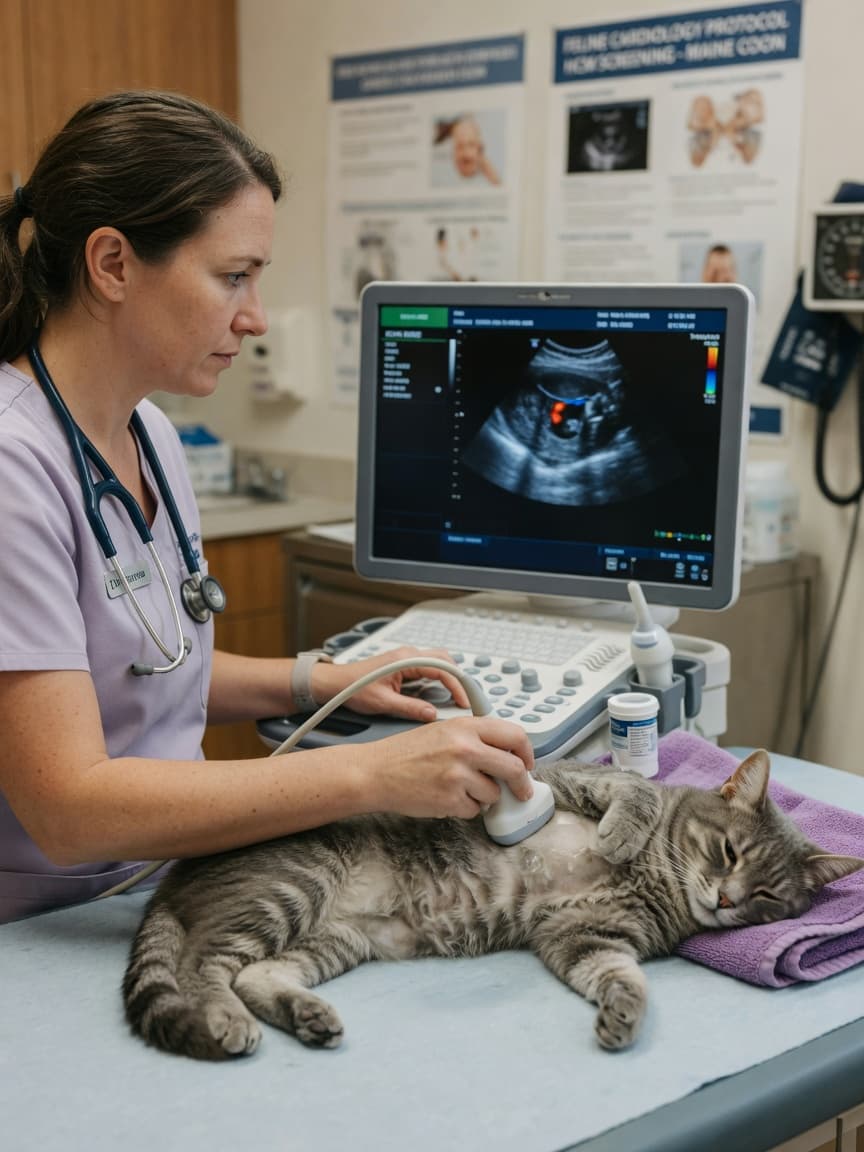
The Silent Nature of Feline Heart Disease
Heart disease in cats is often called a silent condition, and for good reason. Unlike dogs, who commonly develop a detectable heart murmur long before clinical signs appear, many cats with significant cardiac disease have no audible murmur at all. Symptoms, when they eventually emerge, can appear with alarming suddenness — in some cases, a cat that appeared entirely healthy the previous day is presented in acute respiratory distress or has suffered a sudden paralysis of the hindlimbs. This unpredictable nature makes feline heart disease one of the more challenging conditions in companion animal medicine, both to detect and to manage.
The most common form of heart disease in cats is hypertrophic cardiomyopathy (HCM), in which the walls of the left ventricle — the main pumping chamber of the heart — become abnormally thickened. This thickening reduces the volume of the chamber, impairs its ability to fill with blood normally, and creates turbulence that can lead to clot formation. HCM is estimated to affect between 10 and 15 per cent of all cats, making it one of the most significant health challenges in feline medicine.
Breeds With Genetic Predisposition
While any cat can develop HCM, certain breeds carry a significantly elevated genetic risk. The Maine Coon and Ragdoll are the breeds in which HCM is best studied and most prevalent. In Maine Coons, two specific mutations in the MYBPC3 gene — the same gene implicated in human HCM — have been identified and are directly linked to disease development. A DNA test is available for these mutations, allowing breeders to screen cats before using them in breeding programmes and to exclude affected individuals.
Responsible Maine Coon breeders throughout Europe perform both genetic screening and echocardiographic examination of breeding cats. FECAVA and several national breed clubs support these initiatives. It is important to note, however, that the identified mutations do not account for all HCM in Maine Coons — a cat testing negative for the known mutations can still develop the condition — and that echocardiographic screening therefore remains essential regardless of genetic test results. The British Shorthair, Persian, Norwegian Forest Cat, and Sphynx are among other breeds with a documented higher prevalence of HCM.
How HCM Affects the Heart
The thickened heart muscle in HCM is stiffer than normal, making it harder for the ventricle to relax and fill with blood between beats. This is known as diastolic dysfunction. As the disease progresses, several complications can arise. Congestive heart failure develops when fluid accumulates in or around the lungs (pulmonary oedema or pleural effusion), causing breathlessness. The enlarged, turbulent left atrium is highly prone to forming blood clots, which can break free and travel through the circulation to block the aorta where it divides to supply the hindlimbs — a condition called aortic thromboembolism, or ATE, sometimes referred to as a saddle thrombus. ATE causes sudden paralysis, intense pain, and cold hindlimbs, and is a medical emergency.
Some cats develop arrhythmias — abnormal heart rhythms — as a consequence of the structural changes in the heart, which can contribute to sudden death.
Recognising Symptoms

Many cats with HCM — particularly those in the early to moderate stages — show no outward signs of illness. The disease may be detected incidentally when a vet notices a murmur or abnormal heart rhythm during a routine examination, though as noted above, the absence of a murmur does not exclude significant disease. When symptoms do appear, they most commonly involve changes in breathing.
Watch for open-mouth breathing or panting, which is always abnormal in a cat and warrants immediate veterinary attention. An increased respiratory rate — more than 30 breaths per minute at rest — is an early warning sign of fluid accumulation and can be monitored at home using free smartphone applications designed for this purpose. Lethargy, reduced appetite, and weight loss may be present. Some owners report their cat hiding more than usual or appearing vaguely "not right" before more obvious signs develop.
Sudden hindlimb paralysis — the cat unable to use its back legs, crying in apparent pain, with cold, pale, or bluish paw pads — indicates aortic thromboembolism and requires emergency care within minutes to hours.
Diagnosis
Echocardiography is the definitive diagnostic test for HCM and provides information that no other single test can replicate. It allows direct measurement of the thickness of the heart walls, assessment of chamber dimensions, evaluation of how well the heart is filling and pumping, detection of abnormal blood flow patterns, and identification of clots in the atrium. Chest radiographs are used to assess for fluid accumulation. An electrocardiogram assesses heart rhythm. Blood pressure measurement and thyroid hormone testing are routinely performed to exclude conditions such as hyperthyroidism that can secondarily thicken the heart walls — a process that reverses with treatment of the underlying condition and is not true HCM.
Cardiac biomarkers, particularly NT-proBNP, are increasingly used as screening tools. An elevated NT-proBNP in a cat with no other symptoms warrants echocardiographic evaluation. Many European veterinary practices now offer in-house NT-proBNP testing, making it practical to screen at-risk cats as part of a wellness visit.
Treatment and Medication
There is currently no treatment proven to prevent the onset or slow the progression of HCM in cats without signs of heart failure. Management focuses on treating complications as they develop. Cats with congestive heart failure are typically treated with furosemide to remove excess fluid from the lungs, along with medications to support heart function and reduce the risk of further fluid accumulation.
To reduce the risk of aortic thromboembolism, antiplatelet therapy with clopidogrel is recommended for cats with significant left atrial enlargement, as this has been shown in clinical trials to reduce the risk of clot formation and recurrence. Cats that have survived an ATE episode may also be prescribed low-dose aspirin in addition to clopidogrel.
Living with a Cat with HCM
The prognosis for HCM varies widely. Cats with mild, incidentally detected disease may remain stable for years. Cats that develop congestive heart failure or ATE have a more guarded prognosis, though many survive for months to years with appropriate management. Home monitoring of resting respiratory rate, regular echocardiographic recheck appointments, and prompt attention to any changes in breathing or behaviour are the cornerstones of long-term care. For Maine Coon owners specifically, asking breeders to provide documentation of cardiac screening in both parents is a meaningful step in selecting a kitten with the lowest possible cardiac risk.