
What Is Veterinary Chiropractic Care?
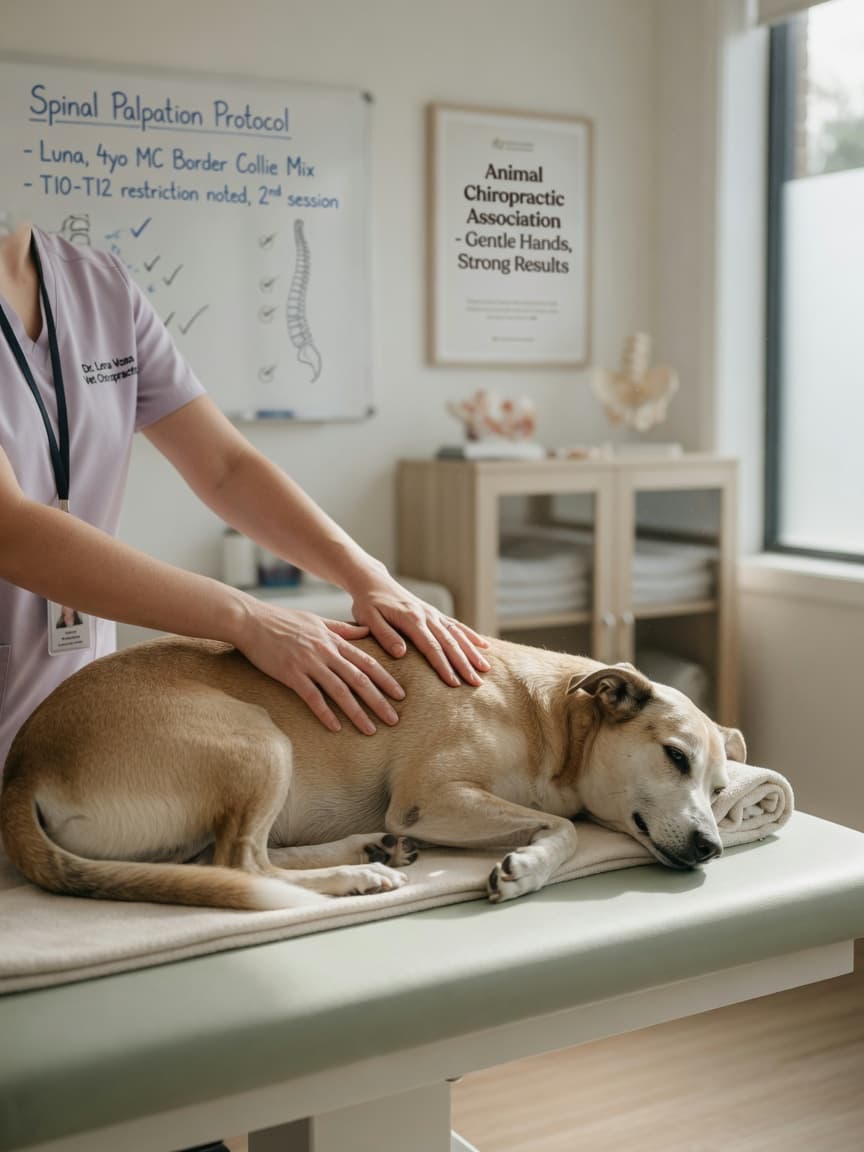
Veterinary chiropractic is a hands-on therapy that focuses on the spine and musculoskeletal system. Practitioners use controlled, directed thrusts — called adjustments — to manipulate joints, particularly in the vertebral column, with the aim of restoring normal movement and reducing nerve interference. The discipline draws heavily from human chiropractic medicine but has been adapted for animal anatomy and biomechanics.
In the UK, veterinary chiropractic must be performed by a registered veterinary surgeon or a qualified human chiropractor working under veterinary referral. The Veterinary Surgeons Act 1966 governs this clearly, so always verify credentials before booking a session for your dog.
What Conditions Might It Help?

Veterinary chiropractic is most commonly sought for dogs with the following presentations:
- Neck and back pain, including disc-related discomfort
- Gait abnormalities or stiffness that is not fully explained by orthopaedic findings
- Chronic osteoarthritis, particularly in older dogs
- Post-surgical rehabilitation to restore full range of motion
- Performance dogs — working breeds, agility competitors, or sporting dogs — with subtle movement asymmetries
Many owners report improvements in their dog's mobility, willingness to exercise, and general demeanour after a course of sessions. However, it is important to separate anecdote from clinical evidence, and the two do not always align neatly.
What Does the Evidence Actually Show?
This is where honest appraisal matters. The evidence base for veterinary chiropractic is limited by the standards of conventional medicine. Most studies involve small sample sizes, lack control groups, and rely on subjective outcome measures. A 2021 systematic review published in the journal Frontiers in Veterinary Science acknowledged that while there are plausible biomechanical mechanisms for benefit, randomised controlled trials in veterinary patients remain scarce.
There is somewhat stronger evidence from human medicine, particularly for low back pain, and practitioners extrapolate these findings to dogs. This extrapolation may be reasonable given similar spinal anatomy, but it cannot be considered equivalent to direct canine evidence.
That said, several small studies and case series do suggest that spinal manipulation can reduce pain scores and improve range of motion in dogs with intervertebral disc disease and spondylosis. A study in the Veterinary Journal found that dogs with thoracolumbar pain showed measurable improvements in pressure pain thresholds following chiropractic treatment, which is a reasonably objective measure.
Understanding the Proposed Mechanism
Chiropractic theory holds that restricted or dysfunctional spinal joints — often called vertebral subluxations — interfere with nervous system function and biomechanical efficiency. An adjustment aims to restore normal joint kinematics, which is thought to reduce local inflammation, decrease muscle guarding, and improve neural signalling.
Modern research in human sports medicine supports the idea that spinal manipulation can modulate pain through central sensitisation pathways and influence muscle spindle activity. Whether identical mechanisms operate in the canine spine is biologically plausible but not yet fully confirmed through peer-reviewed veterinary research.
Risks and Contraindications
Veterinary chiropractic is generally considered low-risk when performed by a properly trained and credentialled practitioner. However, it is not appropriate in all cases. Contraindications include:
- Active bone infection or neoplasia (cancer) affecting the spine
- Severe osteoporosis
- Acute fracture or spinal instability
- Dogs with advanced myelopathy or severe neurological deficits where manipulation could worsen cord compression
In rare cases, aggressive manipulation near the cervical spine has been associated with worsening of neurological signs, though such adverse events appear to be uncommon in veterinary practice when practitioners adhere to proper assessment protocols. A thorough neurological and orthopaedic examination, and often diagnostic imaging, should precede any spinal manipulation.
Some dogs experience temporary muscle soreness for twenty-four to forty-eight hours after an adjustment, similar to post-exercise stiffness. This typically resolves without intervention.
What to Expect at a Session
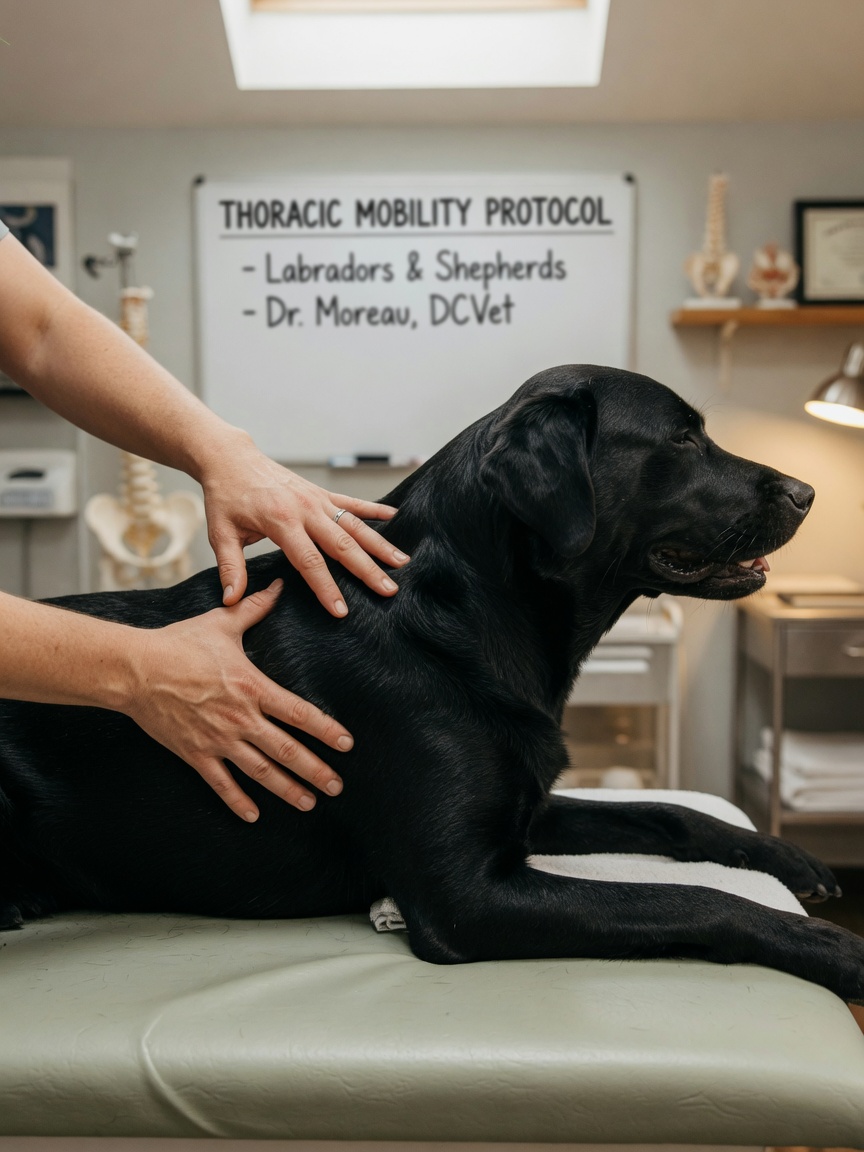
An initial consultation with a veterinary chiropractor typically lasts forty-five minutes to an hour. The practitioner will take a detailed history, observe your dog's gait and posture, and perform a hands-on assessment of spinal motion segments and muscle tone. They are looking for areas of reduced joint mobility, asymmetry, or soft tissue tension.
Adjustments themselves are brief and targeted. Practitioners use their hands to apply a short, precise thrust to a specific joint. The technique used in animals is generally gentler than what you might experience in a human chiropractic clinic. Most dogs tolerate treatment well and show no signs of distress; many appear relaxed during the session.
A typical course of treatment might involve three to six sessions over several weeks, with reassessment at each visit. Maintenance sessions every four to eight weeks are common for dogs with chronic musculoskeletal conditions or those in active competition.
Choosing a Qualified Practitioner
In the UK, look for practitioners certified by the International Veterinary Chiropractic Association (IVCA) or the McTimoney College of Chiropractic, which offers a postgraduate programme specifically for animal chiropractic. The British Veterinary Chiropractic Association also maintains a register of practitioners.
Always ensure that your regular vet is informed before starting chiropractic treatment. A responsible practitioner will ask for a veterinary referral and will communicate findings back to your vet. If a practitioner dismisses the importance of conventional diagnosis or discourages communication with your vet, treat this as a red flag.
Integrating Chiropractic Into Your Dog's Care
Veterinary chiropractic works best as part of a broader management strategy rather than a standalone cure. For a dog with chronic back pain, for example, combining chiropractic with physiotherapy, appropriate exercise modification, weight management, and — where necessary — conventional pain management is likely to produce better outcomes than any single approach in isolation.
The honest position is this: the evidence supports cautious optimism rather than certainty. For dogs with musculoskeletal pain that has not fully responded to conventional treatment, a properly supervised course of chiropractic care is a reasonable and relatively low-risk option to explore.