
Why Is My Cat Losing Hair?
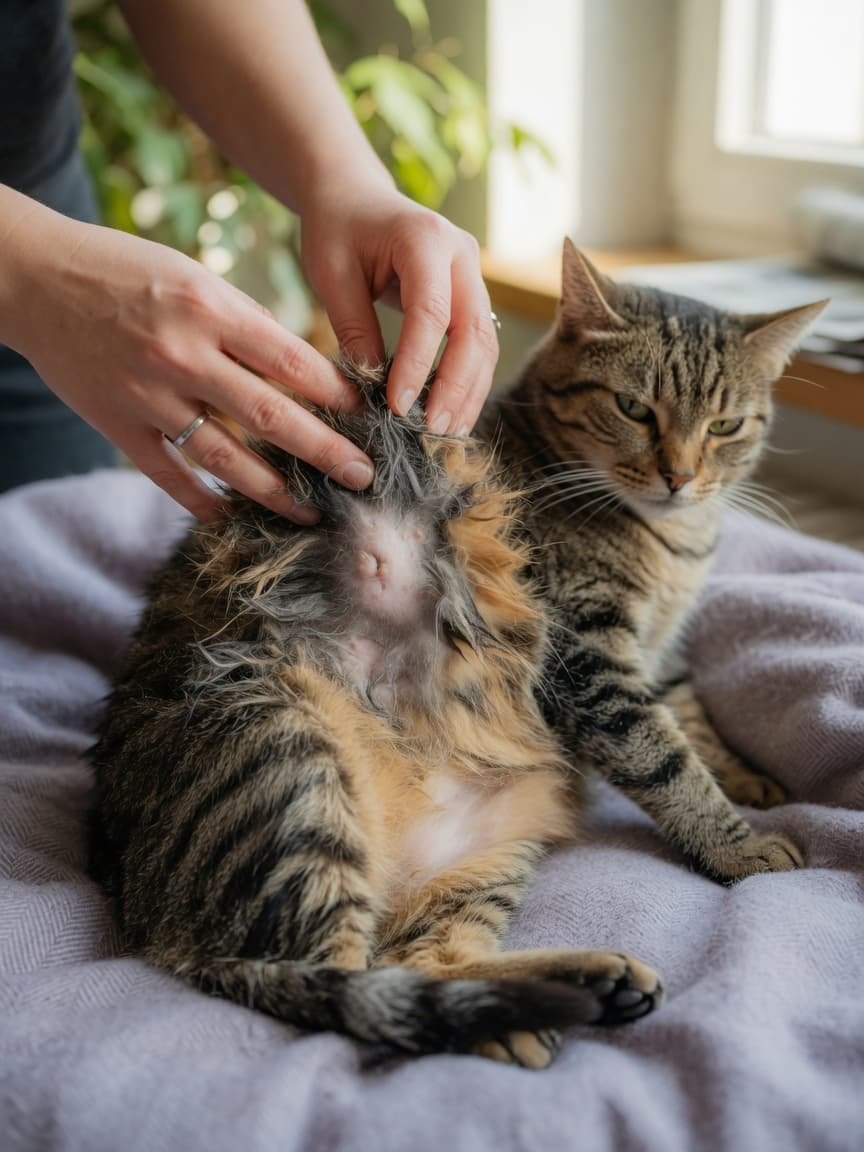
Finding tufts of cat fur on furniture and floors is not unusual, but when your cat develops thinning patches, bare skin, or symmetrical areas of missing coat, something beyond routine moulting is at work. Feline alopecia — hair loss beyond what is normal for the individual cat or season — is one of the more common reasons owners consult a vet, and its causes span an impressive range from simple parasitic infestations to complex psychological conditions.
One of the most important distinctions in feline alopecia is whether the cat is actively removing its own fur (self-induced alopecia through overgrooming) or whether the hair is falling out spontaneously (non-self-induced alopecia). This single question shapes the entire diagnostic approach.
Self-Induced Alopecia: When Cats Over-Groom
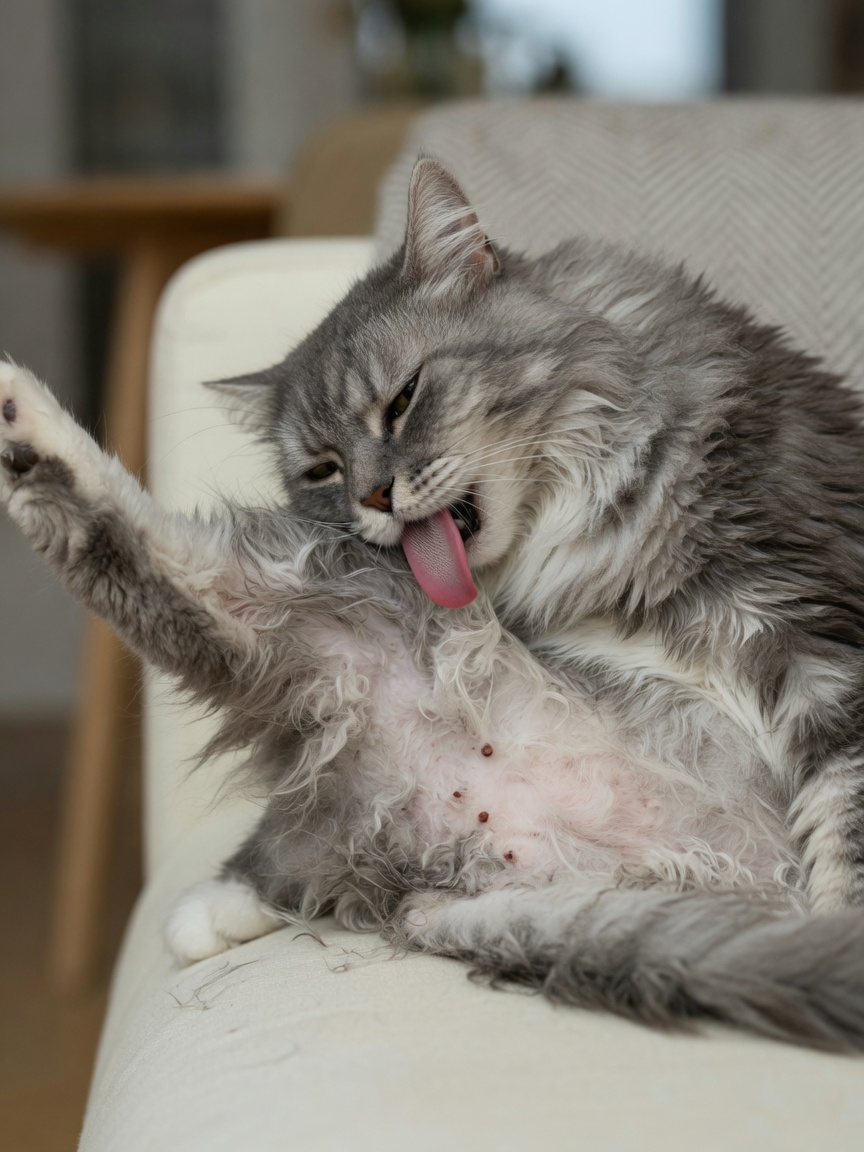
Cats are fastidious groomers, but excessive licking, chewing, and barbering of the coat results in hair that is broken off at the base rather than lost from the follicle. The skin beneath tends to look relatively normal rather than inflamed or scaly. The most common locations for self-induced alopecia are the abdomen, inner thighs, flanks, and the lower back — areas the cat can reach easily with its tongue.
The causes of overgrooming fall into two main categories: pruritic (itchy) causes and psychogenic causes.
Common Causes of Hair Loss in Cats
1. Parasites: Fleas, Mites, and Lice
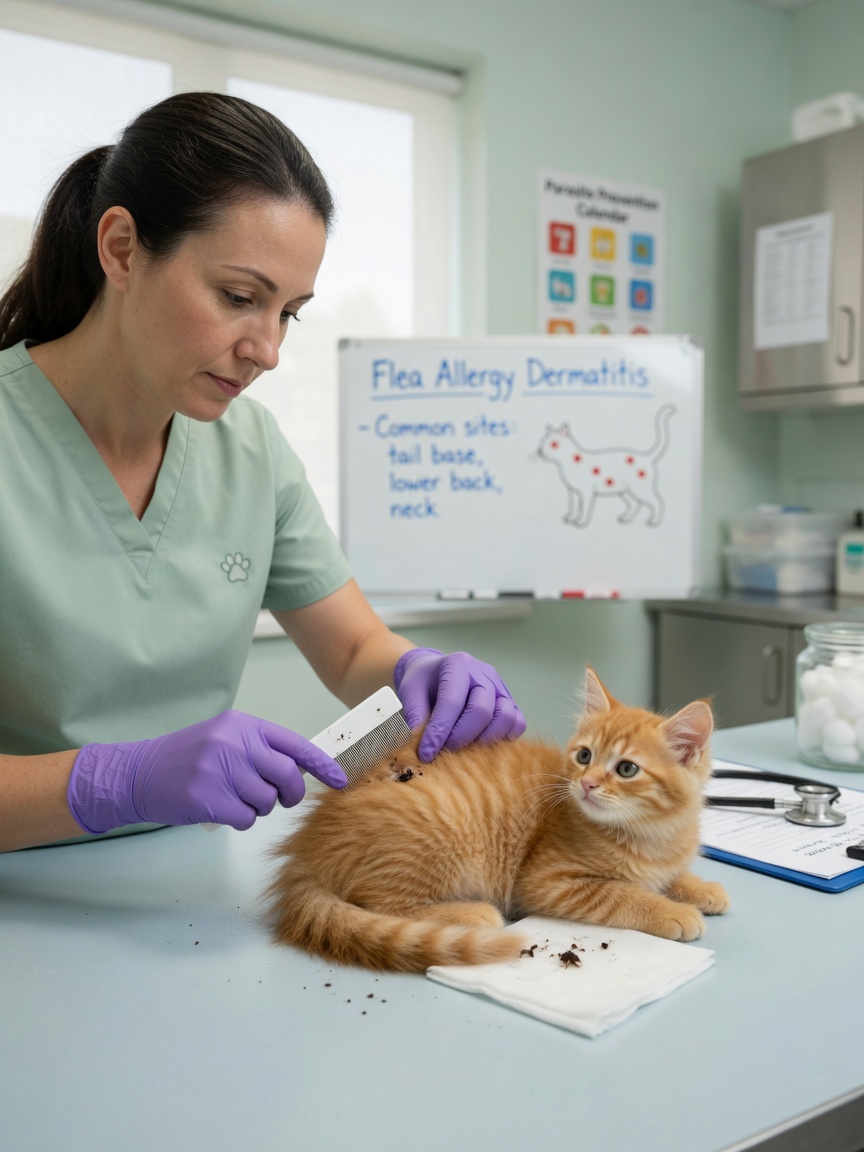
Fleas are the most common parasitic cause of hair loss in cats. Flea allergy dermatitis (FAD) — a hypersensitivity reaction to flea saliva — causes intense itching and compulsive grooming, particularly over the lower back and tail base. Because cats are such efficient groomers, they often remove all evidence of fleas from their coat before an owner notices. The absence of visible fleas does not rule out FAD — flea dirt (digested blood) in the coat or an appropriate response to flea treatment confirms the diagnosis.
ESCCAP (the European Scientific Counsel Companion Animal Parasites) recommends year-round flea prevention for cats across most European countries, as heated indoor environments now allow flea populations to persist through winter. Cheyletiella mites (walking dandruff) and Otodectes (ear mites, which occasionally spread to surrounding skin) can also contribute to hair loss and itching.
2. Allergies
Allergic skin disease in cats manifests differently from allergic disease in dogs but is no less common. Cats typically present with one or a combination of four reaction patterns: miliary dermatitis (tiny crusted papules across the back, like millet seeds), eosinophilic granuloma complex lesions (raised, yellow-orange plaques, indolent ulcers, or linear granulomas), self-induced symmetrical alopecia, or head and neck excoriations.
- Flea allergy dermatitis: As above — the most common allergic trigger.
- Atopic dermatitis: Reaction to environmental allergens including dust mites, pollens, and mould spores. Typically causes pruritus of the face, head, neck, and ventrum.
- Food hypersensitivity: Adverse reactions to dietary proteins — commonly chicken, fish, beef, or dairy. Unlike atopy, food allergy is non-seasonal and does not respond to corticosteroids reliably. An eight-to-twelve-week strict elimination diet using a hydrolysed protein or novel protein food is the gold standard diagnostic test.
3. Ringworm (Dermatophytosis)
Ringworm — caused by Microsporum canis in the vast majority of feline cases — is a highly contagious fungal skin infection affecting cats of all ages, but kittens and immunocompromised cats are especially susceptible. It causes irregular, often circular patches of broken, stubbled hair with scaling and sometimes mild redness or crusting at the margin. Unlike dogs, cats often carry ringworm with few outward signs (subclinical carriers), making them a silent source of infection for other pets and humans.
Ringworm is a zoonosis — it can readily spread to people, causing itchy circular skin lesions. Any household with suspected ringworm in a pet should seek prompt veterinary diagnosis and treatment. Diagnosis is by fungal culture (the gold standard), Wood's lamp examination (only some Microsporum canis strains fluoresce), or PCR testing. Treatment involves topical antifungal shampoos or lime sulphur dips, systemic antifungals (itraconazole or terbinafine), and rigorous environmental decontamination.
4. Psychogenic Alopecia
Psychogenic alopecia is a stress- or anxiety-driven compulsive disorder in which cats overgroom to the point of causing significant hair loss, sometimes down to bare skin. It is more common in anxious, indoor-only cats or those in multi-cat or stressful households. Classic triggers include changes in the home environment (new people, new pets, building work, moving house), loss of a companion, or chronic conflict with another cat.
The hair loss pattern is typically bilaterally symmetrical along the abdomen, inner thighs, and flanks. The skin beneath looks normal initially, though persistent licking can lead to secondary skin trauma and infection. Psychogenic alopecia is a diagnosis of exclusion — it should only be concluded after pruritic causes (parasites, allergies, infection) have been thoroughly ruled out, as most cats presented as "stress groomers" turn out to have an underlying physical cause for their itching.
Management involves identifying and removing stressors where possible, environmental enrichment, pheromone therapy (such as Feliway), and in severe cases, prescription anxiolytic medication. Behavioural referral to a veterinary behaviourist may be appropriate for complex cases.
5. Hormonal Causes
Hormonal hair loss in cats is less common than in dogs but does occur. Feline symmetrical alopecia — a bilateral, non-itchy thinning of the coat over the flanks and abdomen — was historically attributed to sex hormone imbalances and commonly diagnosed as "hormonal alopecia." Current veterinary thinking holds that many such cases are in fact self-induced alopecia driven by subtle pruritus. True hormonal causes are uncommon but include:
- Hyperthyroidism, which can cause poor coat quality and patchy thinning in some cases
- Hyperadrenocorticism (Cushing's disease, rare in cats but presenting with thin fragile skin and hair loss)
- Paraneoplastic alopecia — a dramatic thinning and glistening of the ventral skin caused by internal tumours, particularly pancreatic or bile duct carcinoma
6. Skin Infections
Bacterial folliculitis (infection of hair follicles) and fungal infections beyond ringworm can cause localised hair loss, pustules, and crusting. These often arise secondary to another problem — scratching from allergies damages the skin barrier and allows opportunistic infection. Cytology (examining skin cells under a microscope) and bacterial culture guide treatment with appropriate antibiotics or antifungals.
Red Flags: When Hair Loss Signals Something Serious
- Rapid, widespread hair loss across the whole body
- Skin that looks fragile, tears easily, or hangs loosely — may suggest paraneoplastic alopecia or Cushing's disease
- Hair loss alongside jaundice, weight loss, or severe lethargy
- Open sores, ulcers, or raw, bleeding skin
- Circular lesions with crusty edges spreading rapidly — particularly if household members develop similar skin lesions (suggests ringworm)
- Hair loss accompanied by facial itching so severe the cat causes deep scratches around the head and neck
Diagnosis: How Your Vet Will Investigate
A systematic diagnostic approach is essential. Your vet will assess the distribution and pattern of hair loss, examine the quality of the remaining fur, and inspect the skin closely. Diagnostic tests may include skin scrapes for mites, adhesive tape preparations for surface parasites, Wood's lamp examination, fungal culture, skin cytology, full blood and urine panels, thyroid hormone measurement, and biopsy in complex cases. A dietary elimination trial is recommended when food allergy is suspected.
See Your Vet If...
- You notice any patchy, symmetrical, or spreading hair loss
- Your cat is grooming excessively, licking the same areas repeatedly
- The skin beneath lost hair looks red, crusty, scaly, or abnormal in any way
- Other pets or people in the household develop skin lesions
- Hair loss is accompanied by weight loss, changes in appetite, or lethargy
- You suspect your cat may be stressed or anxious — even if this seems like the obvious cause, a physical cause must first be ruled out
Feline alopecia is rarely straightforward, but with a methodical approach your vet can almost always identify the underlying cause and offer effective treatment. Never assume hair loss is purely cosmetic — in cats, it almost always reflects a level of discomfort or illness that deserves attention.