
ForPetsHealthcare
Dogs

Why Your Dog Is Bored and How to Stop It

By Julia WrenfieldUpdated August 4, 20264 min read
Evidence-based · Sources checked
{"en": "Bored dog lying on floor with toys nearby, looking restless and disengaged indoors", "es": "Perro aburrido acostado en el piso con juguetes cerca, luciendo inquieto y desinteresado en interiores", "fr": "Chien ennuy\u00e9 allong\u00e9 sur le sol avec des jouets \u00e0 proximit\u00e9, l'air agit\u00e9 et d\u00e9sengag\u00e9 \u00e0 l'int\u00e9rieur", "de": "Gelangweilter Hund liegt auf dem Boden mit Spielzeugen in der N\u00e4he, wirkt unruhig und desinteressiert drinnen", "nl": "Verveelde hond liggend op de vloer met speelgoed in de buurt, ziet er onrustig en onge\u00efnteresseerd uit binnen", "pt": "C\u00e3o entediado deitado no ch\u00e3o com brinquedos pr\u00f3ximos, parecendo inquieto e desinteressado dentro de casa", "it": "Cane annoiato sdraiato sul pavimento con giocattoli nelle vicinanze, sembra inquieto e disinteressato al chiuso"}

Have you noticed your dog staring blankly out the window, destructively chewing the sofa, or barking incessantly at nothing in particular? These behaviours often signal something many pet owners overlook: profound boredom. Unlike humans who can entertain themselves with books or television, dogs are active animals with complex minds that require regular mental and physical stimulation. When this need goes unmet, the consequences ripple through their behaviour, health, and your household peace. The good news? Boredom is entirely preventable with the right knowledge and commitment.

Understanding Why Dogs Get Bored

Dogs are descended from wolves, creatures built for hunting, problem-solving, and exploring their environment. Even domesticated dogs retain these instincts. Modern pet life—often confined to a small flat or garden—can feel monotonously repetitive to a dog's intelligent brain. Most dogs need between 30 minutes to 2 hours of daily exercise and mental engagement, depending on their breed, age, and individual temperament.

Boredom isn't simply a matter of an unhappy dog; it's a genuine welfare concern that can lead to anxiety, depression, and destructive behaviours that escalate over time.

Signs Your Dog Is Bored

  • Destructive chewing or scratching at doors and walls
  • Excessive barking, whining, or howling
  • Hyperactivity or sudden bursts of frantic energy
  • Inappropriate toileting indoors
  • Obsessive behaviours like tail-chasing
  • Weight gain from inactivity
  • Lethargy and seeming depression
  • Aggression or excessive mouthing during play

Physical Exercise: The Foundation
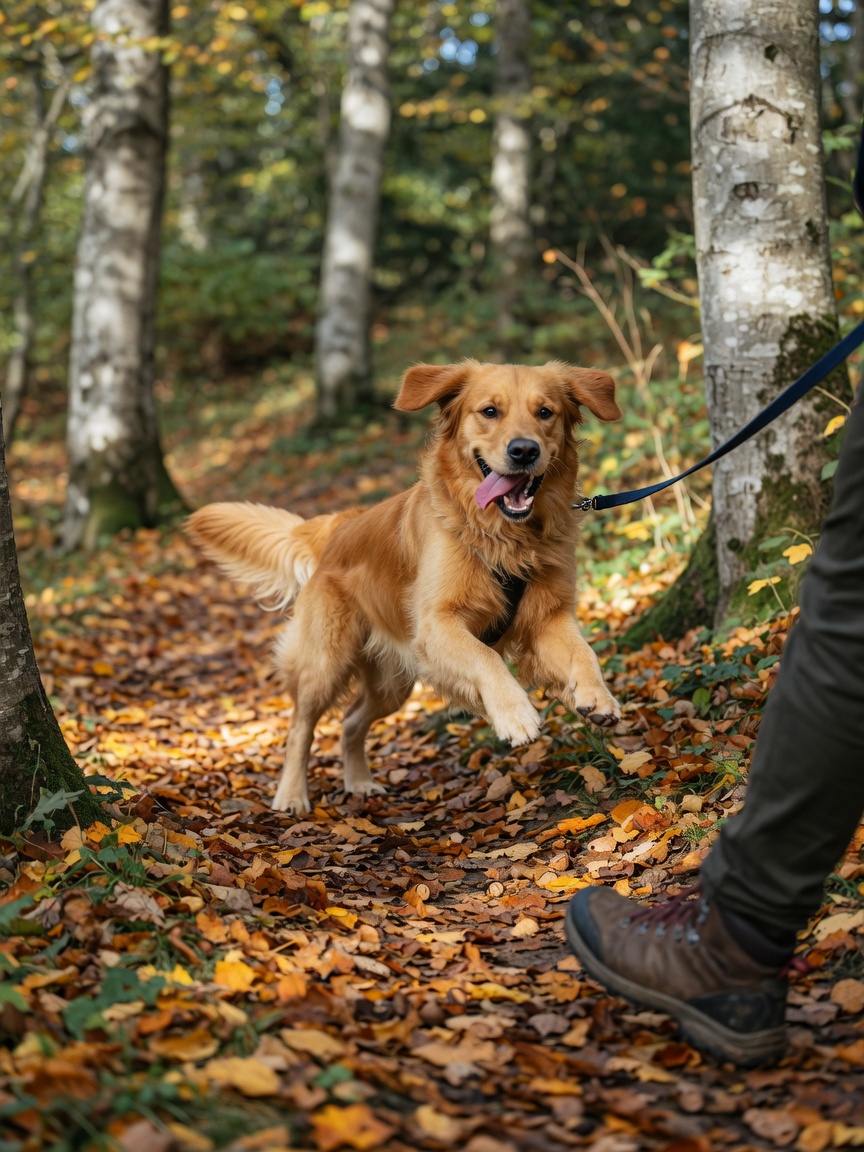
Golden Retriever running energetically through a woodland trail during an active outdoor exercise session

The first line of defence against boredom is adequate physical exercise. A tired dog is generally a well-behaved dog. However, exercise requirements vary significantly:

  • High-energy breeds (Border Collies, Spaniels, Huskies) need 60-120 minutes daily
  • Moderate-energy dogs (Beagles, Cocker Spaniels) need 45-60 minutes daily
  • Low-energy breeds (Bulldogs, Basset Hounds) need 20-30 minutes daily

Vary your routes and environments. Walking the same path daily becomes predictable. Try different parks, woodland trails, and beaches to stimulate your dog's senses and keep walks interesting.

Mental Enrichment: The Missing Piece

Black Labrador engaged with a puzzle feeder toy, demonstrating mental enrichment and problem-solving activity

Physical exercise alone isn't enough. Dogs need mental challenges that engage their problem-solving abilities. Consider these enrichment activities:

  1. Puzzle feeders and treat-dispensing toys – Transform mealtime into a game that slows eating and stimulates thinking
  2. Scent work and nose games – Hide treats around your garden or home for your dog to find, tapping into their natural tracking instincts
  3. Training sessions – Teach new commands or tricks in short 5-10 minute bursts several times daily
  4. Rotating toys – Store most toys away, rotating a selection weekly to maintain novelty
  5. Snuffle mats – Scatter low-value food in fabric mats for foraging behaviour
  6. Socialisation opportunities – Regular interaction with other dogs and people provides valuable mental stimulation

Creating a Boredom-Proof Routine

Structure matters. Dogs thrive on routine, but that routine should include varied activities:

  • Schedule two exercise sessions daily at different times
  • Dedicate 10-15 minutes to training or play each day
  • Provide mental enrichment during your working hours through puzzle toys or long-lasting chews
  • Consider doggy daycare one or two days weekly for additional socialisation
  • Explore dog sports like agility, obedience, or flyball if your dog shows aptitude

Key Takeaways

Boredom in dogs is preventable and manageable through commitment to both physical exercise and mental enrichment. The effort you invest now prevents behavioural problems, promotes better health, strengthens your bond, and ensures your dog experiences a fulfilling life. Start by honestly assessing your dog's current activity level, identify gaps, and gradually introduce new enrichment activities. Your dog's joy and wellbeing are worth the investment.

#why your dog is bored and how to stop it#dog health#dog nutrition#forpetshealthcare

Sources & further reading

This article is based on peer-reviewed veterinary research and reputable animal-health sources. Explore the underlying science in our Research Library.

Related articles

The 19 Best Animal Shelters in the Netherlands (2026)

the Netherlands's animal shelters, rescue associations and refuges save thousands of dogs, cats and other animals every year, almost always on tiny budgets and volunteer power. To build the most objective ranking possible, we analysed public Google reviews across more than 56 registered animal-prote…

Read more →

The 25 Best Animal Shelters in Italy (2026)

Italy's animal shelters, rescue associations and refuges save thousands of dogs, cats and other animals every year, almost always on tiny budgets and volunteer power. To build the most objective ranking possible, we analysed public Google reviews across more than 121 registered animal-protection org…

Read more →

The 48 Best Animal Shelters in Germany (2026)

Germany's animal shelters, rescue associations and refuges save thousands of dogs, cats and other animals every year, almost always on tiny budgets and volunteer power. To build the most objective ranking possible, we analysed public Google reviews across more than 152 registered animal-protection o…

Read more →

The 32 Best Animal Shelters in France (2026)

France's animal shelters, rescue associations and refuges save thousands of dogs, cats and other animals every year, almost always on tiny budgets and volunteer power. To build the most objective ranking possible, we analysed public Google reviews across more than 89 registered animal-protection org…

Read more →

The 8 Best Animal Shelters in Portugal (2026)

Portugal's animal shelters, rescue associations and municipal centros de recolha save thousands of dogs, cats and other animals every year, almost always on tiny budgets and volunteer power. To build the most objective ranking possible, we analysed public Google reviews across more than 86 registere…

Read more →

Sphynx Cat Skin care and hygiene: Causes, Signs & Care

Sphynx cats have little to no coat, which means the skin itself takes on jobs that fur normally does — insulation, oil dispersal, and barrier protection — leaving it prone to greasiness, blocked pores, fungal infections, and sunburn. The single most important thing to know is that a Sphynx's skin ne…

Read more →
Disclaimer:This article is for informational purposes only and does not constitute veterinary advice. Always consult a qualified veterinarian for your pet's health concerns.

Free newsletter

Pet health tips, straight to your inbox

Weekly science-backed advice for dog & cat owners. No spam, unsubscribe anytime.