
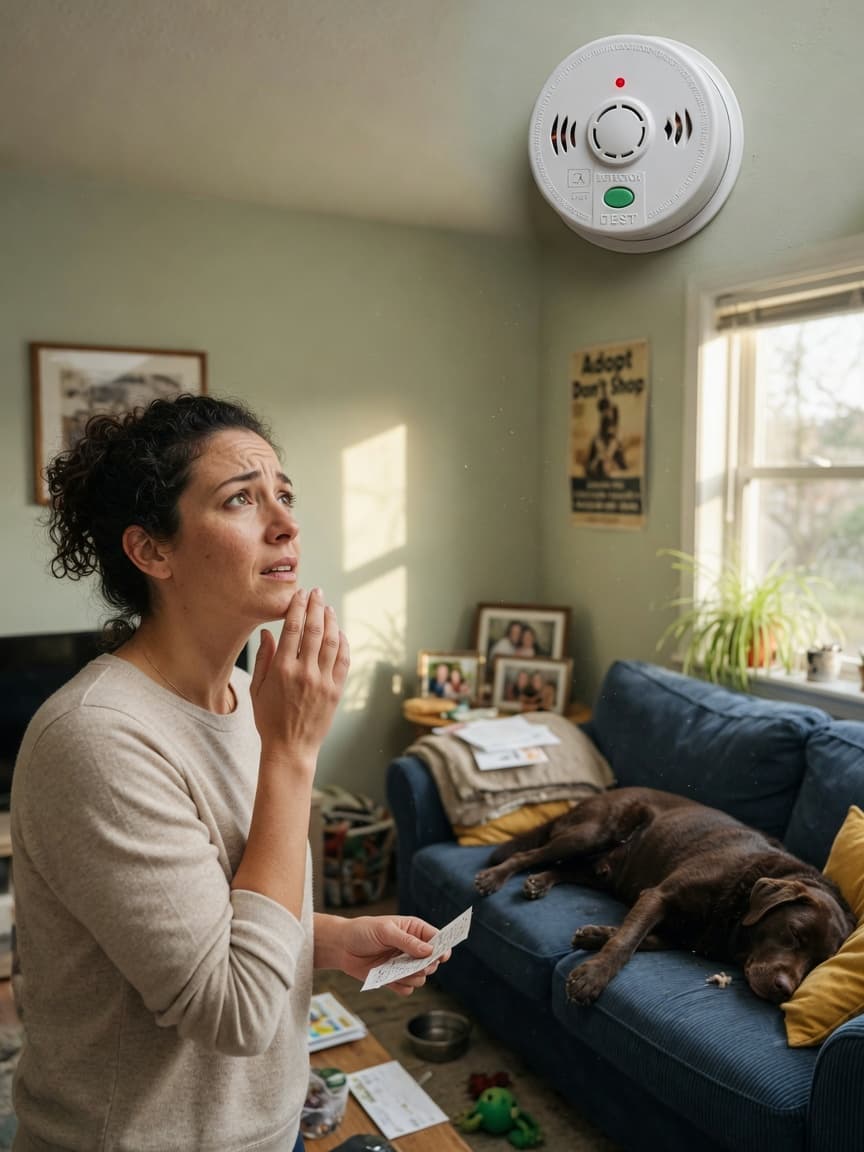
The Silent Threat Inside Your Home
Carbon monoxide (CO) is odourless, colourless, and entirely undetectable by smell. It kills by depriving cells of oxygen, and it does so with little warning. Pets are often the first to show symptoms in an affected household — partly because they spend more time indoors, and partly because smaller body size means the same concentration has a faster, more severe effect. Recognising the signs in your pet may save not only their life but yours.
Sources of Carbon Monoxide in the Home
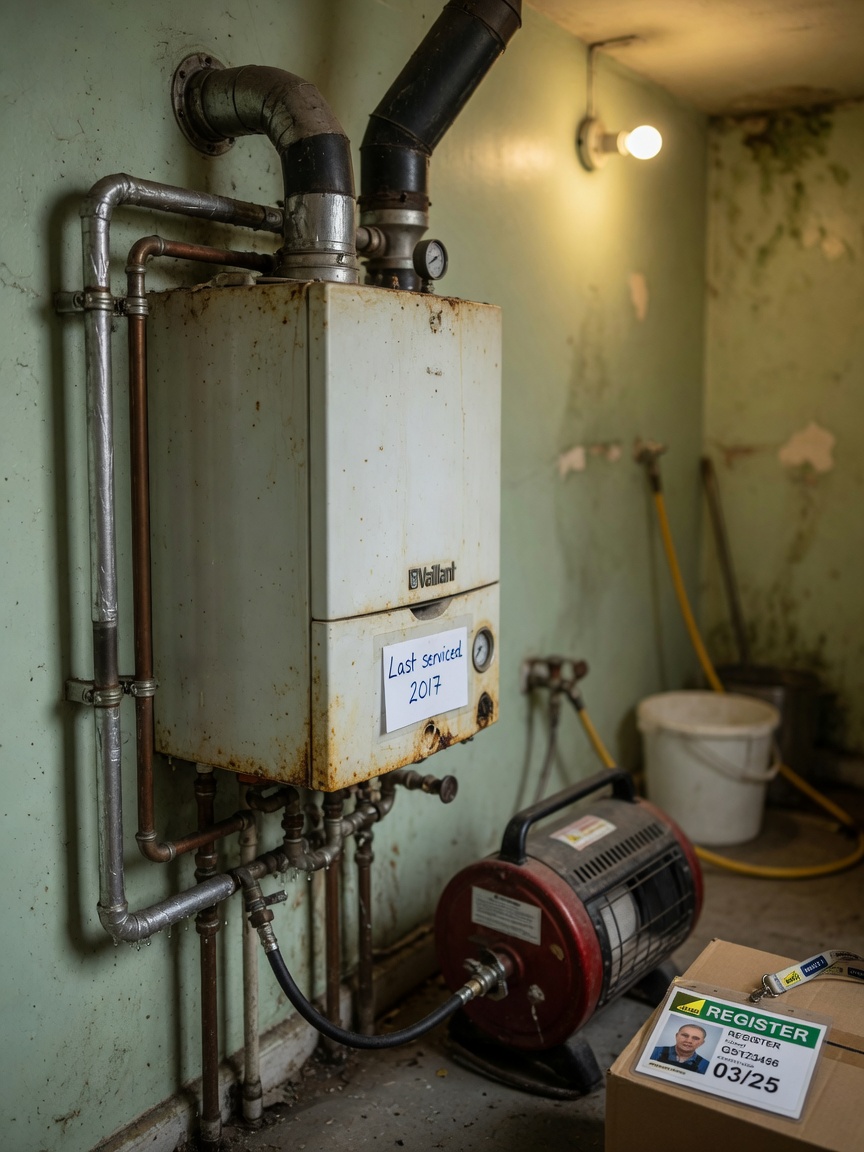
CO is produced whenever carbon-based fuels combust incompletely. Common household sources include gas boilers, cookers, and ovens; wood-burning stoves and open fireplaces; portable gas heaters; petrol-powered generators used indoors or in garages; blocked or damaged flues and chimneys; and attached garages where vehicles are left running even briefly. Faults in any of these appliances — particularly those that develop gradually — may release CO at levels too low for immediate human symptoms but sufficient to affect a small pet over hours.
Why Pets Are Particularly Vulnerable
Carbon monoxide binds to haemoglobin with an affinity roughly 200 times greater than oxygen, forming carboxyhaemoglobin. This prevents red blood cells from carrying oxygen to tissues. Smaller animals reach toxic blood concentrations more rapidly than larger ones. Birds are especially sensitive — canaries were historically used in mines precisely because they would succumb to CO before concentrations became dangerous to miners. If you keep birds and they become suddenly unwell or die unexpectedly, CO exposure is a serious consideration. Dogs and cats follow, but with symptoms that may be subtle at first.
Recognising the Symptoms
Early Signs
- Lethargy and unusual sleepiness, particularly if the pet seems more tired than normal without obvious cause
- Loss of appetite
- Mild disorientation or appearing "dopey"
- Watery eyes or runny nose
- Vomiting
Progressive or Severe Signs
- Difficulty breathing or rapid, shallow respiration
- Loss of coordination, stumbling, or inability to stand
- Muscle weakness or sudden collapse
- Seizures
- Loss of consciousness
- Cherry-red or bright pink gums (a classic but not always present finding in CO poisoning)
A key diagnostic clue is that symptoms appear to improve when the pet is taken outside or to a different environment. This pattern — a pet that seems ill indoors but recovers in fresh air — should raise immediate suspicion of CO exposure and trigger investigation of the home.
What to Do If You Suspect CO Exposure

Act immediately. Do not attempt to diagnose the situation while remaining in the building.
- Remove your pet and all people from the property at once, and keep everyone outside.
- Do not re-enter for any reason until emergency services have cleared the building.
- Call 999 in the UK (or your national emergency number) and report a suspected CO incident.
- Take your pet to a veterinary practice immediately — even if they appear to be improving in fresh air.
- Inform the vet of the suspected cause so they can test carboxyhaemoglobin levels and begin oxygen therapy promptly.
Treatment for CO poisoning is high-flow oxygen administered by mask or in an oxygen cage. In severe cases, hyperbaric oxygen therapy may be considered, though this is less widely available for animals. Recovery depends on the duration and level of exposure; some animals recover fully with prompt treatment, while prolonged exposure can result in lasting neurological damage.
Prevention: Protecting Your Household Year-Round
Detectors
Install audible carbon monoxide detectors on every floor of your home and near sleeping areas. Replace them every five to seven years according to manufacturer guidance. CO detectors are inexpensive and widely available — they are among the most important safety investments a pet owner can make. Note that CO detectors will not trigger until concentrations reach levels dangerous to humans; pets may be symptomatic before the alarm sounds.
Appliance Maintenance
Have all gas appliances, boilers, and flues serviced annually by a Gas Safe registered engineer in the UK. Ensure chimneys are swept regularly if you use solid fuel heating. Never use portable fuel-burning appliances indoors or in enclosed spaces, and never leave a vehicle running in an attached garage, even with the door open.
Seasonal Vigilance
CO incidents spike in colder months when heating systems are used more heavily and ventilation is reduced. Pay particular attention to your pet's behaviour in autumn and winter. If a pet becomes suddenly and inexplicably unwell during cold weather when the heating has recently been switched on, consider CO as a possible cause and act accordingly.
Your vet cannot help with CO exposure if they are not told about it. Providing this context is not alarmist — it is essential clinical information that directs appropriate treatment from the outset.