
Reproductive Tumours in Dogs Are Among the Most Treatable Cancers in Veterinary Medicine — When Caught Early
Two types of reproductive tumour in dogs deserve particular attention from owners: transmissible venereal tumour, a unique infectious cancer spread through mating, and testicular tumours, among the most common neoplasms in intact male dogs. Understanding what to look for, how these conditions develop, and what treatment involves can make a decisive difference in outcome.
Testicular Tumours: Common, Varied, and Often Curable
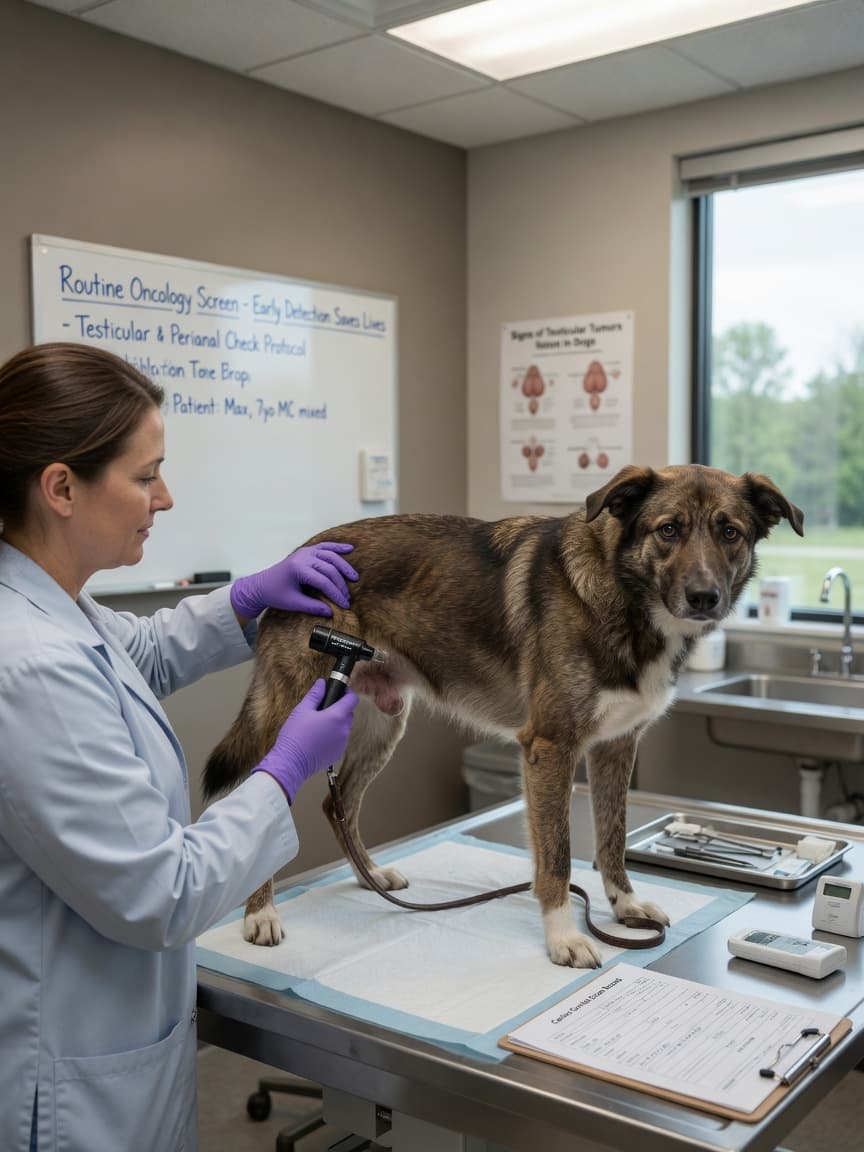
Testicular tumours are the second most common tumour type in intact male dogs. They are rare in neutered males, which is one of the health arguments for castration. There are three main types: Sertoli cell tumours, seminomas, and interstitial (Leydig) cell tumours. These can occur individually or in combination within the same or different testes.
Who Is at Risk
Age is the primary risk factor. Most testicular tumours develop in dogs over seven years of age. Cryptorchidism — the condition where one or both testes fail to descend into the scrotum and remain in the abdomen or inguinal canal — significantly increases tumour risk. A retained testicle is approximately 13 times more likely to develop a Sertoli cell tumour than a normally descended one. This is a compelling reason to address cryptorchidism surgically, even if the dog is otherwise healthy.
Signs to Watch For
In some dogs, a testicular tumour is discovered incidentally during a routine examination before any symptoms appear. In others, signs include asymmetry between the testes, a palpable mass, scrotal swelling, or — particularly with Sertoli cell tumours — signs of feminisation: symmetrical hair loss, skin changes, mammary development, and attraction from other male dogs. This feminisation occurs because some Sertoli cell tumours secrete oestrogen. Bone marrow suppression, a potentially life-threatening complication, can also occur in dogs with oestrogen-secreting tumours.
Diagnosis and Treatment
Diagnosis typically involves ultrasound of the testes and assessment of any clinical signs of hormonal disturbance. Castration — removal of both testes — is the treatment of choice and is curative in the vast majority of cases, as testicular tumours rarely metastasise. When they do, it is most often the Sertoli cell type. Post-operative monitoring is recommended, and in cases of confirmed metastasis, chemotherapy may be considered, though this is relatively uncommon.
Transmissible Venereal Tumour: A Unique Infectious Cancer
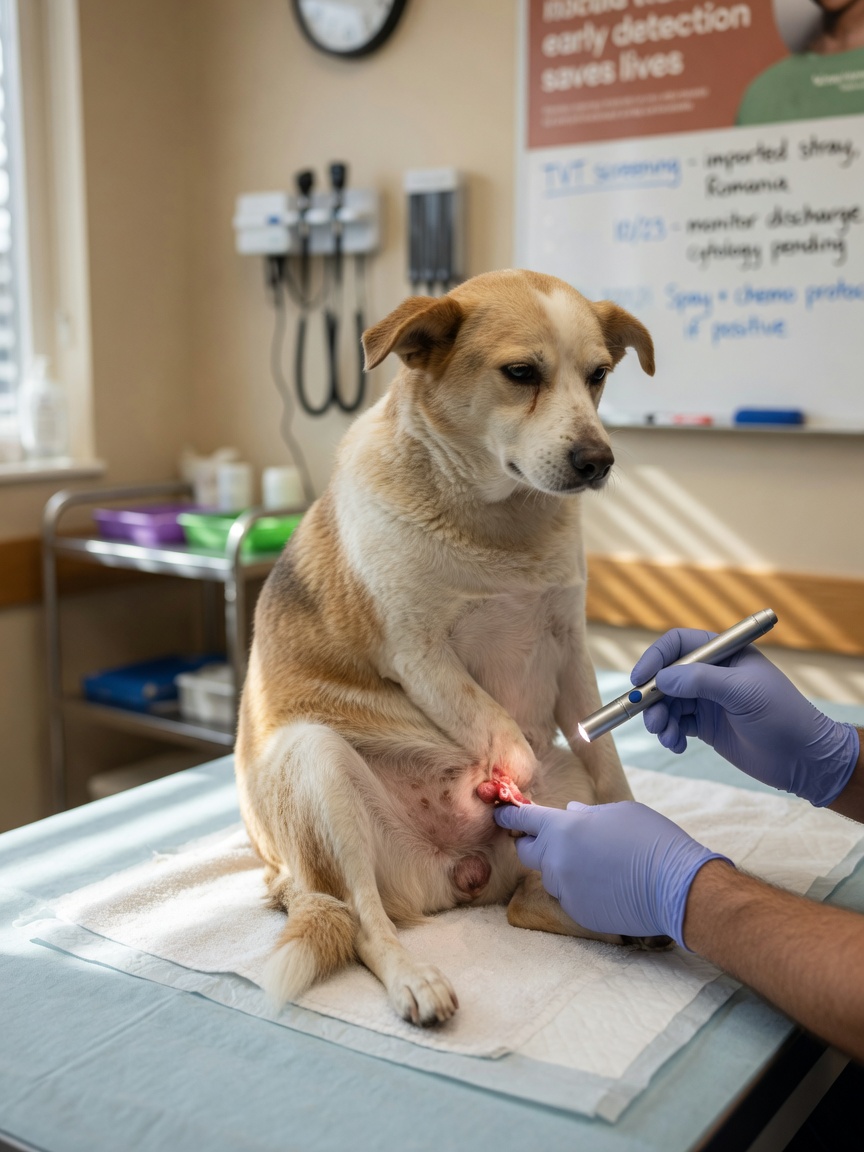
Transmissible venereal tumour, or TVT, is biologically remarkable — it is one of only two naturally occurring transmissible cancers in the animal kingdom. The tumour cells themselves are the infectious agent, transmitted directly between dogs during mating or close contact such as sniffing and licking of affected areas. The tumour cells that establish themselves in a new host are genetically the tumour, not the host dog — a lineage of cells that has been circulating in the dog population for thousands of years.
Where TVT Is Found
TVT is most prevalent in countries with large stray dog populations and warm climates: parts of Southern and Eastern Europe, Latin America, Asia, and Africa. In the UK, it is primarily seen in imported or recently travelled dogs. With increased movement of dogs across borders — through rescue programmes and international relocation — UK vets are seeing TVT in dogs that originated in affected regions. Any dog adopted from abroad or that has lived in an affected country should be examined for signs of TVT.
Recognising TVT
In female dogs, TVT typically presents as a cauliflower-like, friable mass on the vaginal or vulval mucosa, often noted when the owner observes a bloody or serosanguinous discharge that does not resolve after the season ends. In male dogs, similar growths appear on the prepuce, penile shaft, or glans. The masses may bleed easily and have an irregular surface. Extragenital sites — the nose, mouth, or skin — can be affected, particularly in dogs that have groomed the primary lesions.
Diagnosis and Treatment
Diagnosis is confirmed by cytology or biopsy, which reveals the characteristic round tumour cells with a distinctive appearance. TVT is highly responsive to chemotherapy — vincristine is the treatment of choice and produces complete remission in the majority of cases, typically after four to six weekly treatments. This makes TVT one of the more treatable cancers in veterinary oncology, with excellent long-term outcomes in dogs that do not have severe systemic spread at the time of diagnosis.
Prevention and Screening
- Castrate male dogs if breeding is not intended — this eliminates testicular tumour risk entirely
- Examine the testes of intact male dogs regularly at home and report any asymmetry or lumps to your vet promptly
- Ensure cryptorchid dogs are neutered — retained testes should always be removed surgically
- Have dogs adopted from abroad examined by a vet, including inspection of the genital mucosa for signs of TVT
- Report any persistent genital discharge in intact females that does not correspond with the normal season cycle
- Attend annual veterinary health checks — many tumours are caught during routine examination before clinical signs appear
Both TVT and testicular tumours are conditions where early detection significantly improves outcomes. Your vet is best placed to examine your dog, recommend appropriate diagnostics, and outline the treatment plan that gives the best chance of full recovery.