ForPetsHealthcare
Dogs

Can I Give My Dog Benadryl? Is It Safe?

By Julia WrenfieldUpdated September 11, 20263 min read
Evidence-based · Sources checked
{"en": "Dog scratching due to allergies or itching, showing discomfort and need for veterinary care", "es": "Perro rasc\u00e1ndose por alergias o picaz\u00f3n, mostrando malestar y necesidad de atenci\u00f3n veterinaria", "fr": "Chien se grattant en raison d'allergies ou de d\u00e9mangeaisons, montrant l'inconfort et le besoin de soins v\u00e9t\u00e9rinaires", "de": "Hund kratzt sich aufgrund von Allergien oder Juckreiz und zeigt Unbehagen und Bedarf f\u00fcr tier\u00e4rztliche Versorgung", "nl": "Hond die zich kratzt vanwege allergie\u00ebn of jeuk, vertoont ongemak en behoefte aan dierenartszorg", "pt": "C\u00e3o se co\u00e7ando devido a alergias ou coceira, mostrando desconforto e necessidade de cuidados veterin\u00e1rios", "it": "Cane che si gratta per allergie o prurito, mostrando disagio e necessit\u00e0 di cure veterinarie"}

If your dog is scratching incessantly, experiencing anxiety during thunderstorms, or suffering from an allergic reaction, you might have wondered whether Benadryl could provide relief. Whilst antihistamines like diphenhydramine (the active ingredient in Benadryl) can be used for dogs, it's crucial to understand that this isn't a one-size-fits-all solution. This guide will help you navigate the complexities of giving your dog this medication safely and effectively.

What Is Benadryl and How Does It Work?

Benadryl is an over-the-counter antihistamine containing diphenhydramine as its active ingredient. It works by blocking histamine receptors in the body, which reduces allergic reactions and can have a sedative effect. Whilst humans use it commonly for allergies and sleep issues, dogs' bodies process medications differently, making professional guidance essential before administration.

Is Benadryl Safe for Dogs?

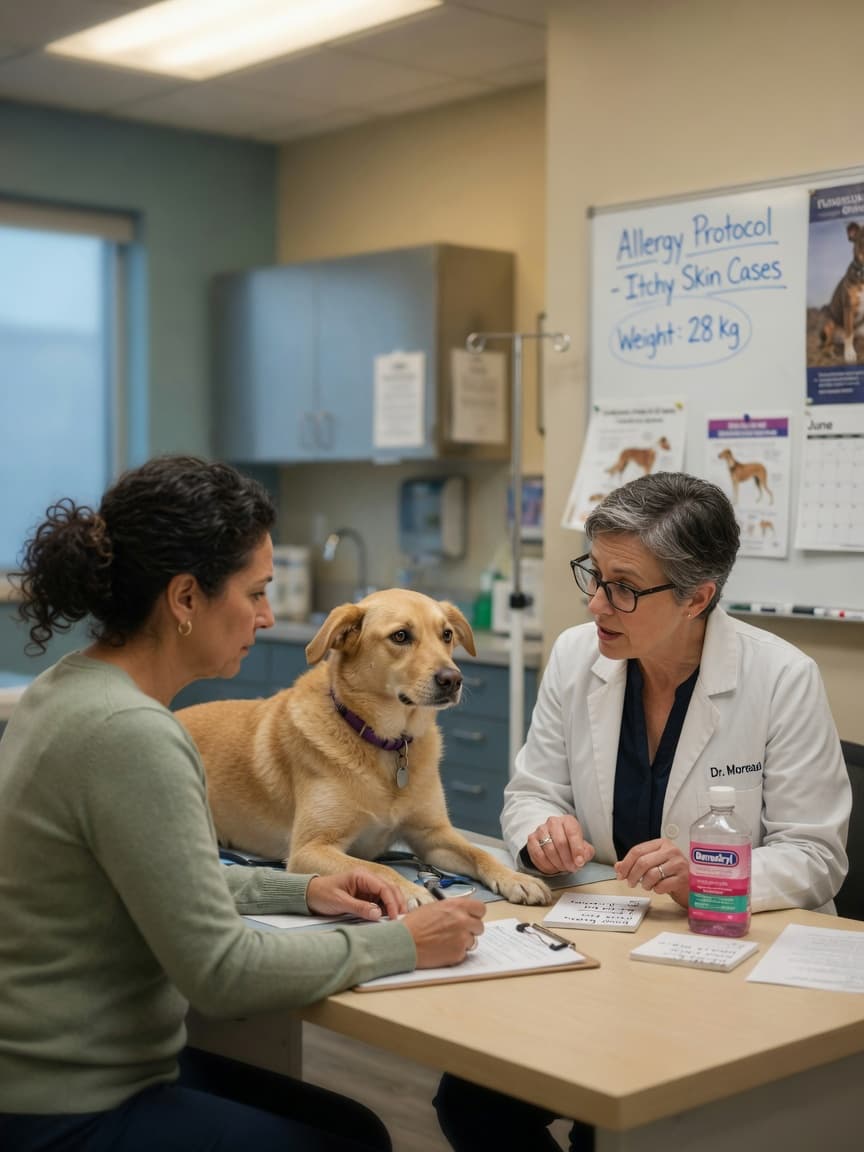
The short answer is: it can be, but only under specific circumstances and with proper dosing. Benadryl is generally considered relatively safe for dogs when used appropriately, but several important caveats apply:

  • It should only be given under veterinary guidance
  • The dosage must be calculated based on your dog's weight
  • Some dogs may have underlying conditions that make it unsuitable
  • Certain medications can interact dangerously with diphenhydramine
  • It's not suitable for pregnant or nursing dogs

When Might Your Vet Recommend Benadryl?

Dog scratching intensely at its neck due to allergic reaction or itching

Veterinarians may suggest antihistamines for dogs experiencing:

  1. Mild to moderate allergic reactions – such as itching from food sensitivities or environmental allergies
  2. Hives or skin reactions – following insect bites or minor allergic responses
  3. Anxiety during travel – the sedative effects can help anxious dogs during car journeys
  4. Swelling from allergic reactions – though severe reactions require immediate veterinary emergency care

Important Risks and Contraindications

Benadryl isn't appropriate for every dog. Your veterinarian will avoid recommending it if your dog has:

  • Glaucoma or eye conditions
  • Urinary retention issues
  • Hyperthyroidism
  • Heart conditions or hypertension
  • Seizure disorders
  • Prostate problems

Additionally, sedative effects can be pronounced in elderly dogs or those with liver or kidney disease. Certain breeds may be more sensitive to the medication's effects.

Proper Dosing Guidelines

If your vet approves Benadryl for your dog, dosing is typically calculated at 1 mg per pound of body weight, given two to three times daily. However, never self-dose your dog. Your veterinarian will provide specific instructions based on your individual pet's health profile and the reason for treatment. Some formulations contain additional ingredients that may be harmful to dogs, so always verify the product composition with your vet.

When to Seek Emergency Care

Contact your veterinarian immediately if your dog experiences excessive drowsiness, urinary retention, rapid heart rate, or difficulty breathing after receiving Benadryl. Severe allergic reactions warrant emergency veterinary care regardless of any home treatments attempted.

Key Takeaways

Benadryl can be a helpful tool for managing minor allergic reactions and anxiety in dogs, but it requires veterinary oversight. Never give your dog this medication without consulting your vet first. Always confirm the correct dosage, check for contraindications with your dog's health history, and monitor your pet carefully for adverse effects. When in doubt, contact your veterinary practice – they can recommend safer, more effective alternatives tailored to your dog's specific needs.

#can i give my dog benadryl is it safe#dog health#dog nutrition#forpetshealthcare

Sources & further reading

This article is based on peer-reviewed veterinary research and reputable animal-health sources. Explore the underlying science in our Research Library.

Related articles

The 19 Best Animal Shelters in the Netherlands (2026)

the Netherlands's animal shelters, rescue associations and refuges save thousands of dogs, cats and other animals every year, almost always on tiny budgets and volunteer power. To build the most objective ranking possible, we analysed public Google reviews across more than 56 registered animal-prote…

Read more →

The 48 Best Animal Shelters in Germany (2026)

Germany's animal shelters, rescue associations and refuges save thousands of dogs, cats and other animals every year, almost always on tiny budgets and volunteer power. To build the most objective ranking possible, we analysed public Google reviews across more than 152 registered animal-protection o…

Read more →

The 25 Best Animal Shelters in Italy (2026)

Italy's animal shelters, rescue associations and refuges save thousands of dogs, cats and other animals every year, almost always on tiny budgets and volunteer power. To build the most objective ranking possible, we analysed public Google reviews across more than 121 registered animal-protection org…

Read more →

The 32 Best Animal Shelters in France (2026)

France's animal shelters, rescue associations and refuges save thousands of dogs, cats and other animals every year, almost always on tiny budgets and volunteer power. To build the most objective ranking possible, we analysed public Google reviews across more than 89 registered animal-protection org…

Read more →

The 8 Best Animal Shelters in Portugal (2026)

Portugal's animal shelters, rescue associations and municipal centros de recolha save thousands of dogs, cats and other animals every year, almost always on tiny budgets and volunteer power. To build the most objective ranking possible, we analysed public Google reviews across more than 86 registere…

Read more →

Yorkshire Terrier Collapsing trachea: Causes, Signs & Care

Yorkshire Terriers are one of the breeds most commonly affected by collapsing trachea, largely because their windpipe cartilage is naturally softer and more prone to weakening than in larger dogs. This means the rings of cartilage that hold the airway open can flatten during breathing, causing a cha…

Read more →
Disclaimer:This article is for informational purposes only and does not constitute veterinary advice. Always consult a qualified veterinarian for your pet's health concerns.

Free newsletter

Pet health tips, straight to your inbox

Weekly science-backed advice for dog & cat owners. No spam, unsubscribe anytime.