
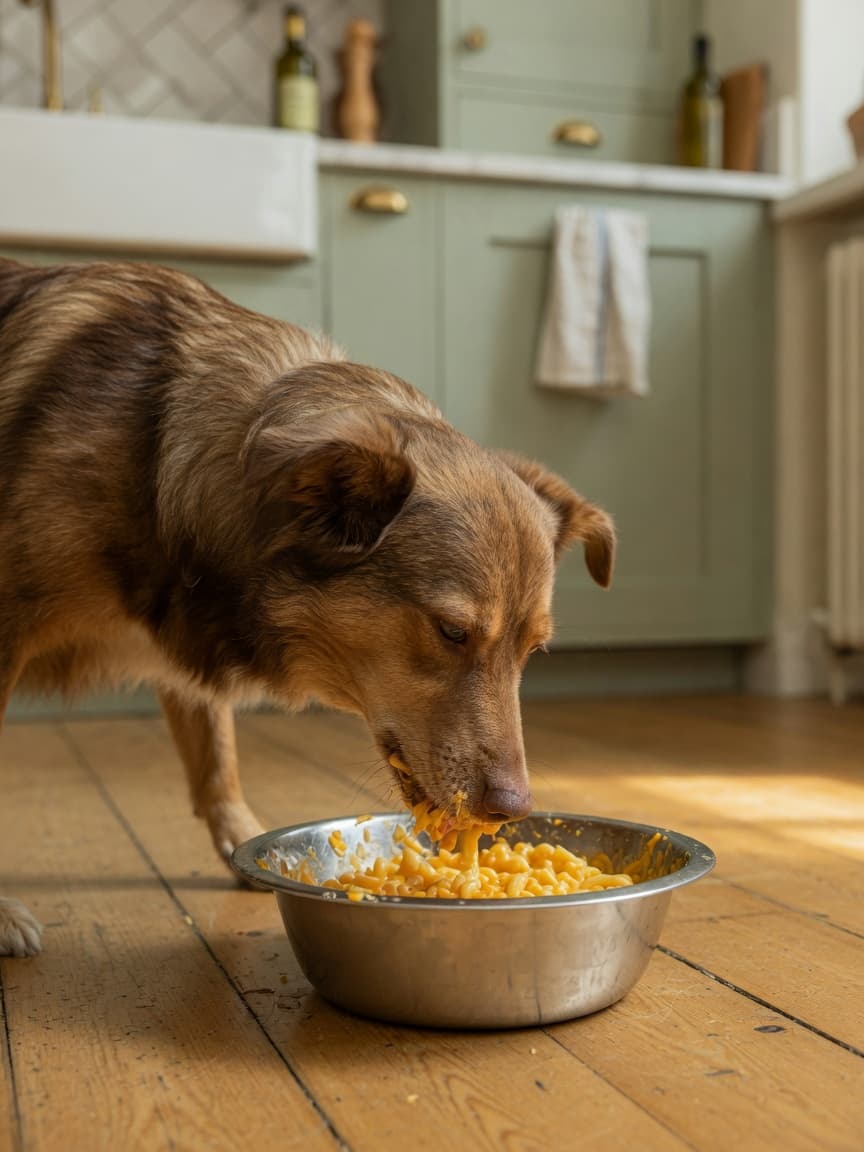
Mac and cheese is a beloved comfort food for many of us, and it's natural to want to share our meals with our furry companions. However, before you offer your dog a spoonful of that creamy pasta, it's important to understand the nutritional implications and potential health risks. This vet-reviewed guide will help you determine whether mac and cheese is safe for your dog and what alternatives might better serve their wellbeing.
Is Mac and Cheese Safe for Dogs?
The short answer is: plain, unseasoned mac and cheese in small quantities is generally safe for most dogs, but it's not recommended as a regular part of their diet. The longer answer requires understanding what makes this dish problematic for our canine companions.
Traditional mac and cheese contains several ingredients that aren't ideal for dogs, even though they may not cause immediate harm in small amounts. The main concerns include high fat content, sodium levels, and common seasonings that can upset your dog's digestive system.
Nutritional Concerns in Mac and Cheese
- High Fat Content: Cheese and butter used in mac and cheese are calorie-dense and can contribute to obesity and pancreatitis in dogs, particularly in susceptible breeds.
- Excessive Sodium: Most homemade recipes and shop-bought versions contain salt levels that far exceed a dog's daily requirements, potentially leading to sodium ion toxicity.
- Lactose Issues: Many dogs are lactose intolerant. The cheese in mac and cheese can cause digestive upset, including diarrhoea and bloating.
- Empty Calories: Refined pasta provides little nutritional value for dogs compared to their complete, balanced commercial food.
- Problematic Seasonings: Garlic powder, onion powder, and excessive black pepper are common additions that are toxic or irritating to dogs.
When Mac and Cheese Becomes Dangerous
Certain variations of mac and cheese pose serious health risks and should never be given to dogs:
- Versions containing garlic or onions (toxic to dogs)
- Recipes with excessive seasoning or spices
- Preparations using artificial sweeteners or xylitol
- Mac and cheese made with cream-based sauces containing alcohol
- Large portions served regularly
If your dog accidentally consumes a meal containing garlic, onion, or xylitol, contact your veterinarian immediately, as these ingredients can cause serious toxicity.
Safe Alternatives and Better Choices
Rather than offering your dog mac and cheese, consider these healthier alternatives that satisfy the desire to share your meals:
- Plain Cooked Pasta: Plain pasta without sauce or seasoning is safe in moderation
- Plain Boiled Chicken and Rice: A classic, easily digestible combination
- Sweet Potato: Rich in fibre and vitamins, often more appealing than pasta
- Plain Pumpkin Puree: Excellent for digestive health
- Dog-Friendly Cheese Treats: Small amounts of plain cheddar cheese without additives
Guidelines for Sharing Human Food with Your Dog
If you do decide to offer your dog plain mac and cheese on a rare occasion, follow these guidelines:
- Use only plain, unseasoned pasta and cheese
- Offer tiny portions—no more than a tablespoon
- Monitor your dog for any signs of digestive upset
- Never make it a regular occurrence
- Ensure all human foods don't exceed 10% of your dog's daily calorie intake
- Always consult your vet, especially if your dog has pancreatitis, obesity, or digestive issues
Key Takeaways
Whilst a small taste of plain mac and cheese likely won't harm your dog, it offers no nutritional benefit and carries unnecessary risks. Your dog's health is best served by sticking to high-quality commercial dog food designed to meet their complete nutritional requirements. If you want to treat your dog to something special, choose from the safer alternatives listed above or consult your veterinarian for personalised recommendations based on your dog's individual health needs. Remember, the best way to show your dog love isn't always through sharing your meals—it's through providing them with the proper nutrition they need to live a long, healthy, and happy life.
```