

Verdict: Yes — in Small Amounts, Skin Removed
Kiwi is safe for most dogs to eat in modest quantities. The flesh is packed with vitamins and fibre, making it a more nutritious treat than many shop-bought options. That said, the skin should be removed before serving, portions should be kept small, and dogs with sensitive stomachs may need to avoid kiwi altogether due to a naturally occurring enzyme that can cause digestive upset.
Nutritional Benefits of Kiwi for Dogs
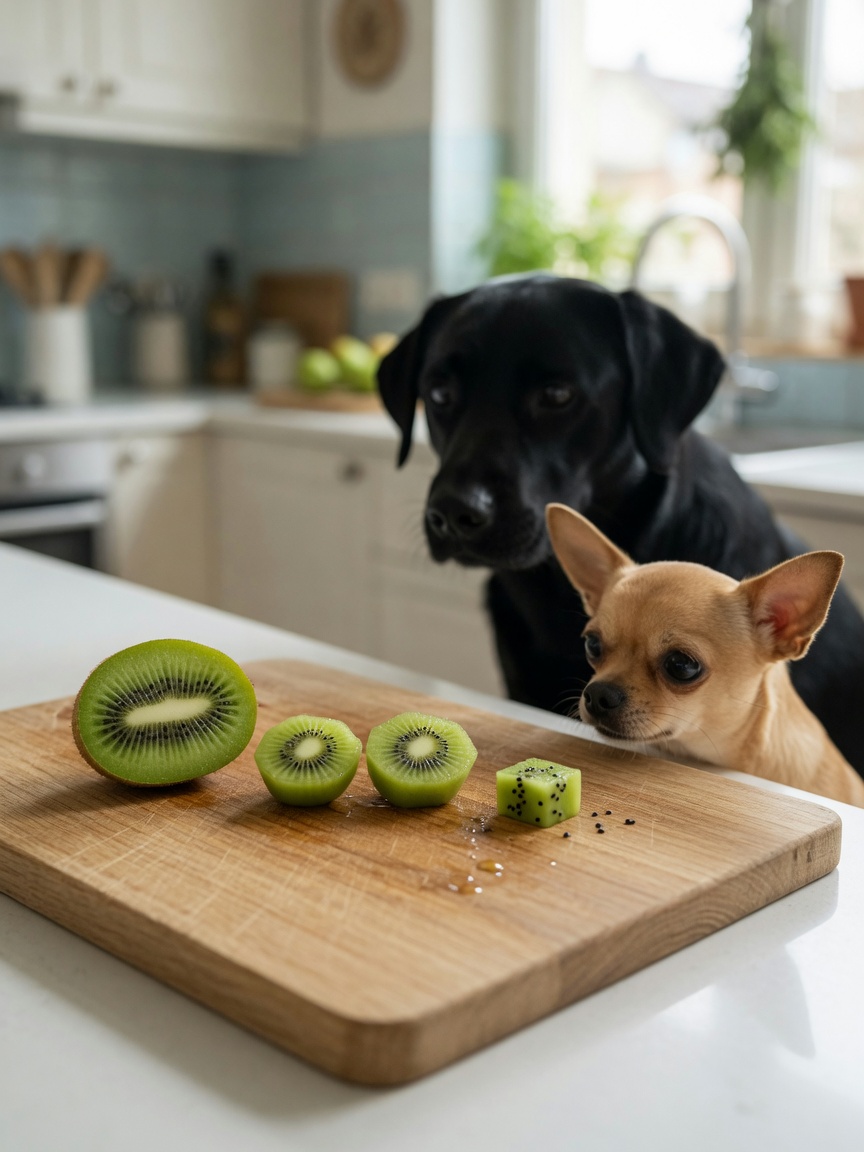
Kiwi is genuinely nutritious — arguably more so than many of the fruits dogs are routinely given as treats:
- Vitamin C — kiwi contains more vitamin C per gram than oranges; while dogs synthesise their own, additional dietary vitamin C provides antioxidant support
- Vitamin K — essential for proper blood clotting and plays a role in bone health
- Vitamin E — supports immune function and healthy skin
- Dietary fibre — promotes healthy digestion and can support gut health over time
- Potassium — important for heart, muscle, and nerve function
- Folate — supports cell production and DNA synthesis
The high water content also makes kiwi a hydrating snack, which is useful on warm days or after exercise.
The Actinidin Enzyme: A Caveat for Sensitive Dogs
Kiwi contains a proteolytic enzyme called actinidin, which breaks down proteins. In humans, it is the reason kiwi acts as a natural meat tenderiser — and why it causes mouth tingling in some people. In dogs, actinidin can irritate the digestive tract, particularly in individuals that are already prone to digestive sensitivity.
The effect is usually mild — loose stools or a slightly unsettled stomach — and passes quickly once the fruit is out of the system. However, if your dog has a known history of irritable bowel conditions, frequent loose stools, or food sensitivities, it is worth skipping kiwi or introducing it in very small test portions before committing to it as a treat.
Why You Should Remove the Skin
Kiwi skin is not toxic, but it presents two practical problems. First, it is tough and fibrous, making it harder to digest than the flesh — particularly for smaller dogs or those with sensitive guts. Second, the skin can be a choking hazard if swallowed in larger pieces. Some dogs will chew it thoroughly; others will bolt it whole.
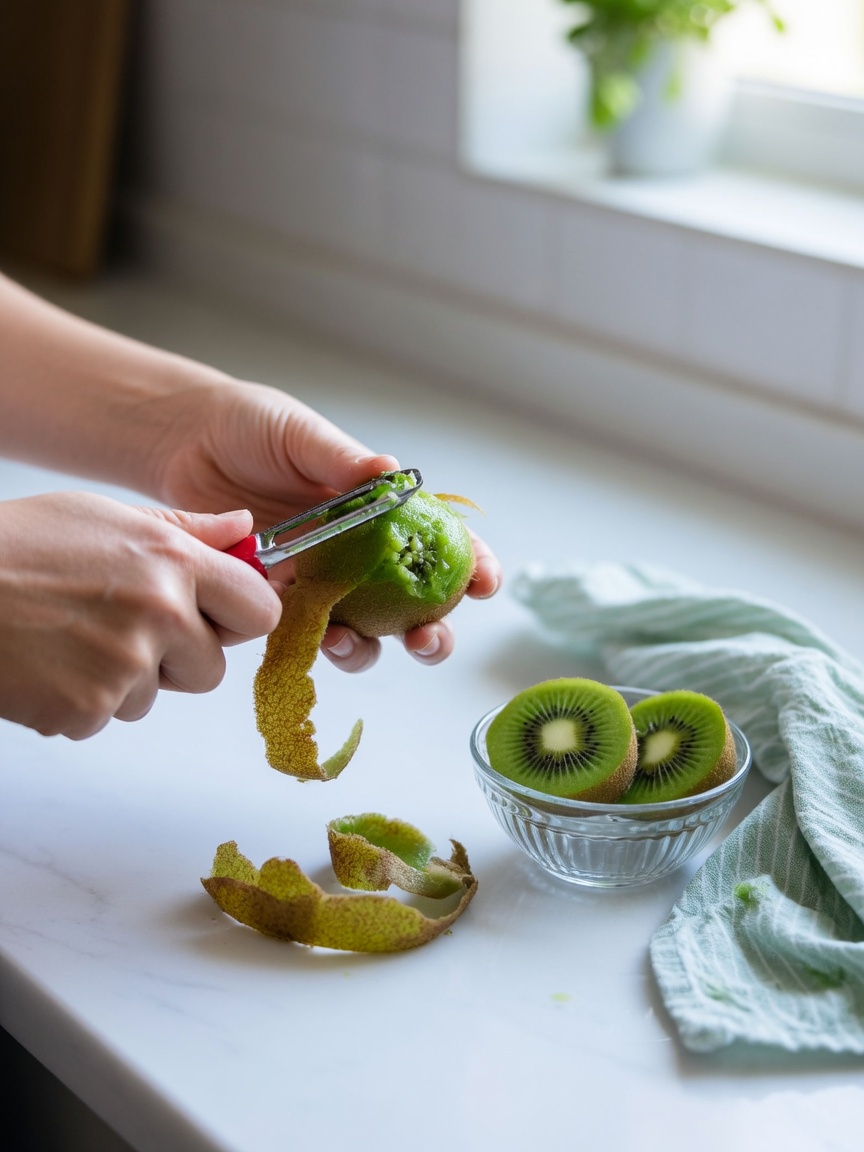
The safest approach is to peel the kiwi before serving. This removes any uncertainty and also eliminates any residual pesticide or chemical coating on the skin's surface.
Serving Kiwi Safely: Size Matters
How you serve kiwi should reflect your dog's size:
- Large breeds — a few slices of flesh (skin removed) is a suitable portion; no more than a quarter of a kiwi at one sitting
- Medium breeds — one or two small pieces, roughly the size of a grape, is enough
- Small and toy breeds — cut the flesh into very small pieces, no larger than a fingernail; even a full slice can be too much for a tiny dog
For all sizes, kiwi should be an occasional treat, not a daily addition to the diet. The natural sugar content, while not extreme, adds up if fruit is given every day alongside a complete commercial dog food.
How to Prepare Kiwi for Your Dog
- Choose ripe kiwi — overripe fruit ferments and can cause more pronounced digestive upset
- Wash the kiwi thoroughly before peeling
- Peel the skin off completely
- Remove any firm central core if present
- Cut the flesh into appropriately sized pieces for your dog
- Serve fresh — frozen kiwi pieces can be an enjoyable summer treat for larger dogs but should still be cut small for smaller breeds
- Never give kiwi juice or kiwi-flavoured products; these often contain added sugar, artificial sweeteners, or preservatives
When to Avoid Kiwi
Kiwi is not suitable for all dogs:
- Dogs with known digestive sensitivities or irritable bowel conditions may react badly to actinidin
- Diabetic or overweight dogs should avoid extra sugar sources, including kiwi
- Dogs with kidney disease — the high potassium content can be problematic for dogs whose kidneys struggle to regulate electrolytes
- Puppies with immature digestive systems may find kiwi too rich; introduce any new food gradually and in tiny amounts
Signs That Kiwi Has Not Agreed With Your Dog
If your dog shows any of the following after eating kiwi, reduce or eliminate the fruit from their diet:
- Vomiting
- Loose stools or diarrhoea
- Excessive gas or bloating
- Signs of abdominal discomfort such as hunching, whining, or reluctance to move
Mild symptoms that resolve within a few hours are usually nothing to worry about. If symptoms persist beyond 24 hours or your dog seems unwell, contact your vet.
The Bottom Line
Kiwi is one of the more nutritionally impressive fruits you can offer a dog. Peeled, cut to the right size, and given in moderation, it is a safe and genuinely beneficial treat for most healthy dogs. The skin and the actinidin enzyme are the two things to be aware of — remove the former and watch for a reaction to the latter. For small breeds in particular, size your pieces carefully; a small dog can choke on a piece that a larger dog would manage without difficulty.
When in doubt, introduce new foods slowly and check with your vet if your dog has any existing health conditions.