

The Evolutionary Roots of Howling
Few sounds are as immediately evocative as a dog howling. It is a direct line back through thousands of years of evolution to the wolf, and understanding why wolves howl in the first place is the key to understanding why your dog does it.
In wolf packs, howling serves several important functions. It is the primary long-distance communication tool, allowing pack members spread across large territories to locate one another. A wolf that becomes separated from the pack howls to signal its position; the rest of the pack howls back to guide it home. Howling also functions as a territorial advertisement — a sustained, far-carrying sound that tells neighbouring packs where a group's range begins. And it serves as a rallying call before a hunt, a way of synchronising pack energy and focus.
Domestic dogs have retained all of this vocal architecture. While the specific triggers have shifted to suit domestic life, the underlying impulse — communicate across distance, signal location, connect with others — remains essentially unchanged from their wolf ancestors.
Common Triggers for Howling in Dogs

Sirens and High-Pitched Sounds
One of the most common triggers for domestic howling is the sound of a siren — from an ambulance, police car, or fire engine. Many dogs begin howling almost immediately upon hearing one, even in the middle of sleep. The explanation lies in resonant frequency: emergency sirens produce long, sustained, high-pitched tones that are acoustically similar to the howl frequencies wolves use for long-distance communication. Your dog's brain interprets the siren as another dog or wolf howling at a distance and responds instinctively with a reply.
Other high-pitched sounds — certain musical instruments, televisions at particular frequencies, or even another dog howling on a programme — can trigger the same response. This type of howling is entirely normal and generally stops once the triggering sound ceases.
Other Dogs Howling
Dogs are highly responsive to the howls of other dogs, particularly in multi-dog households or densely populated neighbourhoods. Howling is socially contagious in canids — when one starts, others join in. This is the chorus howling behaviour of wolf packs playing out in a suburban setting. It is communicative, social, and represents no cause for concern unless it becomes persistently disruptive.
Owner Absence and Separation Anxiety
Howling that occurs specifically when the owner leaves the home is a hallmark sign of separation anxiety. Unlike the brief, reactive howling triggered by a siren, separation anxiety howling is sustained, distressed in quality, and often accompanied by other anxiety behaviours — destructive chewing, inappropriate elimination, pacing, or attempts to escape. Neighbours frequently report this type of howling to owners who had no idea it was occurring.
Separation anxiety is a genuine welfare concern and should not be confused with attention-seeking behaviour. It reflects a dog that is genuinely distressed by isolation and typically requires a structured behaviour modification programme, often in combination with veterinary support.
Attention-Seeking
Some dogs learn that howling produces a response from their owners — even a negative response such as being told to be quiet counts as reinforcement in the dog's mind. If a dog has discovered that howling brings their owner into the room, it may howl specifically to trigger that outcome. This type of howling is typically short, intermittent, and stops when the owner appears or engages.
Breeds More Prone to Howling
All dogs can howl, but certain breeds have been selectively developed for traits that make them significantly more vocal. Siberian Huskies, Alaskan Malamutes, and other Nordic working breeds were developed in environments where vocal communication between sled dogs and handlers was functionally important, and these breeds retain a strong inclination to howl. Beagles, Bloodhounds, and other scent hounds were bred to give voice while tracking prey, enabling hunters to follow them through dense cover — howling and baying is deeply ingrained in these breeds.
If you have a Husky that howls at the television or a Beagle that sings to the neighbourhood at dusk, you are largely observing the breed doing what it was developed to do. Management, enrichment, and training can help, but expecting these breeds to be entirely silent is not realistic.
Musical Howling Versus Distress Howling
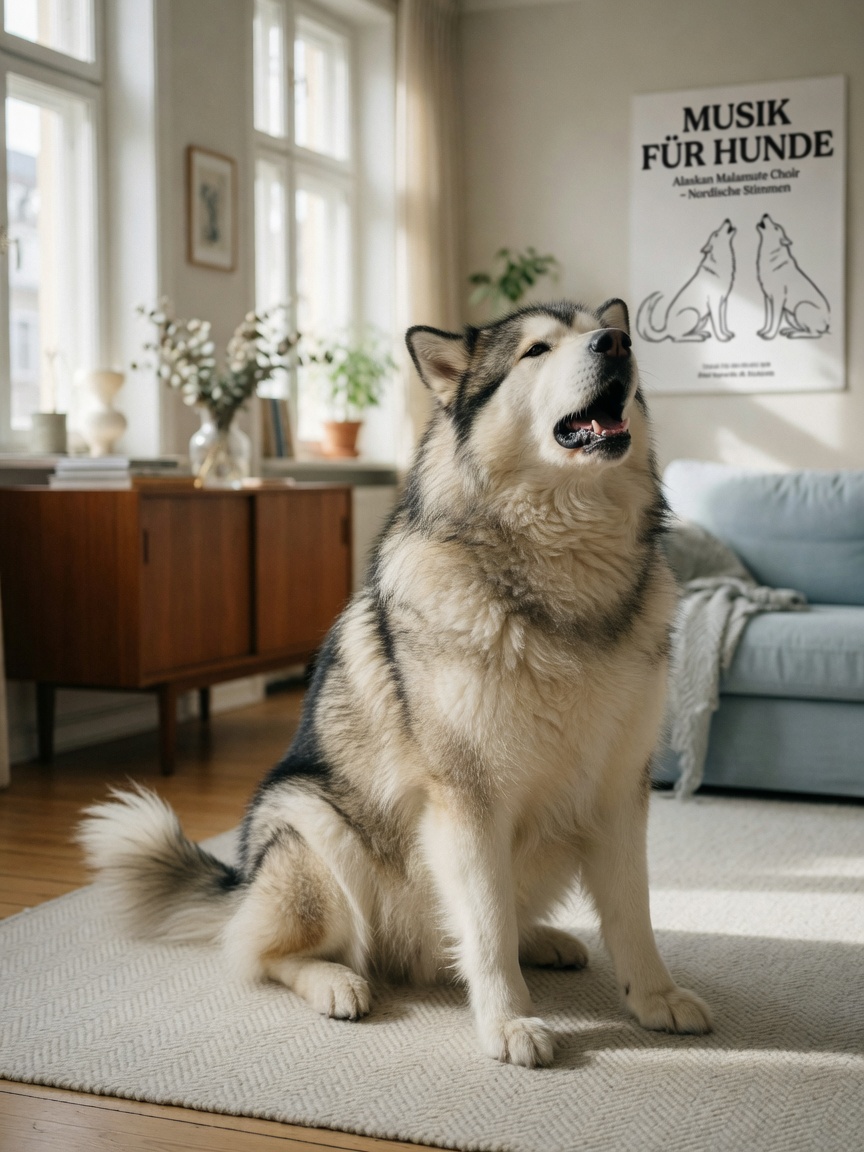
Learning to distinguish between different types of howling is genuinely useful. Musical or communicative howling tends to be melodic in quality, often with rising and falling tones. The dog is typically relaxed in body posture — tail may be wagging, ears are up, the overall impression is of an animal participating in something enjoyable or interesting.
Distress howling is quite different in character. It tends to be more monotonous, urgent, and repetitive. The dog's body language reflects stress — lowered head, tucked tail, restless movement, or frozen stillness. This type of howling does not stop when the triggering sound stops; it continues or even escalates. Any howling that is accompanied by obvious anxiety signals warrants investigation.
Health-Related Howling
Pain and cognitive decline are two health-related causes of howling that owners should be aware of. A dog in significant pain — from an injury, joint disease, internal discomfort, or dental pain — may vocalise through howling, particularly at night when there are fewer distractions. This type of howling tends to occur suddenly in a dog with no previous history of the behaviour, often at night, and may be accompanied by reluctance to move or changes in posture.
Cognitive dysfunction syndrome, the canine equivalent of dementia, commonly causes older dogs to vocalise at night. Disorientation and confusion in a dark, quiet house can trigger sustained howling or whining. If your senior dog has begun howling at night after years of silence, a veterinary assessment is strongly recommended.
Training to Reduce Problem Howling
For howling that is disruptive without an underlying medical cause, a consistent training approach works well. The foundation is to avoid reinforcing the howling — do not respond when it occurs, as even negative attention rewards the behaviour. Instead, reward periods of quiet with calm praise and treats, teaching the dog that silence is the behaviour that earns a response.
For siren-triggered howling, desensitisation using recordings of sirens at low volume, gradually increased over many sessions, can reduce the reactivity over time. For separation anxiety howling, a structured programme of gradual departures and returns, combined with enrichment and in many cases veterinary input, is the most effective route. Addressing boredom through increased exercise, training, and interactive toys reduces the overall likelihood of howling for all triggers.