
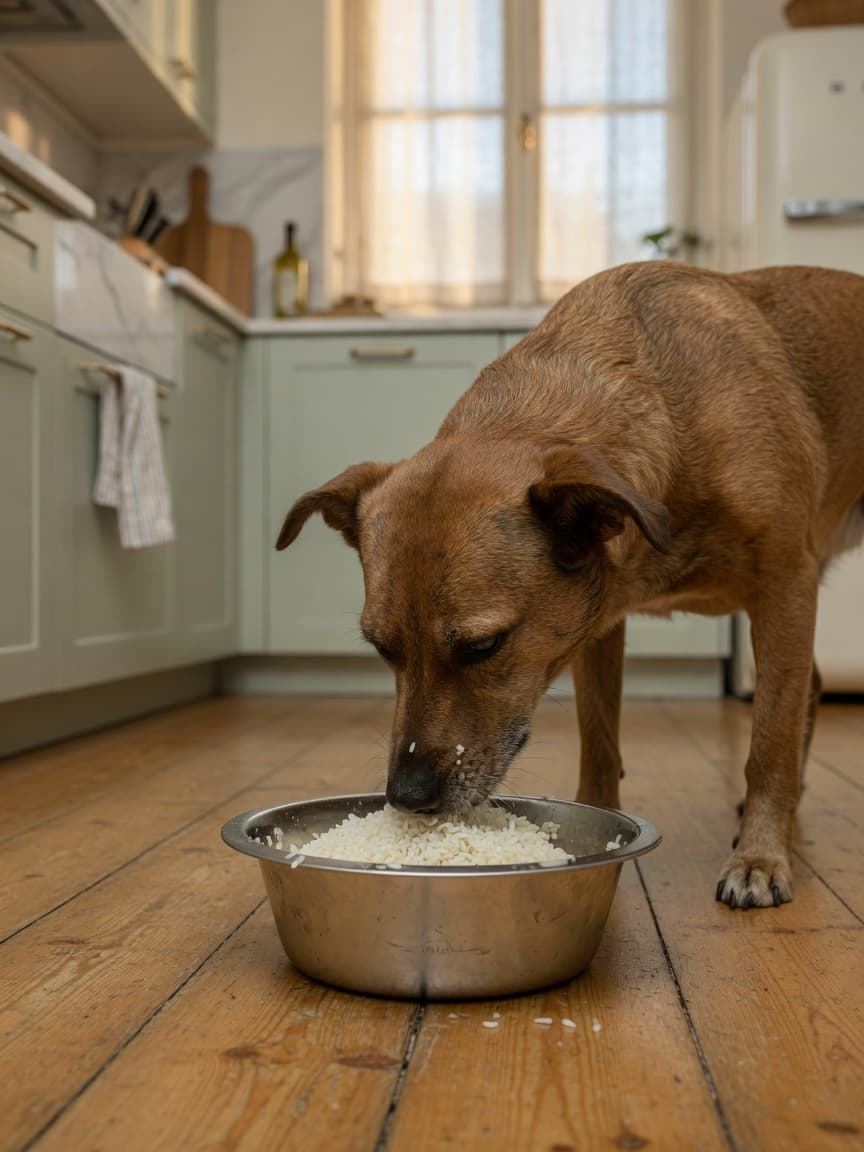
If you're preparing jasmine rice for your family dinner and your dog is watching expectantly from across the kitchen, you might wonder whether it's safe to share. The good news is that jasmine rice is generally safe for dogs to eat in moderation. However, there are important considerations to understand before adding it to your pet's diet. This guide breaks down what you need to know about feeding jasmine rice to your canine companion.
Is Jasmine Rice Safe for Dogs?
Yes, jasmine rice is safe for most dogs when served plain and cooked properly. Unlike some human foods that are toxic to dogs, jasmine rice contains no harmful ingredients. It's a natural, wholefood grain that many commercial dog foods include as a carbohydrate source.
The key word here is "plain." Jasmine rice served to your dog should be cooked without salt, butter, garlic, onions, or any seasonings. These additions can cause digestive upset or, in the case of garlic and onions, pose serious health risks to your dog.
Nutritional Benefits of Jasmine Rice for Dogs
Jasmine rice offers several nutritional advantages when included as part of a balanced diet:
- Easy digestibility: Cooked jasmine rice is gentle on the digestive system, making it an excellent choice for dogs with sensitive stomachs or those recovering from illness
- Energy source: The carbohydrates in jasmine rice provide readily available energy for active dogs
- Fibre content: Rice contributes to healthy digestion and stool consistency
- B vitamins: Jasmine rice contains B vitamins that support metabolism and brain function
- Gluten-free: A suitable option for dogs with grain sensitivities
How to Serve Jasmine Rice to Your Dog
When introducing jasmine rice to your dog's diet, follow these guidelines:
- Cook thoroughly: Boil jasmine rice in water until completely soft. Never serve raw or undercooked rice, as it's difficult to digest and may harbour bacteria
- Cool before serving: Allow the rice to cool to room temperature to prevent burns
- Serve plain: No salt, seasonings, or added fats—just plain cooked rice
- Start small: Introduce jasmine rice gradually, beginning with small portions to monitor your dog's response
- Mix with regular food: Consider combining rice with your dog's usual food rather than serving it as a standalone meal
- Portion control: Rice should constitute no more than 10% of your dog's daily caloric intake
Potential Concerns and When to Avoid
Whilst jasmine rice is generally safe, some dogs may experience issues:
- Weight management: Rice is calorie-dense and should be limited for dogs prone to obesity or those with weight restrictions
- Diabetic dogs: The carbohydrate content may affect blood sugar levels; consult your vet if your dog has diabetes
- Allergies: Rare rice allergies in dogs may cause itching, vomiting, or diarrhoea
- Digestive issues: Some dogs may experience loose stools if given too much rice
Never serve jasmine rice mixed with toxic ingredients like garlic, onions, or xylitol-containing foods. Always check that any rice dish intended for your dog is genuinely plain.
Key Takeaways
Jasmine rice is a safe, nutritious addition to your dog's diet when served properly. This wholefood grain supports digestive health and provides valuable nutrients, making it an excellent choice for dogs with sensitive stomachs or as an occasional treat. Remember to serve only plain, fully cooked rice in appropriate portions, and consult your veterinarian if you're considering making significant changes to your dog's diet or if your pet has existing health conditions. When in doubt, your vet is the best resource for personalised dietary advice tailored to your individual dog's needs.
```