
Can Dogs Eat Cucumbers? Yes — And They're One of the Best Snacks You Can Give
By Julia Wrenfield, Pet Wellness Researcher — June 2025
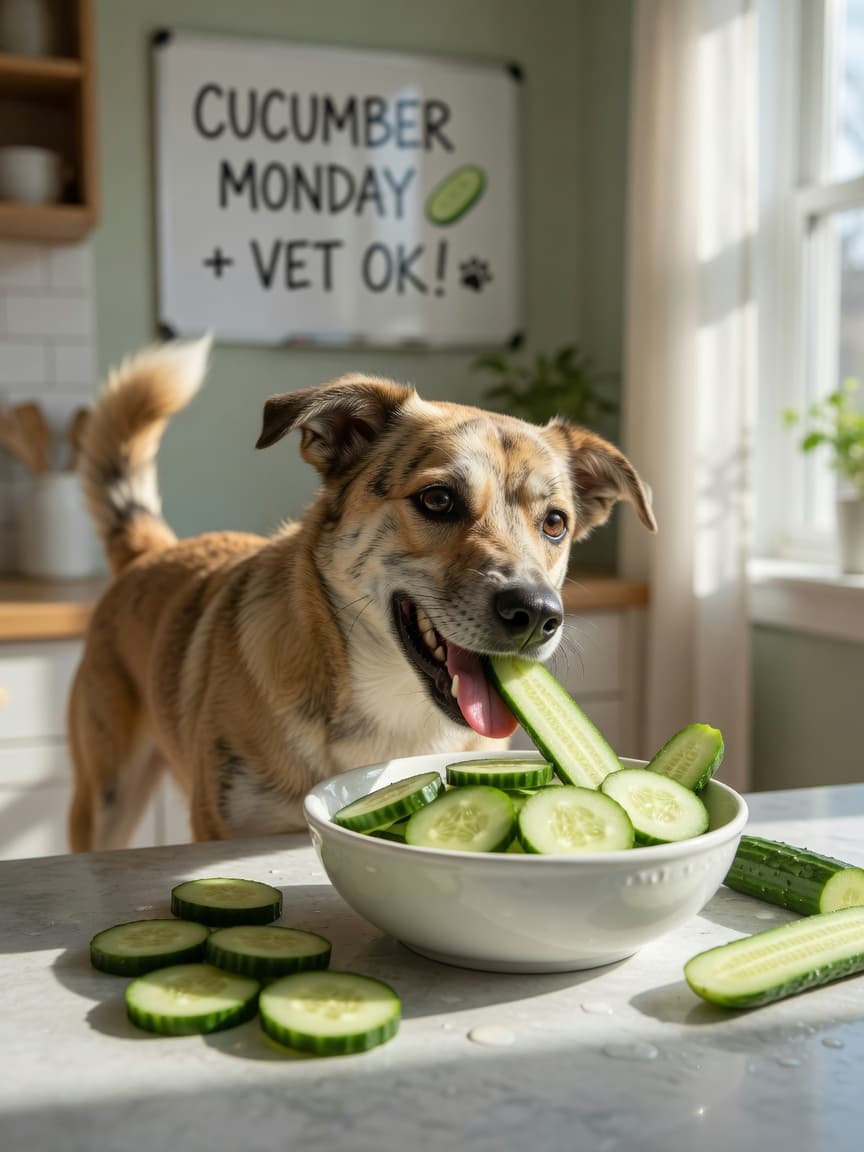
Cucumbers are one of the safest, healthiest snack options for dogs. They are extremely low in calories, contain no known toxins, and are naturally hydrating. Excellent choice for all dogs, especially those watching their weight.
Is Cucumber Safe for Dogs?
If you're looking for a guilt-free snack to share with your dog, cucumber is about as close to perfect as it gets. Unlike many human foods that require lengthy disclaimers and "moderation" warnings, cucumbers are genuinely safe for dogs in generous amounts — no toxic compounds, no harmful sugars, no problematic proteins. Just clean, crisp, hydrating vegetable goodness.
Veterinary nutritionists consistently list cucumber among the best snack options for dogs. It has no known toxicity at any reasonable serving size, making it one of the rare human foods where you don't need to stress about your dog sneaking an extra bite. Whether your dog is a tiny Chihuahua or a giant Great Dane, cucumbers are a smart addition to their treat rotation.
The only minor caveats: dogs with extremely sensitive stomachs may occasionally experience mild digestive upset from the seeds, and the skin, while safe, may be harder to digest for some dogs. Both are easily managed by peeling and deseeding — though for most dogs, neither step is necessary.
Nutritional Benefits of Cucumbers for Dogs
Cucumbers are approximately 95% water, which already makes them stand out as a uniquely hydrating snack. But they also deliver a meaningful range of micronutrients per calorie — making them genuinely nutritious, not just filler:
- Vitamin K — supports healthy blood clotting and bone metabolism.
- Vitamin C — an antioxidant that bolsters immune function and skin repair.
- Vitamin B1 (Thiamine) — essential for energy metabolism and proper nervous system function.
- Potassium — an electrolyte critical for heart, muscle, and kidney function.
- Magnesium — supports muscle function, nerve transmission, and energy production.
- Biotin — supports healthy coat, skin, and metabolism (also called Vitamin B7).
- Molybdenum — a trace mineral that assists in enzyme function and detoxification.
- Low sugar content — unlike carrots or sweet potatoes, cucumbers have very little natural sugar, making them appropriate even for diabetic dogs.
With only about 8 calories per half cup of sliced cucumber, you can offer a satisfying portion without making a dent in your dog's daily calorie budget. This is particularly valuable for dogs on weight management programs.
Why Cucumbers Are Perfect for Overweight Dogs
Canine obesity is one of the most common health issues veterinarians see today, affecting an estimated 50–60% of adult dogs in developed countries. Treats are a major contributor to unplanned calorie intake — most commercial dog treats range from 20 to 100+ calories per piece, which adds up fast.
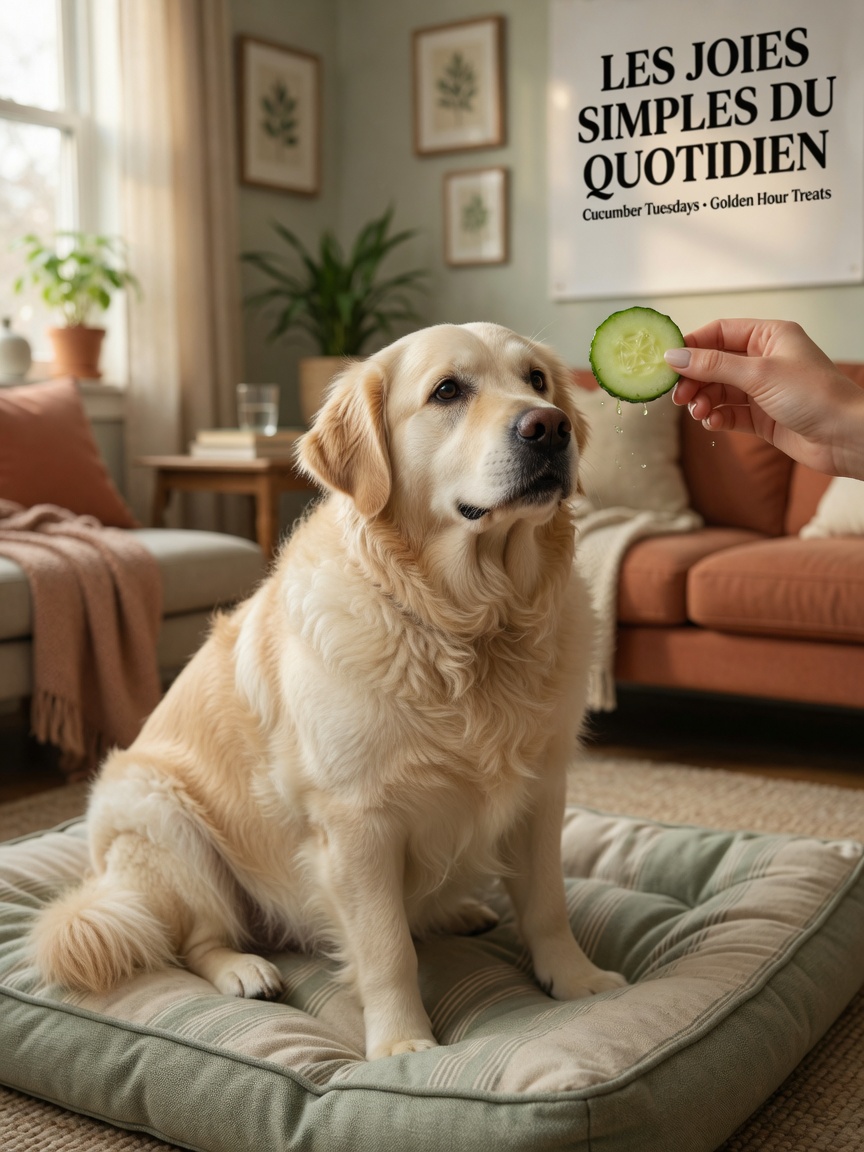
Cucumber slices contain roughly 1 calorie per slice. You can offer your dog 10 slices for the caloric equivalent of a single commercial treat. This makes cucumber an outstanding tool for training rewards, food enrichment, or simply satisfying a dog who seems perpetually hungry. The high water and fiber content also creates a feeling of fullness without the caloric load, helping weight-management dogs feel more satisfied between meals.
How to Safely Serve Cucumber to Your Dog
Preparation is simple, but a few tips will make the experience better for your dog:
- Wash thoroughly. Always rinse cucumbers before serving to remove any pesticide residue or surface contaminants.
- Cut into appropriate sizes. Slice into rounds or small spears appropriate to your dog's size. Large chunks can be a choking hazard, especially for small dogs or enthusiastic eaters.
- Remove seeds if sensitive. For dogs with known digestive sensitivity, scoop out the seeds from the center. Most dogs handle them fine, but it's an easy precaution.
- Skin on or off — your choice. The skin is safe for virtually all dogs. It contains additional fiber and nutrients. If your dog seems to struggle digesting it, peel before serving.
- Serve plain. Never add salt, vinegar, or spices. Plain cucumber only — avoid pickled cucumbers entirely, as the sodium and vinegar content are inappropriate for dogs.
- Refrigerate for extra appeal. Cold cucumber slices are especially refreshing on warm days and make an excellent summer hydration boost.
Complement your dog's healthy diet with premium natural treats from Zooplus — a wide range to suit every size and dietary need.
Portion Guide: How Much Cucumber Can Dogs Eat?
| Dog Size | Weight | Recommended Amount Per Day | Notes |
|---|---|---|---|
| Small | <10 kg | 4–6 thin slices | Cut into small pieces to prevent choking |
| Medium | 10–25 kg | Half a small cucumber | Can be given as regular daily snack |
| Large | >25 kg | Half to one full cucumber | Excellent for daily enrichment and hydration |
Unlike many vegetables, cucumber has no strict upper limit for healthy dogs. The main constraint is simply ensuring treats don't exceed 10% of total daily caloric intake — which with cucumber's near-zero calorie count is essentially a non-issue.
- Cucumbers are one of the safest snacks you can give your dog — no toxicity at any reasonable amount.
- At 95% water content and approximately 1 calorie per slice, they are ideal for overweight dogs.
- Rich in vitamins K, C, B1, potassium, magnesium, and biotin.
- Excellent for hydration, especially during warm weather or after exercise.
- Serve plain, washed, and cut to appropriate size — never pickled or salted.
- Seeds and skin are both safe for most dogs; remove if your dog has a sensitive stomach.
References
- German AJ. "The growing problem of obesity in dogs and cats." Journal of Nutrition. 2006;136(7 Suppl):1940S–1946S. PMID: 16772461
- Laflamme DP. "Companion Animals Symposium: obesity in dogs and cats — what is the best way to measure success?" Journal of Animal Science. 2012;90(5):1667–1677. PMID: 22147467
- Zicker SC. "Evaluating pet foods: how confident are you when you recommend a commercial pet food?" Topics in Companion Animal Medicine. 2008;23(3):121–126. PMID: 18656082