
Cat Ownership in Italy: Laws, Colonies and Culture
Italy's relationship with cats is unlike almost anywhere else in the EU. Italian law grants cats a degree of legal protection and freedom that reflects centuries of coexistence between humans and felines in the country's cities, towns, and rural landscapes. Whether you are an owned cat's guardian or you simply want to understand the status of the street cats you see throughout Rome, Naples, or Venice, Italian cat law is fascinating — and importantly, it places real responsibilities on both owners and municipalities.
Italy's Unique Legal Status for Cats
Italian national law treats cats differently from dogs. Under Law 281/1991 and subsequent regional implementing regulations, cats are recognised as having a semi-wild status — meaning that free-roaming cats (gatti randagi or liberi) are not considered abandoned property or strays in the traditional sense, but rather animals with a legitimate place in the urban environment. This philosophical underpinning shapes everything from colony management to condominium rules.
Owned cats, of course, have a distinct legal status from free-roaming colonies, but the law's protective framework extends protections across the spectrum. Killing, injuring, or maltreating a cat — owned or otherwise — constitutes an animal cruelty offence under Article 544 of the Italian Penal Code, with penalties of up to 18 months imprisonment and significant fines.
Mandatory Microchipping and the Anagrafe Zootecnica
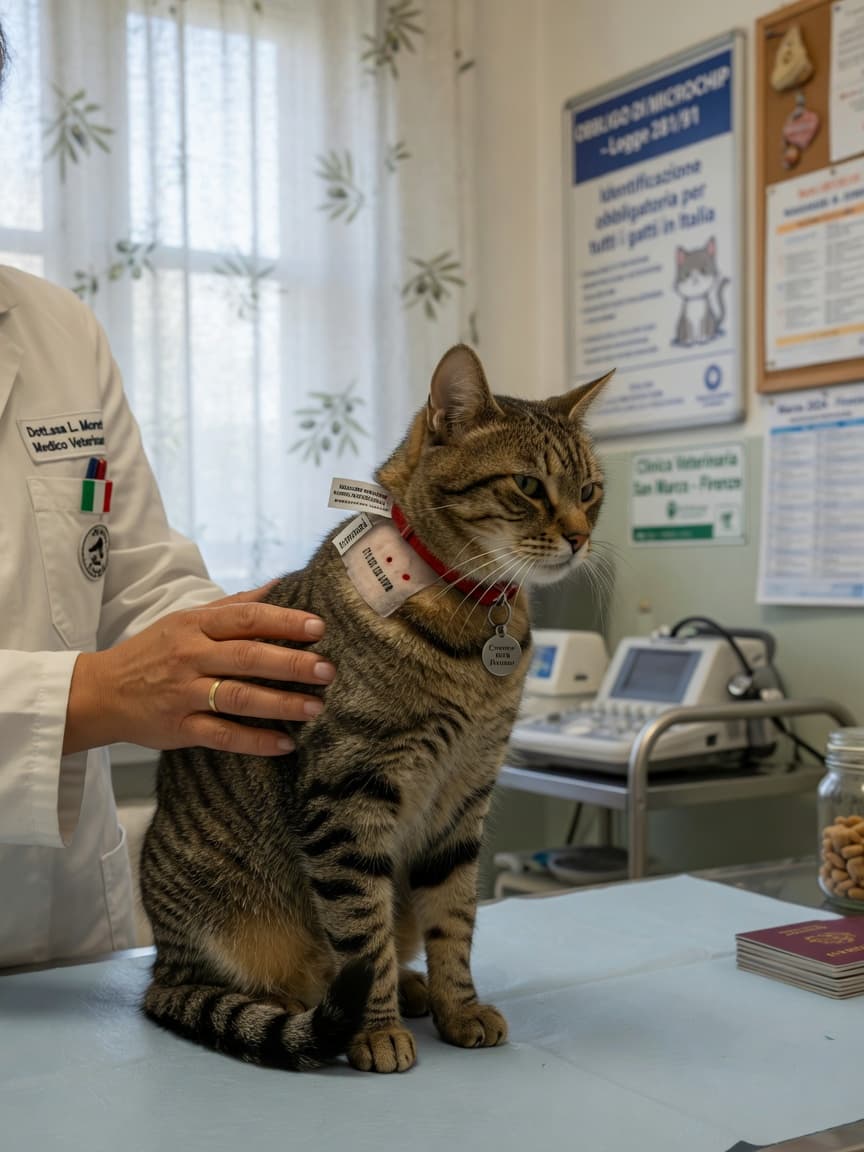
Microchipping is mandatory for owned cats in Italy under national legislation coordinated through the Ministry of Health. The microchip must be ISO 11784/11785-compliant (15-digit code) and is implanted by a licensed veterinarian. Following implantation, your cat must be registered on the Anagrafe degli Animali d'Affezione — the national pet identification register maintained by the Ministry of Health and coordinated with regional veterinary systems.
In practical terms, registration is managed locally through the ASL (Azienda Sanitaria Locale — local health authority), which operates its own regional animal register. Your veterinarian will typically handle the registration at the time of microchipping. Costs for microchipping range from €20 to €50 at a private clinic; some ASL offices offer subsidised or free microchipping during public awareness campaigns.
It is essential to keep your contact details on the register up to date. If your cat is found and scanned, the ASL register is the first database checked. The national database is also linked to the European pet passport system for travel purposes.
Regional Registers: The Role of the ASL
Italy's cat registration system is decentralised. Each ASL (there are hundreds across Italy's regions) maintains its own records, which feed into the national system. This means that registration in Rome connects to a different local database than registration in Milan, though both are part of the national framework.
The ASL also plays a key role in managing free-roaming cat colonies. Each colony must be officially registered with the local ASL, and the ASL is responsible for overseeing the health management of those colonies — including coordinating TNR (Trap-Neuter-Return) programmes and maintaining colony population records.
Stray Colony Management: Gattare, TNR and Legal Protection
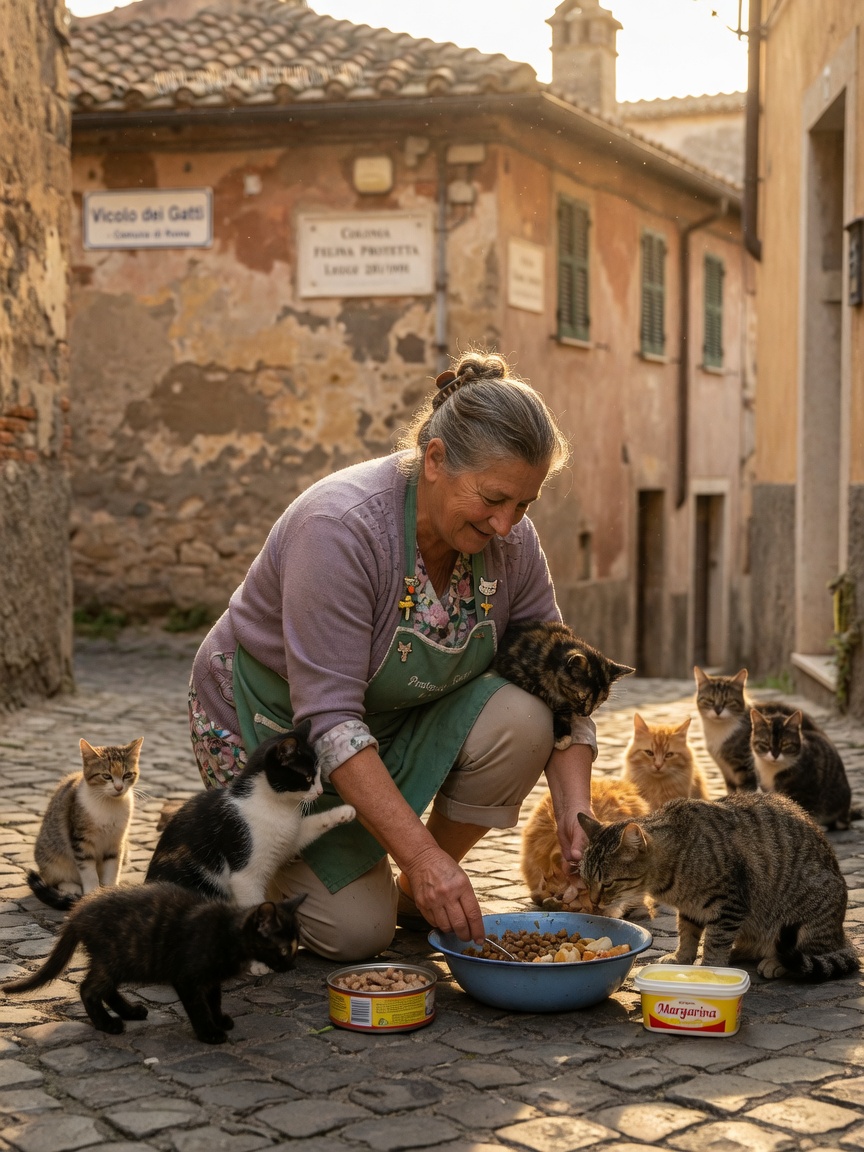
Perhaps the most distinctive aspect of Italian cat law is the formal legal protection given to free-roaming urban cat colonies. Law 281/1991 prohibits the capture and killing of free-roaming cats and instead mandates a humane management approach built around TNR — Trap, Neuter, Return (known in Italian as sterilizzazione e reimmissione in libertà).
Gattare (colony carers — predominantly women, though the term is used more broadly) are volunteers who feed, monitor, and care for feral colonies. Their role is legally recognised in many regions, and they are entitled to access public spaces, including private property on occasion, to carry out colony care activities. Interfering with a registered colony or its carers can constitute a legal offence.
Municipalities are obliged to provide resources for colony management, including working with ASL veterinarians to carry out neutering programmes. This nationally coordinated TNR approach has been credited with stabilising and gradually reducing free-roaming cat populations in Italian cities without resorting to culling — a model that has attracted international attention from animal welfare organisations.
No Cat Tax in Italy
Unlike dogs in some EU countries, cats in Italy attract no ownership tax at national or municipal level. There is no annual registration fee for owned cats beyond the administrative processes associated with microchipping and ASL registration. This is consistent with Italy's general approach of encouraging responsible cat ownership rather than creating financial disincentives.
Apartment and Condominium Rules: Cats Cannot Be Banned
One of the most practically important aspects of Italian cat law for urban dwellers concerns condominium (apartment building) regulations. Under Italian civil law, as clarified by Law 220/2012 (the condominium reform law), building regulations (regolamenti condominiali) cannot prohibit residents from keeping domestic animals — including cats — in their private apartments.
This is a stronger protection than exists in many other EU countries, where building regulations can effectively ban pets. In Italy, a condominium assembly vote cannot override this right. What building rules can legitimately do is regulate the use of common areas — for example, requiring that cats not be allowed to roam unsupervised in shared gardens or on communal staircases.
In practice, disputes between neighbours over cats — particularly over noise, allergens, or damage to shared spaces — are common and are addressed through civil mediation or, ultimately, the courts. Consulting your condominium administrator (amministratore) about the specific building rules before acquiring a cat is always advisable.
Italy's Rabies-Free Status and EU Travel
Italy is officially rabies-free (along with the rest of mainland EU), meaning there is no requirement for rabies vaccination for domestic cat ownership. However, for travel between EU member states or to/from non-EU countries, standard EU pet travel rules apply: your cat must be microchipped and vaccinated against rabies, with a valid EU Pet Passport issued by a veterinarian.
For travel to the UK post-Brexit, additional requirements apply — your vet can provide current guidance. For travel within the Schengen area, the EU Pet Passport and microchip are generally sufficient, provided vaccinations are up to date.
Finding a Vet in Italy
Italian veterinary professionals are regulated by FNOVI (Federazione Nazionale degli Ordini Veterinari Italiani — the National Federation of Veterinary Orders). Each province has its own Ordine Provinciale dei Veterinari. You can find a registered vet via the FNOVI website (fnovi.it) or through the regional Ordine directory.
Average consultation fees at a private clinic in Italy range from €25 to €60 for a standard appointment, with significant variation between northern and southern Italy and between rural and urban areas. Annual vaccinations for cats (typically covering cat flu, feline enteritis, and optionally feline leukaemia) cost approximately €50–90 per year. Spaying and neutering costs for cats typically range from €80 to €200 depending on the clinic and region.
Key Points for Cat Owners in Italy
- Have your cat microchipped and registered with your local ASL — mandatory for owned cats
- Keep your registration details up to date on the Anagrafe degli Animali d'Affezione
- Your condominium cannot legally ban you from keeping a cat in your private apartment
- Obtain an EU Pet Passport and rabies vaccination before travelling internationally
- Free-roaming colony cats in your neighbourhood are legally protected — do not interfere with registered colonies or their carers
- Find a registered vet via FNOVI at fnovi.it
- No cat tax applies anywhere in Italy
Italy's approach to cats — both owned and free-roaming — is rooted in deep cultural affection and shaped by decades of progressive animal welfare legislation. For cat owners, this translates into a country where your rights as a guardian are well protected and where your pet is genuinely welcomed as part of the community fabric.