

If you've ever enjoyed a banana and noticed your dog's hopeful eyes following your every bite, you've probably wondered whether this popular fruit is safe to share. The good news is that bananas are indeed safe for most dogs and can even offer some nutritional benefits when given appropriately. However, like many human foods, bananas come with important considerations regarding portion size, preparation, and individual health factors. Let's explore what you need to know about feeding bananas to your canine companion.
Nutritional Benefits of Bananas for Dogs
Bananas are nutrient-dense fruits that offer several health advantages for dogs when included in moderation. They're rich in essential minerals and vitamins that support your dog's overall wellbeing.
- Potassium: Supports heart health and muscle function, helping maintain proper electrolyte balance
- Vitamin B6: Aids brain development and nervous system function
- Vitamin C: Acts as an antioxidant, supporting immune system health
- Manganese: Contributes to bone development and metabolism
- Fibre: Promotes healthy digestion when given in appropriate amounts
These nutrients make bananas a reasonably healthy occasional treat for dogs, particularly for those needing a natural, low-fat snack option.
Portion Sizes and Feeding Guidelines
Moderation is crucial when offering bananas to your dog. The appropriate portion depends on your dog's size and overall diet.
- Small dogs (under 10kg): Offer thin banana slices, approximately one or two small pieces per week
- Medium dogs (10-25kg): A few small slices or half a banana once or twice weekly
- Large dogs (over 25kg): Up to half or three-quarters of a banana, several times weekly
Remember that treats, including fruit, should comprise no more than 10% of your dog's daily caloric intake. Bananas are relatively high in natural sugars, so excessive consumption could contribute to weight gain or digestive upset.
Potential Risks and Precautions
Whilst bananas are generally safe, several precautions warrant attention:
- Sugar content: High natural sugar levels make bananas unsuitable for dogs with diabetes or those requiring weight management
- Choking hazard: Always slice bananas lengthwise into manageable pieces, never offer whole bananas
- Digestive upset: Excessive banana consumption may cause constipation or diarrhoea due to fibre content
- Allergic reactions: Though rare, some dogs may experience allergic responses; monitor for itching, swelling, or gastrointestinal distress
- Medication interactions: Dogs on potassium-regulating medications should avoid bananas; consult your veterinarian first
Best Ways to Serve Bananas
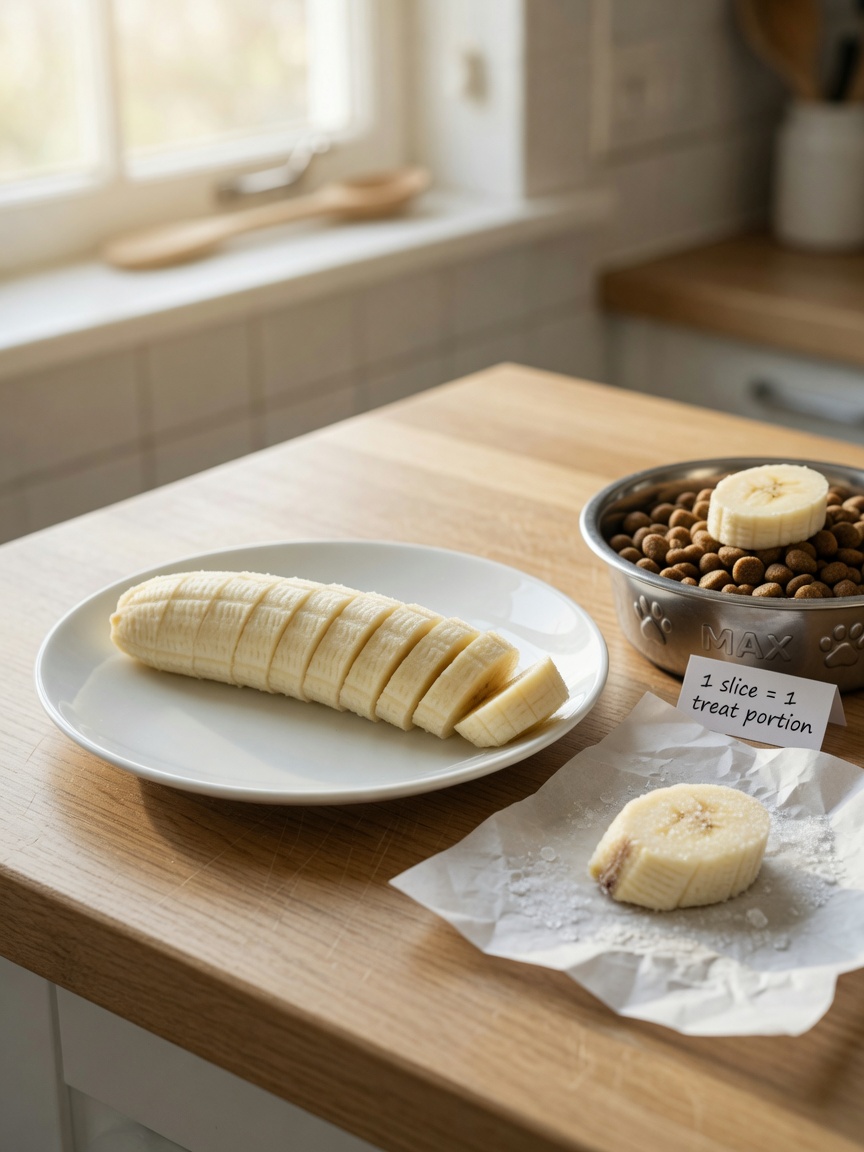
Preparation method matters when offering bananas to your dog. Serve them fresh and raw, sliced into appropriate-sized pieces for your dog's size. You can freeze banana slices for a refreshing summer treat, which many dogs enjoy. Some owners mash banana into their dog's regular food as an occasional topper, whilst others use small banana pieces as training rewards. Never add sugar, honey, or chocolate—toxic to dogs—when preparing banana treats.
When to Avoid Bananas
Certain situations warrant avoiding bananas entirely. Dogs with diabetes, obesity, or pancreatitis should not consume bananas due to sugar content. Additionally, dogs with renal disease may need to avoid the potassium. Always consult your veterinarian before introducing new foods if your dog has existing health conditions or takes regular medications.
Key Takeaways
Bananas can be a safe, nutritious occasional treat for most healthy dogs when served in appropriate portions. Their natural nutrients support various body functions, making them preferable to many processed treats. However, remember that bananas should never replace a balanced commercial dog food and should only constitute a small portion of your dog's diet. When in doubt about whether bananas suit your individual dog's dietary needs, consult your veterinarian. With these guidelines in mind, you can confidently share this wholesome fruit with your furry friend whilst maintaining their optimal health and nutrition.