
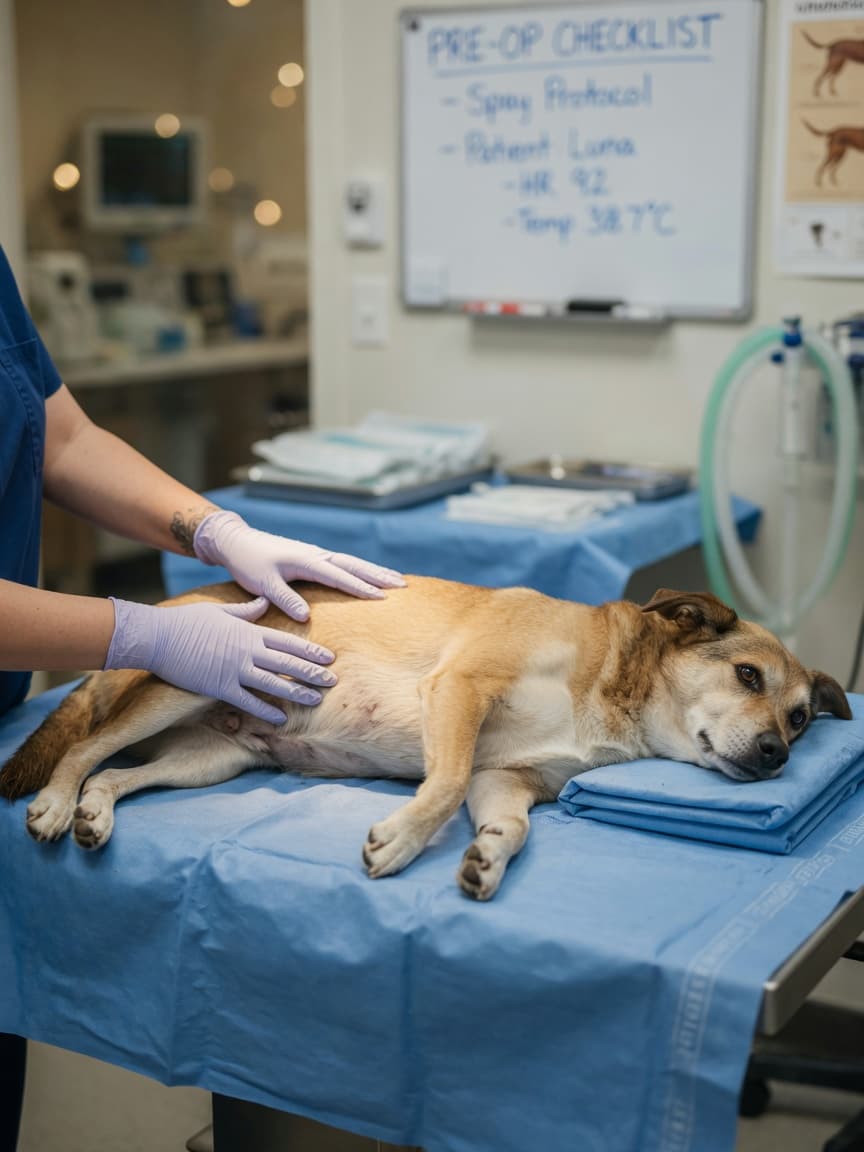
What Does Spaying a Dog Involve?
Spaying is the surgical sterilisation of a female dog. The most common procedure performed in the UK and across Europe is an ovariohysterectomy, in which both the ovaries and the uterus are removed. An alternative approach, the ovariectomy, removes only the ovaries while leaving the uterus in place. Both methods prevent pregnancy and eliminate the hormonal cycle.
A newer approach gaining interest among some veterinary surgeons is the ovary-sparing spay, in which the uterus is removed but the ovaries are left intact. This prevents pyometra but preserves hormonal function, meaning the dog continues to have seasons. It does not provide the mammary cancer protection associated with full spaying and remains less commonly performed in mainstream veterinary practice.
When Should You Spay Your Dog?
The question of timing is considerably more nuanced in dogs than in cats, and the answer depends significantly on the size and breed of your dog. Current evidence suggests that a one-size-fits-all approach is not appropriate.
Small and Toy Breeds
In small breeds, hormones play a less significant role in skeletal development. Spaying at around six months of age, before the first season, is generally considered safe and carries meaningful mammary cancer protection. The evidence for increased joint or bone disease from early spaying is minimal in smaller dogs.
Large and Giant Breeds
For large and giant breeds, the picture is more complex. Research suggests that sex hormones play an important role in musculoskeletal development, particularly in the closure of growth plates. Spaying large breeds before skeletal maturity — which may not occur until 18 to 24 months of age in giant breeds — has been associated with an increased risk of cruciate ligament rupture and, in some breeds, a higher incidence of osteosarcoma. The British Small Animal Veterinary Association (BSAVA) recommends that timing should be discussed with your vet taking into account your dog's individual breed, size, lifestyle, and health history.
Health Benefits of Spaying

- Pyometra prevention is perhaps the most compelling reason to spay a female dog. Pyometra is a life-threatening infection of the uterus that affects approximately one in four intact bitches over their lifetime. It requires emergency surgery and carries significant mortality risk, particularly in older dogs. Spaying eliminates this risk entirely.
- Mammary tumour risk is dramatically reduced when a dog is spayed before her first season — studies estimate the lifetime risk at approximately 0.5%. After one season, the risk rises to around 8%, and after two seasons to approximately 26%. Spaying at any stage still carries some protective benefit.
- Phantom pregnancies, which can cause significant distress and physical discomfort, are prevented entirely by spaying.
- Unwanted litters are prevented, reducing the burden on rescue organisations.
- The twice-yearly season, which can attract unwanted male attention and requires careful management, is eliminated.
Understanding Pyometra: Open and Closed Forms
Pyometra can present in two forms. Open pyometra involves a discharge of pus from the vagina, which may be noticed by the owner — though dogs who clean themselves diligently may mask this sign. Closed pyometra, in which the cervix remains closed, is more immediately dangerous. Pus accumulates within the uterus, and the dog may develop systemic toxaemia rapidly. Signs in both forms include increased thirst and urination, lethargy, vomiting, and reduced appetite. Any intact bitch showing these signs in the weeks following a season should be seen by a vet urgently. Emergency surgical spaying is the standard treatment.
Risks and Side Effects of Spaying

Spaying is a major abdominal surgery and carries a small but real set of risks:
- Urinary sphincter mechanism incompetence (USMI) is the most commonly discussed long-term complication. This condition causes urinary dribbling or leakage, often most noticeable when the dog is resting or sleeping. It affects up to 20% of large breeds spayed before maturity. The condition is manageable with medication, most commonly phenylpropanolamine, which strengthens the urethral sphincter.
- Weight gain is common following spaying, as metabolic rate decreases with the removal of hormonal influence. Adjusting calorie intake post-operatively is important to prevent obesity.
- Coat changes, sometimes described as a soft, woolly regrowth known informally as a "spay coat", are seen in some breeds — particularly Golden Retrievers and certain other double-coated breeds. This is a cosmetic issue rather than a health concern.
- Anaesthetic and surgical risks exist for all procedures but are low in healthy animals undergoing routine spay.
Attitudes Towards Spaying Across Europe
Approaches to routine neutering vary considerably across Europe. In the UK, spaying and castration of companion animals is widely encouraged and considered standard preventative healthcare. In contrast, countries such as Germany, the Netherlands, and Sweden have historically taken a more conservative stance, with routine neutering of healthy animals less routinely recommended and, in some cases, actively discouraged by veterinary associations. Owners in these countries are encouraged to discuss the individual risk-benefit balance with their vet rather than following a blanket policy.
Cost of Spaying in the UK
The cost of spaying in the UK varies depending on the size of the dog and the region. Owners can expect to pay approximately £200 to £300 for small breeds and £400 to £600 or more for large breeds. The size difference reflects the longer anaesthetic time and additional complexity of the surgery in larger animals. Some rescue organisations and charities, including the PDSA and Blue Cross, offer subsidised spaying for eligible owners on low incomes.
What to Expect After Surgery
Following spaying, dogs typically require a period of restricted activity lasting around 10 to 14 days while the surgical wound heals. An Elizabethan collar is usually supplied to prevent licking of the wound site. Most dogs recover well and return to normal activity levels within two weeks. Your vet will schedule a post-operative check to assess healing and remove any external sutures if needed.
Making the Decision
For most female dogs, spaying remains a well-reasoned preventative health measure. The key is discussing the right timing with your vet, particularly if you have a large or giant breed. Taking into account your dog's size, breed, health, and lifestyle will help ensure the decision is right for your individual animal.