
The Cold That Is Never Quite Just a Cold
Feline Calicivirus (FCV) is one of the most common infectious diseases in cats worldwide. It is a leading cause of upper respiratory tract disease — what many owners describe simply as "cat flu" — but it is considerably more complex than that label implies. Certain strains cause a painful lameness that has puzzled cat owners for generations, and rare virulent forms can be life-threatening. Understanding calicivirus properly means understanding why it behaves so differently from one cat to the next.
How Calicivirus Spreads and Why It Persists
FCV is a highly stable, non-enveloped virus. It can survive on surfaces for up to a month under the right conditions, which makes it exceptionally well-adapted to shelters, catteries, and multi-cat households. Transmission occurs through direct contact with infected discharge, aerosol droplets, and contaminated objects including food bowls, bedding, and hands. Recovered cats may continue to shed the virus for months — and some become long-term carriers, shedding intermittently for life without appearing ill themselves. This carrier state is a significant driver of ongoing transmission within cat populations.
Recognising the Symptoms
Classic Respiratory Presentation
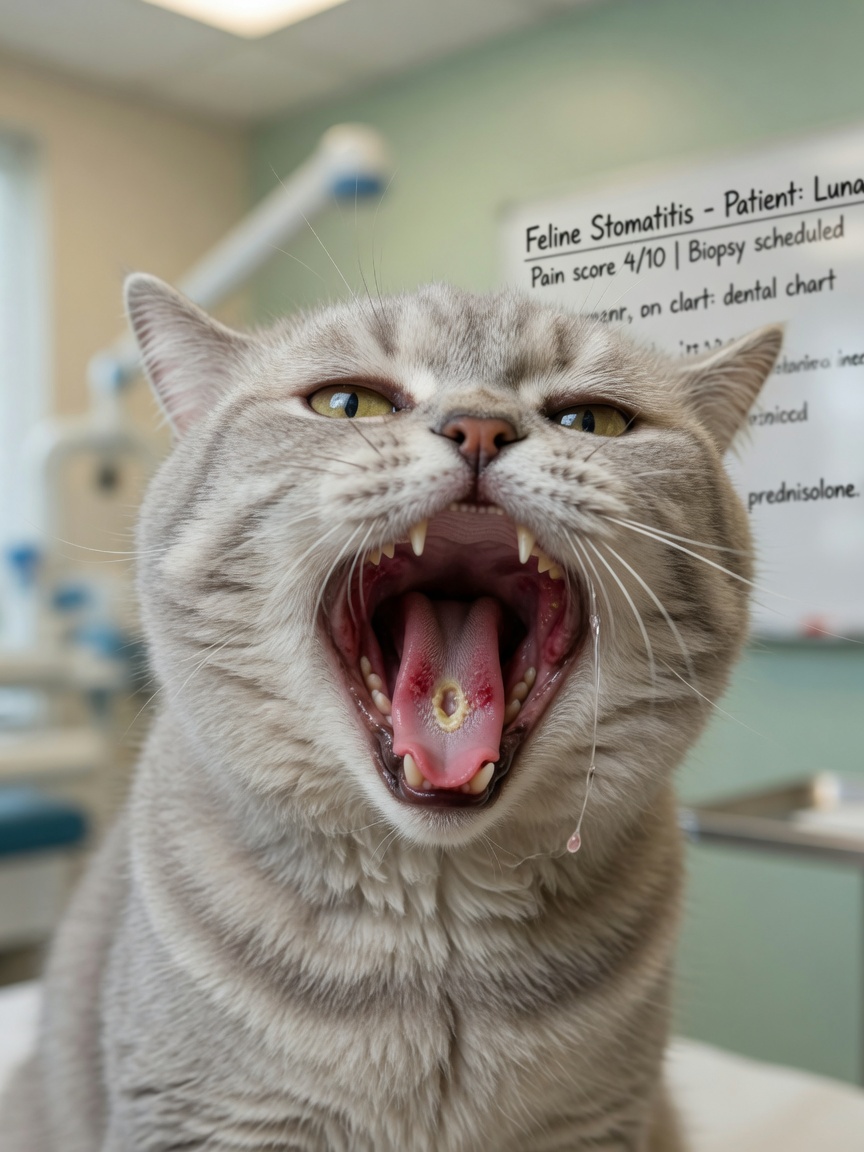
The most familiar form of FCV infection involves the upper respiratory tract and the oral cavity. Affected cats typically develop sneezing, nasal discharge, conjunctivitis, and — most distinctively — ulceration of the tongue, hard palate, or lips. These oral ulcers are painful and frequently cause drooling, reduced appetite, and difficulty eating. Unlike herpesvirus, which tends to cause more severe nasal symptoms, calicivirus is particularly associated with these oral lesions. Fever and lethargy are common. Most immunocompetent adult cats recover within two to three weeks, though secondary bacterial infections can complicate recovery.
Limping Syndrome (Acute Arthritis)
A subset of FCV strains — particularly following vaccination with modified live virus, though also with natural infection — can cause a transient polyarthritis known as limping syndrome or calicivirus-associated lameness. Affected cats develop sudden onset lameness, joint swelling, and pain, often with mild fever. The condition typically resolves within 48 to 72 hours without specific treatment, though anti-inflammatory support from a vet can help manage discomfort. It is far more common in kittens than adult cats.
Virulent Systemic FCV
A rare but serious concern is virulent systemic FCV (VS-FCV), characterised by high fever, severe facial and limb oedema, skin ulceration, and multi-organ involvement including the liver, pancreas, and lungs. Case fatality rates in outbreaks have been reported between 33% and 67%. VS-FCV outbreaks have occurred in both shelters and private practice settings. It remains uncommon, but when it appears, isolation and intensive veterinary care are urgently needed.
Why Calicivirus Is Difficult to Control with Vaccination Alone
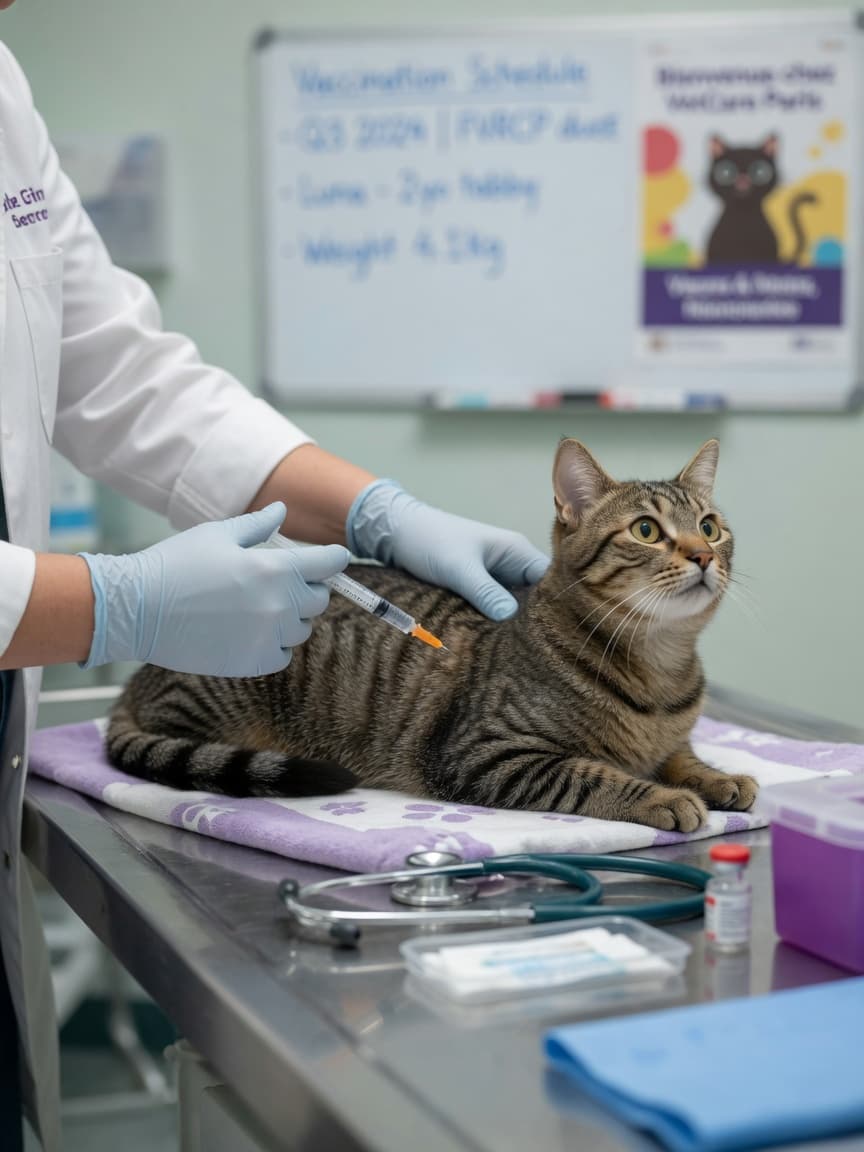
Vaccines against FCV are a core component of feline preventive healthcare and are included in all standard vaccination protocols. They significantly reduce the severity of disease and are very effective at preventing serious illness. However, they do not prevent infection entirely. The central challenge is antigenic diversity: FCV mutates rapidly, and the strains circulating in a given population may differ substantially from the strains included in available vaccines.
Broad-spectrum calicivirus vaccines — formulated to cover a wider range of field strains — are available and offer improved cross-protection. Your vet can advise whether a broad-spectrum formulation is appropriate based on your cat's risk profile. Regardless of vaccine type, no product eliminates the risk of infection, which is why hygiene and isolation protocols remain important alongside vaccination.
Treatment and Supportive Care
There is no specific antiviral treatment for FCV in general practice. Management focuses on supportive care: nutritional support (appetite stimulants or syringe feeding if oral ulcers prevent eating), fluid therapy if dehydration is present, treatment of secondary bacterial infections with appropriate antibiotics, and anti-inflammatory pain relief where indicated. Oral ulcers can be managed with gentle cleaning and, in some cases, topical agents — your vet can advise on the most appropriate approach. Most cats recover fully with good nursing care.
Cats with VS-FCV require intensive hospitalisation. Any cluster of unusually severe respiratory cases with systemic signs in a multi-cat environment should prompt immediate veterinary contact and isolation of affected individuals.
Living with a Calicivirus Carrier Cat
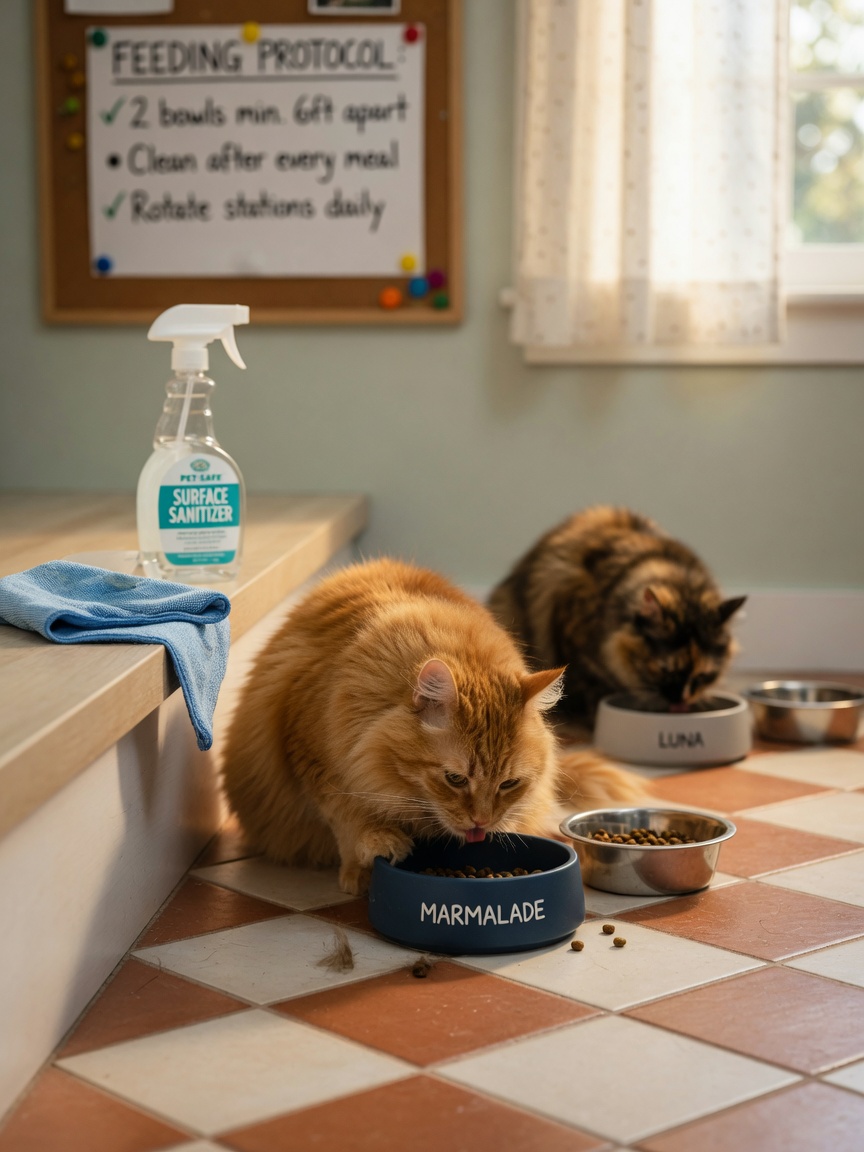
If your cat is a known carrier — persistent shedder following recovery — the priority is managing risk to other cats in the household or those they may contact. Separate food and water bowls, maintain rigorous hygiene, and discuss the implications with your vet before introducing new cats. Many carrier cats live entirely normal lives, but their status is relevant information for any multi-cat household or cattery environment.
Practical Summary
- FCV is a leading cause of cat flu; it spreads easily via contact and contaminated surfaces and can survive outside a host for weeks.
- Classic signs include sneezing, nasal discharge, and painful oral ulcers; limping syndrome is a recognised but self-limiting complication.
- Virulent systemic FCV is rare but severe — outbreaks require immediate isolation and veterinary intervention.
- Vaccination is essential and reduces severity, but does not guarantee complete protection due to viral diversity.
- Treatment is supportive; consult a vet for pain management, secondary infections, and nutritional support.
- Carrier cats need careful management in multi-cat settings — your vet can guide a safe approach.