
Why Indoor Cats Need Enrichment
Keeping a cat indoors protects it from traffic, predators, infectious disease, and injuries. However, the indoor environment comes with its own welfare challenges. Cats are highly motivated predators with complex social and environmental needs that a standard flat or house will not automatically meet. Without appropriate enrichment, indoor cats are at increased risk of stress-related health problems including feline idiopathic cystitis, over-grooming, and obesity.
The International Society of Feline Medicine (ISFM) has identified five core environmental requirements for cats, known as the Five Pillars of a Healthy Feline Environment. These provide an excellent framework for owners creating or improving an indoor setup.
Pillar 1: A Safe Place
Every cat needs access to one or more locations where it feels completely secure and can retreat without being disturbed. This is especially important in multi-person or multi-pet households. A safe place might be a covered bed in a quiet room, a cardboard box on a high shelf, or a dedicated cat igloo.
The key characteristic of a safe space is that the cat controls access to it. Children and other animals should not be permitted to follow the cat into its retreat. When a cat feels it cannot escape stressors, chronic anxiety develops, often manifesting as physical illness.
Pillar 2: Multiple Key Resources in Separate Locations
Key resources include food stations, water sources, litter trays, resting areas, and scratching posts. The ISFM recommends that these are provided in multiple locations throughout the home and kept well separated from one another. This is particularly important in multi-cat homes, where competition over resources — even between cats that appear to get along — is a significant source of stress.
The general guideline for litter trays is one tray per cat plus one extra, placed in different rooms. Water sources should be kept away from food bowls, as cats instinctively avoid drinking near their food due to the risk of contamination from prey in the wild. Many cats prefer running water, making a cat water fountain a worthwhile investment.
Pillar 3: Opportunity for Play and Predatory Behaviour
Play is not merely entertainment for cats — it fulfils a fundamental need to rehearse predatory sequences: stalk, pounce, catch, bite, and carry. Indoor cats that cannot hunt must have regular, interactive play sessions to satisfy this drive.
- Use wand toys or fishing rod toys to mimic the movement of prey — erratic, low to the ground, and occasionally disappearing under furniture
- Allow the cat to catch and hold the toy at the end of each play session; ending without a catch can be frustrating
- Rotate toys regularly, as novelty dramatically increases engagement; a toy hidden for a week feels new again when reintroduced
- Puzzle feeders and food-dispensing toys tap into the same predatory instincts while making mealtimes mentally stimulating
Aim for at least two dedicated interactive play sessions of ten to fifteen minutes each day, ideally one in the morning and one in the evening when cats are naturally most active.
Pillar 4: Positive, Consistent, and Predictable Human Social Interaction
Cats vary enormously in their need for human contact, and crucially, they need to feel that they are in control of social interactions. Forcing attention on a cat that is not seeking it creates stress rather than a bond. The ISFM advises that owners learn to read feline body language and allow the cat to initiate and end interactions.
Signs a cat is inviting interaction include slow blinking, approaching with tail held upright, and rubbing against legs. Signs that the cat has had enough include skin twitching, tail flicking, turning the head away, and dilating pupils. Respecting these signals consistently builds genuine trust over time.
Pillar 5: Respecting the Importance of the Cat's Sense of Smell
Cats communicate and interpret their environment heavily through scent. Strong artificial fragrances, heavily scented cleaning products, or new items brought into the home can be genuinely distressing. The ISFM emphasises the importance of respecting feline olfactory communication, including the scent marks cats deposit through scratching and facial rubbing.
Never clean areas where a cat has rubbed its face, as these marks convey security and familiarity. Provide multiple scratching surfaces — both vertical and horizontal, in different textures such as sisal and cardboard — in prominent locations, particularly near sleeping areas and by windows.
Window Perches and Vertical Space
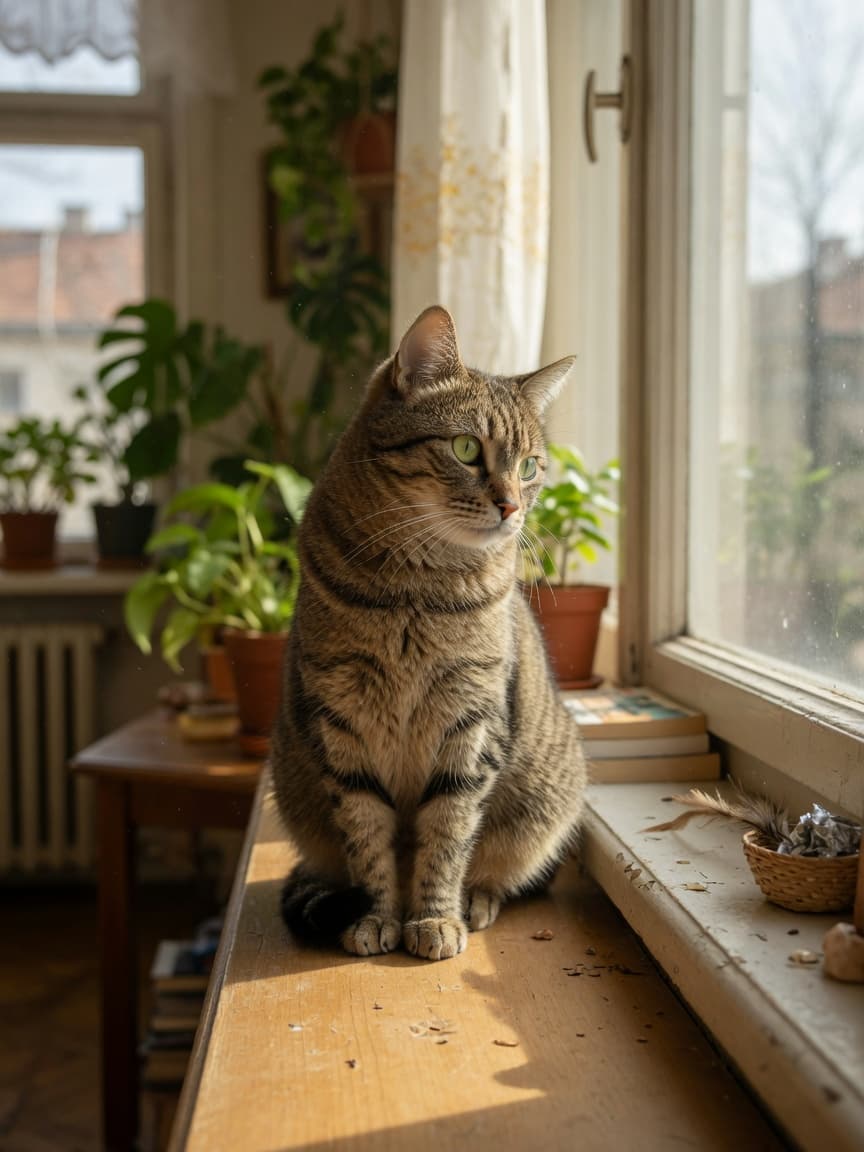
Cats feel most secure when they can survey their territory from height. Providing vertical space — cat trees, shelving systems, wall-mounted platforms, or window perches — dramatically increases the usable space within a home without requiring additional floor area. A window perch positioned at a bird feeder gives an indoor cat hours of sensory stimulation, combining visual interest, scent from outside air, and the sounds of wildlife.
Foraging and Hiding Opportunities
Rather than feeding from a bowl, consider hiding portions of the daily food allowance around the home in small quantities for the cat to find. Paper bags, cardboard boxes with holes cut into them, and egg cartons can all be used as foraging vessels. Providing a selection of hiding spots at different heights — tunnels, covered beds, boxes — gives the cat agency over its environment and reduces baseline stress levels considerably.
Enrichment for indoor cats need not be expensive or elaborate. The most impactful changes are often structural: more vertical space, more resources in more places, and a consistent routine that the cat can predict and rely upon.