
Cats Clean Themselves — So Why Would You Ever Need to Bathe One?
Cats spend between 30 and 50 per cent of their waking hours grooming, and for the vast majority of healthy domestic cats, this is sufficient. The barbed papillae on a cat's tongue act as a highly effective comb and cleaning tool, distributing natural oils and removing loose hair and surface debris. Yet there are specific, well-defined situations in which owner-assisted bathing is not only appropriate but necessary — and carrying it out without causing injury to the cat or yourself requires preparation, technique and patience.
When Bathing Is Actually Necessary
Bathing a cat for purely cosmetic reasons is rarely justified. The occasions that do warrant it include:
- Contamination with toxic substances such as engine oil, paint or chemical products that the cat must not ingest during self-grooming
- Flea treatment failure requiring the removal of dead parasites and flea dirt before a new product is applied
- Severe soiling of the coat that the cat is unable to manage, as seen in elderly, obese or arthritic cats who cannot reach all areas effectively
- Skin conditions for which a veterinarian has prescribed a medicated shampoo as part of treatment
- Show preparation for breeds such as Persians or Maine Coons, where coat presentation is assessed
If you are unsure whether bathing is warranted in your cat's specific situation, ask your veterinarian before proceeding. Unnecessary bathing strips the coat of sebum, disrupts the skin microbiome and creates significant stress for most cats.
Preparing Before the Water Runs
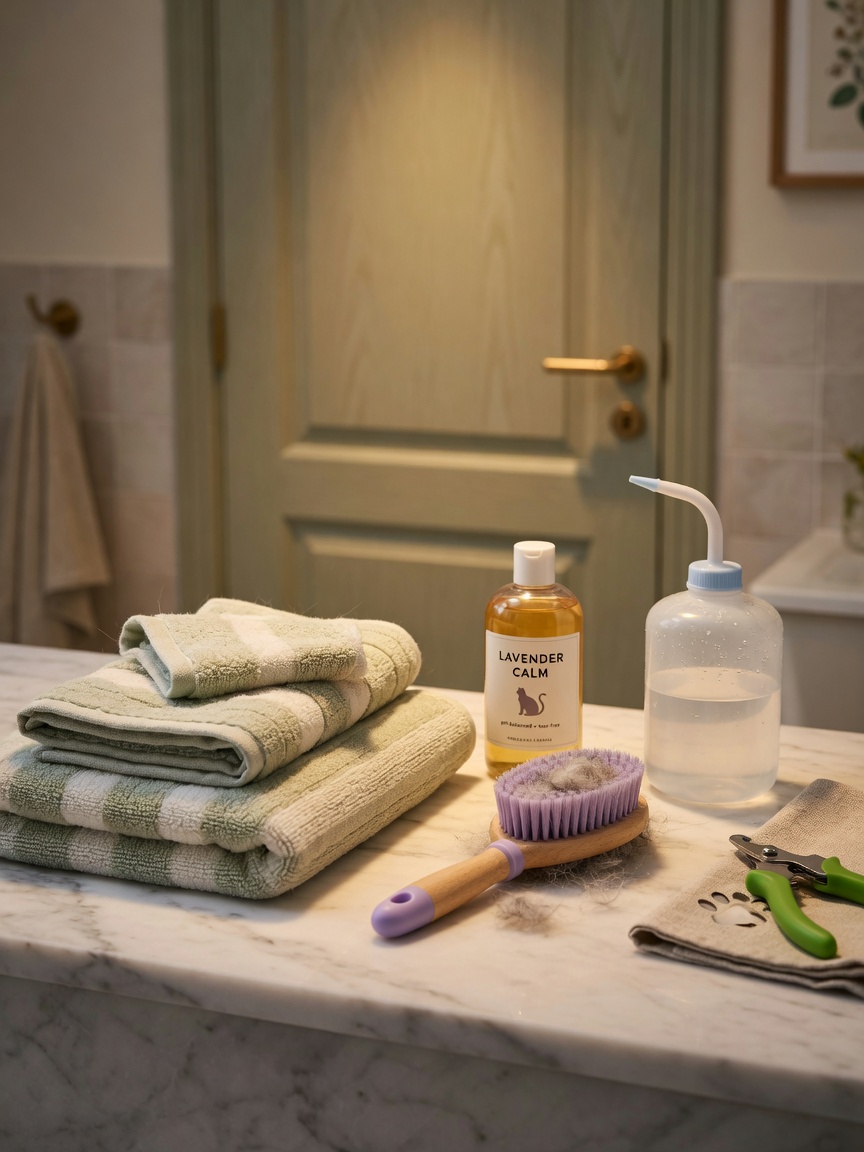
Preparation determines how smoothly the bath goes. A cat that is already stressed before it enters the bathroom will be far harder to manage safely. Begin by trimming the claws 24 hours before the bath — not immediately before, which adds to the cat's agitation. Brush out any loose hair and tangles, as water will tighten existing mats. Assemble everything you need in the bathroom in advance:
- A non-slip mat or folded towel for the base of the sink or bath
- Cat-specific shampoo (human shampoo disrupts the skin's pH balance)
- Two warm towels, pre-heated if possible
- A jug or detachable showerhead set to a gentle, low-pressure flow
- A second person if available, particularly for first-time bathing
Keep the bathroom warm and close the door. Cats frequently attempt to flee, and a closed room prevents a wet, shampoo-covered cat from escaping into the house.
Technique: The Safest Approach
Water Temperature and Approach
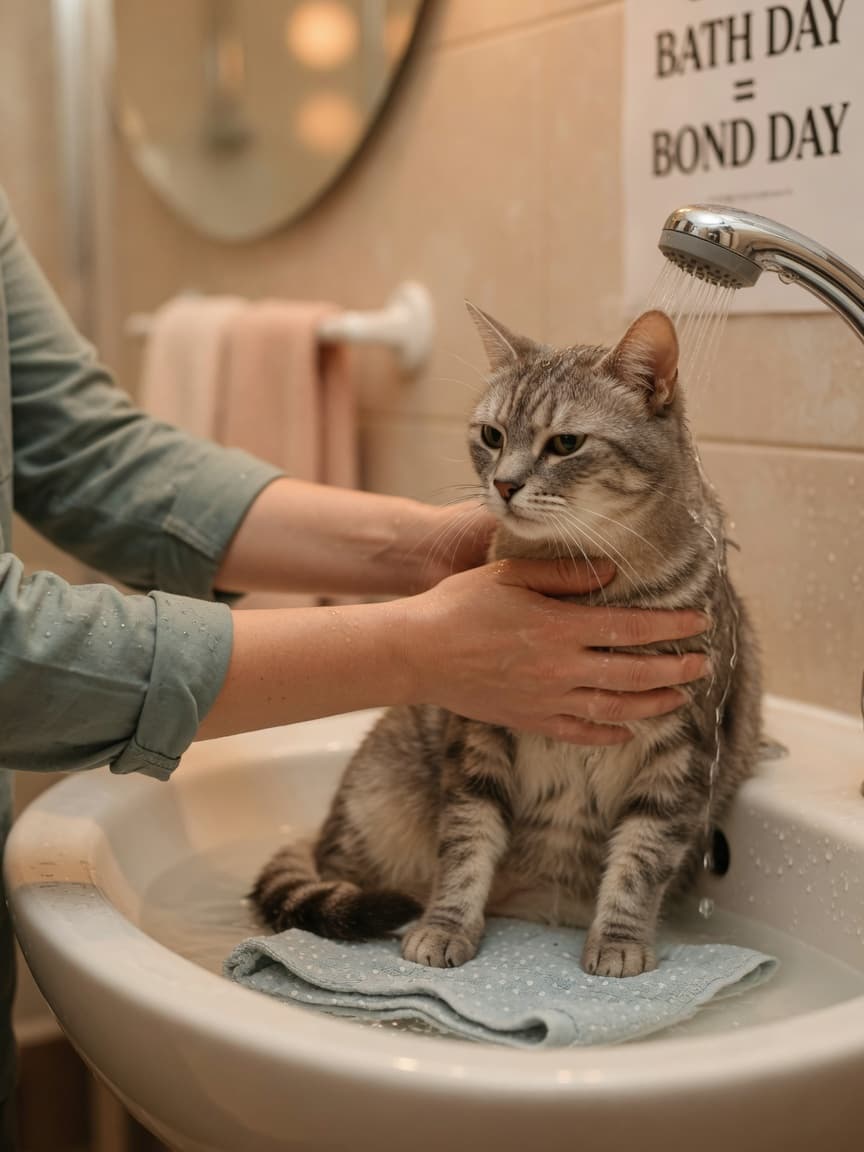
Water should be comfortably warm — around 38 to 39 degrees Celsius, similar to the cat's own body temperature. Cold water causes an immediate panic response. Use a jug or low-pressure showerhead to wet the coat gradually, starting at the neck and working toward the tail. Avoid the head entirely during the main wash; the ears and face are addressed separately with a damp cloth.
Applying Shampoo
Work a small amount of shampoo into the coat from neck to tail, keeping it away from the eyes, ears and mouth. Speak quietly and maintain calm physical contact throughout. Most cats tolerate handling better when they feel they have some stability — supporting the cat's weight against your body or the side of the sink reduces the feeling of vulnerability.
Rinsing Thoroughly
Shampoo residue left in the coat causes skin irritation and will be ingested during grooming. Rinse until the water runs completely clear, which typically takes longer than expected given how effectively a cat's coat holds product.
Drying Without Distress
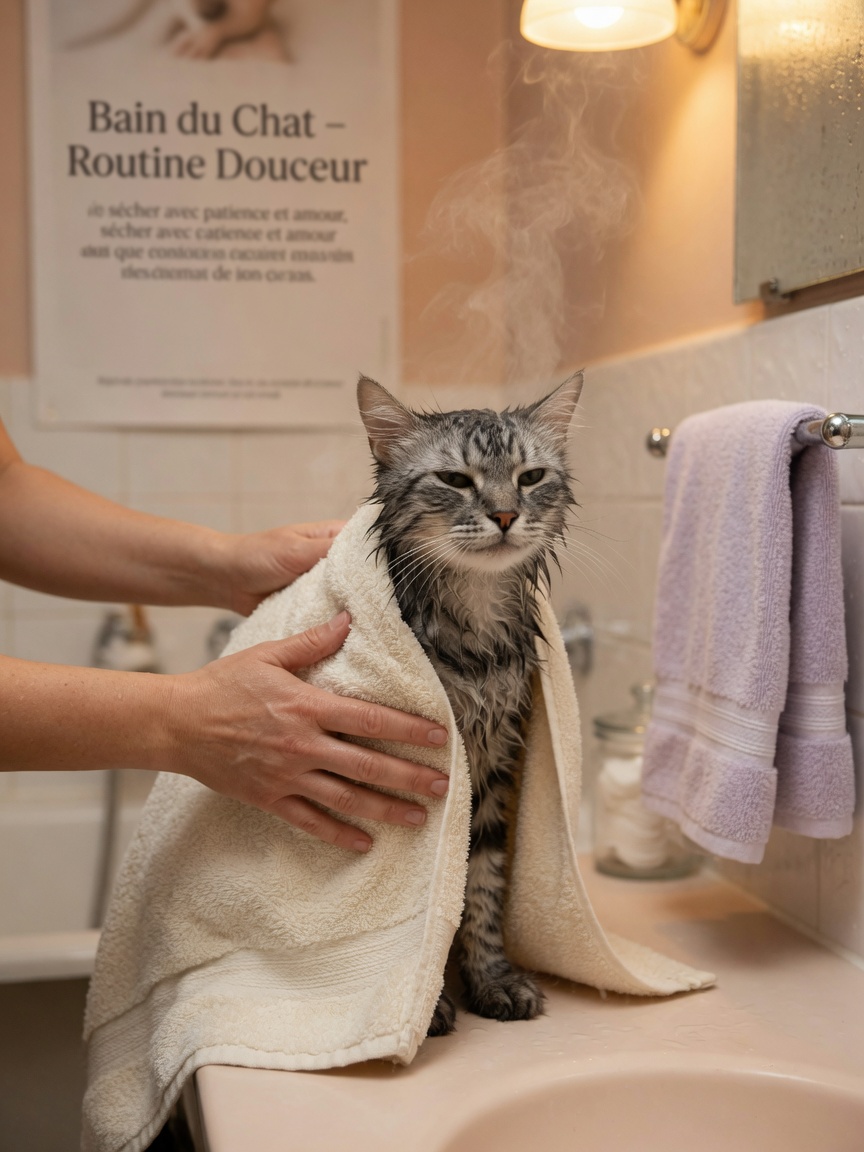
Wrap the cat in a warm towel immediately on leaving the water and press — do not rub — to absorb moisture. Most cats tolerate a second towel change once the first is saturated. Hair dryers are suitable for some cats but only on the lowest heat setting at a distance, and only if the cat has been desensitised to the sound beforehand. Force-drying a cat that is already stressed will escalate the situation rapidly. Allow the cat to finish drying in a warm room away from draughts, and provide food or a treat as a positive association with the experience ending.
After the Bath: What to Watch For
Observe the cat for signs of skin irritation in the days following a bath — excessive scratching, redness or hair loss in areas where shampoo was applied may indicate a reaction to the product used. Cats that were significantly stressed during the bath may hide, refuse food or show behavioural changes for a short period. Contact your veterinarian if any skin changes persist beyond 48 hours or if the cat appears unwell.
Summary: Bath-Time Principles
- Only bathe when medically or hygienically necessary — not for cosmetic reasons
- Use a cat-specific shampoo and water at body temperature
- Trim claws the day before, brush out tangles first and prepare the bathroom fully
- Work calmly from neck to tail, keeping water and shampoo away from the face
- Rinse thoroughly, towel-dry gently and warm the drying environment
- Consult a vet if the cat shows skin reactions or prolonged stress following the experience