
When a Dog's Bark Changes, Listen Carefully
Laryngeal paralysis often announces itself quietly — a bark that sounds slightly different, a voice that has become hoarse or raspy, a dog that tires more quickly on walks than it used to. For years, owners may attribute these changes to ageing. But laryngeal paralysis is a specific, progressive, and potentially life-threatening condition, and recognising it early can be the difference between a planned surgical correction and an emergency presentation in respiratory distress.
The Larynx and Why It Matters
The larynx sits at the entrance to the trachea and has two critical jobs: allowing air to flow freely into the lungs during breathing, and closing during swallowing to prevent food and fluid from entering the airway. Two pairs of cartilage flaps — the arytenoid cartilages — are pulled open by muscles each time the dog breathes in. If the nerves controlling these muscles fail, the cartilages fall inward. Instead of opening to admit air, they collapse into the airway, causing turbulence, noise, and obstruction.
The muscles responsible for opening the larynx are controlled by the recurrent laryngeal nerve, a branch of the vagus nerve that takes a long and anatomically exposed route: down through the neck and chest before looping back up to the larynx. This extended path makes it vulnerable to a variety of compressive, traumatic, and degenerative processes.
Who Is at Risk
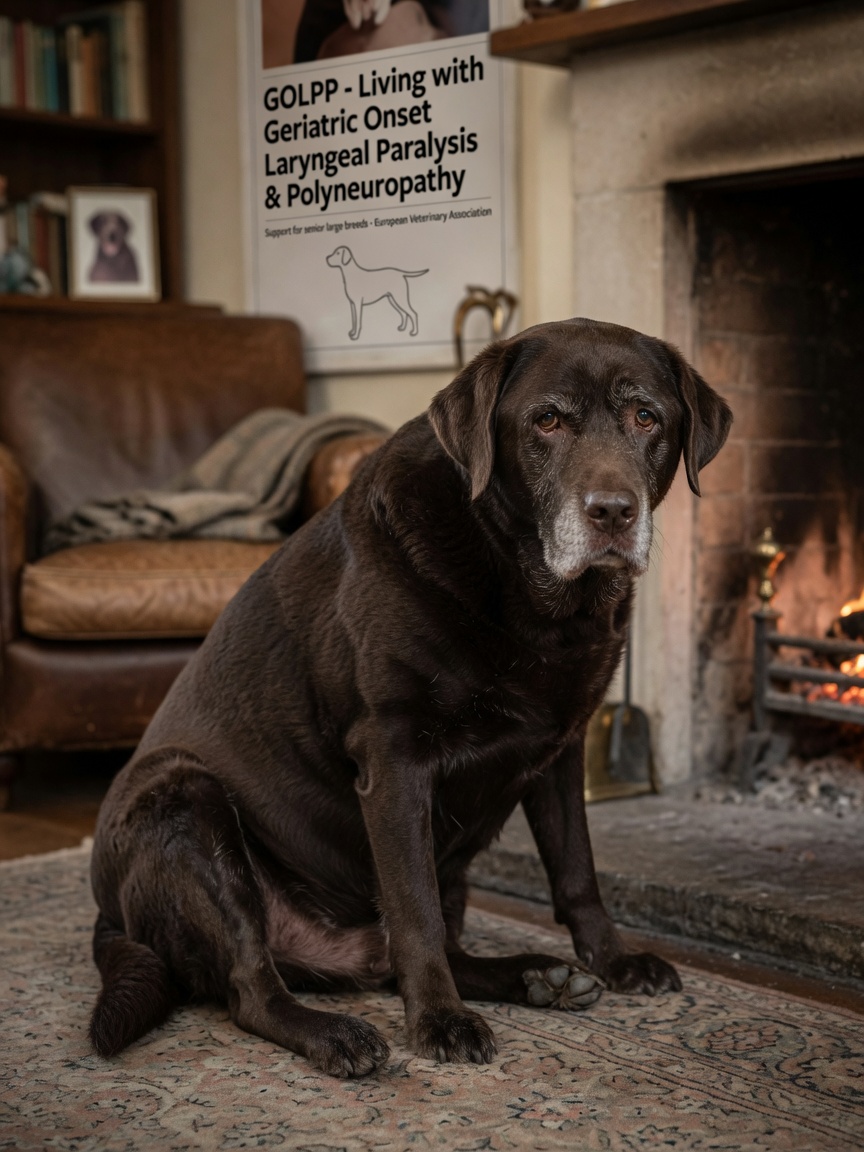
Laryngeal paralysis is most commonly seen in large and giant breed dogs, with Labrador Retrievers, Golden Retrievers, Irish Setters, and Saint Bernards among the most frequently affected. The condition most often presents in middle-aged to older dogs, typically between nine and twelve years of age.
In many of these patients — particularly older Labradors — laryngeal paralysis is not an isolated problem. It is increasingly recognised as the earliest and most visible sign of a broader progressive polyneuropathy, sometimes called geriatric onset laryngeal paralysis and polyneuropathy, or GOLPP. This condition involves diffuse degeneration of peripheral nerves throughout the body, and affected dogs often develop hindlimb weakness and oesophageal dysfunction alongside the laryngeal signs.
Laryngeal paralysis can also occur as a congenital condition in certain breeds including Bouvier des Flandres and Siberian Huskies, and as an acquired condition secondary to neck trauma, thyroid tumours, or mediastinal masses in dogs of any breed or age.
Recognising the Signs
Early Signs
The earliest signs are often subtle and dismissed as normal ageing. The bark changes — lower, rougher, raspier than before. The dog may breathe more loudly than usual at rest, or pant with a harsh, almost rattling quality. Exercise tolerance drops. The dog hangs back on walks, stops to catch its breath, or takes longer to recover after exertion.
Progressive Signs
As the condition advances, the inspiratory noise becomes more pronounced and audible from across the room. A distinctive harsh, high-pitched breathing sound called stridor develops. The dog may become anxious or distressed, particularly in warm weather or during excitement. Coughing and gagging — partly from laryngeal dysfunction and partly from concurrent oesophageal involvement in GOLPP cases — become more frequent.
Crisis Presentation
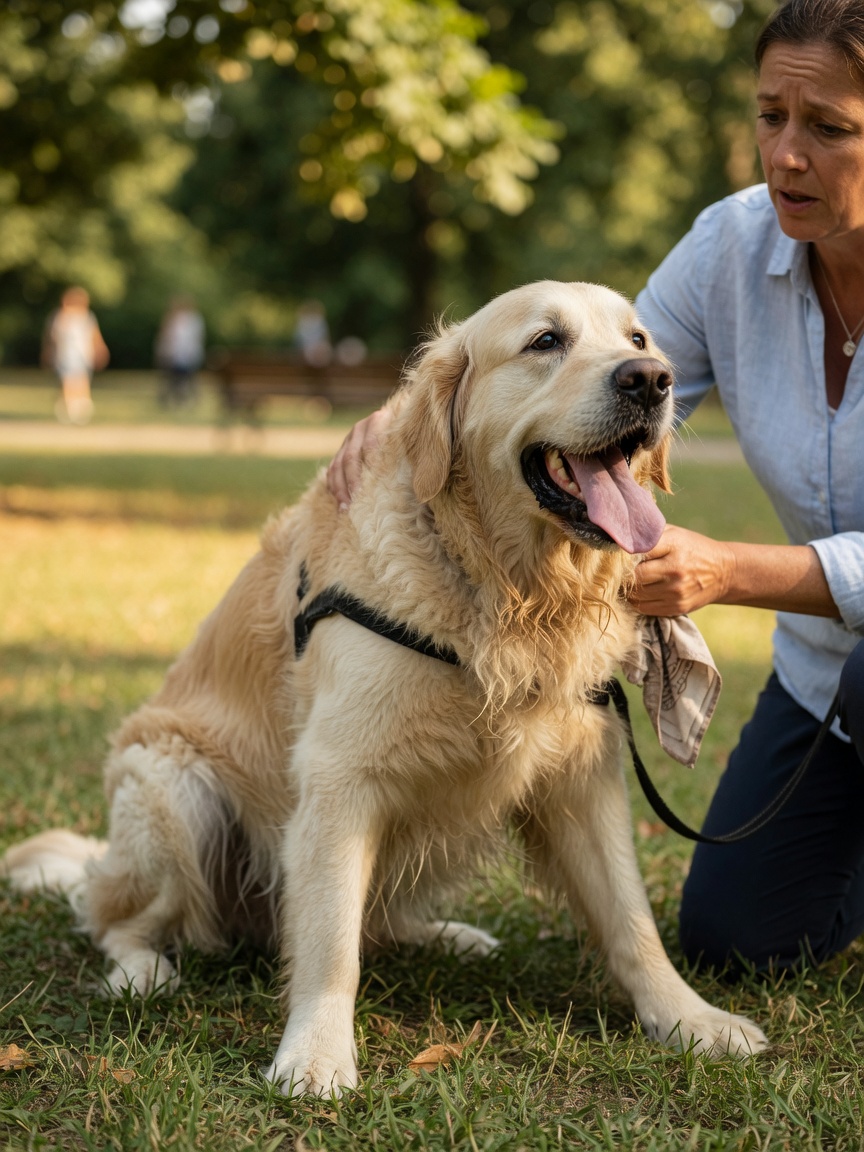
In hot weather, during exercise, or in a state of anxiety, a dog with laryngeal paralysis can decompensate rapidly. Panting increases the demand for airflow just as the already-compromised larynx is struggling to keep up. A respiratory crisis can develop within minutes: the dog cannot move enough air, body temperature rises, the distress worsens, and the situation escalates. This is a veterinary emergency requiring immediate intervention.
Diagnosis
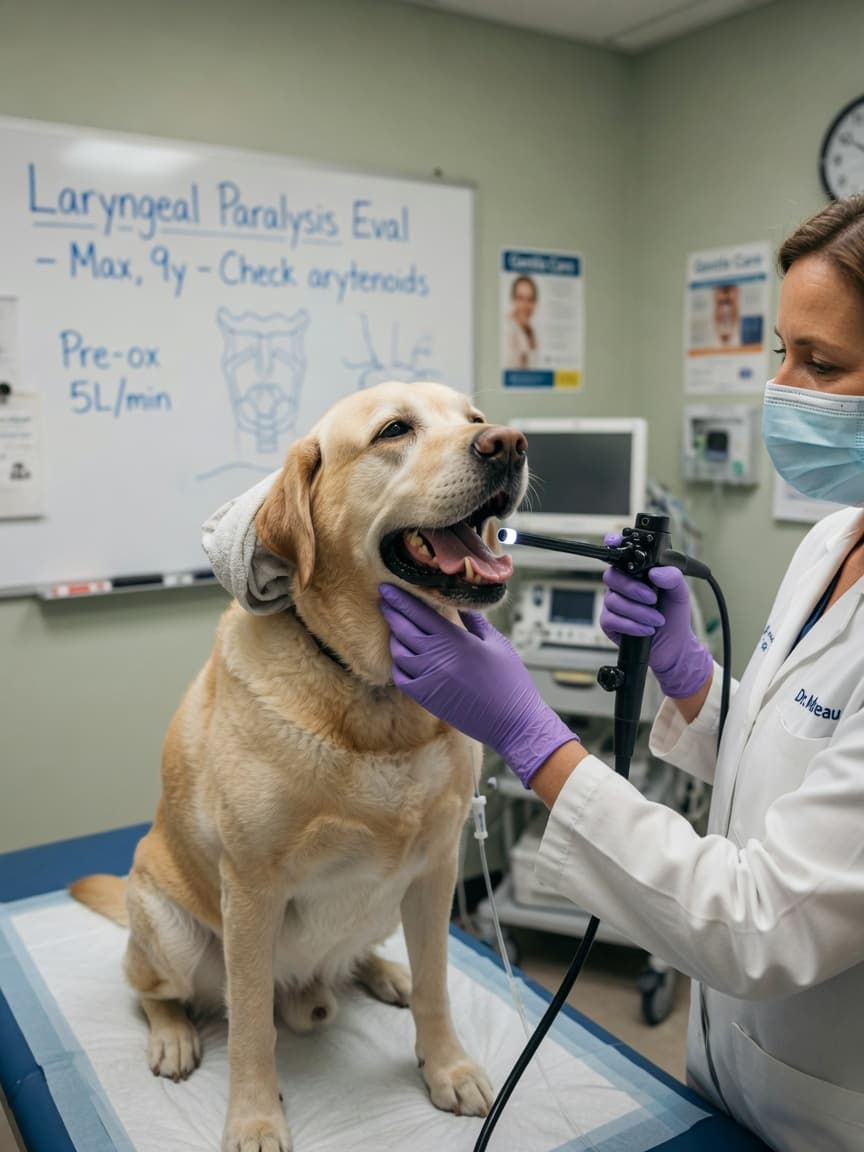
Definitive diagnosis requires laryngoscopy — direct visualisation of the larynx under a very light plane of anaesthesia, light enough that the dog is still making respiratory efforts. A normal larynx will show the arytenoid cartilages abducting — moving apart — each time the dog breathes in. In a dog with laryngeal paralysis, one or both sides fail to open and may be seen collapsing inward with each inspiratory effort.
Thoracic radiographs help assess for concurrent aspiration pneumonia, which can result from the same laryngeal dysfunction that impairs swallowing. Blood work and neurological assessment are important to characterise the broader picture, particularly in older Labradors where GOLPP should be assessed.
Treatment Options
Medical management — keeping the dog cool, calm, and away from strenuous exercise — can maintain quality of life in mildly affected dogs, but it does not address the underlying problem and is not a long-term solution as the condition is progressive.
The established surgical treatment is unilateral arytenoid lateralisation, commonly called a tie-back procedure. A suture is placed to hold one arytenoid cartilage permanently open, widening the airway enough to allow adequate airflow during normal activity. The procedure is performed on one side only — tying both sides open increases the risk of aspiration significantly.
Outcomes are generally good. Most dogs show marked improvement in breathing, exercise tolerance, and quality of life following surgery. The principal ongoing risk is aspiration pneumonia, as the permanently open larynx is less efficient at protecting the airway during swallowing. Feeding from raised bowls, offering food of appropriate consistency, and avoiding swimming are recommended post-operatively.
Protecting Your Dog: Practical Steps
- Take any voice change, increased breathing noise, or reduced exercise tolerance in a middle-aged large breed dog seriously and request a laryngeal assessment
- Avoid exercising your dog in hot or humid conditions if laryngeal paralysis is suspected or confirmed
- Keep car journeys and periods of excitement short and well-ventilated until the condition is managed
- Discuss the tie-back procedure with a veterinary surgeon before a crisis occurs — elective surgery carries lower risk than emergency intervention
- Ask your vet about screening for GOLPP-associated signs including hindlimb weakness and swallowing difficulty
- Know the signs of respiratory crisis and have an emergency vet contact ready if your dog is already diagnosed